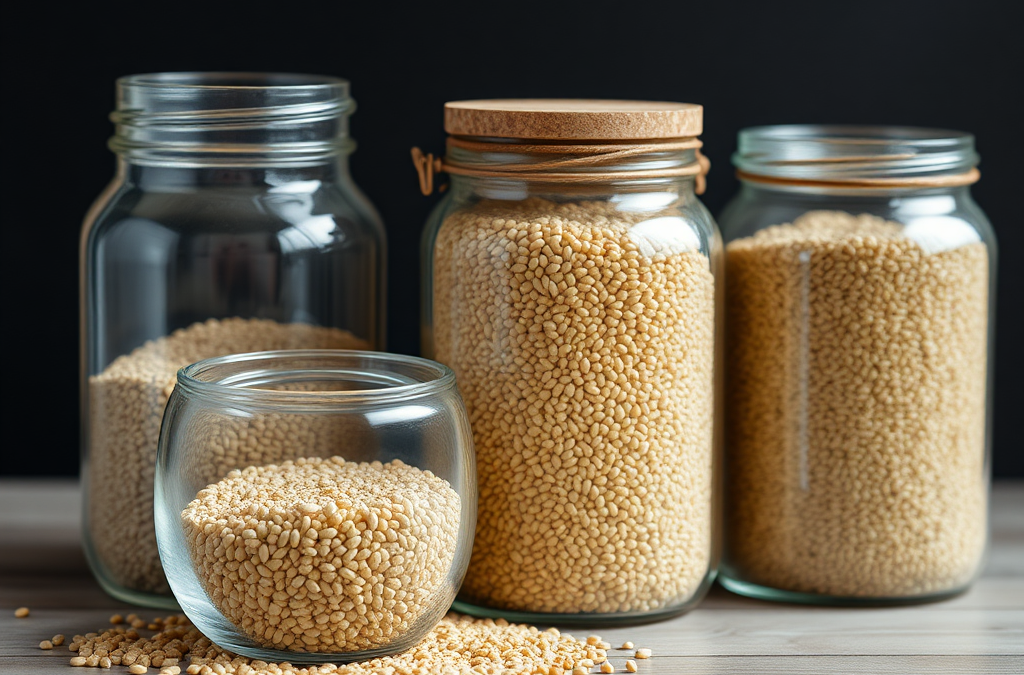
To store grains for optimal nutrition, keep them in a cool, dry place in airtight containers to prevent moisture and pest contamination. Use vacuum-sealing methods for long-term storage, and ensure the grains are free from any contaminants before sealing. Common mistakes include storing grains in warm, humid areas or using non-airtight containers, which can lead to spoilage and nutrient loss. Regularly check for signs of pests or spoilage to maintain grain quality.
Understanding Grain Types and Their Nutritional Needs
Different types of grains, such as rice, wheat, oats, and quinoa, have unique nutritional profiles and storage requirements. Understanding these differences is crucial for effective storage. For example, whole grains retain their bran and germ, providing more nutrients compared to refined grains. However, they are also more prone to spoilage due to higher oil content. Knowing the specific needs of each grain type helps ensure that their nutritional benefits are preserved during storage.
Additionally, grains like brown rice and quinoa have a shorter shelf life than white rice due to their higher fat content. Therefore, it’s essential to prioritize the storage conditions that cater to the specific grain type to maximize their nutritional value. This includes considerations such as humidity levels, exposure to light, and temperature fluctuations.
Optimal Storage Conditions for Grains
For optimal grain storage, aim for a cool, dry environment. Ideal temperatures range between 50°F to 70°F (10°C to 21°C), while humidity levels should be below 60%. High humidity can lead to mold growth and spoilage, while excessive heat can degrade the grains’ nutritional content.
Using airtight containers is essential to keep grains protected from moisture, pests, and air exposure. Glass jars, plastic containers with tight seals, or vacuum-sealed bags are excellent choices. It’s advisable to label containers with the type of grain and the date of storage to keep track of freshness.
When storing grains, consider the location as well. Avoid placing them near stoves or in areas that experience significant temperature fluctuations, such as garages or basements. Instead, opt for a dedicated storage area that remains consistent in temperature and humidity.
Common Mistakes in Grain Storage
One of the most frequent mistakes is neglecting to check for pests before storage. Infestations can ruin an entire batch of grains, leading to waste. Always inspect grains for signs of bugs or mold before sealing them away. Additionally, storing grains in non-airtight containers can introduce air and moisture, both of which are detrimental to grain longevity.
Another common error is overestimating the shelf life of grains. While many grains can last a long time, their nutritional quality can diminish over time. It’s crucial to rotate stored grains, using older supplies first and replenishing with fresh stock. This practice ensures that you are consuming grains at their peak nutritional value.
Long-Term Storage Solutions
For long-term storage, consider vacuum sealing grains. This method removes air from the packaging, significantly extending shelf life and preserving nutrients. Additionally, freezing grains can be an effective strategy, particularly for those that are prone to spoilage. Just ensure they are stored in airtight containers to prevent freezer burn.
Another option is to store grains with oxygen absorbers, which can help mitigate oxidation and spoilage. These absorbers are particularly useful for long-term storage, as they actively remove oxygen from the environment, creating an anaerobic atmosphere that slows down the degradation process.
Regularly check stored grains for any signs of spoilage or pest activity. This proactive approach allows you to address issues before they escalate, ensuring that your grains remain nutritious and safe to consume.
Get Whole Wheat Flour, Grains and Milling Supplies – CLICK HERE

Frequently Asked Questions
What is the best temperature to store grains?
The ideal temperature for storing grains is between 50°F to 70°F (10°C to 21°C) to maintain their nutritional quality.
How can I tell if my grains have gone bad?
Signs of spoilage include an off smell, discoloration, or the presence of pests. If you notice any of these, discard the grains.
Can I store grains in plastic bags?
Plastic bags are not ideal for long-term storage as they may allow air and moisture in. Use airtight containers instead.
How long can I store whole grains?
Whole grains can typically be stored for 6 months to 1 year, depending on the grain type and storage conditions.
Is vacuum sealing effective for grain storage?
Yes, vacuum sealing is highly effective as it removes air, significantly extending the shelf life of grains and preserving their nutrients.
Conclusion
Storing grains for optimal nutrition involves understanding the specific needs of each grain type and maintaining appropriate storage conditions. By keeping grains in cool, dry, airtight containers and avoiding common pitfalls, you can ensure their quality and nutritional value are preserved. Regular monitoring and proper storage techniques will lead to a more sustainable and nutritious food supply.
Get Whole Wheat Flour, Grains and Milling Supplies – CLICK HERE
Auto Amazon Links: No products found.