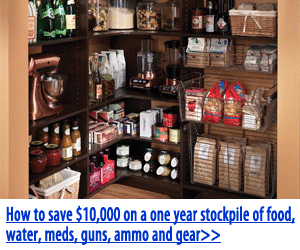
One of my biggest ‘beefs’ with some food storage plans is that the items are stored and ignored for an undetermined amount of time. This not only is poor stewardship of eventually perishable recourses you want to have a eye on, but also omits the one resource you will need in the event of using the stored food – skill. If you keep your food storage in a convenient and accessible place where you can get into it often and use it on a regular basis, you not only know that the contents are in good condition but more importantly you know how to use them all.
Anyone who has cooked from scratch knows the difference between using basic ingredients and an mix that requires ‘just add water’ as the instructions. The skill is an added bonus to keeping your food storage in a convenient and accessible place.
Of course the closer you can locate your food storage to your kitchen, the easier and more convenient it will be, but that is not always the case. Many people who store food will choose an alternative area for the bulk and ‘shop’ there for the replenishing of their smaller kitchen/pantry area. It doesn’t ALL have to be in the kitchen or pantry.
Here is a short list of ideas that I will expound upon in the next blog:
- Spare bedrooms
- Root cellars
- Unfinished rooms
- Crawl spaces
- Spring House
- Closets
- Under stairways
- Under beds
- Utility Room*
- Attic*
- Garage*
- Basement*
- Pantry
- Kitchen
* Temperature change conditions may omit these options
Popular Questions
What makes a food-storage location convenient and accessible?
A convenient food-storage location is easy to reach during everyday cooking, inventory checks, and emergencies. Choose a spot with a clear path, adequate lighting, and shelves you can access without climbing or moving heavy obstacles. Keep frequently used foods at waist or eye level, while reserving higher or harder-to-reach areas for backup supplies.
Where should you place food storage when locating it for easy access?
Place food storage near the kitchen or another area where meals are prepared, provided the space remains cool, dry, and clean. Avoid locations that require traveling through cluttered rooms, opening several doors, or moving stored equipment first. A nearby pantry, basement shelf, or dedicated cabinet can work well if you can reach the supplies quickly.
How can you make locating your food storage more accessible for everyone?
Store essential foods on sturdy shelves between knee and shoulder height so most household members can reach them safely. Use labeled bins or clear containers to group staples, cooking ingredients, and ready-to-eat foods. Leave enough aisle and shelf space for people with limited mobility, and avoid relying on step stools for items needed regularly.
What should you check when evaluating convenience and accessibility in food storage?
Test whether you can reach, identify, and remove the supplies without excessive bending, lifting, or rearranging. Check that shelves support the container weight and that doors, lighting, ventilation, and walking paths do not interfere with access. Reorganize the area after each inventory check so the oldest items remain easy to find and use.
Auto Amazon Links: No products found.