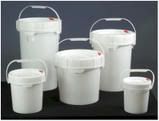
We were asked this very important question by someone who recently purchased several of our BPA-FREE Spin Lid storage pails….Found Here
[We] want to long term store flour, rice, sugar, and pasta for up to one year minimum. Are there any special tips to protect the contents that I need to be aware of?
We felt like it was of importance to share on this blog due to the fact that there are often two camps of food storage that people fall into: Regular Use and Emergency Only food storage.
Here is a copy of our reply:
Basically it only depends on ‘how’ you intend to use them: Regular use or Emergency only.
Regular use:
If you are keeping them indoors in a pantry, basement or closet where temps are cool (not over 85) and away from a heat source (not by furnace or water heater) and out of direct sunlight – AND intending to get into them on a regular (at least monthly) basis – then all you need to do is what is at the bottom of the invoice – wash, dry for 24hrs and fill directly into the pail for ease of use!
If you are in a highly moist climate (deep south or coastal) it would not hurt to toss in an oxygen absorber.
Click here for some options: Mylar Bags – Oxygen Absorbers
Emergency only:
If you are building what we call a ‘store and ignore’ or ‘stash and dash’ food storage cash that you don’t intend to get into for over a year, or it will be stored outdoors in a shed or bunker, we suggest taking EVERY precaution you can such as: First freezing your grain for one week, then allowing it to rest at room temp for one week then repeat freeze for one week (this is not a bad practice even for the above storage method if you want extra sure there are not going to be any live bugs or larvae that arrive in the grain – they can’t get in the pail but could arrive in the food). Then placing grains/legumes in heat sealed, vacuum packed metallic mylar bags WITH oxygen absorbers. This simply prolongs the life of the food in those conditions, but does not insure that all is well. That is why….
To be honest, we only use the ‘regular use’ method since I subscribe to the fact that the skills to use whole food is vital to learn NOW (not in an emergency) so there is no stall or learning curve if we need to live off of them. But that is a personal philosophy.
One other potential thing you may want to think of is that flour does not store well compared to the whole grain (and grinding as needed). It will be edible, but not act as typical flour. The whole grain already comes with it’s Creator created outer protection and can last for up to 4000 years if stored correctly.
Since food now has a better investment increase than most everything else, it would be a wise investment to make sure you can store at today’s prices for what you’ll need in the future. Especially as food and gas prices continue to increase.
You may be interested in our Preparedness Tips that we send to those on our newsletter at the Grain Storehouse and can subscribe by filling out the little drop-down box when the site opens.
Popular Questions
What makes food-grade, BPA-free bulk storage pails and buckets suitable for storing dry foods?
Food-grade, BPA-free bulk storage pails and buckets are made with materials intended for contact with food and do not use BPA in the plastic formulation. Their durable construction helps protect staples such as flour, rice, beans, sugar, and grains from moisture, pests, and household handling. Before filling a bucket, confirm that the product is specifically labeled for food storage rather than general-purpose use.
How should I prepare food-grade BPA-free bulk storage buckets before use?
Wash a new food-grade BPA-free bulk storage bucket with warm water and a mild, unscented detergent if the manufacturer permits cleaning. Rinse it thoroughly and let the bucket and lid dry completely before adding food, because leftover moisture can encourage spoilage. Avoid strong chemicals or abrasive tools that could damage the container or leave unwanted residues.
What foods can be stored in food-grade, BPA-free bulk storage pails?
These bulk storage pails are commonly used for dry goods such as wheat, rice, oats, beans, pasta, flour, sugar, and other shelf-stable staples. Foods should be clean, dry, and free of insects before they go into storage. For oily foods, liquids, or foods with unusual acidity, check the bucket manufacturer’s compatibility guidance and use an appropriate liner when recommended.
How can I keep food stored in BPA-free food-grade buckets fresh?
Use a tight-fitting lid and store the filled food-grade BPA-free bucket in a cool, dry area away from direct sunlight and heat. Label each container with the food name, packaging date, and use-by or rotation date so older supplies are used first. Inspect the bucket and seal periodically for cracks, leaks, odors, or pest activity, and transfer the contents if the container is damaged.
Auto Amazon Links: No products found.