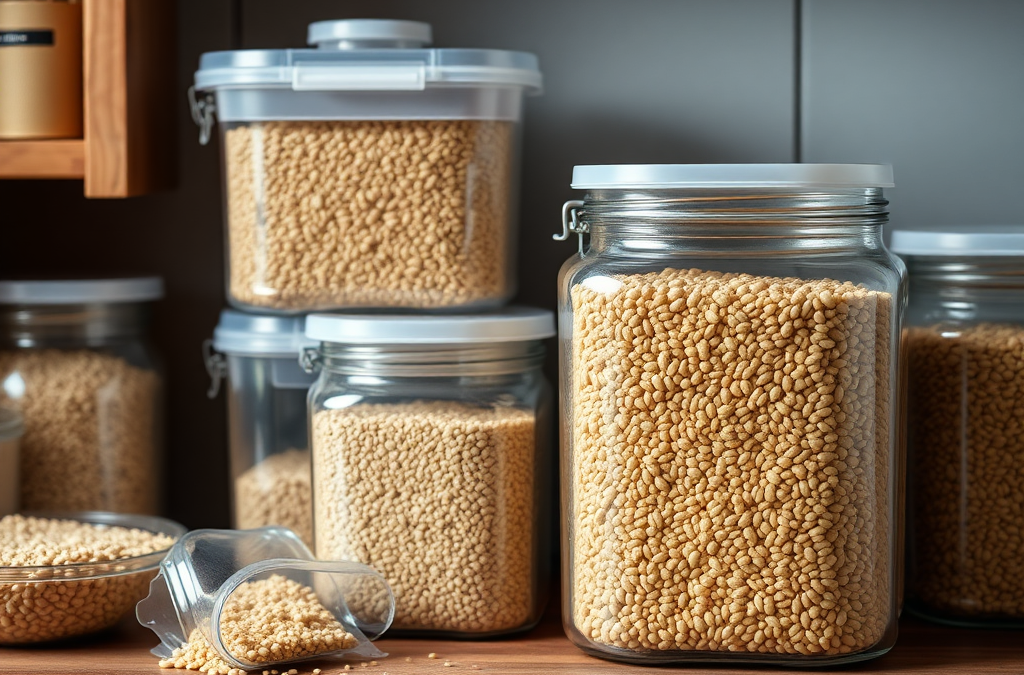
Effective home storage for prepping grains requires using airtight containers and maintaining a cool, dry environment to preserve quality. Food-grade buckets with gamma lids are ideal for long-term storage, while vacuum sealing smaller quantities can significantly extend shelf life. It's essential to keep humidity levels below 15% to prevent spoilage and mold growth, so consider using desiccants to absorb excess moisture. Regularly inspect your stored grains for pests and ensure containers are clean before use to avoid contamination. Prioritizing these strategies will help ensure your grains remain fresh and safe for consumption.
Choosing the Right Containers
Effective home storage for prepping grains begins with selecting the right containers. Airtight containers, such as food-grade buckets and glass jars, are ideal as they prevent moisture and air from compromising the grain quality. Food-grade buckets with gamma lids are particularly popular among preppers due to their durability and ease of use. When storing grains, ensure the containers are clean and dry before filling them.
Another option is vacuum sealing, which removes air and extends shelf life significantly. This method is excellent for smaller quantities and can be achieved using a vacuum sealer and appropriate bags. A common mistake is using non-food-grade containers, which may leach harmful chemicals into the grains. Always prioritize food-safe materials to ensure safety and longevity of your stored grains.
Optimal Storage Conditions
Storing grains in optimal conditions is crucial for maintaining their quality. The ideal environment is cool, dry, and dark. A temperature range of 50°F to 70°F is recommended, as higher temperatures can promote spoilage and pest infestations. Humidity levels should be kept below 15% to prevent mold and bacterial growth. A hygrometer can help monitor these conditions effectively.
Basements or pantries are often suitable for grain storage, but ensure they are well-ventilated. Avoid storing grains in areas with direct sunlight or high humidity, such as kitchens or garages. Using desiccants, like silica gel packets, can help absorb excess moisture within containers. It’s important to check the stored grains periodically for any signs of spoilage or infestation.
Pest Control and Maintenance
Implementing pest control measures is essential for the longevity of stored grains. Common pests include weevils, moths, and rodents, which can quickly ruin grain supplies. To prevent infestations, ensure all containers are sealed tightly and regularly inspect the storage area for signs of pests.
Using bay leaves or diatomaceous earth in storage containers can act as natural repellents. Regularly rotating your grain supplies is also advisable; this means consuming older stocks first and replenishing with new grains, which minimizes the risk of spoilage. If you discover pests, dispose of infested grains immediately and clean the storage area thoroughly.
Common Mistakes to Avoid
Many people make critical mistakes home storage for prepping grains. One common error is not considering the grain type when choosing storage methods. For instance, whole grains like wheat require different storage conditions compared to processed grains like flour. Another mistake is overestimating the shelf life; while grains can last long, improper storage can drastically shorten their viability.
Failing to keep a detailed inventory of stored grains can lead to unintentional waste. Regularly checking expiration dates and maintaining a rotation system can help ensure you use older grains before they spoil. Lastly, neglecting the importance of cleanliness in storage areas can lead to contamination and spoilage, so always prioritize hygiene.
Frequently Asked Questions
What is the best way to store grains at home?
The best way to store grains at home is to use airtight containers in a cool, dry, and dark environment, ensuring they are protected from moisture and pests.
How long can grains be stored?
Depending on the type, grains can be stored for several months to years. For example, white rice can last up to 30 years if stored properly, while whole grains typically last 6-12 months.
Can I store grains in plastic containers?
Yes, but ensure they are food-grade plastic containers to avoid chemical leaching. Airtight seals are crucial to prevent moisture and pests.
How do I know if my stored grains are bad?
Signs that stored grains are bad include an off smell, discoloration, or the presence of pests. Discard any grains that show these signs.
What temperature is best for storing grains?
The best temperature for storing grains is between 50°F and 70°F to prevent spoilage and pest infestations.
Conclusion
Effective home storage for prepping grains involves careful selection of containers, maintaining optimal conditions, and regular maintenance. By avoiding common mistakes and implementing proper pest control measures, you can ensure your grains remain fresh and safe for long-term use. Prioritizing these strategies will help you build a reliable grain supply for your prepping needs.
Get Whole Wheat Flour, Grains and Milling Supplies – CLICK HERE

Related Content
- 10 Effective Grain Storage Buckets with Lids (2025) Guide to Keep Your Crops Fresh
- Best Containers for Prepping Food: Essential Types and Features for Efficient Meal Prep
- The Ultimate Guide to 10 Best grains for emergency pantry in 2025
- Designing a Grain Storage System for Large Families
- Interuption: Value of money vs. Valuables
Auto Amazon Links: No products found.