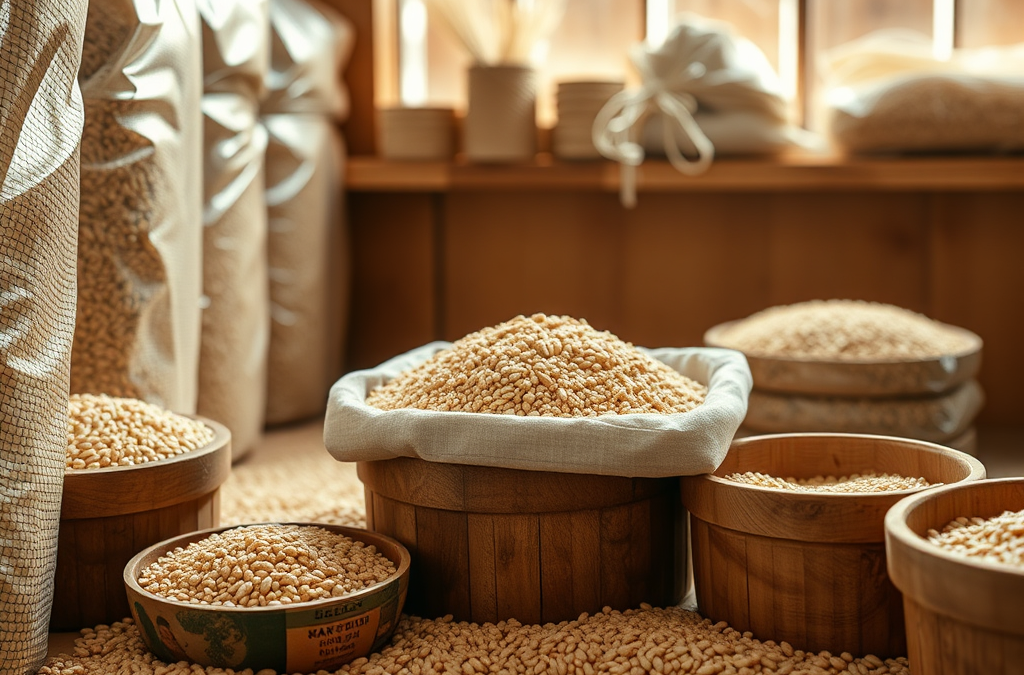
Storing grain away from light is essential to preserve its quality and extend its shelf life. Light exposure can lead to nutrient degradation and spoilage, particularly from ultraviolet rays that cause oxidation. To effectively protect grains, use opaque containers and select storage areas that are inherently dark, such as basements or windowless rooms. Additionally, maintaining low temperatures and humidity levels is crucial, as high moisture can encourage mold growth and attract pests. By implementing these strategies, you can significantly enhance the longevity and nutritional integrity of your stored grains.
Importance of Light Control in Grain Storage
Grain storage away from light is essential to prevent the degradation of nutrients and quality. Light exposure can lead to the breakdown of essential compounds, affecting flavor, texture, and overall nutritional value. For example, ultraviolet (UV) light can cause oxidation in grains, which not only diminishes their quality but can also lead to spoilage.
Furthermore, certain pests thrive in well-lit environments, making it critical to minimize light exposure. By controlling light conditions, you can significantly enhance the shelf-life of grains and maintain their nutritional integrity, which is particularly important for long-term storage scenarios.
Optimal Storage Conditions
To effectively store grains away from light, it is important to consider several environmental factors. First, choose a storage location that is inherently dark, such as a basement or a dedicated storage room without windows. This reduces the risk of light exposure and its associated degradation effects.
Moreover, temperature and humidity play significant roles in grain storage. Ideally, grains should be kept in a cool, dry environment with temperatures below 70°F (21°C) and humidity levels below 15%. High temperatures and humidity can promote mold growth and attract pests, further compromising grain quality. Using moisture-absorbing materials can help maintain optimal conditions.
Common Mistakes in Grain Storage
A frequent mistake in grain storage is using transparent containers, which allow light to penetrate and degrade the grains inside. Instead, opt for opaque or dark containers that block light effectively. Another common error is neglecting to monitor humidity levels; failing to do so can lead to spoilage or infestations.
Additionally, many people overlook the importance of cleaning storage areas before placing grains inside. Residual debris can attract pests and facilitate mold growth. Regularly inspecting stored grains for signs of spoilage or infestation is crucial to maintaining their quality.
Practical Techniques for Effective Storage
Implementing effective storage techniques can greatly enhance the preservation of grains. Start by selecting airtight containers made of materials that do not allow light penetration. Glass jars, food-grade plastic bins, or metal bins are excellent choices. Ensure these containers are sealed properly to prevent moisture ingress.
Additionally, consider incorporating desiccants or moisture-absorbing agents within the storage containers. These can help maintain low humidity levels, further protecting the grains from spoilage. Regularly check the condition of the stored grains and rotate them based on the first-in, first-out principle to ensure older grains are used before newer ones.
Frequently Asked Questions
Why is it important to store grains away from light?
Storing grains away from light prevents nutrient degradation and spoilage, enhancing their shelf-life and maintaining quality.
What are the best containers for grain storage?
Airtight containers made of opaque materials, such as glass or food-grade plastic, are ideal for preventing light exposure.
How does humidity affect grain storage?
High humidity can promote mold growth and attract pests, leading to spoilage, so it is crucial to maintain low humidity levels.
What common mistakes should be avoided in grain storage?
Common mistakes include using transparent containers, neglecting humidity control, and failing to clean storage areas before use.
How often should I check my stored grains?
Regular inspections are recommended, ideally every few months, to check for signs of spoilage or infestation.
Conclusion
Effective grain storage away from light is crucial for preserving quality and extending shelf life. By employing appropriate techniques, such as using airtight containers and maintaining optimal humidity levels, you can significantly reduce the risk of spoilage. Regular inspection and attention to environmental conditions will ensure that your grains remain fresh and nutritious for extended periods.
Get Whole Wheat Flour, Grains and Milling Supplies – CLICK HERE

Related Content
- Home Food Pantry Grain Supply: Essential Foods for Balanced Nutrition and Storage
- Best Storage Methods for Non-GMO Grains: Ensuring Quality and Longevity
- Grain Storage Without Refrigeration: Effective Methods for Long-Term Preservation
- Celebrating Whole Grains in World Cuisines
- How to Safely Store Grains with Pets in the House
Auto Amazon Links: No products found.