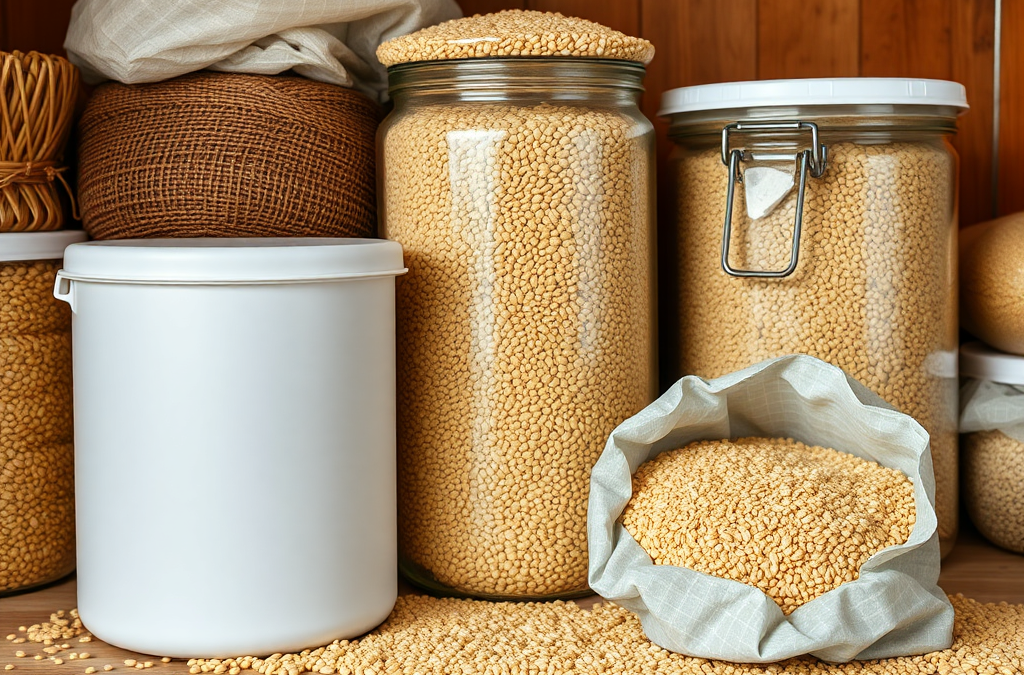
Choose grain storage materials by matching the container’s moisture barrier, seal quality, durability, and capacity to the grain, storage period, and room conditions. For most household supplies, food-grade plastic or metal containers with tight-fitting lids offer a practical balance of protection and handling, while glass works well for smaller quantities that need frequent inspection. Grain must be thoroughly dry before sealing because trapped moisture can encourage mold, spoilage, or insect activity. Avoid reused containers that held chemicals, thin bags that puncture easily, and any vessel with a damaged gasket.
Match the Container to the Grain and Storage Period
The best storage material depends first on what is being stored and how soon it will be used. A small jar of rice kept in a kitchen cabinet has different demands from a larger quantity of wheat intended for extended storage. Whole grains, flour, cracked grains, and polished rice do not behave identically: flour has more exposed surface area, while intact kernels are generally easier to inspect and protect from contamination.
Storage duration changes the priority. For grains used within weeks, a clean, tightly closed food container may provide enough protection from household humidity, odors, and insects. For supplies held for months or longer, the container needs a dependable barrier, a lid that remains secure, and construction strong enough to tolerate repeated handling. Large bins are efficient for bulk quantities, but they can make it harder to notice a small damp area or pest problem developing at the bottom.
Consider the storage environment before buying anything. A dry interior pantry is less demanding than a garage that experiences seasonal temperature swings. Warm afternoons followed by cool nights can promote condensation on or inside a container, particularly when grain was packed before it had equilibrated to the room. In a basement, elevation above the floor matters because leaks, seepage, and cleaning water can reach containers that appear safely closed.
A useful starting comparison is convenience versus protection. A lightweight food-grade bucket may be easier to move than a steel can, but its lid and gasket deserve close inspection. A glass jar makes visual checking simple, yet it is heavy and breakable. The sensible choice is the material that protects the quantity you can realistically inspect, rotate, and move without damaging the package.
Readers comparing options on how to choose grain storage materials wisely should write down the grain type, approximate amount, expected storage period, available space, and likely exposure to heat or humidity. That short inventory prevents a common mistake: choosing a container because it is inexpensive or attractive rather than because its physical properties fit the actual storage conditions.
Compare Plastic, Metal, Glass, and Flexible Packaging
Food-grade plastic is often the most versatile option for household grain storage. Rigid plastic containers are light, stackable, and available in many sizes. They are useful for flour, oats, rice, and frequently accessed portions, provided the plastic is intended for food contact and the lid closes firmly. Their weaknesses are equally practical: some lids warp, plastic can scratch during cleaning, and thin walls may offer less protection from punctures or compression than heavier containers.
Metal containers can provide a strong physical barrier and resist many forms of puncture or gnawing. A sound metal can with a secure closure is useful where rodents, rough handling, or limited shelving space are concerns. Metal does not automatically solve moisture problems, though. A poorly fitting lid, interior corrosion, or condensation can still damage the contents. Inspect seams, hinges, and closures rather than assuming that a metal exterior makes the package airtight.
Glass offers excellent visibility and does not readily retain food odors. It works particularly well for modest quantities that are opened often, such as rolled oats or specialty grains. The tradeoff is weight and breakage. A fallen glass jar can create both food loss and a cleanup hazard, so it is a poor choice on an unstable shelf or in a location subject to frequent movement.
Flexible bags are convenient for original packaging, portioning, and short-term use, but ordinary thin film is vulnerable to tears, pinholes, and imperfect closures. A bag folded or clipped shut may keep dust out while failing to block humidity or insects. Heavy multilayer packaging can perform better, but its quality depends on the actual closure and whether the package is protected from abrasion.
Do not repurpose containers that held paint, fuel, pesticides, detergents, or other nonfood substances. Washing cannot be assumed to remove every residue. Likewise, a food container with a persistent odor, cracked wall, swollen lid, or degraded gasket should be retired. Material choice is not a contest in which one substance wins for every household; it is a risk comparison involving cleanliness, seal integrity, visibility, durability, cost, and ease of rotation.
Evaluate Moisture, Seals, Pests, and Placement
Moisture control is the central test for any grain container. Dry grain placed into a container with a reliable closure is much easier to protect than grain packed while warm, damp, or exposed to humid air. A container may be described as airtight, but the practical question is whether the lid, gasket, seam, and opening remain closed after filling and handling.
Before filling, clean the container and allow it to dry completely. Do not rely on a quick wipe if water has collected in a lid channel or threaded area. Check the grain for clumping, unusual warmth, off odors, insects, webbing, or visible discoloration. These signs do not become harmless because the grain is transferred to a better vessel; sealing questionable product can conceal a problem and make inspection more difficult.
Temperature deserves attention because containers experience the conditions around them. Placing a sealed vessel against a cold exterior wall or directly on a concrete floor can expose it to temperature changes and damp surfaces. Shelving that keeps containers off the floor, away from plumbing, and out of direct sun is usually a better arrangement. Leave enough space to lift and inspect each container rather than packing bins so tightly that the back row becomes forgotten.
Seals also affect pest control, but no household container should be treated as a substitute for sanitation. Crumbs, spilled grain, and open packages nearby can attract insects or rodents even when the main bin is well closed. A practical inspection includes the container rim, lid underside, shelf corners, and adjacent food. If pests appear, isolate the affected package and examine other supplies instead of simply adding a second outer bag.
- Working signs: the lid remains evenly seated, the grain stays loose and odor-free, and the package is easy to date and inspect.
- Failure signs: condensation, recurring clumps, a loose closure, unexplained odor, insect evidence, or a container that cannot be safely moved.
A common weak assumption is that a thicker container always provides better storage. Thickness may improve durability, but it cannot correct wet grain, a damaged seal, excessive heat, or neglected rotation. The full system matters more than a single material label.
Build a Material Decision and Rotation Plan
A sensible purchase begins with the smallest reliable system, not the largest container available. Divide bulk grain into manageable quantities when practical. Smaller units limit exposure when one package is opened and make it easier to identify a problem before it spreads through a large supply. They also allow different grains or lot dates to be rotated independently.
Use this priority order when comparing containers:
- Confirm that every food-contact surface is clean, intact, and suitable for the intended use.
- Check the closure by fitting the lid fully and examining the gasket, threads, or locking points.
- Match capacity to lifting ability, shelf dimensions, and the amount consumed before quality declines.
- Choose a material that suits the main threat: breakage, pests, humidity, sunlight, or frequent opening.
- Label the grain, packing date, and any preparation or inspection notes before shelving it.
For example, a household that cooks rice weekly may benefit from a durable, easy-open plastic bin for the active supply and smaller sealed units for reserve stock. Someone storing a modest amount of wheat in a cool, dry cupboard may prefer visible glass jars if the shelf is stable and the jars are not too heavy. A garage setup may call for sturdier opaque containers placed on raised shelving, with more frequent checks for temperature and condensation.
Get Whole Wheat Flour, Grains and Milling Supplies – CLICK HERE 
Rotation is part of material selection because the best container is still a poor choice if its contents are forgotten. Put newer packages behind older ones, record what is opened, and inspect reserve containers at a regular interval appropriate to the environment. Do not repeatedly top off an old container with new grain; emptying, cleaning, drying, and checking the vessel makes it possible to find residue, insects, or damaged seals.
Budget constraints should be handled by reducing quantity or dividing purchases rather than accepting unsafe packaging. A smaller number of sound food-grade containers is preferable to a large collection of questionable reused vessels. Readers refining their grain material choices can test the system with one container first: fill it with a modest amount, label it, observe the seal and condition over time, and adjust before committing to a larger purchase.
Avoid Common Material-Selection Mistakes
The most damaging mistakes usually come from treating storage as a one-time purchase. People may select a container with a tight lid but ignore whether the grain was dry, choose a large bin that cannot be moved safely, or store the package beside heat-producing appliances. Each decision changes the conditions inside the vessel and the likelihood that a problem will be noticed.
Another mistake is confusing an odor barrier with a complete preservation system. A closed container can reduce exposure to household smells, but it does not reverse rancidity in high-fat grains or protect poor-quality product indefinitely. Brown rice, whole-grain flour, and other items with more natural oils may need more conservative quantities and rotation than dry polished rice. The appropriate material should be paired with a storage period the food can reasonably tolerate.
Buying containers without replacement parts can create a later weakness. If a gasket becomes brittle or a lid no longer seats evenly, the container may look sound while losing its protective function. Keep closures clean, avoid forcing warped lids, and replace damaged components when the design permits. If a container cannot be restored to a dependable condition, transfer the grain only after checking it carefully and use a serviceable vessel.
Ultimately, avoid placing all supplies in one location. A plumbing leak, pest event, or heat problem can affect the entire reserve. Separating active-use grain from reserve stock and keeping containers away from obvious hazards gives the household more options when conditions change. The goal is not an expensive storage display; it is a clean, inspectable, manageable barrier between dry grain and the threats surrounding it.
For a final review, ask whether each container is food-safe, dry, intact, sealable, appropriately sized, and positioned where it can be checked. That checklist is more useful than choosing by material name alone, and it keeps the selection process tied to actual household conditions.
Frequently Asked Questions
Are plastic buckets suitable for grain storage?
Food-grade plastic buckets can work well when they have intact, secure lids and are kept away from heat, moisture, and damaging chemicals. Ordinary utility buckets should not be assumed safe for food.
Is glass better than plastic for dry grains?
Glass offers visibility and resists odor retention, but it is heavier and breakable. Plastic is often more practical for larger quantities or shelves that must be accessed frequently.
Should grain be washed before it is stored?
Do not store grain wet. Washing adds moisture, so any grain that is rinsed must be thoroughly dried before packaging; otherwise, clumping and spoilage risk may increase.
Does an airtight container prevent all pest problems?
A dependable seal can limit access to the contents, but it cannot remove pests already present in the grain or nearby. Inspect the product and keep surrounding shelves clean.
How large should a grain container be?
Choose a size that can be lifted safely, fits the shelf, and will be used within a reasonable rotation period. Several manageable containers are often easier to inspect than one oversized bin.
Conclusion
Wise material selection begins with the conditions the grain will actually face. Choose food-safe construction, a closure that remains dependable, and a capacity that supports inspection and rotation. Plastic, metal, glass, and flexible packaging can each serve a purpose, but none compensates for damp grain, heat, condensation, contamination, or neglected shelves. Before buying in bulk, test one container in its intended location and watch for loose lids, odors, clumping, insects, or difficult handling. Keep containers raised from the floor, clearly labeled, and separated from likely sources of moisture and pests. A modest, manageable storage system usually offers better protection than an oversized collection of containers that cannot be checked regularly.
Get Whole Wheat Flour, Grains and Milling Supplies – CLICK HERE
Auto Amazon Links: No products found.