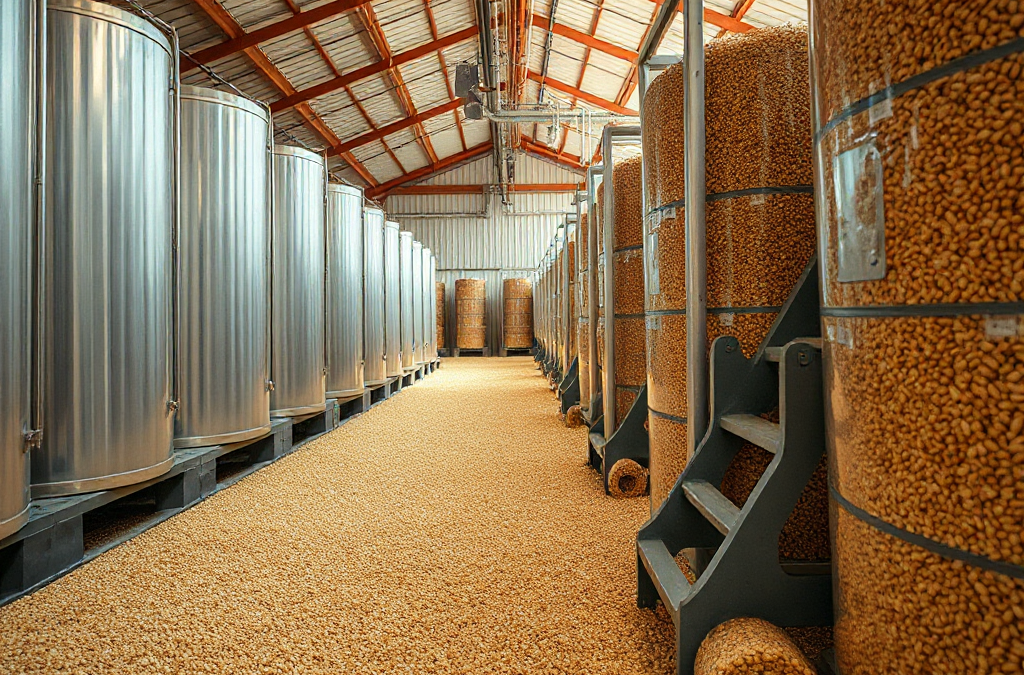
Effectively monitoring grain storage conditions means combining temperature and humidity readings with physical grain sampling, airflow checks, and documented seasonal inspections. Place calibrated sensors at representative points, watch for temperature differences that can signal moisture migration, and inspect for insects, condensation, odors, clumping, or damaged kernels. Record readings over time rather than relying on a single measurement, because a gradual change may reveal trouble before visible spoilage appears. Recheck after loading, weather shifts, aeration, or power interruptions, and investigate unusual readings promptly instead of masking them with more ventilation.
Build a Monitoring System Around Risk Signals
Reliable grain monitoring begins with identifying the conditions that can change quality: moisture, temperature, pests, oxygen exposure, physical damage, and inadequate sanitation. A sealed household container, a small pantry bin, and a farm-scale bin do not require identical routines. The container size, grain condition at loading, surrounding climate, and intended storage period determine how quickly a problem can develop and how difficult it will be to detect.
Temperature deserves early attention because grain can develop localized warm areas when moisture moves through a mass. Warm pockets may result from condensation, insect activity, microbial activity, or heat entering through a wall or roof. A single reading from the room may look acceptable while the center or edge of the stored grain is changing. Monitoring should therefore compare several representative locations rather than treating ambient temperature as a substitute for grain temperature.
Moisture is equally important, but a handheld reading is only useful when the sample represents the batch and the meter is appropriate for the grain. Grain that feels dry at the surface may contain wetter material below, especially after uneven filling or exposure to humid air. Inspecting the how to effectively monitor grain storage conditions process means checking whether sampling points reflect the whole container, not merely the easiest place to reach.
A practical monitoring plan identifies four signals:
- Trend: a reading that steadily rises or falls deserves more attention than a normal but isolated result.
- Difference: a warm wall, damp corner, or unusual layer can reveal a localized issue.
- Physical change: clumping, condensation, odor, webbing, or live insects may confirm deterioration.
- Event: loading, aeration, rain, a heat wave, or a power failure can justify an extra inspection.
The common mistake is to monitor only when a problem is suspected. Scheduled checks create a baseline, making it easier to distinguish normal seasonal movement from a developing hotspot. A small operator with limited equipment may gain more from consistent notes and representative manual samples than from an expensive sensor placed in one convenient location.
Measure Temperature, Moisture, and Airflow Correctly
Temperature, moisture, and airflow describe different parts of the storage environment, so no single instrument can replace the others. Temperature sensors show heat patterns and trends; moisture testing estimates whether grain is within a suitable condition for its storage plan; airflow checks reveal whether ventilation is actually moving air through the intended path. Combining these measurements gives a more useful picture than collecting many readings of one type.
Place temperature sensors where conditions are likely to differ: near walls, toward the center, above and below the grain mass when practical, and close to the roof or floor in larger structures. Avoid assuming that a sensor at the entrance represents the interior. In a small container, a probe taken from more than one depth may be adequate. In a larger bin, fixed cables or a systematic probe route can reduce blind spots. Compare readings at similar times when possible because daily temperature cycles can otherwise create misleading differences.
Moisture testing requires careful sampling. Stirring or sampling only the upper layer can miss wet grain beneath a dry crust. Take portions from different locations, combine them when appropriate for the test method, and follow the meter manufacturer’s instructions for grain type, temperature correction, and calibration. If results vary widely, the variation itself is a warning that the batch is not uniform. Do not average away a suspicious wet pocket before investigating why it exists.
Airflow is often misunderstood. A fan running does not prove that air is passing evenly through the grain. Blocked ducts, compacted grain, excessive fines, or a poorly sealed route can leave stagnant zones while consuming power. Compare the planned airflow direction with what the structure and equipment can actually deliver. Short aeration may reduce a surface temperature without resolving moisture deep in the mass, so follow-up measurements matter.
Choose equipment according to the decision it must support. A basic probe and moisture meter may suit short-term household storage, while remote sensors are more useful when the site is unattended or the grain volume makes manual access difficult. Digital systems still need calibration checks, battery attention, and occasional physical verification. Treat an implausible stable reading as a possible instrument failure, not proof that conditions are perfect.
Inspect the Grain, Container, and Surrounding Area
Instrument readings should be paired with direct inspection because early storage problems are not always captured by sensors. Open or sample containers safely and look for changes in texture, color, odor, flow, and cleanliness. Grain that has begun to cake may indicate moisture migration or condensation. A sour, musty, oily, or otherwise unusual odor is a reason to isolate the affected material and assess it rather than blending it into sound grain.
Check kernels for insect damage, holes, powder, webbing, shed skins, or live insects. Pest evidence can be concentrated near seams, lids, cracks, floor edges, or warmer parts of a building. Traps and visual checks can show activity around the container, but they do not prove that the grain itself is pest-free. Conversely, finding no insects during one inspection does not establish long-term protection, particularly after nearby grain or infested packaging is introduced.
The container deserves its own inspection. Examine lids, gaskets, seams, welds, vents, liners, and fittings for leaks or damage. Look for rust, rodent access, roof leaks, and condensation on the inside of the lid or wall. A food-safe container that is clean and tightly closed may work well for a modest quantity, while a large bin may require attention to aeration, unloading, structural integrity, and safe access. Airtight storage can limit later exchange with humid air, but it cannot correct grain that was loaded too wet.
Storage surroundings influence the result. Keep containers away from direct solar heating, plumbing leaks, damp floors, and areas where cleaning chemicals or strong odors could migrate. Raise containers where appropriate and leave enough space to inspect walls and seams. Do not place a cold container against a warm, humid surface without considering condensation risk.
A frequent failure mode is treating visual cleanliness as evidence of safe condition. Grain may look normal while temperature or moisture is changing inside. The reverse also matters: surface dust may be harmless handling residue, whereas a localized odor or warm area can signal a deeper issue. Compare physical observations with sensor trends and samples before deciding whether to continue, dry, aerate, segregate, or discard material.
Set Inspection Timing and Respond to Changes
Inspection frequency should increase when storage risk increases. Newly loaded grain, recently moved grain, changing weather, suspected moisture exposure, insect pressure, and long unattended periods all justify closer observation. A fixed calendar is useful, but event-based checks are more responsive because many storage failures begin after a specific disturbance rather than on a predictable date.
For routine monitoring, establish a baseline soon after loading and record the date, location, temperature, moisture result, appearance, odor, and any equipment action. Recheck after major weather changes and after aeration or cooling. Short-term storage may need less intensive documentation than a reserve intended to remain untouched for months, but even a simple log helps reveal drift. The purpose is not paperwork; it is recognizing a developing pattern while options remain available.
Respond to abnormal readings in a controlled sequence:
Get Whole Wheat Flour, Grains and Milling Supplies – CLICK HERE 
- Verify the instrument, battery, calibration status, and sampling method.
- Repeat the measurement at nearby and contrasting locations.
- Inspect for condensation, caking, pests, leaks, odors, or damaged grain.
- Identify the likely cause, such as wet loading, outside heat, airflow blockage, or condensation.
- Separate questionable grain from unaffected grain when practical, then choose an appropriate corrective action.
More ventilation is not automatically the answer. Bringing humid air into grain can add moisture, and aggressive cooling may create temperature gradients that encourage further migration. Aeration should match the equipment, weather, grain condition, and storage objective. If grain is visibly moldy, strongly off-odor, or otherwise questionable for consumption, do not rely on a sensor reading to declare it safe; consult applicable food-safety guidance and avoid using suspect material.
Consider two contrasting situations. A gradual temperature rise at the center with increasing insect evidence calls for prompt investigation of activity and distribution. A brief rise after a hot afternoon, followed by stable readings throughout the mass, may reflect heat transfer rather than spoilage. The difference is established through repeated, location-specific measurements rather than guesswork.
Use Records to Improve Storage Decisions
A monitoring log becomes valuable when it connects readings to actions and outcomes. Record the grain type, source or lot, loading date, container, initial condition, instrument used, sampling locations, weather or room conditions, and corrective steps. Consistent labels prevent a common error: comparing numbers from different locations or meters as if they came from the same batch.
Review the record for trends instead of isolated values. A stable moisture result with uniform temperatures and no physical changes supports continued monitoring. A widening difference between locations, repeated condensation, or increasing insect evidence suggests that the storage system needs intervention. The goal is not to chase every small fluctuation; it is to identify changes that have a plausible mechanism and could worsen if ignored.
Records also expose weak assumptions. If a container repeatedly shows moisture near one wall, the cause may be building temperature, a leak, or poor air circulation rather than the grain itself. If a sensor never changes despite weather and handling events, it may be poorly placed or malfunctioning. If samples are always taken from the top, the log may appear reassuring while leaving the lower portion unexamined.
Use a compact priority checklist during each review:
- Are readings comparable with previous readings from the same locations?
- Did any recent event change moisture, heat, airflow, or pest exposure?
- Do physical observations agree with the instruments?
- Is questionable material clearly separated and identified?
- Is the next inspection date tied to the current risk rather than convenience?
Technology can make records easier, but automation does not remove judgment. Alerts should be set around meaningful changes and verified against the grain, not accepted blindly. A low-cost manual system can outperform a disconnected monitoring platform when the operator samples consistently and acts on anomalies. For more storage planning, the grain storage conditions monitoring checklist should be adapted to container size, grain type, climate, and access limitations.
The best system is the one that detects change early enough to preserve choices. Monitoring cannot repair poor-quality grain at loading, eliminate every pest risk, or guarantee a safe outcome. It can, however, reveal when storage is departing from its baseline and provide evidence for a timely, proportionate response.
Frequently Asked Questions
How often should stored grain be checked?
Check soon after loading, during major weather changes, after equipment or power problems, and at a regular interval suited to the storage risk. Longer storage, uncertain initial moisture, and unattended locations warrant more frequent checks.
What temperature change suggests a possible storage problem?
A persistent rise or a meaningful difference between locations is more concerning than a brief room-temperature change. Verify the instrument and repeat readings before deciding whether moisture migration, insects, or airflow problems are involved.
Can a moisture meter alone confirm that grain is safe?
No. A meter provides an estimate from a particular sample and may miss uneven moisture, pests, odors, or quality damage. Use representative sampling, physical inspection, and appropriate food-safety judgment together.
Where should temperature sensors be placed?
Use locations that represent different risk zones, including the center, near walls, and different depths when practical. A single sensor near an opening or outside the grain may miss a localized warm or damp area.
What should be done when grain begins to clump or smell unusual?
Isolate the affected material if possible, verify readings, inspect nearby grain and the container, and investigate moisture, condensation, pests, or leaks. Do not blend questionable grain into a sound batch or assume ventilation alone will correct it.
Conclusion
Effective monitoring depends on combining measurements with observation and a written history. Establish a baseline after loading, sample more than the easiest surface, compare temperatures across locations, and inspect for caking, condensation, pests, odors, leaks, and damaged kernels. Increase attention after weather shifts, handling, aeration, or equipment interruptions. When a reading changes, verify the instrument and investigate the cause before applying a remedy; extra airflow is not appropriate for every moisture or temperature problem. Match the system to the storage scale, from a simple manual log for household containers to distributed sensors and planned sampling for larger bins. The next practical step is to label sampling points, record current conditions, and set the next inspection based on the batch’s actual risk.
Get Whole Wheat Flour, Grains and Milling Supplies – CLICK HERE
Auto Amazon Links: No products found.