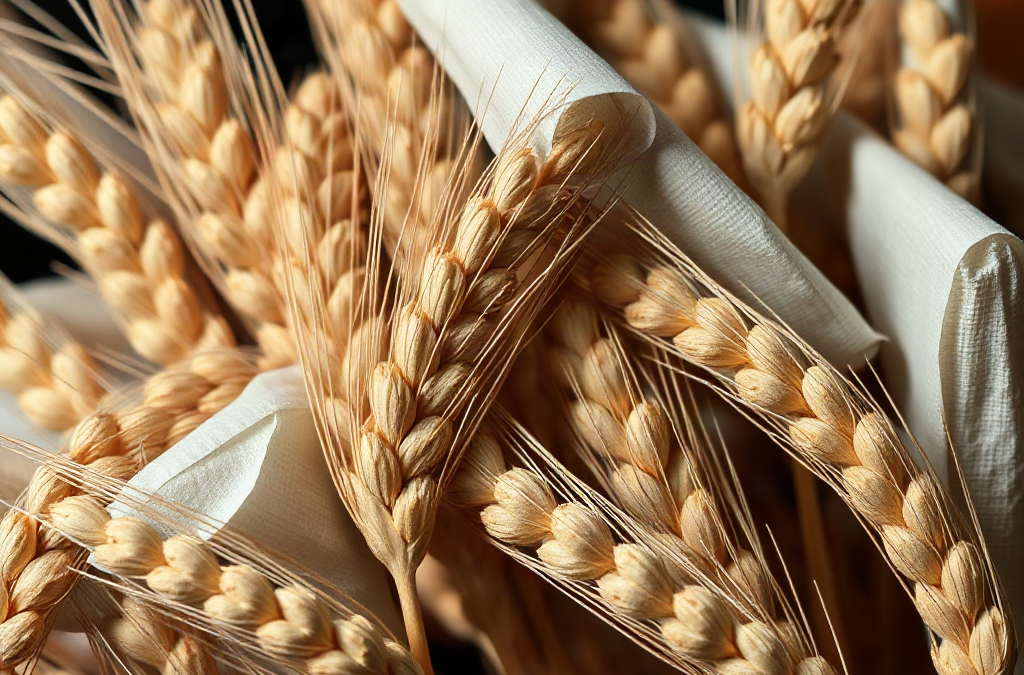
Ancient wheat varieties store well when their moisture, hull status, temperature, and intended use are matched to the storage method. Einkorn, emmer, and spelt may be kept as hulled spikelets or cleaned kernels, while khorasan wheat is generally handled as a free-threshing kernel; intact, dry grain lasts much longer than cracked grain or flour. For extended storage, verify moisture with a calibrated grain meter, use clean food-grade containers, limit oxygen and insect access, and keep the grain cool and stable. Do not seal damp wheat in an airtight container, because retained moisture can promote mold, heating, odors, and loss of seed viability.
Which Ancient Wheats Need Different Handling?
The most useful storage distinction is not whether a wheat is described as ancient, but whether it is hulled, dehulled, intact, cracked, or milled. Einkorn, emmer, and spelt are hulled wheats: after threshing, the kernel commonly remains enclosed by tightly attached husks. Khorasan wheat is generally sold as a cleaned, free-threshing kernel. These physical differences affect cleaning, packing density, pest detection, and the amount of handling the edible kernel receives before storage.
Hulled spikelets provide a physical covering that can reduce direct abrasion during handling, but the hull is not a substitute for dry, sanitary storage. Hull material occupies container space, can conceal insects, and may carry field dust or plant debris. A grower storing spelt for later processing might retain the hull to reduce handling and dehull only the quantity needed. A household buying cleaned spelt berries has a denser, ready-to-mill product, but the exposed kernels require closer protection from moisture and pests.
Dehulling must be distinguished from removing bran. Properly dehulled einkorn or emmer remains a whole grain with bran, germ, and endosperm present. Pearled or heavily polished grain has had some outer tissue removed and should not be treated as equivalent to an intact berry. Cracked grain exposes more surface area, while flour exposes vastly more. Oxygen, humidity, insects, and naturally occurring grain oils therefore have greater access to damaged or milled material.
Variety names can also create false confidence. “Ancient grain” is a broad commercial description rather than a storage grade, and grain sold under the same name may arrive with different moisture levels, cleaning quality, kernel damage, or packaging. Inspect the actual lot rather than assuming einkorn, emmer, spelt, or khorasan wheat has a fixed shelf life. Grain intended for planting also deserves separate treatment: aggressive heat, moisture, and rough handling that may be acceptable for food processing can reduce germination.
A practical intake check should identify the grain form, source lot, purchase or harvest date, intended use, and whether insects or foreign material are present. Reject or isolate grain with musty odors, visible mold, webbing, live insects, or unexplained warmth. A common mistake is mixing a questionable new lot into an established reserve; doing so can spread pests and makes it impossible to trace a quality problem.
How Do Moisture, Temperature, and Oxygen Affect Storage?
Moisture and temperature set the biological pace inside stored wheat. Damp kernels exchange moisture with surrounding air, molds become more likely under unfavorable conditions, and insects reproduce more readily in warm grain. Cool, dry, stable conditions slow these processes, but the safe result depends on the grain’s measured moisture, storage duration, local climate, and container system.
For wheat expected to remain in storage for an extended period, operators commonly aim for moisture around the low teens, often approximately 12–13 percent or lower depending on conditions and duration. That range is a working benchmark rather than a universal guarantee. Moisture meters vary by grain and calibration, and unusual kernels may not match an instrument’s standard wheat setting perfectly. Harvested grain should be sampled from several locations, because a dry surface does not rule out wetter pockets deeper in a sack or bin.
Temperature stability matters alongside the meter reading. A container filled with cool grain and then moved into a warm, humid room can experience condensation when air and container surfaces change temperature. Similar problems occur when bins sit against exterior walls or concrete floors. Elevating containers, allowing air circulation around them, and avoiding rapid transfers between temperature extremes can reduce localized dampness. Sunlight and heat sources are poor companions even when the room feels dry.
Oxygen control is useful only after the grain is adequately dry. Food-grade airtight containers, oxygen absorbers, or purpose-designed hermetic systems can suppress many insect problems by limiting available oxygen. They cannot make wet wheat safe. Sealing damp grain may trap the conditions needed for mold, heating, fermentation-like odors, and quality loss. Ordinary vacuum packaging also does not correct moisture and may not maintain a complete vacuum over long periods.
Relative humidity in the room remains relevant because grain stored in permeable sacks can move toward equilibrium with surrounding air. Cloth and paper bags may suit short holding periods in a dry, pest-controlled storeroom, but they offer little protection in a humid basement or shed. Airtight containers provide a stronger moisture barrier, although repeated opening admits fresh humid air. Divide a large reserve into smaller units so routine use does not expose the entire lot.
The failure signs are practical: clumping, condensation, a sour or musty smell, insect activity, hot spots, or kernels that feel unusually soft. Do not taste suspect grain to decide whether it is acceptable. Isolate the container and seek qualified local guidance when mold, contamination, or significant heating is present.
Choosing a Storage Method for Each Grain Form
The best container system follows the grain’s form and expected turnover. Intact kernels tolerate storage better than cracked wheat or flour because their outer layers remain largely undisturbed. Hulled spikelets may gain physical protection from the husk, yet they require more volume and can make visual inspection less reliable. No single package is equally suitable for a farmer’s seed stock, a household milling supply, and flour used every week.
| Stored form | Primary concern | Practical approach |
|---|---|---|
| Hulled einkorn, emmer, or spelt | Hidden insects, debris, and bulky volume | Clean and dry before packing; inspect representative samples inside the hull material |
| Dehulled whole kernels | Moisture entry and insect access | Use sealed food-grade containers in a cool location and divide into manageable lots |
| Cracked wheat | Faster quality decline from exposed surfaces | Store smaller quantities and rotate sooner than intact berries |
| Whole-grain flour | Oxidation and flavor deterioration | Mill in small batches; use cool or frozen storage when practical |
| Planting seed | Loss of germination and varietal identity | Keep dry and cool, label the lot clearly, and test germination before sowing |
For a household that mills flour, storing cleaned whole berries and grinding only a working quantity usually offers better quality retention than keeping a large volume of whole-grain flour at room temperature. Flour contains exposed germ oils and has far more contact with oxygen. Refrigeration or freezing can extend useful quality, but the package must resist moisture and odors. Let a sealed cold container warm before opening so humid room air does not condense on the flour.
A farm-scale operation has different constraints. Grain may need aeration, temperature monitoring, controlled drying, and attention to airflow through a bin. Hulled spelt or emmer may not move or ventilate exactly like conventional free-threshing wheat because the bulk density and air spaces differ. Equipment settings and management assumptions used for ordinary bread wheat should not be transferred blindly. Local extension guidance and equipment documentation are more dependable than improvised drying temperatures, especially when seed viability matters.
Get Whole Wheat Flour, Grains and Milling Supplies – CLICK HERE 
Use the following packing sequence for small food reserves:
- Identify the lot. Record the variety, form, supplier or field, and date.
- Check condition. Measure moisture where possible and look for odor, insects, debris, and damaged kernels.
- Select the barrier. Match the container to humidity, pests, and planned storage time.
- Pack manageable units. Smaller containers reduce repeated exposure and limit losses if one lot fails.
- Label and isolate. Keep new grain separate until it has passed an initial inspection period.
A frequent error is filling a clean container with unclean grain and assuming the lid solves the problem. Containers preserve the condition placed inside them; they do not remove field moisture, insect eggs, dust, or damaged kernels.
How Should Stored Ancient Wheat Be Inspected and Rotated?
Inspection should be based on the storage environment and the grain’s behavior, not on a shelf-life claim printed without context. Newly packed or recently harvested wheat deserves closer early observation because hidden moisture gradients and insects may become apparent after sealing. Once a lot remains cool, dry, odor-free, and stable, checks can be spaced according to local heat, humidity, pest pressure, and the reliability of the container.
Begin with the exterior. Look for condensation, lid distortion, gnawing, rust, punctures, water marks, or spilled kernels. Note the room temperature and any recent flood, plumbing leak, power outage, or seasonal humidity change. For bins and larger containers, compare temperatures at more than one point when suitable monitoring equipment is available; an isolated warm area may indicate biological activity even when the surrounding grain feels normal.
Opening every airtight package repeatedly can undermine the protection it provides. Keep inspection samples or working containers separate from long-term units. Clear containers make visual checks easier but should be protected from light, and visibility cannot reveal moisture accurately. Opaque pails or metal cans require careful labeling so contents are not forgotten. Whichever system is used, maintain a simple record of packing dates, observations, and withdrawals.
Rotation should account for processing state. Use opened containers before sealed ones, cracked grain before intact berries, and flour before unmilled grain. Hulled wheat may remain physically buffered, but it still needs periodic sampling for webbing, frass, live insects, off odors, or damp material beneath the surface. If seed is being preserved, run a small germination test before planting rather than assuming kernels that look sound are still vigorous.
Signs that the system is working include free-flowing grain, a neutral cereal aroma, no condensation, no new insect evidence, and stable readings where temperature or moisture is monitored. Warning signs include clumps, unusual softness, mustiness, visible fungal growth, insect webbing, or localized heat. Moving affected wheat into another container without finding the cause merely transfers the problem.
The strongest rotation plan connects storage with actual use. A family that mills einkorn monthly can keep one small working container and leave the remaining units sealed. A grower preserving several emmer accessions should keep each lot separately labeled to avoid mixing varieties. Buying more than can be inspected, processed, or consumed creates a larger exposure rather than a stronger reserve.
Frequently Asked Questions
Do Ancient Wheat Varieties Last Longer Than Modern Wheat?
Not automatically. Storage life is governed more by moisture, temperature, kernel damage, sanitation, and packaging than by the age or heritage of the variety.
Should Einkorn, Emmer, and Spelt Be Stored With Their Hulls?
They may be stored as hulled spikelets when properly cleaned and dried, especially before later processing. Hulls add bulk and may hide insects, so representative samples still require inspection.
Can Oxygen Absorbers Be Used With Ancient Wheat?
They can be useful with sufficiently dry grain in compatible airtight packaging. They should never be used as a remedy for damp kernels or uncertain moisture.
Is Whole Ancient-Grain Flour Suitable for Long-Term Pantry Storage?
Flour generally loses quality sooner than intact kernels because milling exposes oils and increases contact with oxygen. Store modest amounts cool, or freeze well-sealed flour when longer holding is needed.
Can Food Wheat Also Be Saved for Planting?
Possibly, if it is an identifiable viable seed lot that has not been heat-treated or damaged. Test a sample for germination and confirm that planting the variety is appropriate for the intended location.
Conclusion
Successful storage begins by identifying what is actually being packed: hulled spikelets, dehulled berries, cracked kernels, flour, or planting seed. Measure rather than guess at moisture, keep questionable lots separate, and choose containers for the humidity and pest pressure of the storage location. Whole kernels usually deserve priority for reserves, while cracked grain and flour should move through a shorter rotation.
Record the variety, grain form, source, and packing date on every unit. Check new lots closely, protect stable sealed packages from unnecessary opening, and investigate condensation, odors, insects, clumping, or warmth immediately. For farm bins, artificial drying, or seed preservation, use local extension guidance suited to the crop and equipment. The dependable approach is not a promised shelf life but a monitored system that keeps each lot dry, cool, clean, identifiable, and usable.
Get Whole Wheat Flour, Grains and Milling Supplies – CLICK HERE
Auto Amazon Links: No products found.