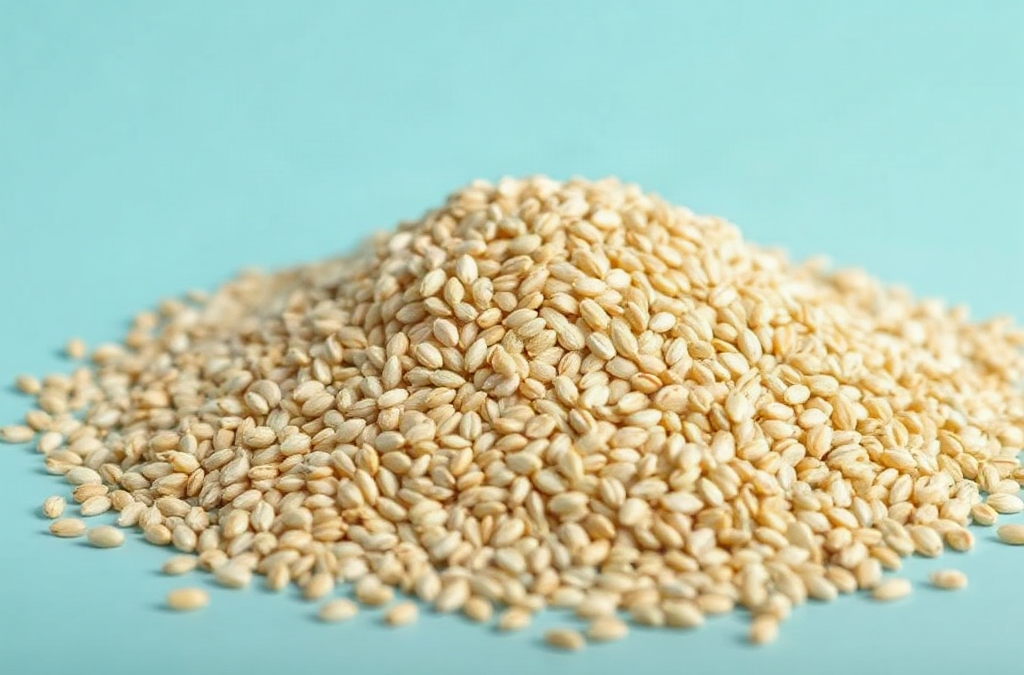
Stored batches should be labeled with a standardized grain name plus the form, variety or class when known, lot identifier, packing date, and relevant treatment status. A label such as “wheat” is too broad when hard red winter wheat, soft white wheat, and cracked wheat have different milling, cooking, and rotation implications. Keep marketing claims, supplier descriptions, and household shorthand separate from the batch’s factual identity. Durable container labels should match a batch log, remain attached when grain is transferred, and never carry an old lot number onto a refill.
What Belongs in a Stored Grain Name?
A useful grain name moves from broad identity to specific identity without claiming facts that were never documented. The common grain name comes first, followed by a recognized class, variety, physical form, or processing distinction when that information affects use. “Wheat, hard red winter, whole kernel” is operationally useful; “premium wheat” is not. Premium describes a seller’s positioning rather than the contents in a way that helps someone mill, cook, rotate, or compare the batch.
Species and market class should not be treated as interchangeable. Wheat may be sold as hard red winter, hard red spring, soft red winter, hard white, or soft white, among other descriptions. Those distinctions can influence expected baking performance and end use. Rice labels may distinguish long-grain, medium-grain, or short-grain forms, while the name may also identify a particular cultivar. Corn may be described by type or intended use. A household does not need to invent a complex taxonomy, but it should preserve the distinctions already supported by the supplier’s packaging or records.
Physical form belongs next to the name because it changes how a batch behaves. Whole oat groats, rolled oats, steel-cut oats, and oat flour all originate from oats, yet they are not interchangeable inventory entries. The same principle applies to whole corn, cracked corn, cornmeal, and flour. Processing increases exposed surface area and may change handling, preparation, and expected keeping quality. A container marked only “oats” hides information needed at the moment of use.
Variety names require restraint. A recognized variety may be worth recording when seed identity, cooking characteristics, or a specific purchase matters. A descriptive phrase such as “brown rice,” however, identifies a processing state rather than a botanical variety. Likewise, “organic” is a production or certification claim, not the grain’s species. It can be recorded in a separate field when supported by the original package, but it should not replace the underlying name.
Use a fixed naming order so labels sort consistently:
- Grain: wheat, rye, barley, oats, rice, millet, sorghum, or corn.
- Documented distinction: class, type, or named variety.
- Form: whole kernel, pearled, rolled, cracked, meal, or flour.
- Status: food grade, seed, treated seed, or another verified designation.
A common failure is identifying an unfamiliar batch by appearance. White wheat can resemble another pale kernel, and hulled grains can be difficult to distinguish after packaging is discarded. If the original identity has been lost, label the contents as uncertain and isolate them rather than assigning a confident name. Visual resemblance is not a sound substitute for provenance.
Which Details Belong on the Batch Label?
The container label should answer four practical questions: what is inside, which batch it came from, when it entered the current storage arrangement, and whether any condition limits its use. The front-facing name supports quick selection, while a compact set of traceability fields prevents two similar containers from becoming indistinguishable months later.
A batch or lot identifier is the anchor. Commercial packaging may already carry a manufacturer’s lot code; preserve it in the log and on the new label when repacking. If no usable code exists, create an internal identifier such as RYE-2026-04-A. The format matters less than uniqueness and consistent use. A date alone is weak because two purchases or packing sessions can occur on the same day.
| Label Field | What It Records | Why It Matters |
|---|---|---|
| Standardized name | Grain, class or variety, and form | Prevents substitution and preparation errors |
| Batch ID | Unique lot reference | Links the container to purchase and inspection records |
| Source | Supplier or original package reference | Preserves provenance if questions arise |
| Dates | Purchase, packing, or transfer dates | Supports rotation without confusing separate events |
| Treatment status | Verified food, seed, or treatment information | Prevents inappropriate use |
| Container number | For example, 2 of 4 | Tracks split lots and partial quantities |
Dates need explicit labels. “04/06/26” is ambiguous both in meaning and date order. Write “Packed 2026-04-06” or spell out the month. Record a best-by date only as information from the original package; do not silently convert it into a packing date or a claim that grain becomes unusable on that day. If the harvest year is known, keep it as its own field rather than assuming it from the purchase date.
Status warnings deserve conspicuous placement. Grain intended for planting may have been treated, and a seed designation should never be interpreted as proof that the contents are suitable for food. Retain original warnings and supplier information instead of shortening them into vague initials. Conversely, do not add “food grade,” “organic,” “gluten-free,” or similar claims unless the source documentation supports them and the subsequent handling has not undermined the claim.
Quantity is helpful but secondary because it changes as grain is used. An estimated starting weight belongs in the log; a current estimate may be added if inventory control requires it. The label’s durable core should remain identity, lot, dates, and restrictions. Trying to fit every purchase detail onto a small lid often produces cramped writing that nobody can read.
How Should Similar Grain Batches Be Kept Distinct?
Separate batches whenever their source, age, form, treatment status, or known storage history differs. Two buckets of hard red wheat are not automatically one batch merely because the kernels look alike. One may have been purchased three years earlier, stored under different conditions, or supplied under a different lot code. Combining them removes the ability to isolate a problem or use the older stock first.
Consider a household that buys one sack of long-grain brown rice in January and another from a different supplier in September. Pouring the later purchase on top of the earlier one creates an inventory that cannot be rotated cleanly. It also obscures which source is associated with an unexpected odor, insect activity, or cooking difference. Keeping the lots separate costs some container space, but it preserves decision value. If consolidation is unavoidable, record the new container as a mixed batch and list every contributing lot; never retain only the newest date.
Similar names can hide meaningful differences. Pearled barley has had more of the outer layers removed than hulled barley, so a generic “barley” label can lead to incorrect preparation expectations. Hard wheat and soft wheat may look similar to an inexperienced user but serve different flour applications. White rice and brown rice should remain distinct even when they share a cultivar name because their processing states differ. The label should reflect the distinction that affects handling or intended use, not merely the broadest category they share.
Use this priority check before combining or relabeling containers:
Get Whole Wheat Flour, Grains and Milling Supplies – CLICK HERE 
- Confirm the exact grain and physical form from original records.
- Compare supplier lot codes, acquisition dates, and packing dates.
- Verify that food-use and treatment statuses match.
- Review inspection notes for moisture exposure, pests, odor, or damaged packaging.
- Assign a new mixed-lot record if consolidation still makes operational sense.
Color coding can support this system, but it should never carry the meaning alone. A blue lid may indicate rice today and oats after containers are rearranged. Written labels remain interpretable without a separate legend and are more accessible to anyone unfamiliar with the color scheme. Colors work best as a secondary cue for broad groups or warnings.
Signs of failure include containers with identical names but no lot codes, labels that conflict with the inventory sheet, and partial bags placed inside buckets without recording their identities. Correct those gaps during routine inspection, while packaging and receipts are still available. Once provenance is lost, a neat new label cannot restore it.
Building a Labeling and Record System That Survives Transfers
A reliable system treats the container label and the batch record as two views of the same identity. The label supports immediate handling; the record holds details that will not fit on the container, including supplier information, original product wording, quantities, inspection notes, and a history of transfers. Either component alone is fragile. A detailed spreadsheet cannot help when the wrong bucket is opened, while a label may fade, detach, or omit the purchase trail.
Create the batch record before discarding the original sack. Copy the product name and lot code exactly, note any useful date wording, and retain a photograph or package panel if practical. Then assign the internal batch ID and apply it to every container filled from that lot. When one sack fills three containers, mark them 1 of 3, 2 of 3, and 3 of 3 under the same batch identifier. This preserves lot unity without pretending the containers are separate purchases.
Transfers should create history, not a new identity. If grain moves from a bag to a bucket and later to smaller jars, carry forward the originating batch ID and add each transfer date. Never leave the prior contents on a reusable container label. Remove or completely obscure obsolete information before applying the current label; two visible labels invite someone to select whichever one confirms an assumption.
Label material must suit the storage surface and environment. Ink that smears with handling, paper that releases from a cool container, or writing placed only on a removable lid can break the chain. Mark the container body and, when useful, duplicate the short identity on the lid. Avoid writing only on an inner liner that may be discarded. For valuable or long-held batches, placing a protected duplicate label with the record can reduce dependence on a single adhesive label.
Inspection records should use observable language. “No visible insects; seal intact” is more useful than “good.” Note unusual odor, condensation, clumping, damaged seals, or evidence of mixing without guessing at causes. If a questionable condition appears, isolate that container and preserve its batch information. Relabeling suspect grain as a different grade or intended use does not resolve uncertainty about its condition.
The system is working when a person unfamiliar with the purchase can select the intended grain, identify its source lot, find the oldest suitable container, and follow its transfer history without relying on memory. It is failing when abbreviations require explanation, dates lack labels, or the digital list contains names absent from the containers. A brief periodic reconciliation—reading each container ID against the record—is more valuable than adding decorative fields that are never maintained.
Frequently Asked Questions
Should every container have its own grain label?
Yes. Each container should carry enough information to connect it to a specific batch, even when several containers hold the same lot. Container numbers such as 1 of 3 make partial use and inspection easier to document.
Is the purchase date the same as the packing date?
Not necessarily. The purchase date records acquisition, while the packing date records when grain entered its current storage container. Keep both when they differ because each answers a separate inventory question.
Can different purchases of the same grain share one lot number?
They should normally remain separate. Different purchases may have different ages, suppliers, moisture histories, or storage exposure. Mixing them erases those distinctions and complicates rotation or isolation.
What should a label say if the grain variety is unknown?
Use the most specific identity supported by the package or supplier record, then mark the missing detail as unknown. Do not infer a class, variety, or processing method from color or appearance alone.
How should labels be handled when grain moves to a new container?
Create a new container label that preserves the original lot identity and records the transfer date. Do not rely on memory, and do not reuse an old label without fully removing the former batch information.
Conclusion
Useful grain labeling preserves distinctions that affect identification, use, and traceability without adding unsupported claims. Standardize each name by recording the grain, documented class or variety, physical form, and verified status. Pair that name with a unique batch ID, clearly described dates, source information, and container numbering when a lot is divided.
Review existing containers for broad names such as “wheat” or “rice,” unexplained dates, reused labels, and missing lot links. Correct records from original packaging rather than appearance or memory. Keep different purchases separate unless there is a clear reason to combine them, and document every contributing lot if mixing occurs. The next practical step is to choose one naming order and one batch-code format, then reconcile labels against the inventory record container by container.
Get Whole Wheat Flour, Grains and Milling Supplies – CLICK HERE
Auto Amazon Links: No products found.