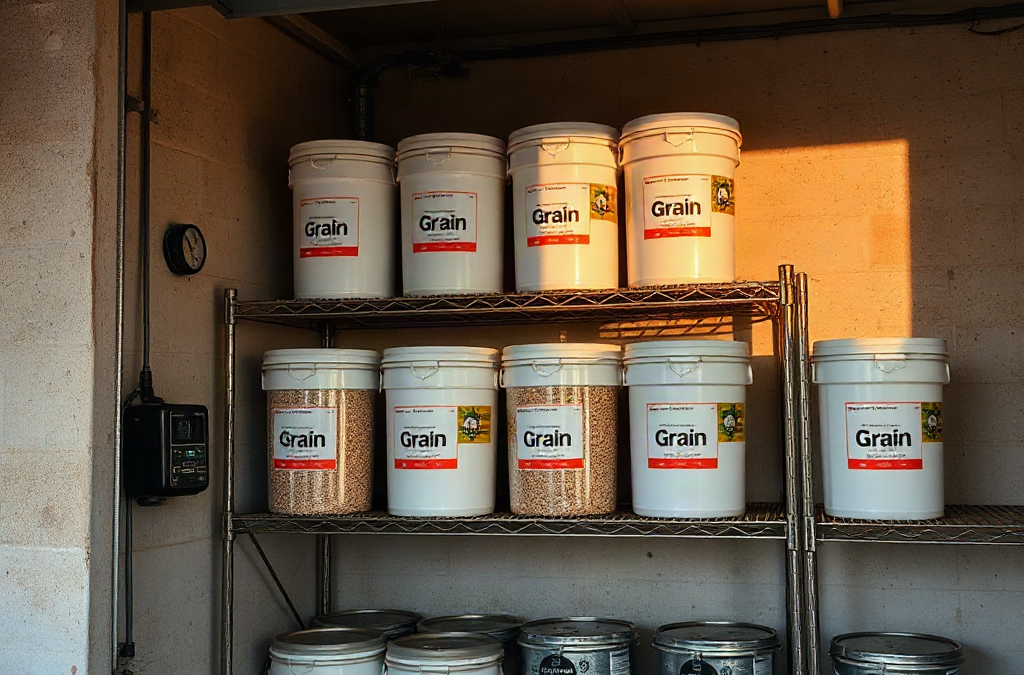
Garage grain storage temperature risks come from prolonged heat, uneven warming, and condensation when cold grain meets humid air, which can shorten storage life or create damp spots. Whole kernels generally tolerate storage better than flour, while oil-rich grains such as brown rice need closer attention during hot weather. A sealed bucket can limit moisture entry, but it cannot cool its contents or correct grain that was packed damp. Track temperatures beside the containers, avoid sun-heated walls, and let cold packages warm while still closed before opening. Move long-term reserves indoors if the garage stays hot or shows moisture problems.
What you’ll learn
This guide covers the following practical points:
- Why Summer Heat Shortens Grain Storage Life — Summer heat affects grain types differently: whole-grain flour and brown rice generally lose quality sooner than intact wheat kernels under comparable conditions.
- How Cold Grain Can Collect Condensation — Cold becomes a moisture problem when a chilled surface meets air humid enough for water to condense on it.
- Measure Conditions Where the Containers Sit — A maximum-minimum thermometer or temperature logger beside the grain gives a more useful picture than an outdoor weather report.
- When Moving Grain Indoors Is the Better Choice — Move grain indoors when sustained garage heat, repeated dampness, or unreliable packaging makes the space difficult to manage.
Why Summer Heat Shortens Grain Storage Life
Summer heat affects grain types differently: whole-grain flour and brown rice generally lose quality sooner than intact wheat kernels under comparable conditions. Their oils are a concern, and milling exposes more of a grain’s contents to the surrounding environment. A garage that works for a small, frequently replaced supply of wheat may be a poor choice for a year’s supply of whole-grain flour.
Warm conditions speed chemical changes that produce stale or rancid flavors. They can also favor stored-grain insect activity. Mold is a separate concern that requires enough available moisture; a hot afternoon does not, by itself, mean that dry grain has become moldy or unsafe.
Duration matters alongside peak temperature. Grain kept warm through an entire summer has a different exposure history from a bucket that briefly warms during a move. There is no single garage temperature that establishes a reliable shelf life for every grain, moisture level, and package.
Airtight does not mean temperature-controlled. A food-grade bucket protects against some outside hazards, but its contents eventually respond to sustained surrounding heat. Oxygen absorbers do not provide cooling. Avoid assigning an indoor shelf-life estimate to grain stored beside a sun-heated garage wall.
How Cold Grain Can Collect Condensation
Cold becomes a moisture problem when a chilled surface meets air humid enough for water to condense on it. Think of a cold drinking glass brought into a warm room: the water comes from the surrounding air, not through the glass.
A sealed grain container brought indoors after freezing weather may develop droplets outside. Those droplets do not automatically mean the grain inside is wet. Opening the container while its contents are still cold, however, admits warm indoor air that may leave moisture on the grain or inner surfaces.
Keep the package closed while it warms toward the temperature of the room where you will open it, and dry the outside before removing the lid. A large bucket’s center can remain cold after its surface feels warmer, so a fixed waiting time is unreliable. Smaller working containers are easier to manage than repeatedly moving and opening a large reserve bucket.
Temperature swings do not create water inside a truly sealed package. Existing moisture can nevertheless redistribute between warmer and cooler areas, especially in larger masses. Grain packed too damp remains a concern even under an intact lid. Do not use winter cold as evidence that a questionable batch has been dried or made suitable for storage.
Measure Conditions Where the Containers Sit
A maximum-minimum thermometer or temperature logger beside the grain gives a more useful picture than an outdoor weather report. Place it at container height, out of direct sunlight, and check the spots you could realistically use. A shelf near the roof or a west-facing wall may experience conditions unlike those near an interior wall.
Record conditions during hot afternoons, overnight cooling, and seasonal changes. A single mild-day reading cannot establish that a garage will work through summer. Air readings also do not equal grain temperatures: the center of a full container warms and cools more slowly.
- Compare locations: Check the current garage shelf against an available indoor cupboard or closet.
- Inspect the surroundings: Look for roof leaks, damp walls, direct sunlight, and nearby heat-producing equipment.
- Check packaging: Examine lids, gaskets, seams, and any signs of water entry or pest damage.
- Match the grain: Follow supplier storage directions and confirm that bulk grain is suitable for the intended storage period.
For an illustrative comparison, suppose the garage reaches 95°F (35°C), while an indoor cupboard stays near 70°F (21°C). That difference favors the cupboard for long-term reserves, even if both locations feel dry. These are example readings, not a safe-versus-unsafe boundary.
Get Whole Wheat Flour, Grains and Milling Supplies – CLICK HERE 
A humidity meter adds context, but room humidity does not establish the moisture content of grain already inside a bucket. If bulk grain’s condition is uncertain, ask the supplier or a cooperative extension grain specialist about appropriate testing rather than guessing from how the kernels feel.
When Moving Grain Indoors Is the Better Choice
Move grain indoors when sustained garage heat, repeated dampness, or unreliable packaging makes the space difficult to manage. If indoor room is limited, prioritize whole-grain flour, brown rice, and supplies intended to remain unopened longest. A smaller garage supply that turns over quickly is a different commitment from several years of reserves.
Insulation can slow temperature changes, but it does not remove heat. An insulated cabinet may delay warming during a hot afternoon without staying cool through a prolonged heat wave. A dehumidifier addresses air moisture, not grain cooling, and releases heat into the room. Ventilation is useful only when incoming air is suitable; bringing humid air across cold containers can make conditions worse.
Use sound, food-grade containers on sturdy raised shelving, away from sunlight and places where water collects. Avoid storing grain alongside gasoline, pesticides, or solvents; temperature control does not address those separate contamination concerns. Label each batch with its contents and packing date so that rotation follows actual stock rather than memory.
Watch for leaks, damp clumps, unexpected warmth within the grain, insects, or unusual odors. Stop using a suspect batch and keep it separate while seeking guidance from the supplier or a qualified food-safety or extension professional. Do not taste questionable grain to judge it. Suspected mold or chemical exposure needs more than a move to a cooler shelf, and normal appearance alone cannot establish safety.
Frequently Asked Questions
Does freezing weather ruin dry grain stored in a garage?
Cold alone is generally less concerning for dry food grain than moisture during warming. Inspect containers for damage, and let chilled packages warm while closed before opening. Outdoor winter temperatures should not be treated as a validated insect-control process.
Are metal containers better than plastic buckets for temperature control?
Neither material provides meaningful cooling by itself. Metal responds quickly to surrounding temperatures, while a plastic bucket still warms during sustained heat. Food suitability, sound seals, pest resistance, and storage location matter more than choosing either material as insulation.
Can oxygen absorbers make a hot garage suitable for long-term grain storage?
No. Oxygen absorbers change the atmosphere inside suitable sealed packaging; they do not lower temperature or remove excess grain moisture. Use them only with products and packaging appropriate for that method, following reliable product-specific storage instructions.
Must grain be discarded after one unusually hot day?
One hot day does not establish that dry grain must be discarded. Consider the product, exposure duration, package condition, and any evidence of moisture or contamination. Move it to better conditions, but seek qualified guidance if its condition is questionable.
Can a fan keep garage grain cool enough?
A fan can move air but cannot cool grain below the temperature of that air. It may help when cooler, suitably dry air is available. It cannot replace a cooler storage location during sustained hot weather.
Conclusion
Judge the garage by measured conditions and the grain you actually keep there, not by how cool it feels when you walk through. Compare its hottest storage spot with an indoor alternative, protect cold containers from humid air during opening, and give vulnerable products the coolest available space. If heat or dampness remains difficult to control, reduce the garage supply instead of relying on heavier packaging to solve the problem.
Get Whole Wheat Flour, Grains and Milling Supplies – CLICK HERE
Auto Amazon Links: No products found.