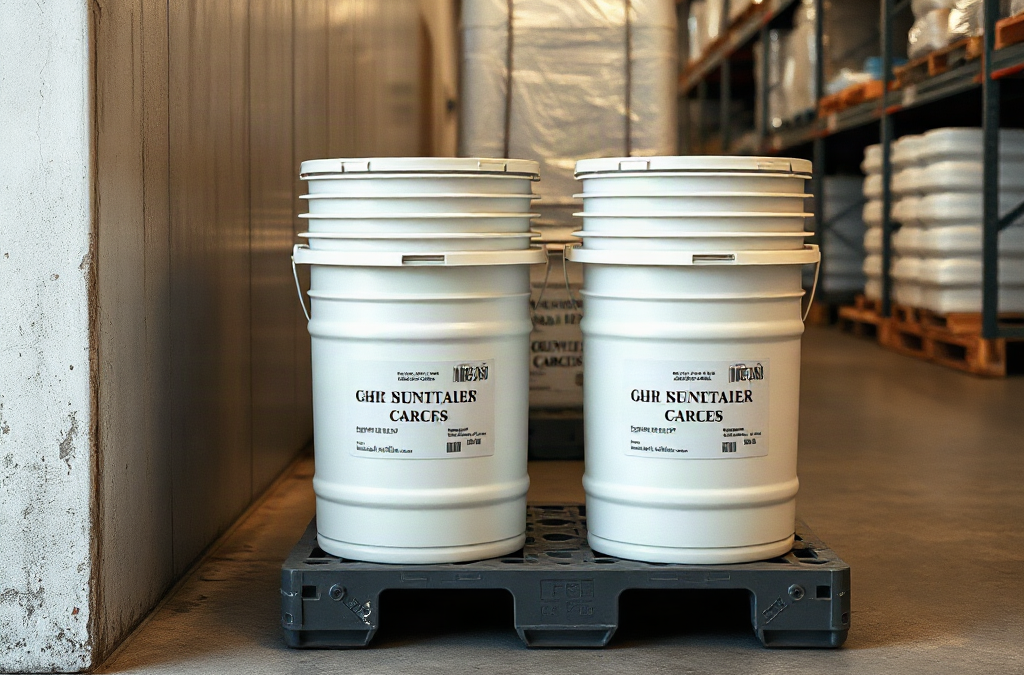
Grain containers elevated off floors are easier to keep clear of floor dampness and inspect for leaks or pests, provided their supports are stable and leave usable cleaning space. Check four things before filling the area: a dry location, enough under-container clearance, support rated for the full load, and room to inspect and remove each container. Use washable shelving or a clean pallet that supports the container bases rather than balancing them across wide gaps. An air gap does not stop condensation, exclude rodents, or make a flood-prone room suitable for grain. Keep containers sealed, and fix recurring moisture before adding more storage.
What you’ll learn
This guide covers the following practical points:
- Choose Clearance for Cleaning, Not Just an Air Gap — Useful clearance lets you reach the floor beneath the containers without unloading the entire supply.
- Match Supports to Filled Container Weight — Choose shelving or pallets by their rated load and how they support each container’s base.
- Four Placement Checks Before Loading — Test the arrangement with an empty container before committing the whole supply.
Choose Clearance for Cleaning, Not Just an Air Gap
Useful clearance lets you reach the floor beneath the containers without unloading the entire supply. Measure your broom, vacuum attachment, or mop against the lowest shelf brace or pallet opening—not just the height of the platform. A raised surface with blocked openings may leave spilled kernels just as difficult to remove as containers sitting directly on the floor.
Choose the location before choosing the platform. Look for water marks, damp edges along walls, nearby plumbing, and routes that rainwater or appliance leaks could follow. A low stand may separate buckets from routine floor cleaning, but it should not be treated as protection against flooding.
Cold floors also need a more careful reading than “concrete makes grain damp.” Moist room air can leave condensation on a surface cold enough for water to collect. A sealed, intact container does not simply absorb moisture through its base because it touches concrete. Elevation may separate that base from a wet surface, but it does not control room humidity or dry grain that was packed too damp.
Keep enough space beside the support to see beneath it. If damp patches keep returning, investigate the moisture source rather than raising the containers another few inches. The useful result is a dry, reachable floor—not merely a visible gap.
Match Supports to Filled Container Weight
Choose shelving or pallets by their rated load and how they support each container’s base. A rack that holds empty buckets neatly may be unsuitable once those buckets contain grain. Check the manufacturer’s shelf rating, total rack limit, assembly instructions, and any anchoring requirements before loading it.
For an illustrative calculation, suppose four containers each hold 35 pounds of grain and each empty container weighs 2 pounds. Their combined weight is 4 × (35 + 2) = 148 pounds, before adding trays or other stored items. Compare that figure with the rating for the shelf actually carrying them, not just the rack’s total capacity. Follow any requirement for evenly distributed loading; concentrating the weight over a few narrow contact points is a different arrangement.
Washable shelving often suits a small household supply because individual containers remain easy to reach. A low plastic pallet can suit a larger floor-level group, but its openings may trap kernels or limit cleaning access. Wooden pallets need a known, clean history and careful inspection for splinters, dampness, odors, and damaged boards. Do not bring a questionable pallet indoors simply because it is free.
Check the contact surface as well as the weight rating. Wide gaps between slats may leave part of a plastic bucket or tote unsupported; consult the container maker’s guidance where needed. Avoid makeshift stacks of loose blocks or scrap boards. Keep heavier containers low enough to remove comfortably, and do not assume that a lid designed to seal a bucket is also approved to carry another full bucket.
Get Whole Wheat Flour, Grains and Milling Supplies – CLICK HERE 
Four Placement Checks Before Loading
Test the arrangement with an empty container before committing the whole supply. Open its lid, reach its handle, and follow the path you will use to lift it out. A layout that requires moving several full buckets to reach one at the back makes routine inspection harder than it needs to be.
Use these four checks when setting up the space or changing the container arrangement:
- Dry location: Check the floor, wall edges, and nearby pipes for recurring moisture before placing the support.
- Cleanable clearance: Pass your actual cleaning tool underneath and confirm that braces or pallet pockets do not block it.
- Supported load: Add the filled container weights, check the relevant ratings, and confirm that bases sit securely without rocking or overhanging.
- Inspection and removal access: Leave room to see container bottoms, read labels, check lids, and remove each container without an awkward lift.
After loading, look for shelf bowing, shifting supports, or distorted container bases. Unload any affected area before investigating. During later checks, remove spilled grain and look for wet marks, rust on metal containers, gnawing, or droppings. Height is not a pest barrier, and a tidy-looking front row can hide trouble behind it.
Frequently Asked Questions
How high should household grain containers be raised?
Allow enough space for your cleaning tool to reach underneath and for you to inspect the floor. Measure beneath the lowest obstruction, including shelf braces. Commercial storage may have specific clearance requirements, so check the rules that apply to that facility.
Can sealed grain buckets sit directly on concrete?
Concrete contact alone does not mean moisture will enter an intact, sealed bucket. The practical concerns are standing water, damp surfaces, hidden spills, and poor inspection access. A suitable raised support makes those conditions easier to spot and manage.
Are wooden pallets suitable for elevating grain containers?
A sound wooden pallet with a known, clean history may be usable beneath sealed containers. Avoid pallets with unknown prior cargo, odors, visible mold, protruding nails, or damaged boards. Also check that the slat spacing supports the container bases.
Will raising grain containers keep mice away?
Do not count on elevation for rodent protection. Keep lids secure, remove spilled kernels, and check the surrounding area for entry points and pest activity. A raised platform mainly improves access for cleaning and inspection.
Can full grain buckets be stacked on a raised shelf?
Only stack them when both the container manufacturer’s stacking guidance and the shelf’s load limits allow that arrangement. Include every filled bucket in the load calculation. If the limits are unclear, avoid stacking until you can confirm them.
Conclusion
Choose a dry location first, then fit the support to the filled weight and your cleaning tools. Before loading everything, test whether you can inspect and remove each container without rearranging the supply. Keep the setup simple enough to maintain: reachable floor space and sound supports are worth more than extra height that makes heavy buckets harder to handle.
Get Whole Wheat Flour, Grains and Milling Supplies – CLICK HERE
Auto Amazon Links: No products found.