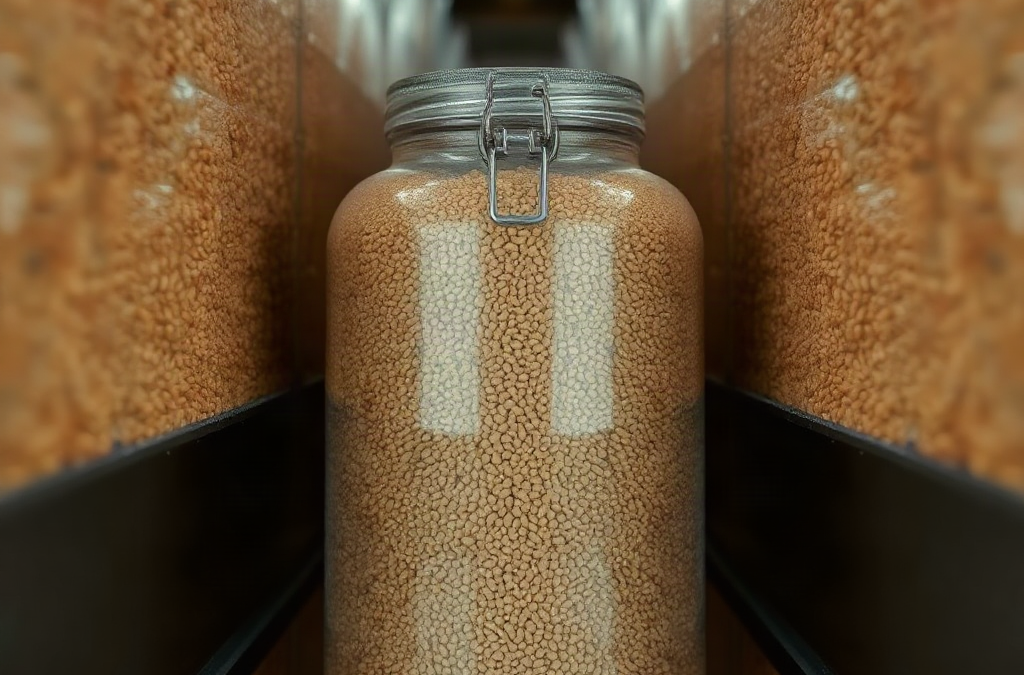
Condensation inside grain containers forms when warm, moisture-bearing air or grain meets a surface cold enough to reach the dew point, turning water vapor into droplets. Common triggers include packing grain before it has cooled, moving a container between warm and cold locations, sealing humid air inside, and temperature differences between the center and walls. The resulting moisture may collect under the lid, run down the sides, or dampen the upper grain layer, encouraging mold, caking, insects, and loss of quality. Check grain dryness, container temperature, seal condition, and storage-room humidity before repacking, and discard visibly moldy or foul-smelling grain rather than drying it for food use.
How Temperature and Dew Point Create Water Droplets
Condensation is a temperature-and-humidity event rather than evidence that a container is manufacturing water. Air between the kernels contains water vapor. When that air contacts a colder lid or wall and cools to its dew point, some vapor becomes liquid. The same process fogs a cold drinking glass, but inside a grain container the droplets can remain hidden until they dampen the food.
A tightly closed container can develop condensation even when rain, plumbing leaks, and ground moisture are absent. Consider a bucket filled in a warm kitchen and placed overnight on a cold concrete floor. The bucket wall and the grain near it cool first, while the center retains heat longer. Humid air trapped in the headspace reaches the chilled lid or sides, and droplets appear on those surfaces. A metal can changes temperature faster than a thick plastic bucket, but either can condense water when the temperature difference is sufficient.
Seasonal cycling produces a similar effect. Containers in garages, sheds, barns, trailers, and unconditioned basements may warm during the day and cool sharply after sunset. Repeated cycles move vapor and create multiple opportunities for it to condense. A sealed package reduces exchanges with outdoor humidity, but it does not remove moisture already present in the grain or headspace. Airtight and dry are not interchangeable descriptions.
The location of the droplets offers a useful clue. Moisture concentrated beneath the lid often points to warm interior air meeting a cold top surface. Wetness along one wall may correspond to a cold exterior wall, an air-conditioning vent, or direct contact with masonry. Water beneath the container could instead come from floor seepage or an external spill. Before blaming the seal, dry the exterior and inspect whether the moisture reappears inside, outside, or both.
A common mistake is assuming a warmer room will solve the issue. Rapid heating can intensify vapor movement, particularly if cold grain is brought indoors and opened immediately. Let a sealed container approach room temperature before opening it. That does not correct grain that was packed too wet, but it limits the chance that humid room air will enter and condense on cold kernels.
Where the Moisture Comes From
Stored grain and trapped air are usually the first moisture sources to investigate. Kernels naturally contain water, and they exchange moisture with surrounding air until conditions move toward equilibrium. Grain that feels dry to the hand may still contain more water than is appropriate for its intended storage period. Touch is a poor measurement because the difference between suitably dry grain and risky grain may not be obvious.
Freshly harvested, home-dried, or recently cleaned grain deserves particular attention. Drying may be uneven: kernels at the edge of a tray can be dry while a deeper portion retains moisture. Mixing those portions and sealing them immediately allows moisture to redistribute. Warm grain also carries warm air into the package. Cooling it in a dry, protected environment before sealing reduces both heat and headspace humidity.
Packaging conditions matter as well. Filling containers on a humid day can trap moisture-bearing air, especially when a large headspace remains. Repeatedly opening a bucket in a damp room replaces its interior air with room air. Moisture can also enter through a damaged gasket, a lid that is not fully seated, a pinhole in an inner liner, or a material that is not an effective vapor barrier. Desiccants may help manage small amounts of residual humidity, but they are not a substitute for adequately dried grain or sound packaging.
External water must be ruled out separately. A roof leak, sweating pipe, damp masonry wall, or flooded floor can wet a package from the outside. Some fiber-based sacks and cartons readily transmit moisture, while plastic containers may retain water around lid channels or beneath their bases. Elevating containers on shelving or a pallet helps distinguish floor moisture from internal condensation and limits direct thermal contact with concrete.
Use a grain moisture meter when storing home-produced or uncertain grain, and follow crop-specific storage guidance rather than applying one moisture target to every kernel. Wheat, corn, rice, oats, and other grains differ in structure, oil content, expected storage life, and safe handling requirements. Meter accuracy can also vary by crop, temperature, calibration, and sample preparation. A representative sample is more informative than a reading from a handful taken only from the top.
Readers investigating What causes condensation inside grain containers should separate three questions: Was the grain dry enough, was it cool enough when sealed, and has outside moisture crossed the package? Treating every droplet as a lid failure can leave the actual moisture source untouched.
Why Moisture Migrates Through Stored Grain
Temperature differences can move air and water vapor through the spaces between kernels. Grain is not a solid block; its pore spaces form pathways for slow air circulation. When one part of a container is colder than another, denser cool air sinks while warmer air rises. This internal circulation can transport moisture even though the container never moves and remains closed.
During cold weather, grain near the outer walls cools before grain near the center. Air can descend beside the colder wall, travel inward near the bottom, warm as it passes through the central mass, and rise. Moisture may then accumulate near the colder upper region. The precise pattern varies with container size, grain depth, temperature exposure, and airflow paths, but the practical result is unevenness: a generally dry batch can develop a damp pocket or crust near the top.
Warm-weather reversals can change the circulation direction and shift the vulnerable area. This is why checking only the visible top surface is useful but incomplete. Large bins are especially susceptible to temperature gradients, though smaller household buckets can experience the same mechanism when placed against a cold wall, under direct sun, or on bare concrete. A clear container may reveal droplets, but light exposure and material limitations make transparency an imperfect storage solution rather than a monitoring strategy by itself.
Moisture migration differs from water entering through a leak. Leakage tends to correspond with a failed seam, lid, puncture, or wet exterior area. Migration often creates localized dampness without an obvious breach, particularly after weather changes. It also differs from normal kernel respiration. Grain, insects, and microorganisms can produce heat and water vapor through biological activity, but noticeable heating or musty odor suggests deterioration is underway rather than harmless condensation alone.
Examine more than the container wall. Clumped kernels, a hardened surface layer, discoloration, webbing, insects, musty or sour odors, and warmth in the grain mass all raise concern. Mold may develop below the visible surface, and some hazards cannot be judged reliably by appearance or smell. Washing, cooking, or blending questionable grain with sound grain should not be treated as a dependable correction.
The weak assumption is that a few droplets are harmless because the bulk still looks dry. Water concentrated in one zone can create a much wetter local environment than an average measurement suggests. Inspect the top, center, edges, and bottom when the package can be opened safely, and keep suspect material separate from unaffected stock while deciding whether it remains suitable for use.
How to Diagnose and Correct the Problem
Diagnosis should begin before the container is moved, warmed, or opened. Note where it has been sitting, recent temperature changes, contact with floors or walls, sunlight exposure, and whether nearby packages show the same pattern. Photograph the droplet location if useful. Moving the container immediately can redistribute water and erase clues about whether the cold surface, lid, or an external leak was responsible.
Get Whole Wheat Flour, Grains and Milling Supplies – CLICK HERE 
Use the following compact inspection sequence:
- Check outside first: Look for roof leaks, pipe condensation, wet shelving, floor seepage, lid-channel water, cracks, and punctures.
- Compare temperatures: Note whether the container wall, room, and grain feel markedly different; use clean, suitable instruments when available.
- Open carefully: Inspect the underside of the lid and the upper layer without stirring moisture through the batch.
- Sample beyond the surface: Check representative areas for dampness, clumps, abnormal warmth, insects, discoloration, and odor.
- Decide by condition: Separate sound grain from questionable stock only when cross-contamination can be avoided.
If droplets are limited to the lid, the grain tests appropriately dry, and there are no spoilage signs, moving the container to a stable, dry location and repacking after temperatures equalize may be reasonable. Use a clean, fully dry food-grade container with an intact closure. Do not pour grain into a replacement package while either the kernels or container is visibly wet.
Grain that is merely above the intended moisture condition but remains otherwise sound may sometimes be dried using a crop-appropriate method before repacking. Drying requires controlled airflow, clean equipment, protection from pests, and verification rather than guesswork. Household ovens can heat unevenly or alter seed viability and food quality. Sun drying can expose grain to humidity, debris, animals, and nighttime rewetting. The appropriate method depends on the crop, volume, end use, and ability to measure the result.
Discarding is the safer choice when grain is visibly moldy, persistently musty, slimy, unusually discolored, or affected by an unknown liquid. Heated or heavily infested grain also needs cautious handling. Do not lean over a large container and inhale dust or mold spores. Commercial quantities, significant self-heating, or widespread spoilage warrant advice from a local agricultural extension service or grain-storage professional.
A frequent failure mode is wiping the lid and resealing the same package. That removes visible water but leaves wet grain, warm air, a temperature gradient, or a leaking seal in place. A useful diagnosis of What causes condensation inside grain containers must identify both the water source and the surface cold enough to collect it.
Preventing Condensation During Packing and Storage
Prevention depends on dry grain, temperature stability, and packaging that limits water-vapor entry. Start by confirming that the grain is suitable for the planned storage duration. Crop-specific guidance matters because a condition acceptable for short holding may be unsuitable for long storage. If grain has been dried or warmed, let it cool in a clean, low-humidity setting before sealing it.
Choose food-grade containers designed for the intended use, and inspect every lid, gasket, seam, and liner. The package should be clean and completely dry. Oxygen absorbers address oxygen in properly sealed dry foods; they do not dry wet grain and should not be treated as condensation control. Desiccants absorb some vapor, but their capacity is finite. Neither product compensates for sealing a damp batch.
Storage placement often determines whether a sound package remains stable. Keep containers away from exterior walls, hot appliances, heating ducts, direct sunlight, and areas with large day-to-night swings. Elevate them above concrete floors and leave enough clearance for inspection. Conditioned indoor space is generally preferable to an unconditioned garage or shed, provided the location is dry, clean, and protected from pests.
Large reserves and frequently used supplies benefit from different handling. A large long-term container should remain sealed and stable, while a smaller working container can be opened for routine use. This arrangement limits humid-air exchange and reduces the number of thermal cycles affecting the main supply. Label packages with grain type, packing date, source, and any drying or moisture information so that a later problem can be traced rather than guessed at.
Inspect after abrupt weather changes, relocation, flooding, HVAC failure, or any event that could alter temperature or humidity. Signs that prevention is working include dry inner surfaces, free-flowing kernels, stable odor, no unexplained warmth, and intact packaging. Repeated lid droplets, recurring clumps, changing odor, insect activity, or a package that warms independently of the room indicate that the cause has not been corrected.
Zero temperature variation is unrealistic in most homes. The practical objective is to avoid rapid, repeated swings and cold contact points while keeping the grain appropriately dry. Monitoring cannot make unsuitable grain safe, but it can reveal a developing moisture pattern before the entire container is affected.
Frequently Asked Questions
Does condensation mean the container is leaking?
Not necessarily. Condensation can form in an intact sealed container when moist interior air reaches a cold wall or lid. Inspect the exterior, seams, gasket, and storage area to distinguish a leak from internal moisture movement.
Can oxygen absorbers stop condensation?
No. Oxygen absorbers remove oxygen from a suitable sealed package; they do not remove enough water to correct damp grain. Dryness and stable storage temperature must be established separately.
Should grain containers be stored directly on concrete?
Direct contact is best avoided because concrete can be cold or damp and can create a strong temperature difference at the container base. Use sound shelving or a clean pallet and retain access for inspection.
Can condensed water be wiped away and the grain resealed?
Wiping the surface is insufficient unless the grain is confirmed sound and appropriately dry, the package is dry, and the temperature or leakage problem has been corrected. Otherwise, the droplets are likely to return.
Is grain safe if condensation appears only under the lid?
Droplet location alone cannot establish safety. Check for damp kernels, clumping, abnormal heat, insects, discoloration, and musty or sour odors, and discard grain showing spoilage rather than relying on cooking to correct it.
Conclusion
Condensation is a warning that moisture, temperature, and packaging conditions are out of balance. First determine whether water originated in the grain, entered through the closure, or collected because a cold surface reached the dew point. Then inspect representative portions of the contents instead of judging only the lid.
Prioritize crop-appropriate dryness, cooling before sealing, intact food-grade packaging, and a location protected from concrete contact and abrupt temperature changes. Wiping away droplets without correcting those conditions is only a temporary cosmetic fix. If the grain is moldy, abnormally warm, foul-smelling, heavily clumped, or affected by an unknown liquid, keep it out of food use. For large volumes or uncertain moisture readings, seek crop-specific direction from an agricultural extension or qualified grain-storage professional before repacking.
Get Whole Wheat Flour, Grains and Milling Supplies – CLICK HERE
Auto Amazon Links: No products found.