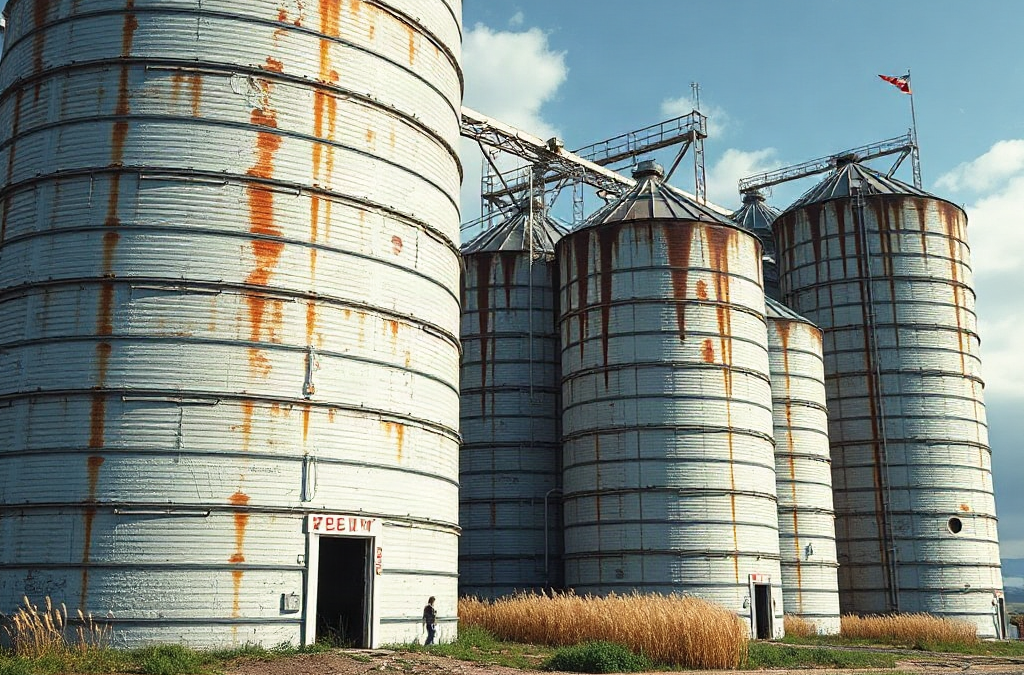
Abandoned grain silo hazards near stored food areas include structural collapse, combustible or contaminated dust, animal infestation, mold-laden debris, and water runoff that can reach food buildings or packaging. Keep people out of the silo, restrict the surrounding area, and move intact food stocks away from visible dust, falling material, pests, or drainage paths when this can be done safely. Do not enter to investigate odors, blockages, or remaining grain because oxygen deficiency, toxic atmospheres, engulfment, and unstable components may be hidden. A qualified structural or environmental professional should assess the structure, while questionable food should remain isolated pending guidance from the appropriate food-safety authority.
What Makes an Abandoned Silo Dangerous?
An unused silo can remain hazardous long after grain handling stops. Corrosion, failed foundations, deteriorated concrete, missing roof panels, unsecured ladders, and weakened discharge equipment may progress without routine inspection. A wall or attached conveyor can appear stable from one side while connections, reinforcing steel, or support legs are failing elsewhere.
Residual grain creates a second layer of risk. Material left inside may bridge across an empty space, adhere to a wall, ferment after water intrusion, or release dust when disturbed. A person who enters can encounter engulfment, oxygen deficiency, harmful gases, unstable crusted grain, or falling components. Opening a hatch does not make the atmosphere safe, and an ordinary dust mask does not address low oxygen or unknown gases.
Fire and explosion potential must also be treated seriously. Fine grain dust can burn rapidly when dispersed and exposed to an ignition source. Old motors, damaged electrical conductors, hot work, smoking, and improvised lighting can provide ignition. By contrast, damp, compacted debris may be less likely to become airborne but more likely to support mold, decomposition, insects, or rodents. Neither condition is a reason for untrained entry.
A common mistake is assuming that abandonment means the original confined-space and grain-handling hazards have disappeared. Deterioration often adds uncertainty instead. Internal ladders may no longer carry weight, access covers may fail underfoot, and animals may have damaged wiring or nested near combustible debris.
People responsible for nearby food should treat the structure as an uncontrolled industrial hazard rather than an empty farm building. Prevent entry, keep vehicles and routine foot traffic away from visibly compromised walls or attachments, and arrange an exterior assessment by a qualified professional. If movement, falling debris, smoke, fire, or a strong chemical or decomposition odor is present, withdraw from the area and contact local emergency services rather than attempting a closer inspection.
How Can Silo Deterioration Affect Stored Food?
Food does not need to be inside the abandoned silo to be affected by it. Wind, drainage, pests, shared ventilation, and vehicle movement can carry material from the structure into an active storeroom, loading area, or packaging space. The actual risk depends on the pathway between the silo and the food, not merely the distance separating them.
Wind can move dust, rust flakes, insulation fragments, dried droppings, or moldy plant material through open doors and air intakes. Stormwater can wash decayed grain and animal waste toward a warehouse threshold, wellhead, or low storage room. Rodents and insects may move between the abandoned structure and food stocks, particularly where weeds, spilled grain, clutter, or connected utility passages provide cover.
| Observed pathway | Food concern | Immediate priority |
|---|---|---|
| Dust entering doors or vents | Deposits on packages, equipment, or exposed product | Stop airflow or access where safe and isolate the affected zone |
| Runoff moving toward food buildings | Contact with floors, pallets, packaging, or water sources | Keep people and stock out of the flow path |
| Rodent or insect activity | Droppings, gnawing, damaged packages, and cross-contamination | Quarantine affected lots and use qualified pest control |
| Falling panels or masonry | Physical damage and sudden release of accumulated debris | Expand the exclusion area and request structural assessment |
Packaging changes the decision but does not remove the concern. Sealed cans or intact rigid containers can usually be evaluated differently from flour in paper sacks, grain in woven bags, or open ingredients. Porous packaging can absorb moisture and is difficult to clean reliably. Damaged seams, gnaw marks, staining, unusual odors, or visible deposits justify isolating the lot rather than wiping it down and returning it to inventory.
Another weak assumption is that food is acceptable whenever no mold is visible. Contamination may be present on pallet surfaces, forklift tires, vents, or workers’ footwear before it reaches a package. Separate the questionable stock, preserve lot and location records, and photograph conditions from a safe position. Decisions about disposal, cleaning, testing, or release should reflect the food type, packaging, exposure route, and guidance from the relevant health or food-safety authority.
What Can Be Checked Without Entering?
A useful first inspection is conducted from outside the restricted area, not from the silo doorway or roof. The objective is to identify changing conditions and contamination pathways without placing anyone beneath unstable components or inside an unknown atmosphere. Binoculars, photographs taken from a safe public or property location, and existing site drawings may reveal more than a close walk-around.
Start by locating occupied food buildings, outdoor stock, ventilation intakes, wells, drains, loading routes, and employee parking relative to the silo. Then note the direction of runoff and the usual wind exposure. A silo uphill from a storeroom may create a different concern than one separated by a sound drainage system, while an air intake facing a broken discharge opening can matter more than straight-line distance.
A compact exterior checklist keeps observations focused:
- Leaning walls, new cracks, bulging sheets, exposed reinforcement, or shifted support legs
- Loose roof sections, ladders, catwalks, augers, cables, or attached conveyors
- Open hatches, unsecured doors, damaged fencing, and evidence of unauthorized entry
- Dust deposits, spilled residue, animal remains, droppings, nests, insects, or gnawed packages nearby
- Standing water, stained runoff, blocked drains, or flow paths leading toward food or water
- Electrical lines, fuel containers, hot-work activity, smoke, heat, or burning odors
Record the date, weather, observation point, and any visible change. Monitoring is working when access remains controlled, no material is migrating toward food areas, pest evidence declines, and professional recommendations are completed. It is failing when cracks widen, panels move, debris appears after storms, people bypass barriers, or contamination repeatedly reaches active operations.
Do not climb, tap walls, open access covers, operate old machinery, sample internal grain, or enter to obtain better photographs. Those actions can disturb dust, release trapped material, energize damaged equipment, or put a person within the collapse zone. A property owner can document exterior conditions, but structural stability, confined-space entry, hazardous-atmosphere testing, demolition, and residue removal require properly qualified contractors using a site-specific plan.
Building a Safe Isolation and Response Plan
An effective response plan separates immediate life safety from food protection and long-term property work. Trying to solve all three at once often sends workers too close to the structure or allows questionable inventory to remain mixed with unaffected stock. Assign responsibility for access control, food-lot isolation, professional assessment, and communications before cleanup begins.
Get Whole Wheat Flour, Grains and Milling Supplies – CLICK HERE 
The first action is to establish a restricted area based on observed conditions and professional advice. There is no universal safe distance for every silo because height, construction, attachments, slope, wind, and failure mode differ. Barriers should keep people away from falling materials and prevent routine traffic from crossing dust or runoff. Where the silo threatens an occupied building or public route, the property owner should involve local building, fire, emergency-management, or environmental authorities as appropriate.
Next, protect food without creating new exposure. Close nearby doors and adjust ventilation only when doing so will not create another operational hazard. Relocate unaffected inventory through a clean route if workers can remain outside the restricted area. Mark potentially exposed lots, stop their distribution, and keep them physically separate. Cleaning crews should avoid dry sweeping or compressed air around suspect dust because those methods can spread material into the air and onto additional surfaces.
Professional evaluation should match the problem. A structural engineer or qualified building professional can evaluate stability; a competent grain-handling or confined-space contractor can address residual contents; pest-management professionals can trace infestation; and food-safety or public-health authorities can help determine how exposed products should be handled. A demolition contractor alone may not be equipped to evaluate food contamination or enter a grain-filled confined space.
The frequent failure mode is beginning demolition or cleanup before isolating food operations. Vibration, cutting, vehicle traffic, and debris handling can spread contaminants farther than ordinary weathering did. Require a written work sequence that addresses dust control, drainage, utility isolation, pest escape, debris routes, weather conditions, and post-work cleaning. Reopen affected food areas only after the hazard source is controlled, surfaces have been evaluated and cleaned appropriately, and isolated inventory has received a documented disposition.
Conclusion
A neglected silo beside active food stocks should be managed as both a physical hazard and a possible contamination source. Prioritize access control, exterior observation, and separation of questionable inventory before cleanup, sampling, or demolition. Pay particular attention to windblown dust, runoff, pests, unstable attachments, and routes shared by workers or vehicles.
Document visible conditions from a safe location and assign each problem to the appropriate specialist rather than relying on a single contractor for every decision. Structural evaluation, confined-space work, pest control, and food disposition require different capabilities. If the structure is moving, shedding debris, burning, or producing a strong unknown odor, withdraw and contact local emergency services. A controlled work sequence and documented food-lot decisions are safer than improvised entry or rapid cleanup.
Frequently Asked Questions
How far should stored food be kept from an abandoned silo?
No single distance is safe for every structure. Silo height, condition, wind, slope, drainage, attached equipment, and food-building openings should inform a site-specific exclusion area established with qualified professional input.
Can sealed food remain near a deteriorating silo?
Intact rigid containers may be less vulnerable than paper bags or open food, but they can still be damaged or contaminated externally. Isolate exposed stock and assess packaging, dust, pests, runoff, and handling routes before release.
Is it safe to enter an empty abandoned silo?
An apparently empty silo may contain low oxygen, hazardous gases, residual grain, unstable ladders, or falling debris. Do not enter without a properly planned confined-space operation led by qualified personnel.
Who should inspect an abandoned grain silo?
Structural concerns call for a qualified structural or building professional. Residual grain, hazardous atmospheres, pests, and exposed food may require separate grain-handling, environmental, pest-control, and food-safety expertise.
Should food exposed to silo dust be discarded?
Do not distribute it until its exposure has been assessed. The decision depends on the food, package integrity, contaminant pathway, and applicable authority guidance; porous, open, or damaged packages generally present greater concerns.