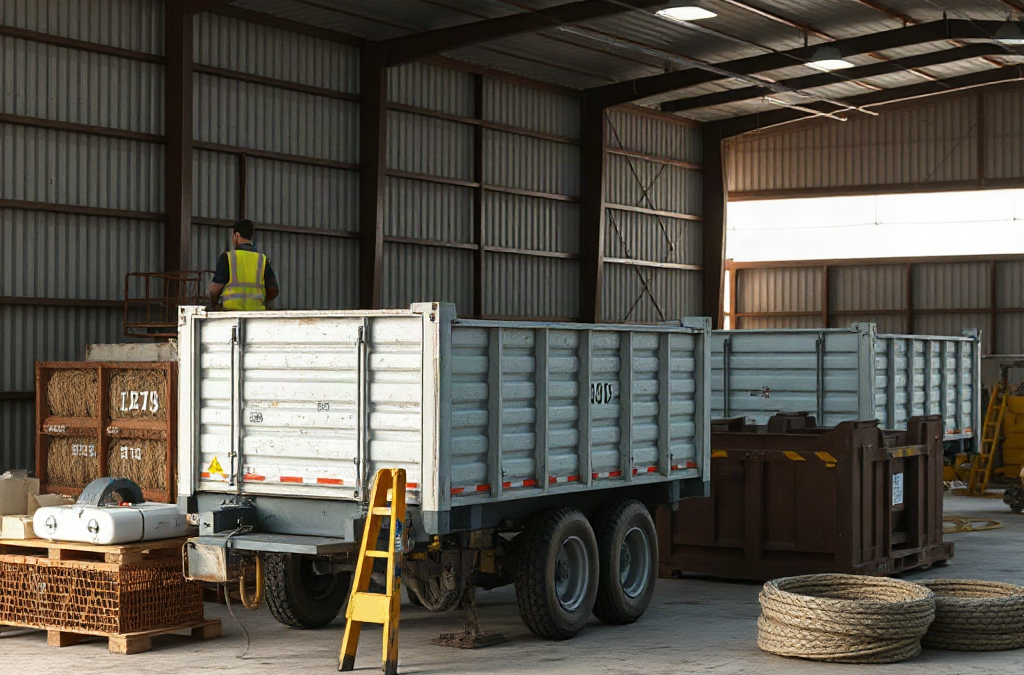
Grain carts and transfer contamination prevention depend on removing carryover grain, isolating incompatible crops, controlling moisture, and inspecting every surface along the unloading path before the next lot moves. Empty the cart fully, open accessible cleanout points, and clear the auger tube, sump, corners, tarp ledges, and discharge spout with dry cleaning methods. Document the previous load and assign extra cleaning when allergens, treated seed, moldy grain, animal feed, or chemically exposed material may have been present. A clean cart can still reintroduce residue through an unclean receiving pit, conveyor, truck, or sampling tool, so verification must cover the complete transfer chain.
Where Does Contamination Hide in a Grain Cart?
Residual material collects wherever grain flow slows, changes direction, or passes over an irregular surface. The cart body may look empty from above while kernels, fines, dust, weed seeds, and broken grain remain in the sump, auger flighting, tube seams, access covers, tarp supports, corners, and discharge spout. Grease-coated surfaces can retain dust as well. These deposits may release only after vibration or after the next crop scours the equipment, which means the first portion unloaded is not necessarily the only portion at risk.
The contamination concern depends on what occupied the cart previously. A small amount of ordinary corn in commodity soybeans may chiefly cause a grading or contract problem. The same quantity becomes more consequential when identity-preserved grain, food-grade crops, seed, or an allergen-sensitive lot is involved. Treated seed requires a much stricter response because it must not enter food or feed channels. Moldy grain, manure, standing water, hydraulic leaks, fuel, and residues from inappropriate chemical use introduce different hazards and should not be treated as routine crop commingling.
Moisture changes the problem from loose carryover to adhered residue. Damp fines can pack beneath an auger, cling to seams, support spoilage, and conceal corrosion. Washing a dusty cart without a drying plan may therefore exchange one problem for another. Dry methods are generally easier to verify before harvest operations resume, while water may be justified only when the contaminant cannot be removed safely by dry cleaning and the cart can be fully drained, dried, and inspected.
A useful inspection follows the actual grain path rather than the surfaces that are easiest to see. Start at the cart opening and walls, move down to the sump and intake, trace the auger tube and discharge area, and then examine the receiving equipment. Use safe access and follow the equipment manufacturer’s shutdown, blocking, and maintenance instructions. Never enter or reach into equipment that can move, and do not depend on a disengaged control alone when stored mechanical or hydraulic energy remains.
A common failure is declaring the cart clean after sweeping its box. That check misses material retained inside the unloading system. A stronger inspection asks whether residue could still fall, shake loose, or be carried forward when the auger starts. If the answer is uncertain, accessible cleanout points and the discharge end deserve another check before loading.
How Should a Grain Cart Be Cleaned Between Loads?
Cleanout should match the consequence of carryover rather than follow one identical routine for every crop change. Routine commodity movement may require complete unloading, dry residue removal, and a visual check. A transition involving treated seed, an allergen, spoiled material, food-grade grain, or a tightly specified contract requires segregation, deeper inspection, documented approval, and possibly dedicated equipment. Cleaning must not be used to make an unsuitable cart acceptable when the contamination cannot be confidently removed.
Begin by recording the last material handled and the destination requirements for the next lot. Park on a firm surface where removed grain and dust can be collected rather than blown into another load. Shut down the tractor and cart according to manufacturer instructions, isolate energy, and secure components before opening guards or cleanout covers. Personal protective equipment should reflect the dust and residue present; compressed air can create an inhalation and visibility hazard and may drive debris deeper into bearings or cavities.
- Unload completely: Run the normal unloading cycle until flow stops, while watching for bridging or an unevenly emptying sump.
- Expose retention points: Open only the access points intended by the manufacturer and inspect the sump, corners, auger intake, tube, flighting, and spout.
- Remove residue dry: Use suitable vacuums, brushes, scrapers, or low-pressure air where permitted. Collect the material and keep it out of marketable grain.
- Inspect for non-grain hazards: Look for water, caked fines, mold, animal contamination, oil, hydraulic fluid, loose coating, rust scale, and damaged seals.
- Reassemble and verify: Replace covers and guards, account for tools, and document the inspection before releasing the cart.
Flushing the system with a small quantity of the incoming crop can dislodge material that visual cleaning missed, but flushing is not a substitute for physical removal. The flush grain must be identified, contained, and directed to an appropriate use; otherwise, the procedure merely transfers the contamination into a different container. Flushing is also a poor response to treated seed, chemical contamination, or unknown residues because dilution does not establish that the equipment is suitable.
Signs of an effective cleanout include clean material emerging from the spout, no kernels appearing after the auger is briefly operated under an approved safe procedure, dry seams, and inspection records that identify the previous load. Repeated kernels after vibration, musty odor, damp packed fines, colored seed treatment dust, or unexplained oily residue are stop signals. Isolate the equipment and determine the source rather than sending the next load through.
When Is Crop Sequencing Better Than Cleaning Alone?
Deliberate crop sequencing reduces the consequence of unavoidable trace carryover, but it works only when market requirements allow the crops to follow one another. Moving ordinary commodity grain before a more sensitive identity-preserved lot is usually the wrong order because residue from the broad commodity stream can compromise the specified load. Scheduling the highest-purity or most restricted crop after a verified full cleanout gives operators a clearer control point.
Sequence crops by compatibility, not merely by harvest convenience. For example, a farm handling commodity corn and soybeans may group same-crop fields together to reduce changeovers. If food-grade soybeans are also present, they may need a cleaned, inspected cart and a separate route to their assigned truck or bin. A later load of feed grain cannot retroactively correct contamination of the food-grade lot. Contract terms, buyer tolerances, organic requirements, allergen controls, and seed identity standards should determine whether sequencing is acceptable.
Dedicated carts, trucks, augers, or receiving lanes offer stronger separation when the value or consequence of a mix-up is high. The tradeoff is cost and operational complexity: dedicated equipment must still be maintained, protected from weather, and clearly identified. Color-coded signage or equipment labels can reduce routing mistakes, but labels do not replace load records or physical inspection. On smaller operations, time-blocked use with verified cleanouts may be more practical than owning duplicate machinery.
Treated seed should remain outside the food and feed transfer chain. A cart that has carried treated seed should not automatically return to market grain service after an ordinary sweep or flush. The treatment product label, equipment manufacturer, buyer, and applicable handling requirements should guide whether decontamination is possible and how residues and rinse material must be managed. If the prior load is unknown, treating the cart as low risk is an unsupported assumption.
Get Whole Wheat Flour, Grains and Milling Supplies – CLICK HERE 
The most useful schedule is written before harvest pressure builds. Identify restricted crops, assigned carts, approved receiving points, cleaning triggers, and who can release equipment after inspection. Mark any change in crop class, production status, or intended market—not just a change in species. A cart moving between two soybean fields may still require a controlled transition if one lot is seed, organic, food-grade, or identity-preserved and the other is not.
Sequencing is failing when operators rely on memory, destinations change without updating tickets, or a cart arrives at an incompatible truck because it was the nearest available machine. Pause the transfer, confirm the lot identity, and protect the more sensitive load. Lost time at that point is usually easier to manage than an entire mixed bin with uncertain market status.
How Do You Verify the Entire Transfer Chain?
Verification must extend from the field cart to the final receiving point used for that lot. Grain leaving a clean spout can pick up residue from a truck box, hopper trailer, swing-away auger, belt conveyor, dump pit, elevator leg, diverter, sampler, or storage bin. Controlling only the cart creates a clean segment inside an unverified system.
Walk the intended route before the first sensitive load moves. Confirm the cart and transport unit identities, inspect accessible contact surfaces, verify that valves and diverters point to the correct destination, and check that the receiving bin is empty or contains compatible grain. Load tickets should connect the field, crop status, cart, transport unit, destination, previous load, cleanout status, operator, and time. The record does not need to be elaborate, but it must let the operation reconstruct where a questioned lot traveled.
Sampling can reveal obvious admixture, unusual odor, insect activity, discoloration, or moisture-related damage, yet a clean sample does not prove every hidden surface was clean. Samples represent only the material captured at a particular time and place. Combine sampling with equipment inspection and traceability rather than using a handful of visually acceptable grain as the sole release decision.
| Verification Point | What to Check | Failure Signal |
|---|---|---|
| Before loading | Previous load, cart interior, sump, and crop identity | Unknown history or visible residue |
| During unloading | Spout flow, color, odor, foreign kernels, and routing | Unexpected material or wrong receiver |
| After transfer | Ticket details, destination, retained residue, and cleanout need | Missing lot link or unexplained carryover |
A practical response plan matters because contamination may be noticed after flow begins. Stop the cart and downstream conveyors, identify the last confirmed acceptable point, isolate affected grain, and prevent the destination bin from receiving more material. Do not blend questionable grain to make the issue less visible. The appropriate disposition depends on the contaminant, crop use, buyer requirements, and applicable rules, so keep the lot separate until a qualified decision is made.
Verification is working when operators can answer three questions without guessing: what the cart previously carried, how it was cleaned, and exactly where the current load went. It is failing when records say only “clean,” when inspections have no named person or time, or when receiving equipment is assumed compatible. Periodic review of rejected loads, residue findings, and routing errors can show where the written procedure differs from actual harvest practice.
Frequently Asked Questions
Should a grain cart be cleaned after every load?
Not necessarily after every compatible commodity load, but it should be checked for residue, moisture, damage, and unexpected material. A crop, market class, identity, or contamination-risk change should trigger the cleanout level specified by the operation and buyer.
Is compressed air suitable for cleaning a grain cart?
It may remove dry dust from accessible areas, but it can aerosolize contaminants and force debris into hidden spaces. Use it only where permitted, with suitable respiratory and eye protection, dust control, and manufacturer-approved procedures.
Can incoming grain be used to flush the unloading auger?
A controlled flush may help remove trace crop residue after physical cleaning, but the flush grain must be segregated and assigned an appropriate destination. It is not an adequate remedy for treated seed, chemicals, mold, or unknown contamination.
What records should accompany a grain-cart cleanout?
Record the previous load, current crop and status, date, cart identity, cleaning method, inspection result, operator, and destination. Note unusual residues, corrective work, and the disposition of removed or flush grain.
What should happen when contamination is discovered during transfer?
Stop movement, isolate the affected grain, secure the receiving route, and document where the material traveled. Keep the lot separate until its acceptable use or disposal is determined under buyer requirements, product labels, and applicable rules.
Conclusion
Reliable contamination control comes from treating the cart as one part of a connected handling route. Map the retention points, match cleaning effort to the previous and next loads, and reserve the strictest controls for treated seed, unknown residues, allergens, spoiled material, and identity-preserved crops. Crop sequencing can reduce changeovers, but it cannot override buyer specifications or make incompatible carryover acceptable.
Before the next transfer, confirm the cart history, inspect the sump and unloading system, verify the receiving equipment, and create a traceable load record. Stop when residue, moisture, odor, routing, or load identity is uncertain. A short delay for isolation and inspection preserves more options than allowing questionable grain to enter a truck or bin where separation becomes difficult or impossible.
Get Whole Wheat Flour, Grains and Milling Supplies – CLICK HERE
Auto Amazon Links: No products found.