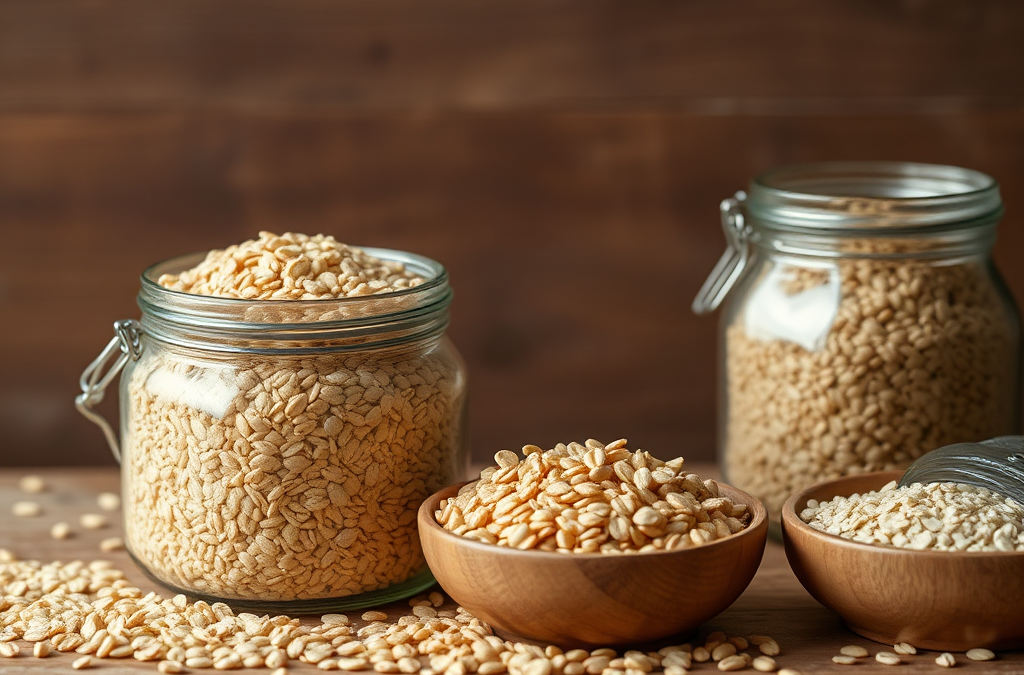
Choose storage by the grain’s oil content, processing level, moisture sensitivity, intended shelf life, and how often you will use it. Whole grains such as brown rice, oats, and whole wheat retain more natural oils, so cool, dark storage—and refrigeration or freezing for extended keeping—can protect flavor better than a warm pantry. Refined grains such as white rice and polished cornmeal generally tolerate airtight pantry storage longer, provided they stay dry and pest-free. Flour needs especially careful moisture and odor control, while cracked or milled grains usually have a shorter useful window than intact kernels.
Match the Container to the Grain’s Composition
The grain itself should determine the first storage decision, not the appearance of the container. Whole kernels, rolled grains, flour, and polished grains behave differently because milling exposes more surface area and whole grains retain more of the germ, where natural oils are concentrated. Those differences affect rancidity, odor absorption, insect exposure, and how quickly a package loses useful quality.
For most dry grains, a rigid, food-safe, airtight container is a strong everyday choice. It limits humidity exchange, reduces exposure to pantry odors, and makes insect activity easier to spot than an opaque bag tucked at the back of a cupboard. A tight lid is not a substitute for dry product, though. Sealing damp grain can trap conditions that encourage clumping, mold growth, or stale odors.
Whole wheat berries, rye berries, dry rice, and intact barley can fit well in lidded buckets or heavy food-storage containers when the room is cool and dry. Oats and brown rice deserve more caution because their natural oils can develop stale flavors faster in heat. A smaller container that is opened frequently may be better than one large bin if the household uses grain slowly; each opening introduces warm, humid air and increases handling.
Thin retail bags are acceptable for short-term use when they remain sealed and dry, but they offer less protection against punctures, rodents, and pantry humidity. Glass jars provide visibility and do not readily retain odors, yet they are heavy and vulnerable to breakage. Plastic containers are lighter and practical for larger quantities, but they should be clean, fully dry, and intended for food contact. The common mistake is choosing an oversized container for convenience, leaving a large air space around a small quantity and delaying rotation for months.
Use how to choose storage methods based on grain type as a product-by-product decision: identify whether the grain is whole or milled, estimate how quickly it will be consumed, then select a container that protects it for that period without creating unnecessary handling or cost.
Choose Pantry, Refrigerated, or Frozen Storage
Temperature and humidity usually matter more than a container’s brand. A cool, dark pantry can suit many refined grains and intact dry kernels, while refrigeration or freezing becomes more useful for oily whole grains, freshly milled flour, and quantities that will sit unused for a long time. The purpose of colder storage is to slow oxidation and insect development, not to make poor-quality grain safe.
White rice, pearled barley, dried corn, and unopened commercial flour commonly fit a dry pantry routine when the package remains intact and the storage area is stable. Keep them away from sinks, dishwashers, ovens, exterior walls with condensation, and direct sunlight. A basement may feel cool but still be unsuitable if humidity fluctuates. Conversely, a kitchen cupboard may be convenient but too warm for a large reserve of brown rice or whole-grain flour.
Refrigeration can preserve flavor for grains with more natural oil, but it introduces practical tradeoffs. Containers must seal well because grains can absorb refrigerator odors, and condensation must not reach the food when a cold container is opened in a humid room. Freezing is useful for longer pauses or small quantities of whole-grain flour, but divide the supply into portions so repeated thawing does not affect the entire batch. Allow a sealed container to warm before opening when condensation is a concern.
A household that cooks oatmeal every morning may reasonably keep a working supply in an airtight pantry container and reserve the remainder in a cooler location. Someone who uses oats only occasionally should consider smaller packages or colder storage rather than assuming a bulk purchase is automatically economical. The failure mode is treating “dry” as the only condition that matters. Heat, oxygen, light, and repeated opening can all shorten the period in which a grain tastes fresh.
Watch for practical signals: rancid or crayon-like odors suggest oil deterioration; visible moisture, soft clumps, or condensation indicate a storage problem; webbing, larvae, or small holes point to insect activity. Do not taste questionable grain to test it. Isolate the container, inspect nearby foods, and discard product with clear spoilage or infestation rather than trying to salvage it through cooking.
Adjust the Method for Whole, Refined, and Milled Grains
Processing level changes both durability and convenience. Intact whole kernels generally have a protective outer layer and less exposed surface area, while milling breaks that structure and exposes starches, oils, and fine particles to air. Refined grains often store conveniently because some oil-rich components have been removed, but they still require protection from pests and humidity.
Whole wheat berries, hard red wheat, rye berries, and intact buckwheat are appropriate candidates for longer dry storage when they are clean, thoroughly dry, and kept in pest-resistant containers. Their advantage is structural: an intact kernel presents less surface area than flour. Their limitation is use. A household needs a suitable mill or another way to process them, and a large reserve is not practical if the grain will not be used before its quality declines.
Rolled oats and cracked wheat occupy a middle position. They cook conveniently, but cutting or flattening increases exposed area. Store a modest working amount in a sealed container and avoid placing it above a heat-producing appliance. Brown rice contains its bran and germ, which can contribute desirable flavor but also make temperature control more relevant than it is for white rice. White rice is less oil-rich and often suits pantry storage, although it should never be treated as immune to humidity, insects, or odor transfer.
Flour requires the most disciplined rotation because milling creates extensive contact with air. Whole-wheat flour, oat flour, and freshly ground grain are better suited to a cool location, refrigeration, or freezing when consumption will be slow. All-purpose flour and other refined flours may remain useful in a dry pantry, but the package should still be sealed and checked regularly. A paper bag inside an open cupboard is a weaker long-term method than a clean airtight container.
When comparing a bulk sack with several smaller packages, consider more than price per pound. Bulk grain can reduce packaging and cost, but it increases exposure after opening and may create waste if the household’s cooking habits change. Smaller packages cost more per unit but simplify freshness, labeling, and pest isolation. A useful test is whether the amount can be consumed comfortably within the expected quality window under the actual conditions of the home, rather than under ideal warehouse conditions.
For a family that bakes weekly, refrigerated whole-grain flour in labeled portions may be sensible. For a household that cooks rice several times a week, a sealed pantry container for a limited working quantity may be more convenient. The mistake is using one method for every grain simply because all packages appear dry at purchase.
Build a Practical Rotation and Inspection System
A storage method works only when the household can identify, access, and rotate the food. Label each container with the grain type, processing form, purchase or milling date, and any transfer date. Place newer packages behind older ones, and keep a small amount visible enough to monitor without opening every container.
Get Whole Wheat Flour, Grains and Milling Supplies – CLICK HERE 
Inspect the storage area on a regular schedule rather than waiting for an obvious problem. Look for condensation, damaged seams, flour dust around lids, insect webbing, unusual odors, and changes in texture. Check the shelf and nearby packages when one container shows activity; pantry pests can move between loosely closed foods. A clean shelf, prompt spill removal, and intact seals reduce opportunities for an infestation, but no container system can compensate for adding questionable grain to a healthy supply.
A simple decision sequence keeps the method proportionate:
- Identify the form: intact kernel, rolled or cracked grain, refined grain, or flour.
- Estimate use: select a quantity that matches the household’s real cooking and baking pattern.
- Assess the room: choose pantry storage only when the area is consistently dry, dark, and reasonably cool.
- Set the protection level: use airtight, pest-resistant storage, with refrigeration or freezing for more perishable whole-grain products.
- Record and rotate: date containers and use the oldest sound package first.
Emergency reserves need a different balance than daily supplies. Long-term storage favors stable conditions, durable containers, and quantities that can be inspected, while everyday storage favors easy access and frequent turnover. Combining both can work: keep a small active container in the kitchen and a sealed reserve elsewhere, opening the reserve only to replenish the working supply.
Do not rely on a printed date alone to judge condition. Dates can support rotation, but storage temperature, package integrity, moisture exposure, and the grain’s composition also influence quality. Likewise, an oxygen absorber or specialized container may be unsuitable if the grain was not dry, the seal is unreliable, or the package will be opened repeatedly. The best system is the simplest one that matches the grain, the environment, and the household’s ability to monitor it.
Readers comparing containers, placement, and shelf-life expectations may also benefit from how to choose storage methods based on grain type alongside a review of how to choose storage methods based on grain type for each item before buying in bulk.
For storage decisions involving large quantities, consult food-safety guidance from government agencies, university extension programs, and grain-processing organizations. These sources can provide condition-specific advice on moisture, temperature, packaging, pest control, and handling without assuming that every grain has the same shelf-life behavior.
Frequently Asked Questions
Should every grain be stored in an airtight container?
Airtight containers are useful for most dry grains because they limit humidity, odors, and pest access. The grain must already be dry, and the container should be sized for practical use rather than left open repeatedly for months.
Are whole grains harder to store than refined grains?
Whole grains are often more sensitive to heat and long storage because they retain oil-rich parts of the kernel. Refined grains may suit pantry storage longer, but both types still need dry, sealed, pest-resistant conditions.
When should flour be refrigerated or frozen?
Use colder storage when flour is whole-grain, freshly milled, purchased in a quantity that will sit unused, or kept in a warm home. Divide it into sealed portions to limit repeated warming and exposure.
Can grains be stored in their original bags?
Original bags can work for short-term pantry use if they remain sealed and dry. Transfer grain to a sturdy food-safe container when protection from pests, humidity, punctures, or odors matters.
What is the first sign that stored grain has deteriorated?
Off odors, stale or rancid notes, clumping, condensation, discoloration, webbing, or visible insects are warning signs. Isolate the package and avoid tasting questionable grain; discard it when spoilage or infestation is evident.
Conclusion
Choosing a storage method by grain type means matching protection to composition, processing, quantity, and household use. Intact kernels and refined grains may fit a cool, dry pantry, while brown rice, oats, whole-grain flour, and freshly milled products deserve closer attention to heat and rotation. Airtight containers reduce humidity and pests, but they cannot correct damp grain or poor inspection. Keep working quantities manageable, label every transfer, and use colder storage when a more oil-rich product will remain unused. Before buying in bulk, decide how quickly the household can consume the grain and where the reserve will actually live. That practical calculation usually produces less waste and better flavor than choosing a container based on appearance or price alone.
Get Whole Wheat Flour, Grains and Milling Supplies – CLICK HERE
Auto Amazon Links: No products found.
Further Reading
Authoritative Sources
- Consider pros, cons of alternative grain storage methods
ndsu.eduStoring grain in poly bags is a good option, but it does not prevent mold growth in damp grain or insect infestations. Place grain in the bag at recommended ...
- Grain Storage Checklist: Moisture, Airflow, and ...
agriculture.comGrain Storage Checklist: Moisture, Airflow, and Temperature Rules to Protect Grain Quality · 1. Moisture Recommendations · 2. Proper Aeration · 3.
- Understanding the Different Grain Bin Systems
grainhandlingdirect.comThis guide breaks down the types of grain storage used most often today, why they vary, and how concrete, metal, and hybrid systems work in real ...
- Grain 101: Grain Types and Optimal Storage From Chief Agri
agri.chiefind.comStore at temperatures below 60°F (15°C) for long-term storage. Store in clean, dry facilities such as silos, bins, or airtight containers. ...