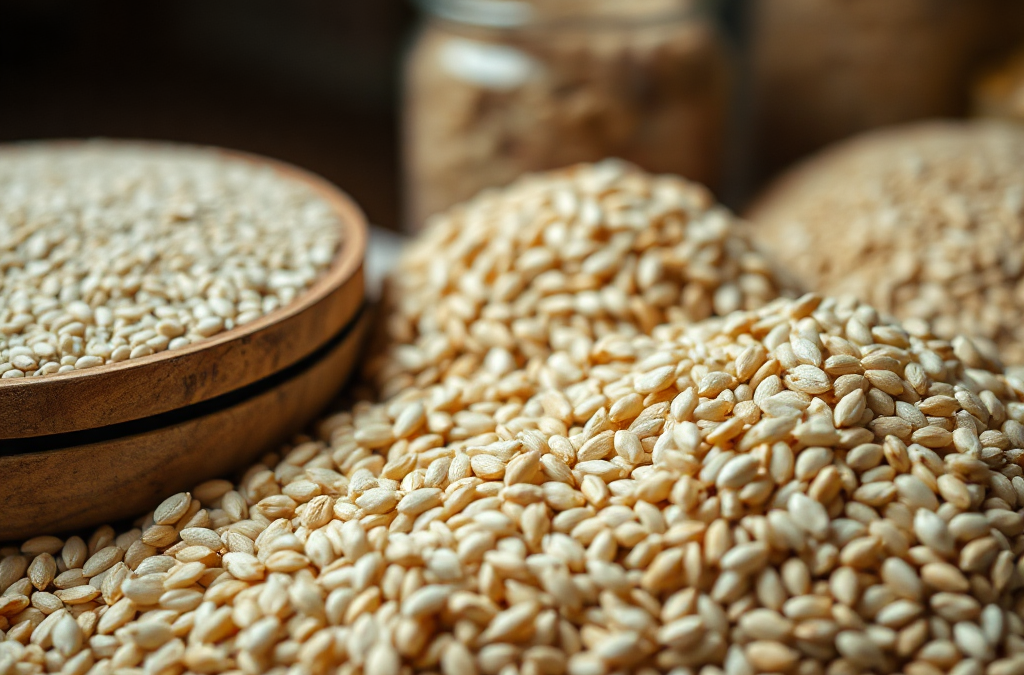
How to safely store grains in varying humidity levels depends on keeping the kernels dry, limiting humid-air exchange, and checking for condensation or odor as conditions change. Use clean, thoroughly dry grains in airtight, food-safe containers, place them in the coolest stable location available, and monitor both the room and the container rather than relying on a single humidity reading. In damp weather, inspect more often and avoid opening containers unnecessarily; in dry climates, protect packaging from cracking or seal failure. Let recently moved containers reach room temperature before opening so condensation does not form on the grain. Discard grain showing mold, insect activity, heating, or persistent musty smells.
How Humidity Damages Stored Grains
Humidity affects grain storage because dry kernels can absorb water vapor from the surrounding air. That exchange may soften the grain, encourage mold growth, reduce keeping quality, and create conditions that favor insects. Whole wheat, corn, rice, oats, barley, and dried beans do not all respond identically, but every dry food needs protection from moisture cycling. A cool pantry with fluctuating dampness can be less reliable than a slightly warmer room with stable, dry conditions.
The container does not remove moisture that was already present. Grain packed while warm or insufficiently dry may trap water inside, where it becomes difficult to detect until the food develops clumps, a stale smell, discoloration, or localized heating. A sealed bucket can therefore preserve a problem as efficiently as it preserves sound grain. Inspect the product before packing, and never assume that an airtight lid compensates for poor preparation.
Humidity also interacts with temperature. Warm air can hold more water vapor, while a cold container moved into a warm, humid room may develop condensation on its inner surfaces. Opening that container immediately can introduce additional damp air. For example, a pail stored in an air-conditioned basement and opened in a humid kitchen may collect droplets even when the grain looked dry during storage.
Use room humidity as a warning signal, not as the only measure of safety. A hygrometer can show that a storage area is becoming damp, but it cannot reveal moisture pockets inside a bag. Pay attention to caked kernels, condensation, unusual warmth, webbing, insects, or a musty odor. Those signs provide more useful evidence than a calendar date or a label promising long-term storage.
A common mistake is treating all grains as interchangeable. Brown rice and whole-grain flours generally have shorter practical storage lives than polished white rice or intact dry kernels because their oils or greater surface area can affect quality. The safer approach is to match the container, inspection frequency, and intended storage period to the specific food rather than applying one rule to every sack.
Containers, Location, and Initial Preparation
Sound grain storage begins with clean, dry food and a container that limits air and moisture exchange. Food-grade plastic buckets with gasketed lids, sealed glass jars, and purpose-made barrier pouches can work when they are intact and properly closed. Ordinary cardboard boxes and thin produce bags provide little protection in a humid room. Choose a container that can be opened and resealed without repeatedly exposing the entire supply.
Before filling, check grain for insects, damaged packaging, wet patches, and off odors. Do not rinse grain before storage, and do not pack it while it is still warm from drying or transport. If the food has been kept in a different climate, let the unopened package adjust gradually in the intended storage area. This reduces the chance that a cold surface will meet warm, moisture-laden air and produce condensation.
Location matters as much as the container. Keep supplies away from basement leaks, exterior walls that sweat, laundry rooms, sinks, direct sunlight, and concrete floors. Elevating containers on shelving or a pallet protects them from small spills and allows air to circulate. A stable interior cupboard is often preferable to a garage where daily temperature swings repeatedly move moisture through packaging.
For bulk supplies, divide grain into manageable portions instead of storing one enormous container. Smaller units make it easier to isolate a problem, rotate older food, and avoid exposing the full supply during routine cooking. The tradeoff is more packaging and labeling. That extra work is worthwhile when the storage area has seasonal humidity changes or when the grain will be used over many months.
Label each container with the grain type, packing date, and any relevant processing detail, such as polished rice versus brown rice. Use older containers first, but inspect them before opening fully. A useful internal link for planning a broader pantry system is how to safely store grains in varying humidity levels, particularly when several grain types share one storage space.
Adjusting Storage for Damp and Dry Conditions
Damp seasons call for fewer openings, more frequent inspections, and stronger separation from household moisture sources. Keep lids closed during cooking, laundry, and dishwashing, when indoor humidity can rise quickly. If a pantry becomes persistently damp, moving the grain to a stable interior room is usually more dependable than placing a small moisture absorber beside an already compromised container. Absorbers may help in limited spaces, but they cannot repair wet grain or substitute for a sound seal.
In a humid climate, avoid repeatedly transferring grain between a large sack and an open countertop bin. Each transfer exposes the food to new air and may bring dust or insects into the supply. Fill a small working container for short-term use while leaving the reserve sealed. When opening a reserve container, examine the underside of the lid and the top layer of grain before dispensing it.
Very dry conditions create a different set of concerns. Low indoor humidity does not usually damage dry grain through moisture absorption, but it can dry out some packaging materials, weaken flexible seals, and increase static that attracts dust. Keep containers closed, protect pouches from abrasion, and avoid storing them where heat accelerates seal aging. Dry air is not a reason to add water or place damp materials near the food.
Seasonal movement requires care. If a container travels from a cool storeroom to a hot, humid area, leave it sealed until its exterior and contents have reached the new room temperature. The same principle applies when bringing supplies home from a cold vehicle. Opening first and acclimating later can create a thin film of water inside the lid, even if no visible rain or spill occurred.
Use a simple humidity-response routine:
- Stable, dry room: keep containers sealed, elevated, labeled, and periodically inspected.
- Rising room humidity: reduce openings, check seals and shelving, and relocate supplies away from damp walls or floors.
- Condensation or wet packaging: isolate the container and assess the grain before mixing it with unaffected food.
- Repeated seasonal swings: divide supplies into smaller sealed units and record inspection dates.
The wrong assumption is that a desiccant packet or vacuum-style seal makes every grain suitable for every climate. Packaging can slow moisture movement, but it cannot correct grain that was packed wet, protect a punctured pouch, or eliminate temperature-driven condensation. Select the storage method based on the actual room, the intended duration, and how often the supply will be handled.
Inspection, Condensation, and Spoilage Decisions
Regular inspection should focus on changes rather than routine opening. Look for clumps, damp kernels, discoloration, insect bodies or webbing, swollen packaging, and a musty or sour smell. A container that feels unusually warm compared with nearby supplies deserves prompt attention. Moisture can collect in a small area first, so stir-free visual inspection of the top and sides is useful, but do not taste questionable grain to decide whether it is safe.
Get Whole Wheat Flour, Grains and Milling Supplies – CLICK HERE 
If condensation appears inside a sealed container, separate it from the rest of the pantry. Do not simply wipe the lid and reseal the grain. Determine whether the droplets came from temperature change, a wet product, a damaged seal, or water entering from outside. A small amount of condensation may still indicate that the grain has been exposed to conditions that require careful evaluation; visible mold, persistent odor, heating, or insect infestation are reasons not to salvage it for eating.
Do not combine a suspect batch with dry, unaffected grain. Mixing spreads insects and makes later inspection nearly impossible. Mark the questionable container, clean the surrounding shelf, and inspect neighboring packages for similar signs. If the packaging is damaged but the grain appears normal, transfer it only after confirming that the food is dry, clean, and free of pests; otherwise, discard it.
Inspection frequency should reflect risk. A dry interior cupboard may need a check every few weeks, while a garage or basement during a wet season deserves closer attention. The goal is not to open every container constantly. The goal is to notice environmental changes early enough to move supplies, repair a seal, or use a vulnerable product before quality declines.
Keep a short storage log with the container date, location, grain type, and inspection result. This is especially helpful when storing both quick-use foods and longer-held reserves. For broader pantry planning, the link how to safely store grains in varying humidity levels can sit beside a rotation record, while how to safely store grains in varying humidity levels can direct household members to the same handling procedure.
Reliable storage is measured by stable condition, not by an ambitious time claim. Grain that remains dry, odor-free, pest-free, and properly sealed is behaving as expected. Grain that repeatedly develops condensation or clumps needs a change in location or packaging, not a longer inspection interval.
For additional handling and storage guidance, consult food-safety information from the USDA, university extension services, and food-grain organizations. These sources can help readers compare grain types, recognize spoilage, and adapt household storage practices to local climate conditions.
Frequently Asked Questions
What humidity level is best for storing dry grains?
A cool, stable, dry environment is preferable, but room humidity alone does not prove that grain is safe. Container integrity, product dryness, temperature swings, and inspection signs matter as well.
Can airtight containers prevent mold in humid weather?
They can limit new moisture entry when the grain and container are already dry. They cannot remove moisture trapped during packing or correct condensation caused by temperature changes.
Should grain be stored in a garage?
A garage may be unsuitable when it has large temperature swings, damp floors, pests, or direct heat. Use it only if conditions remain stable and containers are elevated, sealed, and regularly checked.
How can condensation be prevented after moving grain?
Keep the container closed while it adjusts to the new room temperature. Opening cold packaging in warm, humid air can allow water to collect on the lid or inside the container.
When should damp grain be discarded?
Discard grain with visible mold, persistent musty or sour odors, insect infestation, unusual heating, or clear water damage. Do not taste questionable grain or mix it with a sound batch.
Conclusion
Safe grain storage across changing humidity begins with dry product, a genuinely moisture-resistant container, and a location that stays as stable as possible. Humid weather increases the need to limit openings and inspect seals; dry weather makes packaging condition and heat exposure more relevant. Temperature changes deserve equal attention because condensation can appear when a cold container meets warm, damp air. Divide large supplies when practical, label them for rotation, elevate them from floors, and keep a simple inspection record. Treat clumping, odor, mold, insects, or unexplained warmth as evidence requiring isolation and careful disposal decisions. A modest, repeatable system is more dependable than relying on a single humidity reading or a packaging claim.
Get Whole Wheat Flour, Grains and Milling Supplies – CLICK HERE
Auto Amazon Links: No products found.