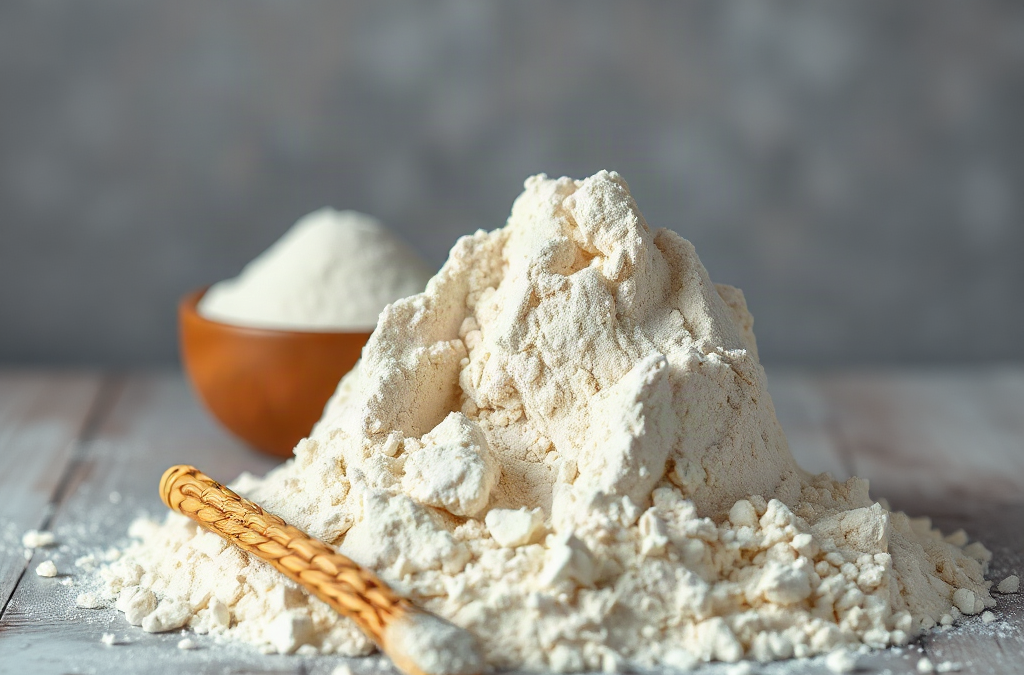
Discard old wheat flour when it smells rancid, musty, sour, or chemical; shows mold, damp clumps, webbing, larvae, or insects; or has contacted water or contaminated surfaces. A best-by date alone does not prove spoilage, but flour stored open in a warm, humid pantry deserves closer inspection because oxygen, heat, moisture, and pests accelerate deterioration. Whole-wheat flour usually develops rancid flavors sooner than refined flour because its germ and bran contain more oils. If appearance seems normal but the aroma or flavor is questionable, replacement is the safer and more practical choice, especially when storage history is unknown.
What Spoilage Signs Mean Flour Should Be Discarded?
Flour gives several useful warnings before it belongs in a recipe. Odor is often the clearest signal because the fats naturally present in wheat can oxidize during storage. Fresh flour has a mild, neutral grain aroma. An odor resembling old cooking oil, crayons, paint, cardboard, sour dough, mildew, or a damp basement indicates deterioration or contamination rather than harmless aging.
Rancidity and mold are different problems. Rancidity results primarily from oxidation of fats and may produce unpleasant aromas and flavors without visible growth. Mold requires moisture and may appear as discolored specks, fuzzy patches, or staining, but it is not always easy to identify against a pale powder. Flour that became wet, sat in a damp package, or developed unexplained compact clumps should be discarded rather than sifted. Removing the visible portion does not establish that the remainder is unaffected.
Stored-product insects leave another distinct set of clues. Live or dead beetles, larvae, shed skins, fine webbing, and powder stuck to package seams all justify disposal. A few hard lumps caused by compression are not necessarily evidence of pests or moisture; they should crumble readily between dry fingers and have no unusual odor. Damp clumps tend to feel dense or tacky and may coincide with staining or a musty smell.
Packaging condition changes how much confidence to place in an inspection. A torn paper bag, a lid that was left loose, rodent damage, water marks, or contamination from household chemicals makes the flour’s history unreliable. Flour readily takes up odors, so a chemical or detergent-like smell may reflect nearby products rather than natural spoilage. It should still be rejected because the source and extent of exposure cannot be verified.
A useful rejection checklist is short:
- Odor: rancid, sour, musty, fermented, or chemical.
- Moisture: wet areas, tacky masses, condensation, staining, or mold.
- Pests: insects, larvae, webbing, shed skins, or chewed packaging.
- Unknown exposure: flooding, dirty utensils, rodent contact, or an unsealed container near chemicals.
Do not try to rescue affected flour by baking it, freezing it, or blending it with a fresh bag. Heat may kill insects, but it does not reverse rancid flavor or make mold-damaged flour acceptable. Freezing can control an active insect stage, yet it cannot remove debris or correct prior contamination. Once a definite rejection sign appears, replacement is the practical decision.
Does the Date Decide Whether Flour Is Bad?
A printed best-by date is a quality reference, not a complete diagnosis of the flour in front of you. It assumes ordinary handling and cannot account for a hot delivery vehicle, a humid cupboard, an opened inner bag, or transfer into a poorly sealed container. Flour may remain usable beyond that date when kept dry, cool, clean, and protected from pests, while a newer package can fail early after moisture exposure.
The date is most useful as a prompt to inspect and prioritize older stock. When two containers appear sound, use the earlier-dated flour first. When an old container has no label, do not invent a shelf-life estimate from appearance alone. Record when it was purchased or opened, the flour type, and any storage changes. An unknown date is not automatically a discard order, but unknown age combined with an open package, warm storage, or an odd aroma lowers the case for keeping it.
Whole-wheat and refined flour should not be judged by identical expectations. Whole-wheat flour retains the bran and germ, including oils that are more vulnerable to oxidation. Refined white flour contains less of these oil-rich components and commonly holds its neutral character longer under equivalent conditions. That difference explains why an older whole-wheat bag may smell stale or oily while white flour stored beside it still appears normal.
Printed dates also cannot reveal cross-contamination. Consider a bag dated months in the future that has sat beneath a leaking pipe. Its nominal age is irrelevant because water exposure creates an immediate reason to discard it. Conversely, an unopened bag modestly beyond its quality date may deserve an inspection rather than automatic disposal if its packaging is intact and its storage conditions were consistently favorable.
A weak assumption is that baking will compensate for age. Flour provides structure and flavor, and deteriorated flour can give bread, biscuits, or cakes an unpleasant aftertaste. Questionable performance is not always spoilage—old leavening, inaccurate hydration, or weak gluten development may be responsible—but a rancid aroma in the dry flour will not improve in the oven. Treat the date as one piece of evidence, then give greater weight to sensory condition, package integrity, flour type, and known storage history.
How Flour Type and Storage Change the Decision
Storage conditions determine how quickly flour loses quality because heat, oxygen, moisture, light, and pests act on it after milling. A loosely folded paper bag in a warm cabinet has much less protection than flour sealed in a food-grade airtight container in a cool, dry location. Paper packaging is convenient for retail sale, but after opening it offers limited defense against humidity, pantry insects, and strong surrounding odors.
Whole-wheat flour needs more conservative handling than refined flour. Its higher natural oil content makes cool storage particularly valuable. If it will not be used promptly, refrigeration or freezing can slow oxidation. The container must remain tightly closed to prevent moisture uptake and odor transfer from foods such as onions or strongly flavored frozen items. Before opening chilled flour, allowing the sealed container to approach room temperature can reduce the chance of humid air condensing inside.
Refined bread, all-purpose, and cake flours differ in protein and intended use, but those distinctions do not override visible spoilage. Specialty wheat flours may also contain more of the original kernel or have storage directions specific to the producer. A flour blend with added ingredients should be judged by its label and its most perishable component, not by assumptions that apply to plain white flour.
Real household conditions rarely stay ideal. A container kept above a stove experiences repeated warmth; one on a basement floor may face humidity or minor flooding; and a bulk bin opened daily receives more air and utensil contact than several smaller sealed packages. Dividing a large purchase into working and reserve containers limits how often the entire supply is exposed. It also makes a local pest or moisture problem less likely to compromise everything at once.
Get Whole Wheat Flour, Grains and Milling Supplies – CLICK HERE 
The container itself should not conceal the evidence needed for good decisions. An opaque vessel protects against light, but it should be opened periodically for a brief visual and odor check if the flour is being held for an extended period. Clear containers make insects easier to notice but still need a dark cupboard. In either case, clean and dry the container fully before refilling it. Topping new flour onto old residue can carry stale odors, insects, or moisture into the fresh supply.
Prioritize stable conditions over elaborate packaging claims: dry flour, a clean airtight container, moderate or cool temperature, and a dated label. If the pantry is routinely hot or humid, buy smaller quantities or use cold storage. A manageable amount that gets used while it still smells and performs normally is more economical than a large bargain bag that eventually requires disposal.
How to Inspect Questionable Flour Safely
A careful inspection should begin before the flour is stirred, sifted, or poured into other ingredients. Moving questionable flour can spread insects through a pantry or release fine particles into the air. Place the package on an easy-to-clean surface away from open food, then examine the exterior for punctures, stains, webbing around folds, or activity near the closure.
Open the container and look across the surface under good light. Search for discoloration, moving insects, larvae, silk-like strands, and clumps that do not break apart like ordinary compressed powder. Next, smell without placing your face inside the container or deliberately inhaling dust. A gentle waft from a short distance is enough to detect rancid, musty, sour, or foreign chemical odors. People sensitive to airborne flour should avoid creating dust and may prefer to have someone else perform the check.
If the flour looks dry, smells neutral, and has a reliable storage history, a small test bake can assess quality when age is the only concern. Use a simple preparation in which an off flavor will be noticeable, and do not taste raw flour or raw dough. Raw flour is not a ready-to-eat food; cooking is the appropriate point for tasting. A failed loaf alone does not prove spoilage because yeast condition, measurement, kneading, and recipe balance also affect results. An unpleasant stale or rancid flavor after proper cooking, however, supports disposal.
Keep the decision sequence practical:
- Check the package and surrounding shelf for moisture, pests, or damage.
- Inspect the flour’s surface, color, texture, and clumping under good light.
- Assess the odor gently without raising a cloud of flour dust.
- Review the type of flour, date, opening history, and storage temperature.
- Use a cooked test only when no contamination warning is present and quality—not safety—is the remaining question.
Discarded flour should be contained before it is moved through the home, especially when insects are present. Seal it in a bag or lidded waste container, clean the shelf, and inspect neighboring dry goods. Vacuuming crevices can remove loose flour and insect material, but dispose of the vacuum contents promptly. Avoid applying household insecticides to surfaces or containers that may contact food unless the product label expressly permits that use.
Keeping flour despite several ambiguous warnings rarely saves much compared with the cost of spoiling a complete batch of food. The threshold should be stricter for flour with unknown origins, flood exposure, rodent evidence, or unexplained chemical odors. When uncertainty concerns only age and every inspection point is normal, a cooked quality test is reasonable; when uncertainty concerns contamination, do not experiment.
Frequently Asked Questions
Can flour be used after its best-by date?
Possibly. An intact package or properly sealed container may remain usable after the date if the flour is dry, pest-free, neutral-smelling, and has been stored under cool, clean conditions. The date does not override evidence of contamination.
What does rancid flour smell like?
Rancid flour may smell like stale oil, crayons, paint, old cardboard, or another sharp oily odor. Fresh flour should have only a mild grain scent, so a persistent unusual smell is a reason to replace it.
Should flour with bugs be thrown away?
Discard flour containing insects, larvae, webbing, or shed skins. Seal it before removal, inspect nearby dry foods, and clean shelf seams so the infestation does not continue elsewhere in the pantry.
Are hard lumps in flour a sign of spoilage?
Not necessarily. Dry compression lumps usually crumble easily. Reject flour when clumps are damp, tacky, stained, musty-smelling, or associated with condensation, mold, webbing, or insects.
Can old flour be made safe by freezing or baking?
Freezing or baking does not reverse rancidity, remove pest debris, or justify using mold- or moisture-damaged flour. These processes should not be treated as rescue methods for flour that already shows rejection signs.
Conclusion
Make the keep-or-discard decision from the flour’s condition and history, not from its printed date alone. Prioritize evidence of moisture, mold, pests, foreign odors, damaged packaging, and exposure to dirty water or chemicals. Whole-wheat flour warrants closer attention because its oil-rich germ and bran make rancidity more likely during warm or prolonged storage.
For flour that is merely old, inspect the package, surface, texture, and aroma before considering a small cooked quality test. Do not taste raw flour, and do not use baking or freezing to rescue a contaminated supply. After disposal, inspect adjacent foods and clean the storage area, particularly when insects are involved. Label replacement flour with its purchase or opening date, keep it sealed and dry, and buy quantities suited to how quickly the household actually uses them.
Get Whole Wheat Flour, Grains and Milling Supplies – CLICK HERE
Auto Amazon Links: No products found.