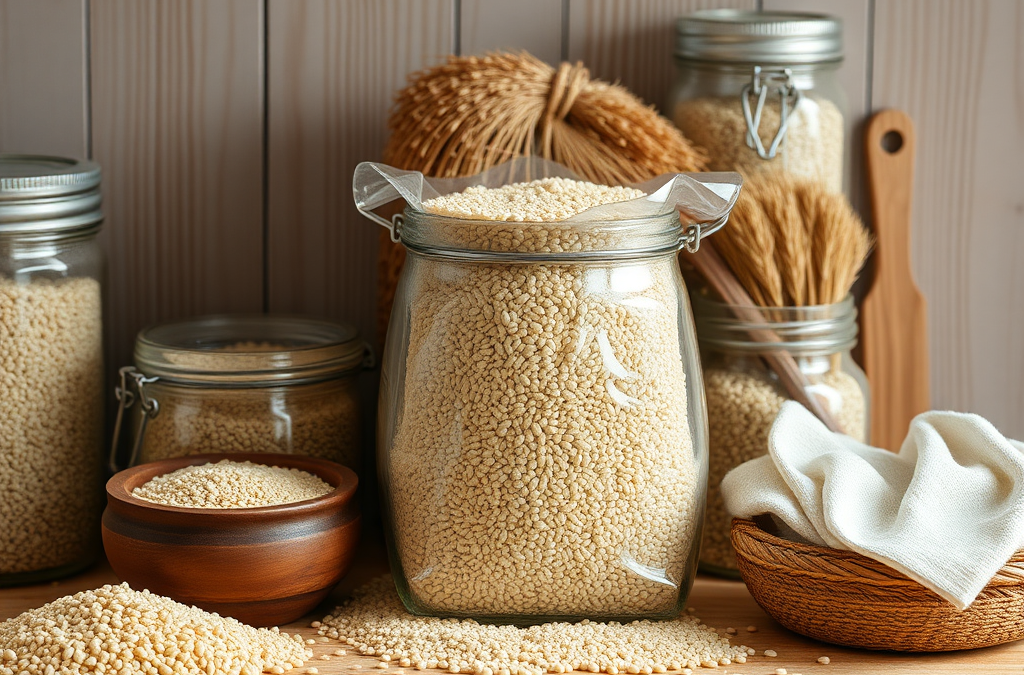
Home grain storage and rotation are essential for preserving the freshness and quality of your grains. To effectively store grains like wheat and rice, use airtight containers made of glass or heavy-duty plastic, keeping them in cool, dark places to prevent spoilage. Implementing a rotation system, such as the FIFO method, ensures that older grains are used first, reducing waste and maintaining food safety. Regularly inspect your stored grains for pests and moisture, as these can compromise quality. By following these practices, you can extend the shelf life of your grains and ensure they remain safe for consumption.
Understanding Home Grain Storage
Home grain storage is vital for ensuring that grains remain fresh and safe for consumption. Grains such as wheat, rice, and oats can degrade in quality if not stored properly. Factors like temperature, humidity, and exposure to light can significantly affect grain longevity. For instance, storing grains in a cool, dark place helps preserve their nutritional value and prevents spoilage.
Choosing the right storage containers is also essential. Airtight containers made from glass or heavy-duty plastic are ideal for keeping moisture and pests at bay. It’s crucial to avoid storing grains in paper or cloth bags, as these can allow air and moisture to enter, leading to mold growth. Understanding these basic principles sets the foundation for effective grain storage.
The Importance of Grain Rotation
Grain rotation is a strategy that involves using older stock before newer stock to minimize waste and ensure food safety. This practice helps to prevent grains from sitting too long, which can lead to spoilage or a decline in quality. The FIFO (First In, First Out) method is commonly used in grain rotation. By labeling containers with purchase dates, you can easily track which grains should be used first.
Implementing a rotation system not only keeps your inventory fresh but also allows for better inventory management. Regularly checking and rotating your grain supply ensures that any potential issues, such as pest infestations or moisture accumulation, are caught early. This proactive approach can save money and reduce food waste.
Best Practices for Storing Grains
To effectively store grains, consider the following best practices: First, keep grains in a cool, dry area with stable temperatures. Ideal storage conditions are around 50°F (10°C) with low humidity levels. Second, use airtight containers to protect grains from moisture and pests. Glass jars, food-grade buckets with airtight lids, or vacuum-sealed bags are excellent options.
Third, regularly inspect your stored grains for signs of spoilage or pest activity. If you notice any issues, address them immediately to prevent further damage. Lastly, consider using oxygen absorbers in storage containers to extend shelf life by reducing oxygen levels that can lead to oxidation and spoilage.
Common Mistakes in Grain Storage
Many individuals make mistakes grain storage that can lead to significant losses. One common error is storing grains in unsuitable containers, such as cardboard boxes or plastic bags, which can allow moisture and pests to infiltrate. Another mistake is neglecting to check the storage environment; fluctuations in temperature and humidity can cause grains to spoil quickly.
Additionally, failing to rotate grains properly can result in older stock being forgotten and eventually going bad. It’s also essential to avoid overstocking, as this can lead to grains sitting for extended periods, increasing the risk of spoilage. By being aware of these pitfalls, you can enhance your grain storage practices significantly.
Frequently Asked Questions
What is the best temperature for storing grains?
The ideal temperature for storing grains is around 50°F (10°C) to prevent spoilage and maintain quality.
How long can grains be stored?
When stored properly, grains can last anywhere from several months to several years, depending on the type of grain and storage conditions.
What containers are best for grain storage?
Airtight containers made from glass or heavy-duty plastic are ideal for grain storage, as they protect against moisture and pests.
How can I tell if my grains are spoiled?
Signs of spoilage include an off smell, discoloration, or the presence of mold or pests. If you notice any of these, it's best to discard the grains.
Should I use oxygen absorbers in my grain storage?
Yes, using oxygen absorbers can help extend the shelf life of grains by reducing oxygen levels that contribute to spoilage.
Conclusion
Effective home grain storage and rotation are essential for preserving the quality and freshness of your grains. By understanding the importance of proper storage conditions, utilizing suitable containers, and implementing a rotation system, you can significantly reduce waste and ensure your grains remain safe for consumption. Regularly checking your inventory and avoiding common storage mistakes will further enhance your grain management practices, allowing you to enjoy high-quality grains for longer periods.
Get Whole Wheat Flour, Grains and Milling Supplies – CLICK HERE

Related Content
- The Ultimate Guide to 10 Effective airtight grain storage containers for 2025
- The Ultimate Guide to Emergency Grain Storage Strategies for 2025
- Appropriate and Safe Food Storage
- Grain shortage and rising food prices: worldwide crisis.
- Organizing Food Storage Pantry: Essential Steps for Maximum Efficiency
Auto Amazon Links: No products found.