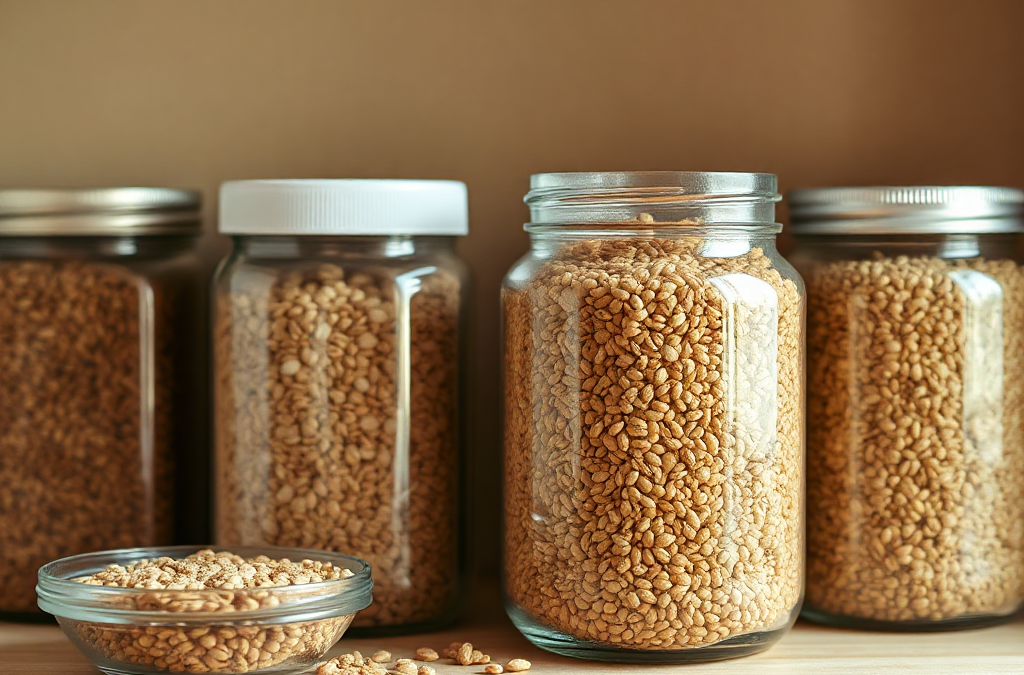
Store grains for children in clean, dry, sealed containers, label them with purchase or opening dates, and keep them in a cool cupboard away from heat, moisture, pests, and household chemicals. Choose intact, fresh products and inspect packages for tears, insects, dampness, or unusual odors before use. Refrigerate or freeze whole-grain flours and other products with more natural oils when the package directs it, because they can become rancid sooner than polished white rice or refined flour. Cooked grains need prompt refrigeration in shallow containers and should not remain at room temperature for extended periods.
Choose Grains and Containers With Children in Mind
Safe grain storage begins before a package enters the pantry. Examine the seal, date information, and product condition at the store. A torn bag, damp cardboard, clumped flour, or visible insect activity is a poor starting point because storage cannot reverse contamination or quality loss. Useful choices for family meals include oats, rice, barley, quinoa, cornmeal, whole-wheat flour, and dry cereals, but each product behaves differently once opened.
Container design matters more than decorative packaging. Use a clean, completely dry, food-grade container with a tight-fitting lid. A rigid container is easier for children to handle safely than a large, floppy sack, and it reduces the chance that a scoop will tear the package or spread crumbs. Smaller containers may be preferable for flour or cereal used daily; opening a small portion limits repeated exposure of the entire supply to humid kitchen air.
Whole grains and whole-grain flours deserve extra attention because the germ contains natural oils that can develop stale or rancid flavors sooner than highly refined products. Brown rice, rolled oats, whole-wheat flour, and millet may benefit from refrigeration or freezing when a package label recommends it, particularly in a warm kitchen. Dry white rice and unopened refined flour are usually less demanding, but they still need protection from moisture and insects. Longer storage is not automatically better storage: a large bulk purchase may save money while increasing waste if the family cannot use it before quality declines.
For younger children, storage and serving decisions are connected. Keep dry grains out of reach of toddlers who may scatter or mouth them, and avoid presenting hard, dry kernels as snacks. Products such as popcorn kernels, uncooked rice, and dense dry cereal can be difficult for a young child to manage. Store them securely, then prepare them into a soft, age-appropriate texture. Advice on how to safely store grains for children should therefore include both pantry protection and the way the food will be served.
Control Moisture, Heat, and Pests
Moisture is the main storage enemy for dry grains because it can encourage mold growth, clumping, stale odors, and insect activity. Keep containers away from the sink, dishwasher steam, stove, and refrigerator exhaust. A cool, dry cupboard is generally more suitable than a garage, basement, or shed where temperature and humidity may fluctuate. Do not place a container directly on a floor that could become wet; a shelf also makes inspection and cleaning easier.
Heat accelerates quality loss, especially in products containing more natural oils. A clear jar on a sunny counter may look convenient, but light and warmth are poor tradeoffs for flour, oats, and brown rice. An opaque container in a shaded cupboard better protects the contents. Refrigeration can extend quality for some whole-grain products, although it uses space and may create condensation if a cold container is opened in a steamy kitchen. Letting the container warm while sealed can reduce that problem.
Pests often enter through thin original packaging or arrive unnoticed in a purchased product. A sealed container helps contain an issue, but it does not make an infested product usable. Look for webbing, small holes, larvae, beetles, or powder that appears unusually fine and mobile. If you find evidence of insects, isolate the container, discard affected food according to local waste guidance, and clean the shelf before restocking. Spraying pesticides around food is not an appropriate substitute for removing the source and following the product label.
A practical pantry arrangement keeps frequently used foods in front and less-used supplies behind them. Leave a little space between containers so leaks or insect activity are visible. Avoid transferring new grain into a container that still contains old residue; wash, rinse, and dry it fully first. The common mistake is treating a tight lid as complete protection. A sealed container cannot correct damp product, a warm location, a dirty scoop, or unnoticed spoilage already present at the time of transfer.
Separate Pantry Storage From Cooked-Grain Safety
Dry-grain storage and cooked-grain storage involve different hazards. Uncooked rice, oats, or flour are mainly threatened by moisture, pests, and declining quality, while cooked grains contain water that supports bacterial growth if they are left warm for too long. After cooking rice, pasta, quinoa, or porridge, divide leftovers into shallow containers so they cool more efficiently, then refrigerate them promptly using safe household food-handling practices.
Do not rely on smell alone to judge cooked leftovers. Food can become unsafe without an obvious odor or visible change, and reheating does not guarantee that every hazard has been removed. Mark the container with the cooking date and use a small portion for a child rather than repeatedly warming the entire batch. Repeated cooling and reheating creates more opportunities for poor temperature control and can make texture less appealing.
Storage also affects a child’s eating experience. Refrigerated rice may become firm, while chilled oatmeal can thicken; add a suitable liquid during reheating and check the temperature before serving. Never serve food hot enough to burn the mouth, and stir carefully because microwaves can create hot pockets. For infants and toddlers, mash or soften grains as appropriate for their developmental stage. A grain is not safe merely because it is nutritious; texture, size, dryness, and the child’s ability to chew and swallow all matter.
For example, a family that cooks a large pot of brown rice for several lunches should cool it in several shallow containers rather than leaving the pot on the counter. The tradeoff is more washing and refrigerator space, but the approach makes portions easier to monitor and serve. A family with limited space may be better served by cooking smaller amounts more often. The related grain storage checklist should distinguish pantry supplies from ready-to-eat leftovers instead of applying one rule to both.
Build a Simple Inspection and Rotation Routine
A rotation system prevents forgotten grain from becoming a hidden quality problem. Label each container with the product name and the date it was opened, then place the oldest usable container where it will be selected first. “Best by” dates generally describe quality rather than providing a universal safety deadline, so use the date alongside condition, storage history, and the manufacturer’s instructions. If a product was exposed to water, heat, or pests, the printed date does not make it acceptable.
Get Whole Wheat Flour, Grains and Milling Supplies – CLICK HERE 
Check dry grains before transferring or cooking. The contents should be dry and free from insects, webbing, unexplained damp clumps, mold, and off odors. A stale, paint-like, or bitter smell in a whole-grain product may indicate rancidity. Do not taste food to test whether it is safe. When only part of a package looks questionable, do not simply scoop from the clean-looking side; contamination may not be evenly visible.
A short weekly check of high-use foods and a more thorough monthly pantry review are realistic for many households. Include the shelf, lid threads, measuring cups, and nearby foods. Crumbs attract pests, while a slightly wet scoop can introduce enough moisture to damage a container over time. Children can participate by reading labels or helping place older containers in front, but an adult should handle inspection, disposal, hot foods, and any product that might be unsafe.
- Keep: clean, dry grain with intact quality and a clear storage date.
- Use soon: opened products nearing their quality limit or whole-grain items stored in a warm environment.
- Discard: food with mold, insects, webbing, water damage, rancid odor, or an uncertain storage history.
The strongest routine is one the household can maintain. Buying several months of grain may be sensible for a family that has cool storage, dependable rotation, and regular use. Smaller packages are often the wiser choice when pantry space is warm, humid, or difficult to inspect. For more household planning context, use how to safely store grains for children as a reminder to match quantity, container, location, and serving needs.
Frequently Asked Questions
Should grains for children be stored in the original package?
Use the original package only if it is intact, dry, and resealable. Transfer opened grains to a clean, dry, tightly sealed food-grade container for better pest and moisture protection.
Is it safe to store whole-wheat flour at room temperature?
It may be acceptable for short-term use in a cool, dry pantry, but refrigeration or freezing may preserve quality longer because whole-wheat flour contains more natural oil than refined flour.
How should cooked rice be stored for a child?
Place cooked rice in shallow containers, refrigerate it promptly, label the date, and reheat only the portion needed. Check its temperature and texture before serving.
What signs mean dry grains should be discarded?
Discard grains with mold, insects, webbing, water damage, unexplained dampness, or a rancid or unusual odor. Do not taste questionable food to assess it.
Can toddlers eat uncooked grains or popcorn kernels?
Uncooked grains and hard kernels are not suitable snacks for young children because their dry, hard texture can create a choking hazard. Prepare grains to a soft, developmentally appropriate texture.
Conclusion
Reliable grain storage for children comes from matching the food to the container, location, quantity, and intended use. Keep dry products sealed in a cool, dry cupboard, give whole-grain flours and similar items extra attention, and inspect every package for moisture or pests. Treat cooked grains as perishable foods: portion them into shallow containers, refrigerate them promptly, and reheat only what the child will eat. Rotation matters as much as the container, so label opened foods and use older supplies first. Begin by checking the pantry today, replacing damp or damaged packaging, and moving frequently used grains into clean containers that an adult can inspect easily.Get Whole Wheat Flour, Grains and Milling Supplies – CLICK HERE
Auto Amazon Links: No products found.
Further Reading
Authoritative Sources
- Preparing an Emergency Food Supply, Long Term Food Storage
fcs.uga.eduCover the wheat with the lid, but not tightly, for five or six hours before tightening the lid to be air tight. Other grains to consider storing include rye, ...
- Choking Hazards | Infant and Toddler Nutrition
cdc.govCutting food into smaller pieces and mashing foods can help prevent choking. Fruits and vegetables to avoid Cooked or raw whole corn kernels. ...
- How to Properly Store Whole Grains: A Beginner's Guide
bobsredmill.comWhen storing both soft and hard grains, choose an airtight storage container with a tight lid. These containers will help prevent outside moisture and irritants ...
- Safe Food Storage
en.hesperian.orgStore dried grains in well-sealed, clean containers in a place protected from moisture and pests. Smoke the grain before it is stored to kill pests.