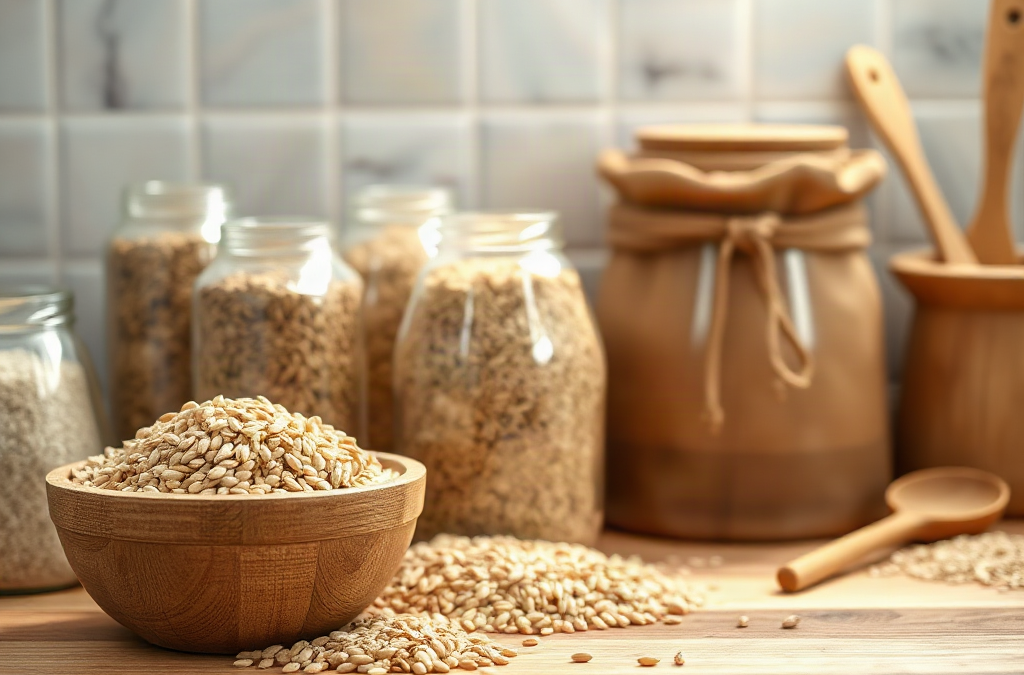
The best grain storage location in a kitchen is a cool, dry interior cabinet away from the oven, dishwasher, sink, refrigerator exhaust, and direct sunlight. Place frequently used dry grains in sealed containers on an accessible middle shelf, while keeping whole-grain flour and other high-fat milled products in the refrigerator or freezer for longer freshness. The chosen cabinet should remain dry, have stable temperatures, and allow containers to be inspected without moving heavy stacks. Avoid spaces above appliances or beneath plumbing, where heat, condensation, leaks, and unnoticed insects can compromise grain quality.
What Makes a Kitchen Location Suitable for Grain?
A suitable kitchen location protects grain from four practical threats: heat, moisture, light, and pests. These conditions matter more than whether the space is labeled a pantry or cabinet. A pantry beside an oven may expose food to more temperature fluctuation than an ordinary interior cupboard across the room, so the name of the storage area does not establish its quality.
Temperature stability deserves priority because warm storage accelerates quality loss, particularly in products that retain natural oils. A cabinet above a range can become noticeably warm whenever the cooktop or oven operates. The top of a refrigerator may have the same problem because the appliance releases heat. Grain stored in either place may still look normal while developing stale aromas or flavors sooner than expected.
Moisture presents a different risk. Paper packages and loosely closed bags do little to isolate grain from humid air, splashes, or a plumbing leak. The cabinet below a sink is therefore a poor choice even if it has ample room. Drain connections, supply lines, cleaning liquids, and damp surfaces make that space unnecessarily vulnerable. A sealed container offers useful protection from ordinary kitchen humidity, but it should not be treated as permission to store food beside plumbing.
Light is less troublesome inside an opaque cabinet, although transparent containers left on an open counter receive both light and changing room temperatures. Countertop storage can be reasonable for a small quantity used quickly, such as a jar of rolled oats eaten every morning. It is a weak location for reserve packages expected to remain untouched for months.
Pest resistance depends on both location and packaging. Grain beetles, moths, and other pantry pests can arrive in a package or spread from nearby dry foods. A clean cabinet and tight container limit the opportunity for an infestation to move through the pantry. Cardboard cartons and folded retail bags offer less containment. Check seams, shelf corners, spilled kernels, webbing, small insects, and unexplained dust around packages. Finding these signs early is easier when containers are visible and the shelf is not overcrowded.
The common mistake is choosing the largest empty space without considering why it is empty. Awkward cabinets near heat, water, or strong sunlight often remain unused for good reason. Favor a smaller stable cupboard over a spacious but hostile location.
Which Cabinets and Shelves Work Best?
An interior cabinet on a middle or lower shelf usually provides the strongest balance of temperature stability, accessibility, and protection. “Interior” means a cupboard that is not directly adjacent to a heat-producing appliance, an exterior wall prone to seasonal temperature changes, or a sink base containing pipes. A dedicated pantry closet can work equally well if it stays dry and does not trap heat.
Middle shelves are convenient for everyday containers because labels and contents can be inspected at eye level. They also reduce the temptation to place grain behind unrelated cans, appliances, or cleaning products. Lower shelves suit heavier containers, especially large jars or food-grade bins, because lifting them overhead creates a dropping hazard. Keep food off the cabinet floor if that surface is difficult to clean or likely to collect crumbs.
Upper cabinets are not automatically unsuitable. An upper cupboard away from the range can hold lightweight packages safely, but assess it during normal cooking. Open the door after the oven has been running and compare the interior with a cupboard elsewhere. Noticeable warmth indicates that another location is preferable. Do not assume a closed door blocks heat transferred through a shared wall or rising from an appliance.
Open shelving offers visibility but provides less protection from light, cooking vapor, and airborne grease. It works best for modest quantities in opaque or light-limiting, tightly closed containers that turn over quickly. A decorative jar beside the stove is convenient, yet repeated exposure to steam and grease makes that placement difficult to keep clean. Moving the same jar several feet away into a cupboard preserves convenience without accepting those conditions.
| Kitchen location | Best use | Main concern |
|---|---|---|
| Cool interior cabinet | Dry grains used routinely | Packages becoming hidden or overcrowded |
| Dedicated pantry | Multiple containers and reserve packages | Heat buildup and poor stock rotation |
| Lower shelf | Heavy jars or larger food-grade containers | Spills and limited visibility |
| Open shelf | Small, fast-moving quantities | Light, grease, steam, and temperature changes |
| Refrigerator or freezer | Higher-fat milled products or longer holding | Condensation and insufficiently sealed packaging |
A location is working when packages remain dry, the cabinet has no musty odor, containers do not feel warm, and older stock stays easy to reach. It is failing when condensation appears, shelves feel warm after cooking, crumbs accumulate behind bins, or forgotten packages repeatedly expire at the back.
Where Do Different Grain Products Belong?
The appropriate location changes with the grain’s form, oil content, package condition, and expected holding time. Intact dry grains such as white rice, barley, and wheat berries generally tolerate a cool cabinet better than milled whole-grain products. Milling exposes more surface area to oxygen, while bran and germ retained in whole-grain flour contain oils that can develop stale or rancid flavors.
Frequently used intact grains can remain in a dry cabinet in well-fitted containers. For example, a household that cooks brown rice twice a week may keep a working jar on a middle pantry shelf and place a larger reserve supply in a cooler storage area outside the active kitchen, if one is available and suitable. The working amount is replenished only after the jar is cleaned and checked. This arrangement limits repeated opening of the reserve package.
Whole-grain flour, brown rice, cornmeal, and other products containing more of the grain’s natural oils merit closer attention. If they will not be used promptly, refrigerated or frozen storage may preserve quality better than a warm cupboard. Packaging must be tightly sealed so the food does not absorb moisture or odors. Before opening a container taken from cold storage, allow it to approach room temperature while still closed; this reduces the chance that humid room air will condense directly on the cold food.
Refined flour and white rice are often less vulnerable to rancidity than their whole-grain counterparts, but they still need protection from moisture and insects. Their comparatively stable composition does not make a cabinet above the stove appropriate. Location and container work together: a good container cannot stop repeated heating, and a cool cabinet cannot prevent insects from spreading through an open paper sack.
Get Whole Wheat Flour, Grains and Milling Supplies – CLICK HERE 
Cooked grain belongs in the refrigerator rather than a dry-food cabinet. Cool leftovers promptly in shallow containers and follow current food-safety guidance for refrigerated storage and reheating. Dry-storage advice should never be applied to cooked rice, quinoa, barley, or oatmeal, because their available moisture creates a different safety situation.
A useful decision order is to identify whether the product is dry or cooked, whether it is intact or milled, how quickly it will be used, and whether its package truly seals. The frequent mistake is treating every item called “grain” as interchangeable. A sealed bucket of wheat berries, an opened bag of whole-wheat flour, and a container of cooked rice require different environments even though all began as grain.
How to Evaluate and Organize the Storage Area
Evaluate a proposed location during normal kitchen use rather than when the room is idle. Cooking, dishwashing, afternoon sunlight, and appliance operation reveal heat and humidity problems that may not be apparent in the morning. Check the cabinet after baking, boiling water, and running the dishwasher. Look for warmth, steam intrusion, damp shelf liners, plumbing stains, grease film, or a musty smell.
Next, inspect how the space will function after it is filled. Containers should fit without being wedged together, and every label should remain readable. If accessing an older package requires removing a tower of heavy jars, stock rotation will eventually fail. Deep cabinets benefit from shallow trays that can be pulled forward, but trays should not become unexamined holding areas for crumbs and spilled grain.
Use this compact placement check before assigning the shelf:
- Test the environment: Reject locations that become warm, damp, greasy, or sunlit during routine kitchen activity.
- Inspect nearby hazards: Keep grain away from pipes, cleaning chemicals, oven walls, dishwasher heat, and refrigerator exhaust.
- Match weight to height: Put heavy containers low and lighter working containers at a comfortable viewing level.
- Create visible rotation: Mark the product and opening date, then place older grain ahead of newer packages.
- Schedule inspection: Check for damaged seals, insects, webbing, off odors, moisture, and unexplained powder or clumping.
Container choice should follow the storage pattern. A household using oats daily benefits from a manageable container with a dependable lid and a scoop that stays clean and dry. Bulk reserves are better divided or kept separately so the full supply is not exposed every morning. Avoid continually topping up a partly empty jar; old material can remain at the bottom, and evidence of pests or spoilage becomes harder to identify. Empty, clean, and thoroughly dry the container before refilling it.
Organization also affects purchasing decisions. Measure shelves and door clearance before buying large bins. A container that fits only when tilted may spill, damage its lid, or be abandoned on the counter. Square containers can use cabinet space efficiently, while clear sides make quantity and pest activity easier to observe; an opaque cabinet supplies the necessary light protection.
Review the area whenever seasons or kitchen habits change. A cabinet on an exterior wall may behave differently in midsummer than in winter, and a newly installed appliance can alter nearby temperatures. Persistent clumping, damp packaging, repeated insect activity, oily or paint-like odors, or unexpectedly stale flavor signals a need to inspect both the food and its environment. Do not taste grain that shows visible mold, pest contamination, or a distinctly objectionable odor. Correct the source—location, packaging, sanitation, or purchasing volume—rather than merely transferring questionable contents to a new jar.
Frequently Asked Questions
Can grain be stored in a cabinet above the refrigerator?
Only if the cabinet stays cool during appliance operation. Many refrigerators release heat nearby, so test the cupboard after the appliance has been running and choose another cabinet if it feels warm.
Is the cabinet under the kitchen sink suitable for grain?
No. Plumbing leaks, condensation, cleaning products, and damp surfaces make a sink cabinet an avoidable risk even when grain is held in sealed containers.
Should whole-grain flour be refrigerated?
Refrigeration or freezing is useful when whole-grain flour will not be used promptly because its natural oils can lose quality. Seal it well against moisture and odors.
Are clear grain containers safe in a pantry?
Yes, when the pantry or cabinet blocks direct light and remains cool and dry. Clear sides also make grain levels, clumping, and possible pest activity easier to notice.
Can unopened grain stay in its original package?
It can remain there for short-term use if the package is intact and the cabinet is suitable. For greater protection from moisture and pantry pests, place the package inside a tightly closed food-storage container.
Conclusion
Choose kitchen grain space by observing its actual conditions, not by relying on labels such as pantry, upper cabinet, or bulk shelf. A stable interior cupboard is usually the practical choice for dry everyday products, while cold storage deserves consideration for whole-grain flour and other oil-rich milled foods kept beyond quick use. Reserve lower shelves for heavy containers, separate food from plumbing and chemicals, and avoid heat from ranges, dishwashers, and refrigerator exhaust.
Inspect the proposed area after cooking, arrange containers so older stock remains visible, and clean each vessel before refilling it. Reassess the setup if packages become warm, damp, clumped, stale-smelling, or difficult to inspect. The strongest system combines a suitable location, dependable packaging, realistic purchase quantities, and routine observation rather than expecting any single container or cabinet to compensate for poor conditions.
Get Whole Wheat Flour, Grains and Milling Supplies – CLICK HERE
Auto Amazon Links: No products found.
Further Reading
Authoritative Sources
- Grain storage facilities: overview of types, advantages and ...
zeo.uaGrain warehouses can be floor, semi-floor or hangar type. Bunker and silo storage facilities, ventilated or heat-protected silos are the best ...
- Grain Storage Practices
millermagazine.comThe large scale grain storage is done in Cover and Plinth (CAP) and silos. Food grains such as wheat, maize, gram, paddy, and sorghum are generally stored in ...
- (PDF) Grain storage: methods and measurements: Abstracts
researchgate.netBamboo structures are used for storing unthreshed and threshed paddy. The base or in some cases with stone slabs. Solid wall bins: The base of ...