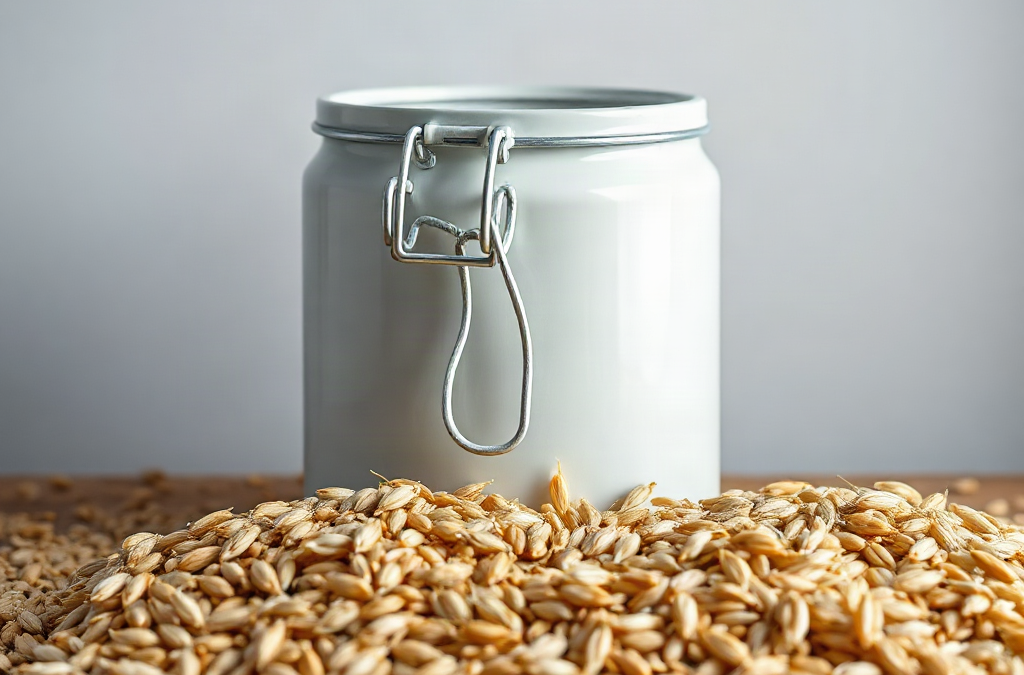
Oxygen absorbers generally do not damage properly dried whole grains, but they can make an unsafe storage situation harder to detect when grain contains excess moisture. The packets remove oxygen through iron oxidation; they do not remove water, stop existing mold, reverse rancidity, or compensate for a leaking container. Used with dry wheat berries, oats, barley, rye, or rice in a sealed high-barrier package, they usually protect flavor and slow oxidation and insect activity. The main risks come from sealing damp grain, choosing an unsuitable package, using too little absorber capacity, or mistaking a firm package and reduced oxygen for proof that the food is safe.
What Do Oxygen Absorbers Actually Do to Grain?
An oxygen absorber changes the atmosphere around stored grain rather than changing the grain itself. Most food-storage packets contain finely divided iron that reacts with oxygen and forms iron oxide. As that reaction proceeds, the oxygen concentration inside a properly sealed package falls. Nitrogen and other gases remain, so the package does not necessarily become a complete vacuum.
Reducing oxygen can slow several quality losses that affect intact kernels. It limits oxidative reactions responsible for stale flavors, particularly in grains whose bran and germ retain natural oils. It also creates unfavorable conditions for many storage insects and their eggs. That does not mean the packet sterilizes the contents: it does not kill every organism, neutralize toxins, or repair grain that was already deteriorating before packaging.
The distinction between oxygen and moisture is central. An oxygen absorber is not a desiccant. If wheat berries are packed while dry, the packet removes oxygen without making the kernels meaningfully wetter. If the same berries are packed after exposure to a humid room or before they have dried adequately, the packet leaves that water in place. The resulting low-oxygen package may conceal the original handling error rather than correct it.
A slight inward pull on a flexible barrier bag is normal because oxygen formerly occupying part of the headspace has been consumed. That pressure change can make a Mylar-style bag feel tight against the kernels. It is a packaging effect, not evidence that the grain has been crushed or chemically harmed. Sharp kernels can puncture a tightly drawn bag, however, especially when a thin bag is moved repeatedly. A food-grade bucket surrounding the sealed bag provides physical protection but does not replace the bag’s oxygen barrier.
Absorbers also cannot reverse rancidity. Rolled oats that already smell paint-like, oily, bitter, or stale will not become fresh after oxygen removal. The practical priority is to package clean, sound, dry grain promptly, rather than treating the packet as a rescue tool. Compared with storing grain in ordinary air, low-oxygen packaging can preserve quality longer, but only when moisture, temperature, package integrity, and starting quality are controlled together.
When Can Oxygen Absorbers Create a Risk?
Excess moisture is the condition most likely to turn oxygen-free packaging into a poor choice. Damp food sealed in a low-oxygen environment can support microbial hazards that dry-food storage methods are not designed to manage. A packet cannot establish whether homegrown, recently washed, sprouted, or incompletely dried grain is safe for room-temperature storage. Grain of uncertain dryness should not be sealed with absorbers merely because its surface feels dry.
Consider home-harvested wheat that has been brought indoors after wet weather. Kernels on the outside of a container may feel firm while moisture remains unevenly distributed through the batch. Sealing that wheat immediately removes a visible warning mechanism—air exchange—without removing the moisture. Commercially dried grain from a reliable dry-goods supplier is a more predictable candidate than a batch whose harvest and drying history is unknown.
Another failure mode is using an absorber in packaging that readily admits air. A thin household zipper bag, loosely fitted lid, or permeable plastic container allows oxygen to return continuously. The packet may exhaust itself while trying to offset leakage, leaving the grain exposed after the initial reaction. A jar with a sound gasket or a heat-sealed, food-grade high-barrier bag is materially different from ordinary plastic film.
Incorrect capacity creates a less dramatic but still consequential problem. Too little absorber capacity may leave substantial residual oxygen in a large container or one with extensive headspace. Excess capacity is generally not what damages dry grain; it is more likely to be an unnecessary expense or to pull a flexible package more tightly around sharp kernels. Follow the packet manufacturer’s sizing instructions because capacity depends on container volume, food displacement, headspace, and the packet’s rated performance.
Temperature remains relevant after sealing. Warm storage accelerates chemical deterioration, and repeated temperature swings can move moisture within a package. Removing oxygen does not make an attic, hot garage, or sunlit shed suitable for long-term grain storage. A stable, cool, dry location remains preferable.
The weak assumption behind many failures is that a contracted bag proves safety. It proves only that gas volume changed and the package may have retained its seal. It says nothing reliable about initial moisture, mold toxins, cleanliness, or flavor. Safety begins with suitable grain before the absorber is opened.
Which Whole Grains Are Suitable for Oxygen-Free Storage?
Dry, intact, low-moisture kernels are the strongest candidates for oxygen absorbers. Wheat berries, polished or whole-grain rice, barley, rye, millet, and similar dry grains are commonly packaged this way when their source and condition are dependable. Intact kernels generally keep better than flour because grinding exposes far more surface area and releases the oils in the bran and germ to oxidation.
Not every product sold near the grain aisle behaves the same way. Plain dry oats differ from flavored instant oatmeal containing dairy ingredients, fruit pieces, sweeteners, or added fats. A multigrain blend may include seeds or oily components that set the practical shelf life for the entire package. Oxygen removal can slow oxidation, but it cannot give a high-fat ingredient the same keeping qualities as an intact wheat kernel.
| Food condition | Suitability | Primary concern |
|---|---|---|
| Commercially dried intact kernels | Generally suitable | Confirm sound packaging and cool storage |
| Freshly milled whole-grain flour | More limited | Exposed oils deteriorate faster than intact kernels |
| Home-harvested grain of uncertain dryness | Not suitable without reliable evaluation | Uneven or excessive moisture |
| Sprouted, washed, or cooked grain | Not suitable for dry room-temperature storage | Added moisture and microbial growth |
| Grain mixes containing nuts or oily seeds | Case-specific | Shortest-lived ingredient controls quality |
Seed grain intended for planting deserves separate treatment. Food quality and germination performance are different goals. Seed viability changes with variety, initial vigor, moisture, temperature, and storage duration. A method chosen for edible reserves should not automatically be assumed to preserve germination. Keep planting seed in a storage system selected for seed viability, and test a sample for germination before relying on it for a future crop.
Brown rice and oats require more conservative expectations than hard wheat because their natural oils can become rancid. An absorber may slow that process, especially when combined with cool conditions, but it does not stop all deterioration. If rapid rotation, freezer space, or refrigeration is available, those options may be more practical for smaller amounts of oil-rich grain. Reserve long-duration ambient storage for foods that have a realistic keeping quality under the available conditions.
Visual cleanliness is not enough to establish suitability. Grain should be free of damp clumps, visible mold, unusual discoloration, active spoilage odors, and evidence of water exposure. Do not taste questionable grain to decide whether it is safe. When the source or moisture history cannot be trusted, replacing the batch is a more defensible choice than attempting to stabilize it with extra packets.
How to Package Whole Grains Without Creating Problems
Successful packaging depends on controlling the grain, container, packet exposure, and seal as one continuous process. Prepare every container before opening the absorber package. Once exposed to room air, unused packets begin reacting, so leaving them on a counter while filling multiple buckets wastes capacity.
Get Whole Wheat Flour, Grains and Milling Supplies – CLICK HERE 
Start by inspecting the grain under good light. Reject any batch with a musty odor, dampness, clumping, visible growth, or an uncertain water-exposure history. Use clean, dry, food-contact packaging. For bulk quantities, a high-barrier liner inside a rigid food-grade bucket combines atmospheric protection with resistance to punctures, pests, and handling damage. Glass jars can work for smaller amounts if their lids and sealing surfaces are sound.
A compact packaging sequence reduces avoidable errors:
- Verify the grain: Package only clean, properly dried grain with a known handling history.
- Prepare the containers: Check liners, jars, lids, gaskets, and heat-sealing equipment before exposing packets.
- Limit headspace: Fill efficiently without preventing a reliable seal or forcing kernels into the sealing area.
- Size the absorber: Follow the manufacturer’s directions for the container and expected headspace.
- Seal promptly: Remove one packet at a time when practical and reseal unused absorbers in an appropriate airtight container.
- Label and inspect: Record the grain, package date, and lot or source, then check the seal after the packet has had time to react.
A common mistake is dust or grain caught in a heat seal. The bag may look closed while a narrow channel still admits air. Wipe the sealing zone, make a continuous seal, and inspect it from both sides. Some packers add a second parallel seal for redundancy, but two poor seals do not equal one properly formed seal.
Do not combine oxygen absorbers with improvised methods without understanding how they interact. Dry ice, vacuum equipment, desiccants, and absorbers solve different problems and have different handling requirements. More interventions do not automatically create safer grain. For ordinary dry kernels, a suitable barrier package, correctly sized absorber, dependable seal, and cool storage location are the priorities.
Plan package sizes around actual use. A single large bag may be efficient to fill, but opening it exposes the entire supply to humid air and insects. Several smaller packages cost more in materials yet preserve unopened portions. Households that use grain slowly often benefit from dividing it into amounts that can be consumed within a reasonable period after opening.
Signs the Storage Method Is Failing
A storage system should be judged by both package integrity and grain condition. A bag that loses its initial tightness may have a puncture, weak seal, or closure failure, although changes in temperature can also alter its feel. Inspect the seams and corners rather than automatically adding another absorber outside the sealed liner. Replacing a failed package is more reliable than guessing where air entered.
Failure signs in the food carry more weight than whether the absorber packet feels warm or firm. Condensation, damp clumps, visible mold, fermented or musty odors, unexplained staining, and active moisture damage warrant rejection rather than repackaging. Rancid odors can resemble old oil, crayons, paint, or bitterness. Oxygen removal cannot restore acceptable flavor once those changes have occurred.
Live insects do not always prove that an absorber damaged the grain. They may indicate that the package leaked, the packet was exhausted before sealing, its capacity was insufficient, or the insects were not fully controlled by the conditions achieved. Move the affected package away from the rest of the supply and inspect adjacent containers. Identify the packaging failure before treating the grain as salvageable.
A packet torn open inside the grain presents a different issue from ordinary use. Food-safe absorbers are designed to remain in their intact sachets, not to have their contents mixed through food. Follow the manufacturer’s disposal guidance and avoid consuming grain contaminated by loose packet material when its identity and safe handling are uncertain.
Routine checks should focus on external condition so that packages do not have to be opened unnecessarily. Look for rodent damage, bucket cracks, rusted lids, broken seals, water intrusion, and temperature exposure. Rotate older packages first and inspect grain again when opened. If a container has remained sealed but experienced flooding, persistent heat, or an unknown storage history, an intact appearance should not override those known risks.
The practical test is not whether an absorber was present; it is whether the complete storage chain remained suitable. Dry starting material, intact barriers, prompt sealing, cool surroundings, and sensible rotation work together. When any link is uncertain, preserve the unaffected supply and replace questionable food rather than relying on smell, cooking, or additional absorbers to correct it.
Frequently Asked Questions
Can oxygen absorbers make whole grains too dry?
No. Oxygen absorbers consume oxygen rather than water, so they do not function as drying agents. Any dryness in the grain primarily reflects its condition before packaging and the surrounding storage environment.
Are oxygen absorbers safe to place directly with grain?
Food-storage absorbers are intended to sit inside the sealed package while remaining enclosed in their intact sachets. Do not open the sachet or deliberately mix its contents into the grain.
Why did the bag shrink tightly around the kernels?
Consuming oxygen reduces the gas volume and can pull a flexible barrier bag inward. The effect is normal, but sharp kernels may puncture thin material if the package is handled roughly.
Can an oxygen absorber save grain that smells musty?
No. A musty odor may indicate moisture damage or mold. Removing oxygen cannot reverse spoilage or reliably make questionable grain safe, so the affected batch should not be repackaged for later use.
Should oxygen absorbers be used with whole-grain flour?
They can reduce oxygen exposure, but whole-grain flour still deteriorates faster than intact kernels because milling exposes its oils. Smaller packages, faster rotation, and cooler storage are often more useful.
Conclusion
The absorber packet is only one part of a dependable grain-storage system. Give first priority to grain that is clean, fully dry, and free from musty odors or water exposure. Match it with a genuine oxygen-barrier package, use the packet capacity specified by its manufacturer, and complete the seal promptly. Cool, stable storage and protection from punctures remain necessary after the oxygen level falls.
Treat a tight bag as evidence of a reaction, not as proof of food safety. Check labels, package seams, outer containers, and storage conditions during rotation, then inspect the grain when it is opened. Dampness, condensation, mold, rancid odors, or a torn packet call for caution rather than another absorber. When moisture history is uncertain, replacing the grain is safer than trying to preserve it under reduced oxygen.
Get Whole Wheat Flour, Grains and Milling Supplies – CLICK HERE
Auto Amazon Links: No products found.