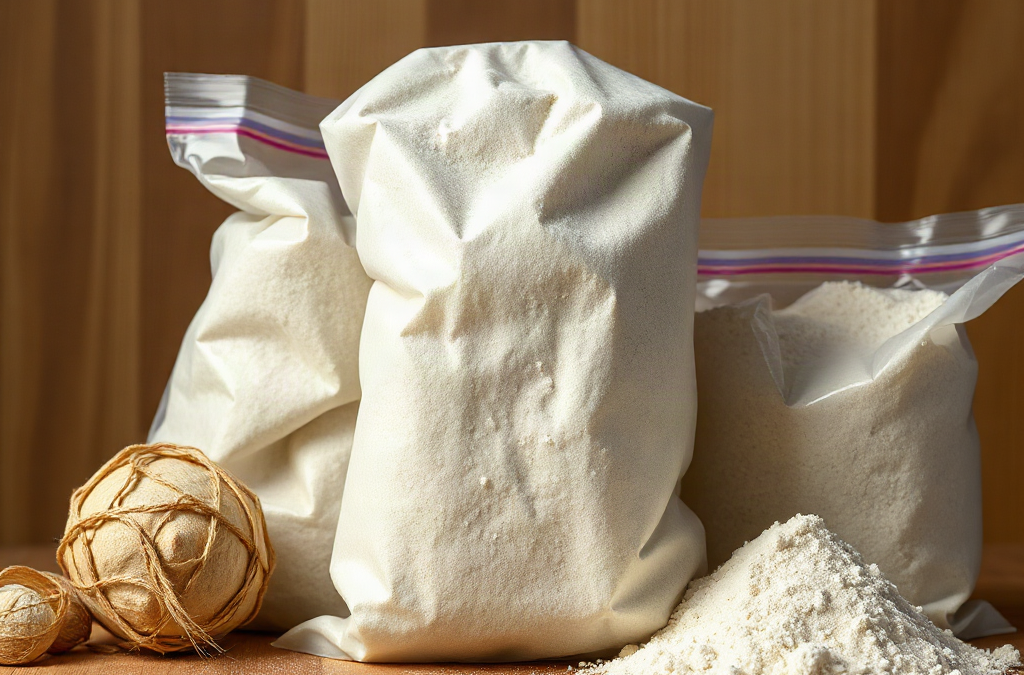
Wheat flour keeps well in either freezer bags or containers, but the better choice depends on air removal, moisture protection, freezer space, and resistance to punctures or odors. Heavy-duty freezer bags suit smaller portions because excess air can be pressed out and the packages freeze flat. Rigid airtight containers protect flour from crushing, torn packaging, and repeated handling, although unused headspace holds more air. For the strongest setup, divide flour into practical amounts, seal it tightly, label the date, freeze it away from aromatic foods, and let the unopened package reach room temperature before use so condensation forms outside rather than in the flour.
Which Option Protects Flour Better?
Protection depends more on the quality of the seal than on whether the package is flexible or rigid. Wheat flour is dry, but it can still pick up moisture and freezer odors when packaging leaks. Oxygen trapped in a package also matters, particularly for whole-wheat flour, because the natural oils associated with the bran and germ can develop stale or rancid flavors over time. A package that limits air exchange protects quality better than a loosely closed container bearing an airtight label.
A heavy-duty freezer bag performs well when its zipper or heat seal closes completely and the bag has no pinholes. The flexible material can be pressed close to the flour, reducing the volume of air left inside. That makes bags practical for flour that will remain undisturbed in a basket or on a stable freezer shelf. Their weakness is physical damage. A sharp frozen package, wire shelf edge, or repeated rearrangement can puncture a bag. Fine flour can also interfere with a zipper seal if it coats the closing track.
A rigid food-storage container offers better resistance to tearing, crushing, and accidental spills. It is especially useful in a chest freezer where packages are stacked, or when a portion will be opened and closed more than once. The tradeoff is headspace. Placing two cups of flour in a large container leaves a substantial pocket of air, and a lid that snaps on firmly is not necessarily vapor-tight. Containers also occupy the same amount of freezer space whether full or nearly empty.
| Decision factor | Freezer bag | Rigid container |
|---|---|---|
| Air removal | Easy to press out excess air | Depends on choosing a close-fitting size |
| Physical protection | Vulnerable to punctures and split seams | Resists crushing and rough handling |
| Space use | Can freeze flat and conform to gaps | Stacks neatly but has a fixed footprint |
| Repeated access | Possible, but the seal can collect flour | Usually easier to scoop from and reseal |
| Odor barrier | Good when thick and fully sealed | Good when the lid is genuinely airtight |
Do not assume that double packaging automatically fixes a weak seal. A thin retail paper sack inside a freezer bag can help contain flour, but the outer bag still needs to close without flour in its zipper. Likewise, a container should be inspected for warped lids, cracked rims, and missing gaskets. Choose bags for compact, undisturbed portions; choose containers where impact protection and frequent handling carry more weight.
How Do Freezer Space and Portion Size Affect the Choice?
Package size should match the amount of flour normally used between freezer visits. Small portions reduce repeated exposure to warm, humid kitchen air and make it easier to remove only what a recipe requires. Oversized packages save packing time, but every opening introduces fresh air and creates an opportunity for moisture to enter. A household that bakes one loaf at a time has different needs from one that routinely mixes several large batches.
Freezer bags are particularly efficient when flour is divided into recipe-sized or short-use portions. After sealing, each bag can be flattened into an even layer and frozen on a tray before being stacked vertically or horizontally. A thin package also warms more evenly than a dense block. The limitation is organization: unmarked white packages are difficult to distinguish, and bags can slide behind baskets or become trapped beneath heavier food.
Rigid containers make better use of vertical stacking space when their shapes match. For example, a family that keeps several types of flour frozen may assign separate, clearly labeled containers to bread flour, all-purpose flour, and whole-wheat flour. Straight-sided containers simplify identification and access. This approach becomes inefficient when containers are only partly filled or when mismatched shapes leave gaps throughout a crowded freezer.
A combined system is often more practical than treating the decision as exclusive. Sealed bags can be placed inside a larger freezer-safe bin to gain compact air removal and protection from punctures. The outer bin need not hold loose flour; it acts as a shield and keeps portions together. This arrangement is useful in a chest freezer where packages are moved frequently, although it adds another item to clean and label.
Before choosing, check four operational details:
- Normal use: Portion enough flour for a few recipes rather than an uncertain long interval.
- Available shape: Measure shelf height and basket width instead of buying containers by capacity alone.
- Handling level: Use rigid protection where frozen meat, jars, or baskets may press against flour packages.
- Identification: Mark the flour type, packing date, and amount on every individual package.
A common mistake is filling bags so deeply that they become rounded, awkward blocks. Another is choosing a very large container merely because it is already available. The package should minimize unnecessary air while remaining easy to lift, inspect, and return without scattering flour around the freezer.
How Should Wheat Flour Be Packed for Freezing?
Clean, dry packaging and an uncontaminated seal are the priorities when packing flour. Any water left after washing a container can form ice or dampen the flour. Food crumbs, oily residue, and strong odors inside reused packaging are equally undesirable. Use freezer-rated bags rather than lightweight sandwich bags, and use containers whose manufacturers identify them as suitable for freezer temperatures.
For a freezer bag, stand the bag in a bowl or wide measuring vessel while filling it. Leave enough unfilled material at the top to close the zipper without strain. Settle the flour gently rather than compacting it into a hard mass, wipe particles from the sealing track, and press out excess air without forcing flour toward the opening. Close most of the zipper, expel the final pocket of air, and finish the seal. Run clean fingers across the entire closure to check for gaps.
For a rigid container, select the smallest practical size that accommodates the portion without packing flour against the lid. The rim and gasket must be dry and free of dust before closure. A container filled to a sensible level protects the contents while limiting headspace. Do not overfill it: flour lodged between the rim and lid may keep the seal from seating, and expansion of trapped air or rough handling can loosen a strained closure.
Vacuum sealing may reduce the air around flour, but fine particles can be drawn toward the sealing area or into a machine. Follow the appliance manufacturer’s directions and use any flour-specific precautions it provides. Vacuum packaging is not a substitute for placing the package where sharp edges cannot damage it. It may also compress flour, so measuring by weight is more dependable than assuming its volume remains unchanged after storage.
Get Whole Wheat Flour, Grains and Milling Supplies – CLICK HERE 
Labeling should happen before the package enters the freezer, while its surface is dry and easy to write on. Include the flour variety, quantity, and packing date. If the original package provides preparation information or an identifying lot code that you want to retain, keep that section with your records or place the intact original bag inside a suitable outer package when space permits.
The finished package should pass a quick inspection: no flour in the closure, no visible holes, no loose lid, and no unexplained residue on the outside. Place it away from fish, onions, strongly seasoned foods, or other aromatic items unless both products are well sealed. If flour later shows wet clumps, freezer odors, packaging damage, insects, mold, or an abnormal sour or rancid smell, do not try to correct the problem by sifting it into a fresh container.
What Is the Right Way to Warm and Use Frozen Flour?
Frozen flour should generally warm in its sealed package before the package is opened. Opening it while cold exposes the flour to warmer air, and moisture from that air may condense on the cold contents. Keeping the seal closed shifts condensation toward the outside of the package, where it can be wiped away. The warming time varies with package size, shape, room conditions, and how firmly the flour was packed, so the package temperature is more useful than a fixed clock time.
A flat bag containing a modest portion will usually warm faster than a deep container holding several pounds. Set the unopened package on a clean, dry surface away from steam, a sink, or direct heat. When it no longer feels cold through the center, dry the exterior before opening. Do not warm flour in an oven or microwave; uneven heating can affect the product or damage packaging, and it is unnecessary for ordinary baking preparation.
If a recipe uses flour by volume, fluff or stir the flour after opening and measure it with the method specified by the recipe. Freezer storage and compressed packaging may change how densely flour settles in a cup without changing its actual amount. A kitchen scale avoids this source of variation. For yeast doughs and other temperature-sensitive mixtures, very cold flour can also lower the initial dough temperature, so allowing the sealed portion to warm gives more predictable handling.
Repeated freeze-and-warm cycles are less convenient and create more chances for condensation than freezing separate working portions. A baker who uses a cup or two each week should not repeatedly carry a large container between the freezer and counter. Instead, keep the main supply sealed and frozen, then remove a smaller package when needed. If a rigid container is used as the everyday working vessel, transfer a warmed portion into it only after confirming that the vessel is clean and completely dry.
Watch for failure signs rather than relying only on the written date. Flour that remains dry, neutral-smelling, and free-flowing has been better protected than flour with damp clusters or absorbed food odors. Whole-wheat flour deserves particular attention because changes in its natural oils can produce stale, bitter, paint-like, or otherwise unpleasant aromas. Freezing slows quality loss but does not restore flour that was already deteriorating when packed. Start with flour that looks and smells normal, then maintain a sealed, dry path from freezer to mixing bowl.
Frequently Asked Questions
Can wheat flour be frozen in its original paper bag?
A paper bag alone provides little protection from moisture, odors, spills, or insects. Place the intact paper package inside a well-sealed freezer bag or suitably sized airtight container.
Should flour be double-bagged before freezing?
Double-bagging is useful where punctures are likely, but two poor closures are not better than one sound seal. Heavy-duty packaging and clean zipper tracks matter more than extra layers.
Can frozen flour be used immediately?
It can be used cold in some recipes, but the sealed package should preferably reach room temperature before opening to reduce condensation and avoid unexpectedly cooling a dough or batter.
Are glass containers suitable for freezing flour?
Only use glassware the manufacturer identifies as freezer-safe. Although dry flour does not expand like liquid, glass is heavier, consumes more space, and may break under impact or thermal stress.
Is a vacuum-sealed bag better than a zipper freezer bag?
Vacuum sealing can remove more air, but flour dust may interfere with the seal or appliance. A properly closed heavy-duty zipper bag remains practical for portions used within a normal household rotation.
Conclusion
Choose packaging around the way the flour will actually be stored and handled. Flexible freezer bags make sense for compact portions that can lie flat and remain protected from sharp objects. Rigid containers earn their space when packages will be stacked, shifted frequently, or opened more than once. Neither option compensates for a dusty closure, a warped lid, excess headspace, or moisture introduced during packing.
Divide the flour into usable amounts, match each portion to the smallest suitable package, and label it before freezing. Inspect seals after arranging the freezer, especially if heavy food sits nearby. When a portion is needed, keep it closed until it has warmed through, then check its smell and texture before adding it to a recipe. That routine protects flour quality more reliably than choosing packaging by material alone.
Get Whole Wheat Flour, Grains and Milling Supplies – CLICK HERE
Auto Amazon Links: No products found.
Further Reading
Authoritative Sources
- The Best Way to Store All Sorts of Flours
food52.comPut flour into a plastic freezer bag, press the air out, then either put the bag into a another freezer bag or in an airtight container with as ...
- The best way to store whole grains
kingarthurbaking.comFor best results, place flour as far away from the freezer door as possible, to avoid incidental kitchen light and warmth. Expect a shelf life ...