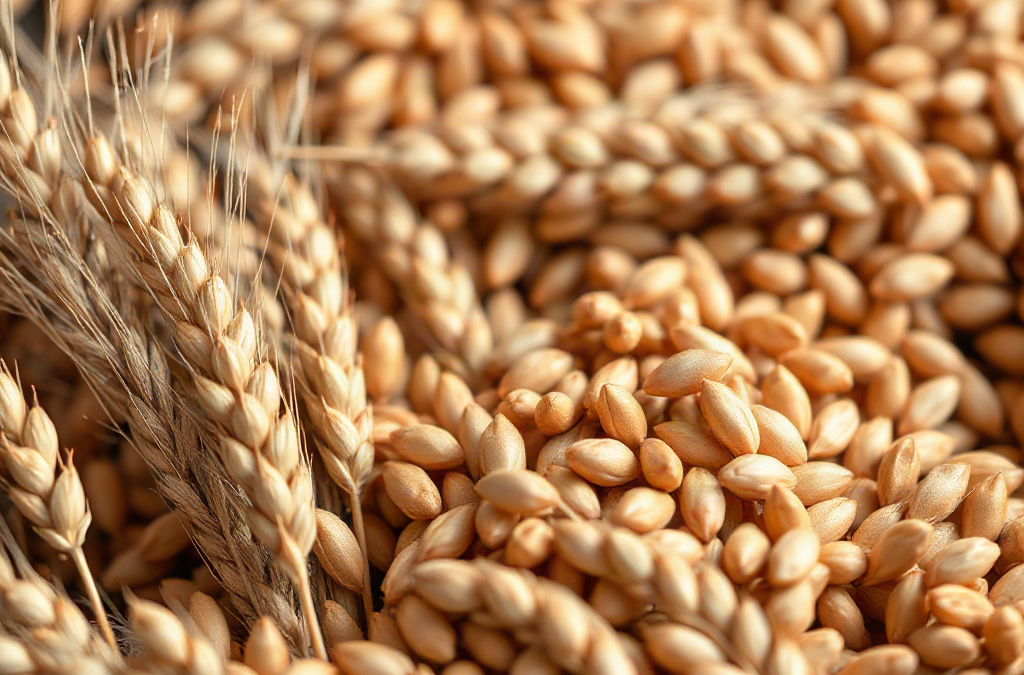
Whole wheat storage after temperature cycling is safest when the kernels are allowed to reach a stable temperature before sealing, then checked for condensation, dampness, and off odors. Repeated movement between cold and warm locations can make container walls or cool wheat fall below the surrounding air’s dew point, depositing moisture that raises mold and spoilage risk. Keep intact wheat berries in airtight, food-grade containers in a consistently cool, dry place, and avoid opening a cold container in humid air. If droplets, clumping, mustiness, insects, or visible growth appear, isolate the lot rather than returning it directly to long-term storage.
Why Do Temperature Cycles Create Moisture Around Wheat?
Temperature cycling becomes a storage problem when the wheat, container, and surrounding air change temperature at different rates. A bucket brought from a cold garage into a warm kitchen may remain cold for hours even though the room air has already warmed. If humid air reaches the cold lid, walls, or kernels, water vapor can condense on those surfaces. The temperature change itself does not add water to wheat; condensation and humid-air exchange do.
Container design affects where the moisture appears. A sealed container limits the entry of new humid air, but moisture already present in its headspace can migrate as warm and cool zones develop. A loosely closed sack or frequently opened bucket exchanges more air with the room, creating repeated opportunities for moisture to enter. Thin metal conducts heat quickly and may show droplets early, while a thick plastic bucket changes temperature more slowly. Neither material compensates for a damp storage site or a poor seal.
Consider wheat stored against an exterior basement wall. During a warm spell, the room air may become humid while the wall and the back of the container remain cool. Condensation may form on the exterior, which signals that conditions near the container are unfavorable even if the kernels remain dry. If the lid is opened at that moment, the same humid air can reach the cold contents. Moving the bucket away from the wall and allowing it to warm while closed is safer than opening it immediately to inspect.
A common misconception is that any cold-to-warm transition ruins wheat. One controlled transition in a sealed, intact package is not equivalent to months of daily heating and cooling in a shed. Risk rises with repeated cycles, large temperature differences, damaged seals, high ambient humidity, and wheat that was marginally dry when packed. Whole kernels generally tolerate storage better than flour because their protective outer structure remains intact, but they are not immune to mold, insects, or rancid odors when conditions deteriorate.
Treat visible exterior condensation as a prompt to correct the environment, not proof that the food inside is wet. Keep the package closed, wipe the outside dry, move it to a stable location, and let its temperature equalize. Interior droplets, damp kernels, caking, or musty odor require a more cautious assessment because those signs indicate that moisture reached the stored food or its internal surfaces.
How Should Cycled Wheat Be Inspected Before Repacking?
Inspection should separate harmless temperature exposure from evidence of moisture, pests, or deterioration. Begin with the container while it is still closed. Check the lid, gasket, seams, and walls for cracks, distortion, rust, punctures, or signs that the closure lifted during handling. Note whether droplets are only outside the package or visible beneath a translucent lid. A failed seal changes the decision because the original barrier can no longer be trusted.
Allow a cold package to approach room temperature in a dry location before opening it. Opening it while the contents are cold may introduce warm, humid air and create the very condensation being investigated. The equalization period cannot be reduced to one universal number: a small jar adjusts faster than a densely packed large bucket, and the difference between the storage and inspection temperatures matters. The practical indicator is that the container no longer feels markedly cooler than the room.
Once opened, inspect a sample from the surface and, when practical, deeper in the lot. Dry wheat berries should remain separate and pour freely. Compare their odor with wheat from a known-good package if available. Mustiness, sourness, unusual fermentation-like odor, visible fuzz, staining, wet patches, or warm compacted areas are warning signs. Webbing, cast skins, live insects, or fine dust associated with damaged kernels point to pest activity rather than condensation alone.
- Suitable for repacking: clean odor, free-flowing kernels, no interior droplets, no visible growth, and an intact package history.
- Needs isolation and further evaluation: uncertain seal, slight clumping, unexplained staining, pest evidence, or uncertainty about how long the lot stayed damp.
- Do not return to long-term storage: visible mold, persistent musty odor, obvious wetness, or extensive insect damage.
Do not rely on appearance alone when long-term storage is the goal. Grain can feel dry at the surface while moisture is unevenly distributed deeper in a large container. A grain moisture meter may provide additional information if it is designed and calibrated for wheat, but a casual reading is not a substitute for following the instrument’s sampling instructions. Household humidity meters measure surrounding air, not kernel moisture.
Tasting questionable wheat is a poor screening method, and cooking does not make mold-damaged grain appropriate for storage. If the condition is ambiguous, isolate and label the lot rather than mixing it with dry wheat. Combining uncertain kernels with a sound batch spreads moisture, insects, and odors while erasing the storage history needed to make a sensible decision.
How to Stabilize and Reseal the Wheat
Stabilization means bringing sound, dry wheat and its packaging into a steady, low-humidity environment before closing it for storage. Move the unopened container away from direct sun, heating equipment, cold floors, and exterior walls. Let the package equalize gradually rather than trying to accelerate warming with a heater. Rapid surface heating can leave the center cold and create internal temperature gradients.
If inspection confirms that the kernels are dry and clean, transfer them only when the room is dry and the replacement container is clean, completely dry, food-grade, and capable of maintaining a dependable seal. Small batches are easier to examine and rotate than one large container. Dividing a questionable storage history into several packages also limits the amount exposed each time wheat is opened for use.
- Record the event. Note where the wheat was stored, the approximate cold and warm conditions, how often it moved, and whether the original seal remained intact.
- Equalize while closed. Wait until the package and room are near the same temperature before inspection.
- Examine representative kernels. Check the top, center, and lower portion where the container permits safe sampling.
- Use dry packaging. Replace damaged lids, liners, or containers rather than trusting a closure that has warped or leaked.
- Label and monitor. Mark the repacking date and inspect the lot earlier than unaffected inventory.
Oxygen absorbers may be used in some properly prepared dry-grain packaging systems, but they do not remove liquid water and should not be treated as a remedy for damp wheat. Likewise, desiccant products have specific capacities and food-storage applications; adding an unknown packet to visibly moist grain does not establish that the lot is safe or stable. Moisture control must begin with dry kernels, dry packaging, and limited exposure to humid air.
Get Whole Wheat Flour, Grains and Milling Supplies – CLICK HERE 
Home drying is another area where confidence can exceed control. Spreading kernels briefly in a conditioned room may remove minor surface dampness, but it does not verify uniform moisture throughout the batch. Heating grain without suitable temperature control can affect seed viability, flavor, or milling behavior, and it may still leave damp pockets. Wheat intended for planting deserves separate handling because storage treatments and heat exposure can reduce germination even when the kernels remain usable as food.
After resealing, watch for renewed fogging, droplets, clumps, odor, package swelling, or pest activity. A stable lot should remain free-flowing and neutral-smelling, with no new moisture visible inside the container. Early reinspection is more useful than placing the bucket at the back of a long-term reserve and assuming that a fresh lid corrected the underlying conditions.
How Can Future Temperature Swings Be Reduced?
A stable location provides better protection than repeatedly moving wheat between very cold and warm spaces. Choose an interior area that stays dry, shaded, and separated from heat-producing appliances, water lines, and surfaces prone to condensation. Elevate containers off concrete floors and leave space around them for inspection and air movement. Floor-level storage beside an exterior wall often combines the coldest surface with the poorest visibility.
Location should be judged by variation as well as average temperature. A garage may feel cool at night yet become hot each afternoon, while an interior closet remains moderately cool with much smaller swings. For intact wheat, the steadier location is generally the more manageable choice, assuming it is dry and protected from pests. A refrigerator or freezer can offer stable cold storage for appropriately packaged quantities, but moving packages in and out requires discipline: keep them sealed until they have warmed enough that humid room air will not condense on the contents.
Packaging should match how the wheat is used. A large bucket may suit reserve inventory that remains closed, whereas smaller jars or bags are practical for the working supply. Opening the reserve container every week replaces its headspace with room air and increases handling exposure. A two-tier arrangement—sealed reserve packages plus one smaller active container—reduces disturbance without requiring specialized equipment.
| Storage Situation | Primary Concern | Practical Response |
|---|---|---|
| Cold package entering a warm room | Condensation after opening | Keep it sealed until temperatures equalize |
| Bucket beside an exterior wall | Cold surface and humid air | Relocate it inward and provide clearance |
| Frequently accessed reserve | Repeated humid-air exchange | Split reserve and working quantities |
| Daily shed or garage swings | Recurring expansion and moisture migration | Choose a more stable indoor location |
Monitoring does not require constant opening. Observe room temperature and relative humidity with a suitable household meter, inspect container exteriors, and check for roof leaks, plumbing moisture, or pest evidence. These observations reveal trends without exposing the wheat. A meter placed across the room may miss a cold, damp corner, so position monitoring near the stored containers while avoiding direct contact with a cold wall.
The recurring mistake is to focus on a single product—an absorber, liner, or heavy bucket—while ignoring the room. Robust packaging adds a barrier, but persistent heat, humidity, water intrusion, and repeated access can defeat that barrier. Prioritize a dry and stable site first, sound containers second, and a clear rotation and inspection record third. Those controls make changes visible before an entire reserve is affected.
Frequently Asked Questions
Does one cold-to-warm move spoil whole wheat?
Not necessarily. If the package stayed sealed and dry, one controlled transition may cause no damage. Let it reach room temperature before opening, then check for internal moisture, abnormal odor, clumping, and seal failure.
Should condensation on the outside of a bucket cause concern?
Exterior condensation shows that the bucket surface is below the surrounding air’s dew point. Dry the outside, relocate the container, and keep it closed while it equalizes; exterior droplets alone do not prove the wheat is wet.
Can an oxygen absorber fix wheat exposed to moisture?
No. An oxygen absorber reduces oxygen under suitable sealed conditions but does not remove liquid water or reverse mold damage. Confirm that wheat is dry and sound before packaging it with any storage aid.
Can cold wheat be opened immediately indoors?
It is better to leave the container sealed until it is close to room temperature. Opening cold wheat in warm, humid air can deposit condensation on the kernels or the inside packaging.
Should temperature-cycled wheat be mixed with another batch?
Keep it separate until its condition is clear. Mixing can transfer insects or moisture and makes it harder to trace odors, clumping, or other changes to the affected lot.
Conclusion
Temperature history matters most when it leads to humid-air exposure, condensation, seal damage, or repeated movement of moisture inside a package. Keep a cold container closed while it adjusts to a dry room, then inspect the closure and representative kernels before deciding whether to repackage the lot. Wheat with a clean odor, free-flowing texture, and no interior moisture can be placed in clean, dry, airtight packaging and monitored earlier than unaffected stock. Isolate any batch with an uncertain history, and do not return visibly moldy, musty, or wet kernels to the reserve. For future storage, favor a steady interior location, separate working quantities from reserve packages, and document unusual temperature events. Environmental stability and prompt inspection are more dependable than trying to correct damp grain with an accessory after the fact.
Get Whole Wheat Flour, Grains and Milling Supplies – CLICK HERE
Auto Amazon Links: No products found.