
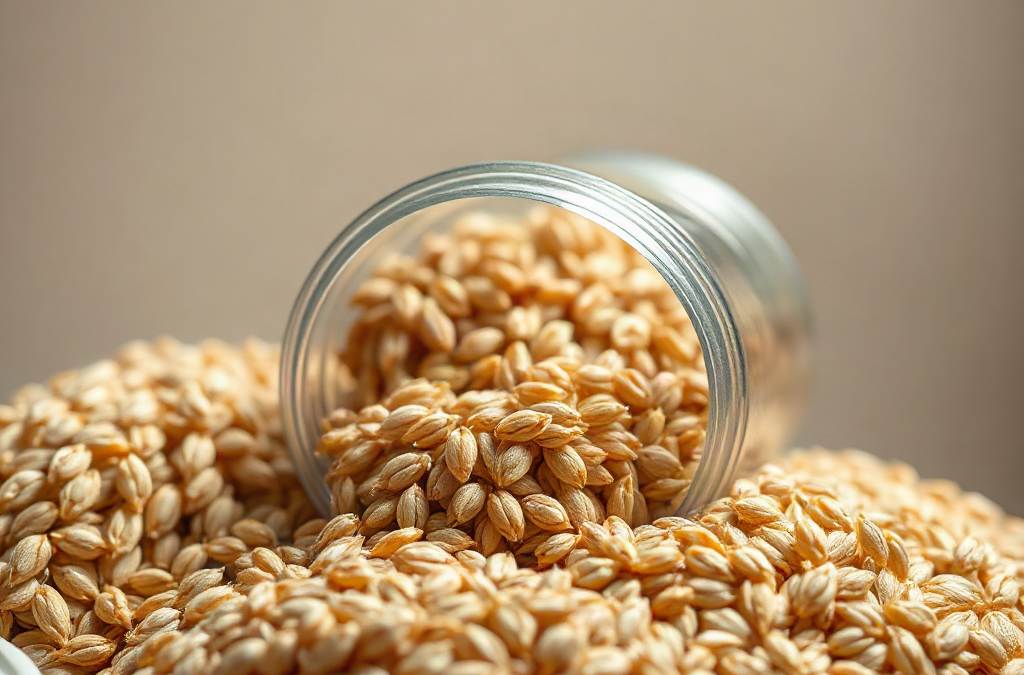
Different grains can share one container when they are equally dry, clean, pest-free, and intended for the same rotation schedule, but separation is usually safer for long-term keeping. Wheat, rice, oats, barley, and corn differ in moisture, oil content, cooking use, and expected shelf life, so one deteriorating grain can affect the entire mixture. Combining them also prevents individual inspection and makes measured recipes harder to prepare. If space requires shared storage, keep each grain in its own sealed inner bag within a larger food-grade container, label every package, and inspect for condensation, insects, damaged kernels, or stale odors before sealing.
When Can Grains Safely Share a Container?
Shared storage is most workable when the grains have matching conditions rather than merely similar appearances. Each grain should be dry, sound, free from visible insects, and suitable for the same storage temperature and planned use period. A small working supply of white rice and pearled barley used regularly in a household pantry presents a different decision from whole grains being packed away for several years.
The condition of the grain at sealing matters because a container creates a shared environment. Moisture released by one inadequately dried batch can move through the headspace or contact neighboring kernels. Insect activity can spread just as easily. An airtight lid does not correct excess moisture, remove existing pests, or restore grain that was already deteriorating; it only limits exchange with the room after closure.
Direct mixing is most defensible when the blend is intentional and will always be used as a blend. Someone who cooks a fixed porridge mixture of oat groats, barley, and wheat berries may reasonably combine a modest quantity after confirming that every component is fresh and dry. The container should hold an amount that will be consumed before the most perishable component loses quality. The shortest practical keeping period governs the mixture, not the durability of its longest-lasting ingredient.
Combining unrelated leftovers simply to save containers is a weaker approach. Different purchase dates, unknown moisture histories, and partially used packages make the final mixture difficult to evaluate. A scoop may contain different proportions each time, while a problem affecting one component becomes harder to trace. The apparent space saving can therefore create more waste than it prevents.
Before combining anything, compare four points: grain condition, expected keeping time, cooking method, and inspection needs. If any one differs materially, retain separation. When the only goal is fitting several packages on one shelf, a shared outer bin with individually sealed inner packages provides the space benefit without turning separate foods into one inseparable lot.
Why Is Separate Storage Usually Better?
Separate containers preserve control over quality, rotation, and use. A household can open only the wheat needed for milling, keep rice sealed until required, and discard a compromised package without sacrificing everything beside it. Separation also keeps labels meaningful because a purchase date, variety, treatment, and intended use remain connected to the correct contents.
Grains do not deteriorate at identical rates. Intact kernels generally keep quality better than cracked, rolled, or milled forms because processing exposes more surface area to oxygen. Grains with more natural oil, including many forms of oats and brown rice, may develop stale or rancid aromas sooner than polished white rice under comparable household conditions. Once such foods are mixed, the least stable component sets the useful life of the full batch.
Recipe control is another practical difference. Hard wheat berries intended for flour, short-grain rice intended for a particular texture, and barley intended for soup require different preparation. Picking them apart after mixing is unrealistic. Even grains cooked together may absorb water at different rates, leaving one component soft while another remains firm. A deliberate recipe blend can be tested in a small jar; a bulk mixture leaves little room to adjust.
Separate storage also improves inspection. Fine webbing, powdery residue, insect movement, condensation, clumping, or an unusual odor can be tied to one lot. In a mixed container, small dark grains may conceal insects or damaged pale kernels, and the original source becomes uncertain. The common assumption that an airtight vessel makes all dry foods equally stable overlooks the condition and composition of the foods placed inside it.
The tradeoff is greater demand for containers and shelf space. That cost can be reduced without direct mixing. Use appropriately sized vessels rather than leaving a small amount in a large bucket, consolidate only matching lots after inspecting them, or place several labeled bags in one protective bin. Prioritize separate containment for long-duration reserves, oily grains, processed grain products, and foods that must remain identifiable for dietary or cooking reasons.
Which Grains Are Poor Storage Partners?
Poor storage partners are foods with sharply different oil content, processing, moisture history, or intended lifespan. The issue is not that two grain species automatically react dangerously when touching. The problem is that one shared container forces both foods to accept the same environment, opening schedule, and inspection outcome.
| Combination | Main mismatch | Better arrangement |
|---|---|---|
| Brown rice and white rice | Brown rice retains oil-rich bran and may lose quality sooner | Use separate sealed packages and rotate brown rice first |
| Rolled oats and intact wheat berries | Rolled oats have more exposed surface area | Keep oats in a smaller frequently used container |
| Cracked corn and whole barley | Cracked grain is more exposed to oxygen and absorbs moisture more readily | Separate the processed grain from intact kernels |
| New grain and an older open lot | Condition, age, and pest history are not equivalent | Finish or inspect the old lot before opening the new one |
| Food grain and planting seed | Identity, variety, germination value, and possible seed treatment must remain clear | Store seed separately with complete labeling |
Food allergies and intolerances add another reason for strict separation. Wheat, barley, and rye contain gluten, and loose kernels or dust can contaminate a container intended for a gluten-free grain. Washing the larger kernels later is not a dependable way to reverse cross-contact. A household managing celiac disease or a medically diagnosed allergy should use dedicated, clearly marked storage and handling tools according to guidance from its qualified healthcare team.
Aromatic or strongly flavored products should not be treated as neutral partners either. Toasted grain, smoked ingredients, seasoning packets, or inadequately cleaned reused containers can transfer odors. Grain stored in a vessel that previously held nonfood material should not be used for food, and food-grade status does not compensate for a persistent residue or damaged interior.
Whole dry white rice, wheat berries, and pearled barley may appear broadly compatible, but direct mixing still removes flexibility. If they are needed for separate meals, individual inner packages remain the stronger choice. Reserve deliberate mixing for tested recipes and near-term turnover. For an emergency reserve or a supply whose opening date is uncertain, differences that seem minor today can become costly after repeated temperature changes or a delayed inspection.
How to Use One Container Without Mixing the Contents
One outer container can organize several grains without allowing direct contact. This arrangement works well where shelf space is limited but the foods still need independent labels, inspection, and rotation. The outer vessel provides physical protection, while sealed inner packaging preserves the identity and condition of each grain.
Get Whole Wheat Flour, Grains and Milling Supplies – CLICK HERE 
Begin with a clean, dry, food-grade container that has an intact lid and no lingering odor. Inspect every grain package before it enters the bin. Look for torn seams, moisture, clumps, insects, webbing, discoloration, and stale or musty smells. Do not place a questionable package beside sound food and assume the outer lid will contain the problem.
- Divide by grain and lot. Put each type and purchase lot in its own sound, food-suitable inner package.
- Label the inner package. Record the grain name, form, packing or purchase date, and any preparation detail that matters.
- Protect against punctures. Avoid sharp package corners, rough scoops, or excessive compression that could damage neighboring bags.
- Arrange for rotation. Place the package that should be used first where it can be removed without unpacking the entire container.
- Label the outer vessel. List all contents and note that they are individually packaged rather than mixed.
Inner bags must be compatible with the intended storage period and environment. Thin retail bags may be adequate for short pantry organization but are vulnerable to punctures and may not provide a strong moisture barrier. More robust food-storage packaging may be appropriate for a longer reserve. Any oxygen-control method must be selected for properly dried foods and used according to the packaging or product instructions; it should never be treated as a remedy for damp grain.
Keep an access record if the supply is large. Opening the outer bin repeatedly exposes every inner package to handling and changing room conditions, even when each remains sealed. A smaller everyday container can reduce disturbance to the reserve. This two-level system costs slightly more in packaging than pouring everything together, but it limits losses and lets each grain be rotated on its own schedule.
What Signs Show That Shared Storage Is Failing?
Condensation, clumping, insect evidence, damaged packaging, and abnormal odors show that the storage system needs attention. These signs should prompt isolation and evaluation rather than stirring the contents, adding fresh grain, or transferring everything into a clean-looking vessel.
Water droplets beneath the lid or damp patches on an inner package suggest moisture movement or temperature-driven condensation. Move the container away from sound reserves and identify the source before repacking anything. Grain that smells musty, appears moldy, or feels unexpectedly damp should not be tasted to judge whether it is acceptable. When safe use is uncertain, discard it rather than blending it with dry stock.
Live insects, shed skins, fine dust, webbing, or small holes in packages indicate an active or previous pest problem. Individually sealed inner bags can limit how far the loss spreads, but they still need close inspection because tiny punctures are easy to miss. Directly mixed grain offers no containment boundary; the complete mixture must be treated as one affected lot.
Rancidity has a different pattern. An oily, paint-like, bitter, or otherwise stale aroma may arise first from a higher-fat or more processed component. Removing visible pieces will not reliably restore a mixture because oxidation is not confined to obviously damaged kernels. Compare the questionable food with a known-fresh sample if the difference is subtle, but do not use tasting as the first test when mold, contamination, or pest treatment is a concern.
A successful setup remains dry, neutral-smelling, clearly labeled, and easy to rotate. Packages retain their seals, dates remain readable, and no grain must be moved through several unmarked containers before use. Check after major temperature swings, after opening the outer bin, and during normal pantry rotation. The strongest corrective step is usually to reduce batch size and restore separation, not to add more treatments to a poorly matched mixture.
Frequently Asked Questions
Can rice and wheat be stored in the same bucket?
Yes, if each is dry and sealed in its own labeled inner package. Direct mixing is less practical because rice and wheat have different cooking uses and may be rotated at different rates.
Does an airtight container make mixed grains safe?
No. An airtight lid limits exchange with room air, but it cannot correct excess moisture, kill every existing pest, or stop a deteriorating grain from affecting a mixture.
Can old grain be combined with a newly purchased bag?
Keep the lots separate unless their history and condition are well established. Combining them erases traceability and can transfer insects, odors, or moisture from the older lot.
Can grains be mixed for porridge or soup?
A tested cooking blend can be stored in a small quantity for routine use. Confirm that its components cook compatibly and size the batch according to the ingredient likely to lose quality first.
Should gluten-free grains share a bin with wheat?
They should have dedicated sealed packaging, and stricter separation is appropriate for households managing celiac disease or wheat allergy. Loose wheat kernels and flour dust can create cross-contact.
Conclusion
Container space should be balanced against the ability to inspect, identify, and rotate each food. Direct mixing is most reasonable for a small, intentional recipe blend that will be used promptly. It is a poor fit for long-duration reserves, unknown lots, processed and intact foods stored together, or grains with meaningfully different oil content and cooking requirements.
Before packing, inspect every lot and reject anything damp, infested, damaged, or abnormal in odor. When one bucket must hold several varieties, use durable labeled inner packages, arrange them by rotation order, and record the contents on the outside. Watch for condensation, package punctures, insect evidence, clumping, and stale smells. If uncertainty remains, separation is the lower-risk decision because a defect stays limited to one package instead of becoming a problem for the entire supply.
Get Whole Wheat Flour, Grains and Milling Supplies – CLICK HERE
Auto Amazon Links: No products found.





