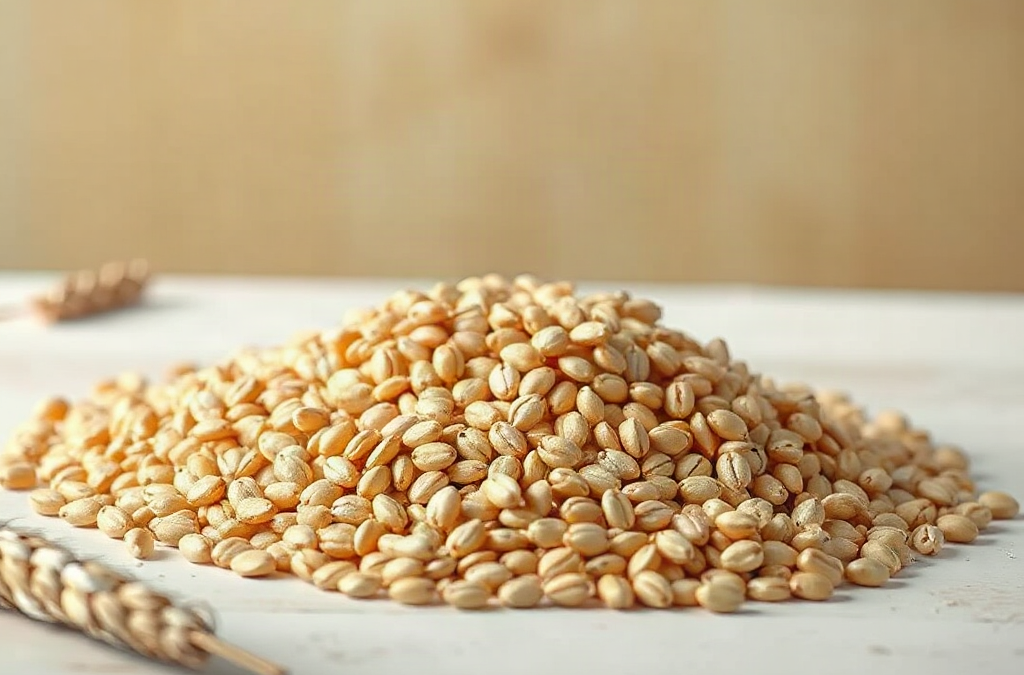
Whole wheat berries for long-term preparedness work best when clean, dry kernels are sealed in food-grade containers with oxygen absorbers and kept in a cool, dark, pest-resistant location. Store varieties you already cook, divide the reserve into manageable containers, and label each batch with its variety, source, packing date, and expected rotation date. A useful supply also requires a grain mill, dependable water, cooking fuel, and practiced recipes; intact kernels alone are not immediately usable flour. Reject grain showing moisture, insects, webbing, mold, or rancid odors, and inspect stored containers regularly for seal failure or environmental damage.
Why Do Wheat Berries Fit a Prepared Pantry?
Intact wheat kernels retain their bran, germ, and starchy endosperm while exposing far less interior surface area than milled flour. That physical structure slows the contact between the germ’s natural oils and oxygen. Flour, by comparison, has vastly more exposed surface and is more vulnerable to flavor deterioration, moisture pickup, and insect contamination after its package is opened.
That durability makes wheat berries a compact foundation ingredient rather than a ready-to-eat emergency food. They can be milled into whole-wheat flour, cooked as a chewy grain, cracked for cereal, or sprouted only when the grain was sold for that purpose and handled with appropriate food-safety care. A single stored ingredient can therefore serve bread, pancakes, porridge, pilaf, and thickened dishes. The limitation is equally important: none of those uses is effortless during an outage.
Stored wheat assumes access to potable water, preparation time, and either a mill or a cooking method suited to whole kernels. Bread also requires other ingredients and a functioning oven or alternative baking setup. Someone who stores hundreds of pounds but owns only an electric mill may lose the intended use of that reserve during a power interruption. A manual mill, tested backup power, or a meaningful quantity of already familiar no-mill foods closes that gap.
Wheat should not stand alone nutritionally. It supplies carbohydrate, protein, fiber, and several micronutrients, but a resilient pantry needs complementary foods and dietary variety. Beans or lentils, fats, salt, shelf-stable vegetables, and foods requiring little fuel broaden meal options. People with celiac disease must avoid wheat, while those with allergies or other dietary restrictions need an alternative reserve selected with qualified medical guidance.
A realistic example is a household that normally eats rice and oats but stores hard wheat solely because it is associated with preparedness. When the grain Ultimately needs rotating, nobody likes dense whole-wheat bread or knows how to adjust hydration for freshly milled flour. The grain becomes difficult to use before it becomes physically unusable. A better test is to buy a small amount, prepare several ordinary meals, and observe flour yield, water use, cooking time, and household acceptance before purchasing a bulk lot.
The practical priority is usability under constraint. Wheat berries earn space when the household can inspect them, process them without grid power if necessary, and convert them into meals people will actually eat. Pairing durable kernels with immediately edible foods avoids relying on one ingredient that demands equipment and fuel at every meal.
Choosing Wheat for Meals and Milling
Wheat class changes how the stored grain behaves in the kitchen, so the best purchase follows the intended meal rather than the longest marketing claim. Hard red and hard white wheat generally suit yeast breads because their flour can form a stronger dough. Soft wheat is better aligned with tender baked foods such as biscuits, pancakes, or cookies, where strong gluten development is less desirable. Durum is associated with pasta and requires suitable milling and preparation techniques.
Hard red wheat has a robust, recognizable whole-wheat flavor. Hard white wheat is still a whole grain, but its milder flavor may be easier to introduce in sandwich bread and other everyday baking. The terms describe wheat classes rather than whether the kernels are refined. A household that dislikes assertive bread may rotate hard white wheat more consistently, while an experienced baker may prefer the flavor and dough behavior of hard red varieties.
Buy grain intended for human consumption from a supplier that provides clean, sound kernels and useful lot information. Seed wheat and animal feed are poor substitutions unless they are explicitly sold as food for people; planting seed may have treatments unsuitable for eating, and feed handling standards may not match household food expectations. Organic status is a production choice, not proof that grain is dry enough, pest-free, or properly packaged for long keeping.
Examine a sample before committing to multiple containers. Kernels should look dry and reasonably uniform, without visible mold, unexplained staining, live insects, larvae, webbing, excessive broken material, or a musty odor. Bite tests and appearance cannot establish an exact moisture level. When condition is uncertain, ask the seller about drying, cleaning, and food-grade handling rather than assuming newly purchased grain is ready for sealed storage.
| Wheat Type | Practical Uses | Preparation Tradeoff |
|---|---|---|
| Hard red | Hearty yeast bread and rolls | Strong flavor may be less familiar |
| Hard white | Yeast bread and general baking | Milder taste, but still needs bread-making skill |
| Soft wheat | Biscuits, pancakes, and tender baking | Less suited to high-rising yeast loaves |
| Durum | Pasta and selected grain dishes | Specialized use may limit rotation |
A sensible first purchase might combine a larger amount of hard white wheat for routine bread with a smaller amount of soft wheat for quick baked foods. That approach is more flexible than treating every berry as interchangeable. Mill a test portion with the equipment you plan to retain, then bake from it. Fresh flour often behaves differently from familiar commercial flour, and recipe adjustments are easier to learn before food access or power becomes uncertain.
How Should Wheat Berries Be Packed for Long Keeping?
Successful packing separates sound, dry wheat from oxygen, moisture, pests, light, and physical damage. Food-grade buckets provide impact and rodent resistance, but a bucket lid alone is not necessarily an oxygen barrier. A common system places wheat inside a food-grade barrier bag, adds an appropriately sized oxygen absorber according to the absorber maker’s directions, heat-seals the bag, and then protects it inside a lidded bucket.
Oxygen absorbers reduce oxygen in a properly sealed package; they do not dry damp grain or make questionable food safe. Sealing kernels with excess moisture can create dangerous conditions that may not be obvious from the outside. Do not package grain that feels damp, smells musty, shows mold, or has an uncertain post-harvest history. Home vacuum sealing can reduce air but is not identical to validated low-oxygen storage, particularly when seals wrinkle or sharp kernels stress the bag.
Container size affects both risk and convenience. One very large container may cost less per pound, yet opening it exposes the entire lot during every use. Several smaller units isolate damage, simplify lifting, and let the household open only what it can rotate. The tradeoff is higher packaging cost and more seals to inspect. A useful arrangement is to keep a working container in the kitchen while leaving reserve packages closed.
Use a packing checklist for every lot:
Get Whole Wheat Flour, Grains and Milling Supplies – CLICK HERE 
- Inspect: Confirm that the kernels are clean, dry, odor-free, and free of visible pest activity.
- Package: Use materials intended for food contact and long-term dry-food storage.
- Seal: Follow the bag and oxygen-absorber manufacturers’ instructions without guessing at capacity.
- Protect: Place sealed packages where rodents, punctures, flooding, and crushing are unlikely.
- Label: Record wheat type, supplier or lot, packing date, package size, and planned inspection or rotation point.
A cool, stable, dark room is preferable to a hot attic, damp basement corner, or building with large temperature swings. Heat accelerates quality loss, while condensation or water intrusion can defeat otherwise good packaging. Keep containers off bare concrete and away from exterior walls or plumbing where leaks may go unnoticed. Shelving must support the load without bowing, and buckets should remain accessible enough to inspect rather than disappearing behind unrelated supplies.
Watch for swollen packaging, broken seals, moisture, insects, webbing, mold, musty odors, or rancid and paint-like smells. A bag drawing inward after an oxygen absorber activates can indicate reduced internal pressure, but appearance alone does not prove that food remained safe or high quality. Do not taste suspicious grain to decide whether it is acceptable. Isolate a damaged package, evaluate the surrounding containers, and discard food when contamination or safety is uncertain.
Building a Usable Wheat Reserve
A useful wheat reserve is sized from meals, recipes, equipment, and available storage space rather than an arbitrary pounds-per-person formula. Requirements differ with calorie needs, dietary restrictions, household size, and the share of the diet assigned to other staples. Begin with a menu: identify the breads, cereals, pasta, and cooked-grain dishes the household will realistically prepare, then calculate how much wheat those tested recipes consume.
For example, a family might schedule bread twice a week, pancakes once a week, and one cooked-wheat dish. Recording actual grain or flour used over a month produces a defensible planning baseline. It also reveals hidden dependencies such as yeast, salt, oil, sweeteners, potable water, oven fuel, and cleanup water. Increasing the grain quantity without increasing those supporting supplies does not create an equivalent increase in usable meals.
Rotation should be based on package condition and a manageable consumption schedule, not a promise that grain can be ignored for a fixed number of decades. Storage life varies with initial quality, moisture, packaging integrity, pests, and temperature history. Date every package and use older acceptable lots first. When a package is opened, inspect it, transfer a practical amount to a working container, and keep that container dry and tightly closed.
Equipment deserves the same testing as food. A manual mill should be mounted securely and operated long enough to understand its output and physical effort. Confirm that it can produce the grind required by preferred recipes; some devices crack grain well but do not make fine bread flour efficiently. If an electric mill is the primary tool, decide whether backup power can operate its starting load rather than assuming any small battery unit will work.
Cooking whole berries can take substantial time and fuel. Soaking may reduce active cooking time for some preparations, but soaked grain must be handled as perishable food rather than left indefinitely at room temperature. A pressure cooker may conserve fuel when used according to its manufacturer’s instructions, although it introduces another equipment dependency. Quick-cooking pantry foods remain valuable for short disruptions when conserving water or fuel matters more than using the longest-lasting ingredient.
Signs that the system is working include steady use of the oldest lot, recipes that produce consistent results, packages that remain dry and intact, and household members who can operate the mill. Warning signs include forgotten purchase dates, grain varieties nobody uses, all supplies stored in one vulnerable location, or dependence on a single electric appliance. Review the reserve after ordinary baking sessions and drills: replace weak containers, adjust the variety mix, and add only as much grain as the household can store and rotate responsibly.
Frequently Asked Questions
Do wheat berries need oxygen absorbers?
Oxygen absorbers are commonly used with dry wheat in properly sealed oxygen-barrier packaging. They are not a substitute for dry, sound grain, and their size and handling should follow the packaging supplier’s instructions.
Can wheat berries be stored in a food-grade bucket alone?
A bucket offers useful protection from impact and pests, but many bucket-and-lid combinations are not dependable oxygen barriers. A compatible sealed barrier bag inside the bucket provides an additional protective layer.
Should wheat be frozen before long-term storage?
Freezing is sometimes used for insect control, but moving cold grain into warm air can introduce condensation. Do not improvise the process; use established dry-food guidance and ensure the grain returns to a dry, stable condition before sealing.
Can stored wheat berries be planted?
Some food-grade wheat may germinate, but low-oxygen storage, age, temperature, and handling can reduce viability. Treat emergency food and planting seed as separate reserves if dependable germination matters.
Is a grain mill necessary for preparedness?
A mill is necessary if the plan depends on turning berries into flour. Whole kernels can be cooked without milling, but they require suitable recipes, water, time, and fuel; a tested manual mill adds resilience during outages.
Conclusion
Begin with a small lot of food-grade wheat and prove the entire process before expanding it. Compare hard red, hard white, or soft wheat in recipes your household already accepts; test the mill; and record the water, fuel, and supporting ingredients each meal requires. Package only clean, dry kernels in food-safe materials suited to low-oxygen storage, then protect the sealed units from heat, moisture, pests, and punctures.
Divide the supply so one failed seal or opened container does not expose everything. Clear lot labels, accessible placement, routine visual checks, and regular cooking create a more dependable reserve than an untested bulk purchase. Keep beans, fats, salt, ready-to-eat foods, and other staples alongside the grain. The next practical step is to mill or cook a trial batch, document what worked, and let that experience determine the variety and quantity added next.
Get Whole Wheat Flour, Grains and Milling Supplies – CLICK HERE
Auto Amazon Links: No products found.