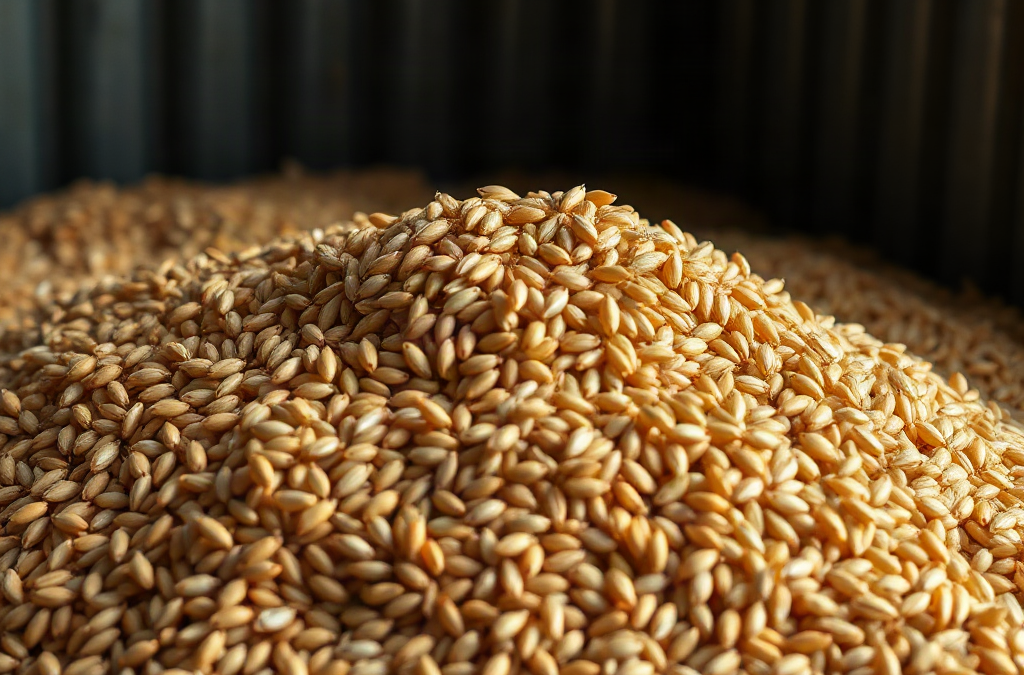
Separate partially spoiled grain from sound grain immediately, stop dust from spreading, and discard any portion showing mold, damp clumps, heating, insects, or a musty odor rather than eating it or feeding it to animals. Visible damage may extend beyond the kernels you can remove, while some molds can leave toxins that washing, cooking, or grinding may not reliably eliminate. Inspect nearby containers for moisture and pests, then clean and dry the storage area. Small household amounts may be sealed for disposal or composted only in a managed pile where animals cannot reach them; questionable livestock quantities require advice from an extension specialist, veterinarian, or feed-testing laboratory.
How Can You Tell Which Grain Is Spoiled?
Spoilage is more than an unattractive patch of kernels. Moisture, mold growth, insect activity, and heat can alter grain throughout a container, including areas that still look normal. Examine the batch before moving or pouring it, because rough handling can release mold spores and fine grain dust into the air. Work in a ventilated location, minimize dust, and avoid leaning directly over the container to smell it.
Look first for moisture-related warning signs: kernels stuck together, damp material along the wall or bottom, condensation under a lid, caking, discoloration, or a crust on the surface. A musty, sour, fermented, or otherwise abnormal odor is another reason to reject the affected portion. Grain that feels warm without an external heat source may have active biological or insect activity. Webbing, larvae, beetles, cast skins, and unusually fine powder indicate an infestation even when mold is not obvious.
The pattern of damage helps reveal what happened. A wet patch beneath a lid may point to condensation or a leak, while spoilage concentrated against a floor or exterior wall may reflect moisture migration through the storage location. Damage scattered through the container suggests that damp grain was packed originally or that insects have spread. For example, a bucket may appear dry on top but contain a compact, warm layer near the bottom where moisture collected. Judging only the upper kernels would miss the most hazardous material.
Ordinary aging should not be confused with active spoilage. Older dry grain may lose flavor, aroma, color, or cooking quality without becoming visibly moldy. By contrast, uncertain odor, moisture, clumping, heating, or fungal growth calls for rejection rather than a taste test. Do not chew a kernel to decide whether a questionable batch is safe.
Contamination from chemicals, rodents, bird droppings, floodwater, or an unknown liquid requires a stricter decision. The absence of mold does not make such grain suitable for food. Isolate the entire exposed batch, keep it away from food preparation areas, and seek local disposal guidance if the contaminant could be hazardous.
Separate and Contain the Damaged Batch
Containment protects the sound supply from moisture, insects, and dust carried from the damaged grain. Stop using the affected container and move nearby intact packages away before opening anything. Label the questionable batch so another household member does not cook, mill, plant, or feed it by mistake. If liquid is leaking, place the whole container inside a sound secondary bin rather than carrying it through the storage area uncovered.
Do not pour suspect grain back and forth merely to inspect it. Pouring creates dust and can scatter insects into seams, shelves, and adjacent packages. A better method is to examine small portions over a washable tray in a ventilated area. Wear gloves when handling moldy material, avoid touching your face, and wash exposed skin afterward. People with asthma, mold sensitivity, or weakened immune defenses should avoid the cleanup and have someone else handle it with suitable protection.
Keep apparently sound grain from the same container separate from every other batch while making a decision. The common mistake is to remove a visible clump and immediately combine the remaining kernels with a fresh supply. Mold growth and dampness do not follow a neat boundary, and insects or eggs may be present beyond the obvious patch. Combining lots sacrifices traceability and can turn a limited loss into a much larger one.
A compact triage sequence keeps the response controlled:
- Stop movement: Do not grind, cook, sift, or transfer the batch near other food.
- Isolate it: Close or cover the container and mark it as questionable.
- Inspect adjacent stock: Check lids, seams, floors, walls, and neighboring packages for dampness or insects.
- Record the source: Note when the grain was packed, where it sat, and where the damage appeared.
- Choose disposal or testing: Base the choice on intended use, amount, contamination type, and access to qualified testing.
Large farm or feed quantities deserve a different response from a spoiled pantry jar. Moving a bulk lot can expose workers to concentrated dust and may mix contaminated grain into saleable material. Keep the lot identified and unmixed while contacting a county or university extension office, grain-quality specialist, veterinarian, insurer, or disposal authority as appropriate. Photographs, storage records, moisture history, and representative testing arranged by a qualified service are more useful than an informal smell check.
Can Any Partially Spoiled Grain Be Salvaged?
Salvage is reasonable only when the problem is clearly limited to quality loss or removable foreign material, not mold, chemical exposure, animal contamination, or unexplained moisture. Clean, dry grain in a separate sealed package may remain usable even when a neighboring package fails. Grain from the same damaged container requires far more caution because visual sorting cannot establish that the remaining kernels are safe.
Moldy kernels should not be treated as a sorting project for household food. Some fungal contamination can extend microscopically beyond visible growth, and certain molds may produce mycotoxins under favorable conditions. Removing discolored kernels can improve appearance without addressing toxins that may already be distributed through the lot. Washing, baking, boiling, fermenting, or milling should not be assumed to make contaminated grain safe. Odor and appearance also cannot identify which mold is present or whether toxins exist.
Drying has a useful but limited role. Prompt drying may stop further deterioration in grain that became slightly damp but has not developed mold, heating, off odors, caking, or contamination. It does not reverse spoilage that has already occurred. At household scale, uncertainty about how wet the interior became and how long it remained damp often makes disposal the safer choice. At commercial scale, moisture measurement, controlled aeration, sampling, and laboratory analysis can support decisions that are not possible from a kitchen inspection.
Get Whole Wheat Flour, Grains and Milling Supplies – CLICK HERE 
Feeding questionable grain to chickens, livestock, pets, or wildlife is not a safe way to avoid waste. Animals vary in their sensitivity to molds and mycotoxins, and dilution with clean feed does not automatically make an unknown batch acceptable. Feed suitability may depend on the contaminant, test result, animal species, age, production stage, and applicable rules. A veterinarian, animal nutrition professional, extension specialist, or feed laboratory should guide decisions involving valuable animals or substantial quantities.
Seed use presents another tradeoff. Grain exposed only to pantry insects may have reduced germination, while moldy or wet seed can introduce poor-quality material into storage or soil. A germination test can estimate sprouting ability, but it does not prove food or feed safety. If the original contamination involved treated seed, chemicals, sewage, floodwater, or unknown residue, do not divert it to food, feed, or casual garden use.
Safe Disposal and Storage-Area Cleanup
Disposal should prevent people, animals, and pests from recovering the rejected grain. Small household amounts can usually be sealed in a sturdy bag or closed container and placed in the appropriate local waste stream. Double containment is useful when the grain is wet, moldy, or insect-infested. Local waste rules differ, especially for chemically contaminated material or large agricultural quantities, so municipal waste services or an agricultural extension office should be consulted when ordinary household disposal is not clearly suitable.
Composting is an option only under controlled conditions. A managed pile that reaches active decomposition temperatures and is inaccessible to pets, livestock, rodents, and wildlife is preferable to scattering grain on the ground. Bury the material well within the pile and balance it with dry carbon-rich matter if it is wet. Avoid composting grain contaminated by pesticides, fuel, floodwater, rodent waste, or unknown chemicals. A cold, neglected pile can simply become a feeding station and spread volunteer plants, insects, or moldy material around the property.
Clean the storage site after the damaged grain has been removed. Vacuum loose kernels, floury residue, insect debris, and material from shelf joints; empty the vacuum promptly so insects do not escape indoors. Wash hard surfaces with an appropriate household cleaner, then let them dry completely before restocking. Porous shelving that remains damp, swollen, or mold-stained may need replacement. Never mix cleaning products, and keep cleaners away from exposed food and grain containers.
Inspect reusable containers rather than assuming a sound lid means the vessel is ready. Check gaskets, corners, threads, seams, and the underside of the lid for moisture, odor, larvae, or residue. Wash food-grade containers according to their material requirements and dry every part fully. Trapped rinse water can recreate the same conditions that caused the loss. Bags, cardboard, or cracked plastic that absorbed moisture or developed mold are generally poor candidates for reuse.
Before storing replacement grain, correct the cause. Repair leaks, move containers off bare concrete, avoid walls with recurring condensation, and allow newly cleaned equipment to dry. Package grain in manageable lots so one failure does not expose the entire supply. Date and identify each lot, keep older stock accessible for rotation, and check periodically for condensation, insects, damaged seals, and unusual odor. The approach is working when containers remain dry, temperatures track the surrounding room, and inspections show no fresh dust, webbing, clumps, or moisture. Recurring condensation or insects indicate that the location, packaging, or grain condition still needs attention.
Frequently Asked Questions
Can I remove the moldy kernels and eat the rest?
Not reliably when the kernels came from the same affected container. Mold and possible toxins may extend beyond visible damage, so household sorting cannot confirm that the remainder is safe.
Does cooking make moldy grain safe?
Cooking may kill some living organisms, but it should not be relied upon to remove mycotoxins or unknown contaminants. Reject visibly moldy, musty, damp, or heated grain.
Can spoiled grain be fed to chickens or livestock?
Do not feed an untested, questionable batch. Animal sensitivity varies, and a veterinarian, extension specialist, or feed-testing laboratory should assess substantial quantities intended for feed.
Can insect-infested grain be saved?
A few insects in otherwise dry, odor-free grain present a different problem from mold, but contamination can be extensive. For human food, assess the packaging failure and quality carefully; discard the lot if moisture, webbing, heavy damage, or off odors are present.
Is spoiled grain suitable for compost?
Small amounts may go into a managed, animal-proof compost pile if no chemicals, floodwater, or other hazardous contaminants are involved. Bury it within the pile rather than leaving it exposed.
Conclusion
A limited patch of damage can signal conditions affecting far more than the kernels that look bad. Preserve the rest of the supply by isolating the lot, reducing dust, and checking neighboring packages before attempting cleanup. Mold, abnormal heat, damp clumps, chemical exposure, animal waste, or unexplained odors favor disposal rather than home salvage, cooking, or use as animal feed.
Match the next step to the scale of the loss. Seal small household amounts for appropriate disposal or place eligible material deep in a managed, animal-proof compost pile. Keep bulk grain unmixed and seek qualified testing or extension guidance before making food or feed decisions. Finish by cleaning and fully drying containers and shelves, correcting leaks or condensation, and dividing replacement stock into labeled lots. Those steps limit the immediate loss and make a repeat failure easier to detect early.
Get Whole Wheat Flour, Grains and Milling Supplies – CLICK HERE
Auto Amazon Links: No products found.