
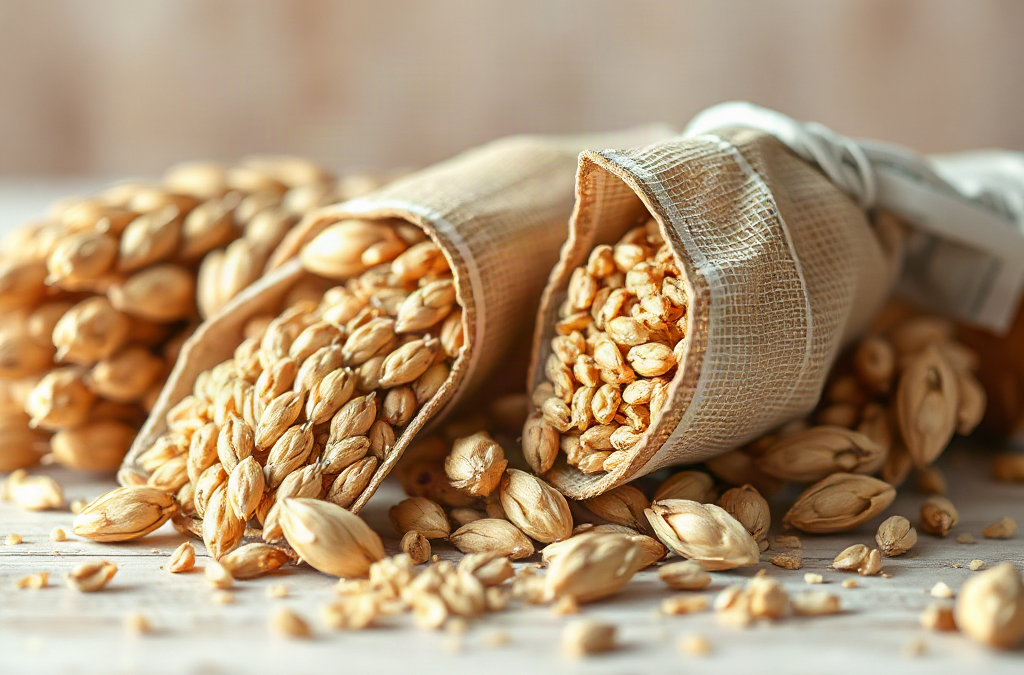
Household temperature swings shorten the useful storage life of whole wheat by accelerating oxidation, encouraging condensation, and creating conditions favorable to insects or mold. Keep wheat berries in airtight food-grade containers in the coolest, driest, darkest location available, and store whole wheat flour in a refrigerator or freezer when temperatures fluctuate widely. Avoid moving a cold container into warm, humid air and opening it immediately, because moisture can condense on the grain or packaging. Monitor the actual storage area with a thermometer and humidity meter, inspect for odors and insects, and rotate warmer-stored wheat sooner than grain kept under stable conditions.
How Do Temperature Changes Affect Whole Wheat?
Temperature variation affects whole wheat through several connected processes rather than through one isolated event. Warm conditions speed chemical reactions, including oxidation of the natural oils concentrated in the germ. Cooling may slow those reactions, but repeated movement between warm and cold conditions can introduce a separate threat: moisture condensing inside a container or on its contents.
Wheat berries generally tolerate household storage better than whole wheat flour because the intact kernel protects much of the germ and bran from air. Grinding greatly increases exposed surface area, so flour develops stale, bitter, paint-like, or otherwise rancid odors sooner. A bag of flour kept in a cabinet that warms whenever the oven runs therefore has a different risk profile from intact berries held in a sealed pail in a stable interior closet.
Heat alone does not automatically make dry wheat unsafe, and a cool night does not reverse quality loss that occurred during a hot afternoon. The cumulative pattern matters. A pantry ranging modestly with normal indoor conditions is less concerning than a garage, attic, sunlit utility room, or exterior wall cabinet that repeatedly becomes hot and then cool. Warm periods also allow stored-product insects to develop more readily if eggs or larvae were already present.
Relative humidity changes as air temperature changes. When warm, moisture-bearing air meets a sufficiently cold surface, water can collect as droplets. In a grain container, that local wet spot is more serious than a short period of dry warmth because damp kernels can clump, discolor, or support mold growth. An airtight lid limits the exchange of humid household air, but it cannot remove moisture that was sealed inside with grain or introduced by opening the container under poor conditions.
A common misconception is that an average room temperature describes the storage environment accurately. A kitchen may average a comfortable temperature while the cabinet beside a dishwasher experiences sharp daily peaks. Measure conditions where the wheat actually sits, preferably at container height and over several days. The goal is not to create a perfectly unchanging environment; it is to reduce heat exposure, prevent moisture entry, and identify locations with avoidable extremes.
Choosing the Most Stable Storage Location
The best household location is usually a dark interior space that remains dry and changes temperature slowly. Interior closets, climate-controlled basements without moisture problems, and low pantry shelves away from appliances often outperform garages or sheds. A location that is slightly warmer but stable may be preferable to one that becomes cold at night and hot during the day.
Test likely storage sites instead of judging them by how they feel during a single visit. Place a recording thermometer or a simple minimum-maximum thermometer beside the containers. A humidity meter adds useful context, especially in basements, laundry areas, or homes with seasonal humidity. Check readings after cooking, heating-system cycles, sunny afternoons, and weather changes. Measurements taken only in the morning can miss the hottest part of the cycle.
Evaluate each location using a short priority order:
- Moisture exposure: Avoid leaks, damp concrete, plumbing, and floors where water could collect.
- Heat peaks: Keep wheat away from ovens, water heaters, dryers, furnaces, and direct sun.
- Temperature stability: Favor insulated interior areas over exterior rooms with rapid swings.
- Pest exclusion: Use intact containers and maintain space for inspection and cleaning.
- Access and rotation: Store containers where dates and condition can be checked without moving an entire stack.
Containers should be food-grade, clean, dry, and capable of closing securely. Glass jars work well for smaller quantities but admit light unless kept in a dark cabinet. Rigid food-grade buckets or other durable airtight containers suit larger amounts and protect against torn packaging. Thin retail bags offer little defense against humidity exchange, punctures, or insects. A sealed container is not a substitute for dry grain, however; sealing wheat with excess moisture traps the problem.
Whole wheat flour deserves a more conservative decision. If it will be used quickly and the pantry remains cool, a well-sealed container may be adequate for routine rotation. If the kitchen experiences pronounced seasonal heat or the flour will sit for an extended period, refrigerator or freezer storage better protects flavor. Reserve room-temperature bulk storage primarily for intact berries, then mill smaller quantities as needed when practical.
Do not place containers directly against basement concrete or an exterior wall. These surfaces can be cooler than surrounding air and may promote localized condensation. Shelving also protects supplies from minor floor leaks and allows air circulation and inspection. The cheapest improvement is often relocation, not specialized packaging.
How Can You Prevent Condensation in Sealed Containers?
Condensation prevention depends on controlling when containers are sealed, moved, and opened. Dry wheat packed at room temperature in a dry environment begins with a major advantage. Problems arise when chilled grain is exposed to warm humid air, when a loosely closed package repeatedly exchanges air, or when a container is packed before it is fully dry.
Consider a container moved from a cold garage into a heated kitchen. Its walls and contents remain cold after the surrounding air warms. Opening it immediately allows humid room air to contact those cold surfaces, where moisture may condense. Keep the container closed while it gradually approaches room temperature. The same principle applies to refrigerated or frozen flour: portion it before storage when possible, and let the closed package warm before opening.
Small working containers reduce repeated exposure. Keep the main supply sealed and refill a jar with only the amount likely to be used in the near term. This arrangement limits the humid air entering the bulk container and reduces the impact if the working supply is contaminated. It also prevents a large pail from being opened beside a steaming kettle, boiling pot, or running dishwasher.
Freezing is useful for preserving whole wheat flour quality, but cycling the same package in and out of the freezer is a weak practice. Divide flour into manageable airtight portions. Remove one package, allow it to temper while closed, and use that portion rather than returning it repeatedly. Freezer packaging should resist moisture and odors; the original paper sack alone is poorly suited to a humid freezer environment.
Get Whole Wheat Flour, Grains and Milling Supplies – CLICK HERE 
Desiccants and oxygen absorbers are not interchangeable solutions. A desiccant addresses moisture within its designed capacity, while an oxygen absorber reduces oxygen in a suitably sealed package. Neither corrects wet grain, an unreliable lid, or exposure to liquid water. Products must be intended for food-storage use and used according to their manufacturer’s directions. Adding packets without understanding package volume, grain condition, and closure quality can create false confidence.
The failure sign to watch for is not merely visible droplets. Fogging, kernels sticking together, damp packaging, a musty odor, or moisture around the lid all justify immediate investigation. Do not mix suspect grain into a sound batch. Separate the container, inspect the storage area for the source of moisture, and avoid tasting wheat that appears moldy or smells abnormal.
Monitoring, Rotation, and Warning Signs
A useful monitoring routine combines dates, environmental readings, and sensory inspection. Mark each container with the product, packing or purchase date, and any relevant treatment or storage history. Without those details, households tend to use the most accessible container rather than the oldest one, leaving warmer-stored grain forgotten at the back.
Inspect more often after a heat wave, power outage, plumbing problem, move between rooms, or noticeable humidity increase. Look around seams and lids for insects, webbing, dust-like residue, damaged seals, or gnaw marks. Examine the wheat for clumps, discoloration, visible growth, and moisture. Smell it after opening: sound wheat should not have a musty, sour, oily, paint-like, or strongly stale odor.
Whole kernels that remain dry, clean, and normal-smelling may still lose baking performance or flavor gradually. Quality decline is not always visible. Grind or cook a small sample when evaluating an older lot. Compare its aroma and taste with a known fresh sample if uncertainty remains. Flour requires closer attention because its exposed oils oxidize faster; an unpleasant bitter or rancid character is a reason to discard it rather than mask it in strongly flavored food.
Use storage history to set rotation priority. Wheat held in a stable conditioned room can reasonably be placed behind an equivalent container that spent a hot season in a garage. Flour stored in a pantry should be used before frozen portions of the same purchase. Exact shelf life cannot be assigned from temperature alone because initial quality, moisture, packaging, oxygen exposure, pests, and flour type all influence the result.
Do not rely on appearance as the only safety check. Visible mold means the food should not be used, but the absence of visible mold does not prove that a damp or foul-smelling batch is acceptable. Discard grain or flour affected by water intrusion, persistent mustiness, obvious mold, or extensive pest activity. If contamination involved floodwater, chemicals, or an unknown substance, do not attempt to salvage the food.
A practical routine is to review containers monthly during hot or humid seasons and after unusual household events, while checking stable supplies less intensively between those reviews. The sign that the system is working is uneventful: dry containers, consistent readings, secure lids, no insect evidence, and normal aroma when a batch is opened. Repeated fogging, widening temperature ranges, or stale flour means the location, package size, or rotation interval needs to change.
Frequently Asked Questions
Are daily household temperature swings harmful to wheat berries?
Modest indoor changes are usually less concerning than repeated high heat or condensation. Intact berries are resilient when dry and sealed, but a location with large daily swings should be replaced with a more stable interior space.
Should whole wheat flour be refrigerated?
Refrigeration is useful when the pantry runs warm or the flour will not be used promptly. Keep it airtight to limit moisture and odors, and let the closed package warm before opening.
Can wheat be stored in a garage?
A garage is a poor choice when it becomes hot, humid, or subject to rapid seasonal changes. If no alternative exists, monitor actual conditions, elevate sealed containers, and rotate the wheat sooner.
Does an airtight container stop temperature damage?
No. It limits air and moisture exchange but does not prevent the contents from heating, cool an unsuitable room, or correct moisture already trapped inside.
How can I tell whether stored whole wheat has deteriorated?
Check for insects, webbing, clumping, dampness, discoloration, mold, and musty or rancid odors. For older grain that appears sound, cook or mill a small sample to assess flavor and performance.
Conclusion
Stable conditions matter more than finding a location that is occasionally very cold. Start by measuring the pantry, closet, basement shelf, or other candidate site through normal household cycles, then choose the driest interior location with the smallest heat peaks. Store berries in clean, airtight food-grade containers, give flour colder storage when use will be slow, and keep all packages away from appliances, sunlight, plumbing, and bare concrete.
Handle temperature transitions deliberately. Let chilled packages warm while closed, divide frozen flour into practical portions, and avoid repeatedly exposing a bulk supply to humid kitchen air. Date each container and move heat-exposed lots forward in the rotation. If inspections reveal condensation, musty odors, mold, water exposure, or extensive pests, treat that as a storage failure requiring isolation and correction—not as a reason to hide the problem through cooking.
Get Whole Wheat Flour, Grains and Milling Supplies – CLICK HERE
Auto Amazon Links: No products found.





