
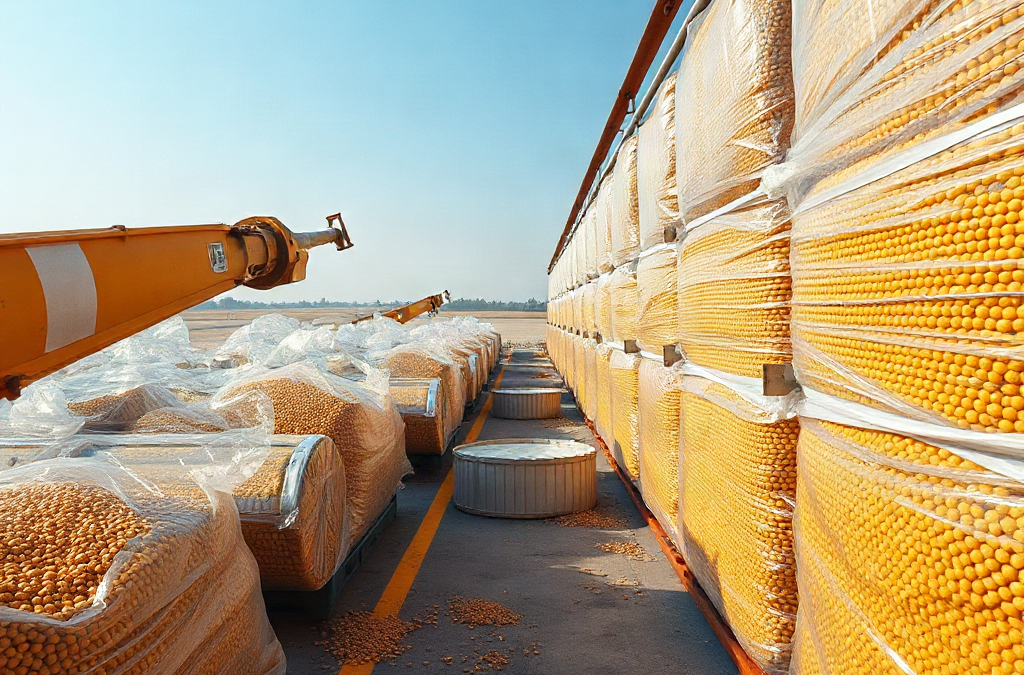
Effective grain storage records for batch traceability connect each identified lot to its source, receipt date, quantity, storage location, condition checks, treatments, movements, and final disposition. Use a unique batch code that remains unchanged while the grain is stored, then document every transfer, split, blend, sale, or disposal against that code. Reconcile recorded quantities with physical inventory so unexplained gains, losses, and location errors are investigated promptly. A workable system should let an operator trace a batch backward to its supplier and forward to every recipient without relying on memory, container appearance, or disconnected paper notes.
What Information Makes a Grain Batch Traceable?
A traceable record identifies the grain, establishes where it came from, and shows what happened to it after arrival. A batch name such as “wheat in Bin 3” is too weak because the bin may hold several deliveries over time. The record needs a stable lot code tied to the supplier or source, grain type and relevant grade or variety, receipt date, received quantity, transport reference, initial condition, and first storage location.
The level of detail should match the way grain is actually handled. A household storing sealed retail bags may use the manufacturer lot number, purchase date, package count, and container location. A farm storing its own harvest may identify grain by field, crop year, harvest period, truckload, and destination bin. A commercial operation may need intake ticket numbers, supplier details, vehicle or delivery references, weights, sampling results, contractual specifications, and customer dispatch records. Recording fields that nobody can verify or maintain adds paperwork without improving traceability.
Location deserves more precision than a building name. Use a unique identifier for each silo, bin, bay, tote, drum, or sealed container. If grain is moved from Bin A to Bin D, the transfer record should show the source, destination, date, quantity, responsible person, and batch code. Leaving the old location active after a complete transfer creates a false inventory trail; failing to record a partial transfer makes it unclear how much of the lot remains in each place.
A practical minimum record contains:
- Batch identity: unique lot code, grain type, crop or production year when known.
- Origin: supplier, field, seller, or package manufacturer and its source lot reference.
- Receipt: date, quantity, unit of measure, delivery reference, and receiving location.
- Condition: observations or measured results taken at intake and during storage.
- History: movements, splits, combinations, treatments, adjustments, and losses.
- Disposition: recipient, dispatch date, quantity, destination, sale reference, use, or disposal.
The common mistake is treating an inventory list as a traceability system. Inventory says what should be present; traceability explains the chain of identity and custody. The test is whether a person unfamiliar with the grain can reconstruct its path from the records alone. If that person must ask which load was placed on top, whether two lots were mixed, or which customer received the remainder, the record is incomplete.
How Should Batch Codes Follow Grain Through Storage?
A batch code should remain attached to the grain through every location change, while new relationships are recorded whenever a lot is split or combined. The code can be numeric, alphabetic, or mixed, but it should be unique, legible, and free of meanings that operators are likely to reinterpret. Date-based codes are useful only when two receipts on the same day cannot accidentally receive the same identifier.
Consider a 10-tonne lot received under code WB-26-014. If four tonnes move to another bin, both resulting quantities still belong to WB-26-014, but the records must show six tonnes in the original bin and four tonnes in the new one. Creating unrelated identifiers for each portion breaks the visible connection to the source unless the system explicitly records a parent-child relationship.
Blending requires a different approach because the output may contain grain from several source lots. Assign the blend a new batch code and link every contributing lot to it, including the quantity or best supportable quantity from each source. The blend record should also identify its destination and creation date. Keeping only the new blend number erases backward traceability; listing the inputs without documenting where the blend went weakens forward traceability.
Physical labels and records must agree. A bin plate, hanging tag, container label, or location marker should display the identifier used in the ledger. Labels should be replaced deliberately when contents change rather than overwritten until the history becomes unreadable. Emptying a bin does not automatically close the batch: residual grain, cleanout material, shrink, spillage, or an unresolved quantity difference may still need an entry before the record is closed.
Paper logs can work where there are few batches and movements, provided pages are controlled, entries are dated, and corrections remain visible. Spreadsheets make searching and reconciliation easier but can introduce duplicate codes, overwritten cells, inconsistent units, and uncontrolled copies. Dedicated inventory software can enforce required fields and relationships, yet it will not correct inaccurate measurements or delayed entries. The best system is the simplest one that reliably captures actual handling events and preserves an audit trail.
Set one operational rule: record a movement when it occurs, not at the end of a busy week. Delayed entry encourages estimated quantities, forgotten partial transfers, and mistaken destinations. Signs that coding works include one unambiguous location for every quantity, documented parent-child links, and rapid retrieval of all movements involving a selected lot. Duplicate identifiers, negative balances, and grain appearing in two full locations are warning signs that control has failed.
Recording Inspections, Treatments, and Inventory Changes
Condition records add meaning to a batch history by showing when a change was observed and which grain may have been affected. Each inspection entry should identify the batch or location, date, person making the check, method used, result, and action taken. Relevant observations may include temperature readings, moisture results, odors, visible insects, condensation, crusting, leakage, or damaged packaging. Avoid recording “checked” without a result because it cannot show whether conditions were stable or deteriorating.
Location-based readings need careful interpretation when a bin contains more than one lot. A high temperature detected in a mixed bin may concern every contributing batch unless records and sampling can isolate the affected portion. Conversely, assigning a bin reading to only the newest delivery without evidence may understate the scope. Traceability records should preserve uncertainty rather than create a false level of precision.
Any treatment or corrective action should be tied to the relevant batch and location. Record what was done, when, why, by whom, and the amount or process details that can be verified. Where pesticide, fumigation, food-safety, contractual, or occupational requirements apply, operators should use the records and procedures required by the applicable label, authority, agreement, or qualified professional. A general storage ledger should not be assumed to replace regulated documentation.
Get Whole Wheat Flour, Grains and Milling Supplies – CLICK HERE 
Quantity reconciliation connects operational records with physical reality. Compare the opening balance plus receipts against transfers, dispatches, documented losses, and closing inventory, using consistent units. Small differences may arise from weighing methods, moisture change, handling loss, retained residues, or data entry. The record should state the reason when known and identify unexplained adjustments rather than silently changing the opening figure.
| Event | Record to Capture | Failure Signal |
|---|---|---|
| Condition check | Date, batch or bin, method, result, operator | Repeated “OK” entries with no measurements or observations |
| Transfer | Source, destination, quantity, time, batch code | Source balance unchanged after movement |
| Blend | Input lots and quantities, new output code, destination | Output code has no documented parents |
| Adjustment | Quantity, reason, approval or verification | Inventory altered with no explanation |
| Dispatch | Recipient, date, quantity, batch, transaction reference | Sale record cannot be linked to stored grain |
A common weak assumption is that exact-looking numbers are automatically accurate. An estimated transfer entered to two decimal places is still an estimate. Mark estimates clearly, retain the basis used, and replace them with verified values when available. Reliable records distinguish measurement from inference, making later decisions more defensible.
How Can Traceability Records Be Tested?
A traceability test selects a real batch and attempts to follow it backward to origin, through every storage event, and forward to its final destination. Reviewing blank forms or confirming that staff know the procedure does not test whether completed records connect. Choose a batch with at least one transfer, split, blend, or inventory adjustment so the exercise exposes weak links rather than proving only the easiest case.
Start at dispatch and work backward. Confirm that the customer, transaction, quantity, and dispatch date identify the released batch. Follow that code to the storage location, movements, condition history, and receipt record. Then reverse direction from the source lot and account for every resulting quantity: grain still held, portions transferred, blended outputs, sales, samples, losses, or disposal. The quantities may not reconcile perfectly, but every difference should be visible and explainable.
For example, suppose a buyer reports an unusual odor in a delivered lot. Useful records should identify the originating deliveries, all bins occupied, inspection observations around the relevant dates, other batches sharing those bins, treatments or aeration actions, and every recipient of related grain. If the only available record is the customer invoice, the operation knows where one portion went but cannot define the potentially related inventory.
Measure the test by completeness and accuracy rather than speed alone. Rapid retrieval of incorrect data is not effective traceability. Note missing links, conflicting quantities, duplicate codes, unidentified blends, illegible entries, and records held in separate files with no shared reference. Assign each correction to a responsible person and retest the same pathway after changes.
A compact test sequence is:
- Select one active or recently closed batch with a meaningful handling history.
- Verify its origin, intake information, and initial quantity.
- Trace every location, split, blend, inspection, treatment, and adjustment.
- Identify all remaining inventory and recipients linked to the batch.
- Reconcile quantities and document unresolved differences.
- Correct the process that produced each gap, then repeat the test.
Testing also reveals whether the system survives practical constraints. Records may be complete while one experienced operator is present but fail when another person receives a load, power is unavailable, or labels become damaged. Keep controlled backup methods, define who may create or close a batch, and ensure units and naming conventions are understood. A system is working when another authorized person can reconstruct the same history and reach the same inventory result without informal explanations.
Frequently Asked Questions
Should each grain delivery receive a separate batch number?
Usually, yes. Separate identifiers preserve the source, receipt date, condition, and quantity of each delivery. Lots may later be combined, but the blend record should retain links to every input batch.
Can a bin number serve as the batch code?
A bin number identifies a location, not the grain itself. Use distinct batch and location identifiers so a lot remains traceable after transfer and successive contents are not confused.
What should happen when stored grain is split?
Record the quantity sent to each destination while preserving the original batch relationship. Child codes may be used if the system clearly links them to the parent lot.
How should inventory discrepancies be recorded?
Enter the adjustment separately with its amount, date, reason, and verification status. Do not rewrite an earlier receipt or transfer merely to force the balance to match.
Are spreadsheets sufficient for batch traceability?
They may be sufficient for a modest operation if codes are controlled, edits are traceable, backups exist, and movements are entered promptly. Complex blending or frequent transfers may justify software with stronger relationship and audit controls.
Conclusion
Strong batch traceability comes from preserving identity as grain changes location, quantity, condition, and ownership. Prioritize unique batch and location codes, immediate movement entries, explicit links for splits and blends, and separate documentation for every unexplained inventory adjustment. Condition checks become more useful when they include actual findings and remain connected to the grain present at that time.
Begin by selecting one current lot and reconstructing its history from receipt to present inventory or dispatch. Correct missing source references, ambiguous locations, unlinked blend inputs, and balances that cannot be reconciled. Then test a second, more complicated batch using another authorized person. That exercise will show whether the record system reflects real handling or depends on individual memory—the distinction that determines whether the stored grain can be located and assessed when a problem arises.
Get Whole Wheat Flour, Grains and Milling Supplies – CLICK HERE
Auto Amazon Links: No products found.





