
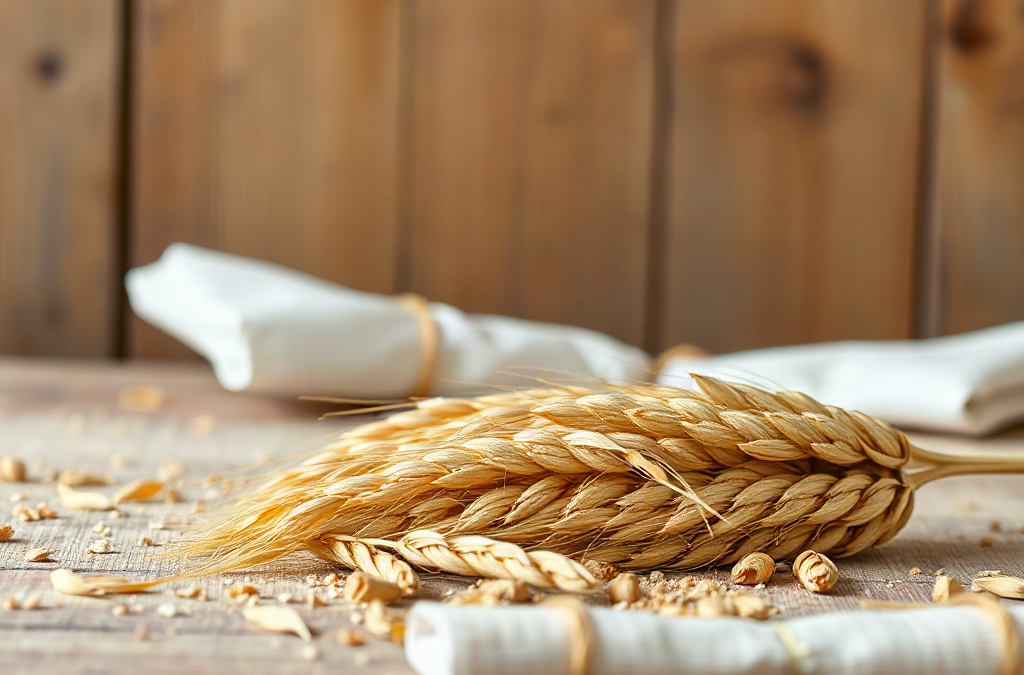
Separating wheat and tares before storage works best when harvested material is dried appropriately, screened by particle size, winnowed by aerodynamic behavior, and inspected for contaminants that mechanical cleaning misses. Begin with coarse debris removal, then use progressively finer screens rather than forcing an entire batch through one opening. Controlled airflow can separate lighter chaff and some weed seeds, while a gravity table or careful hand sorting addresses material similar in size to wheat kernels. Clean grain before sealing it in storage, and isolate any batch containing mold, ergot-like bodies, chemical residues, or unidentified seeds until a qualified grain laboratory or agricultural extension service can assess it.
What Counts as Tares in Harvested Wheat?
The word tares needs a practical definition before any cleaning method is selected. In biblical and botanical usage, it may refer specifically to darnel, a grass whose seed can resemble wheat. Growers and household grain handlers may use the term more loosely for weed seeds, immature kernels, chaff, broken straw, soil, stones, and other foreign material mixed into a wheat harvest. Those contaminants do not all respond to the same separator.
Size, shape, density, and aerodynamic behavior determine what a cleaning step can remove. A large straw fragment is easy to catch on a coarse screen. Light chaff can be carried away by a modest air stream. A stone similar in size to a kernel may pass through the same screen but differ enough in density for gravity separation. A weed seed that closely matches wheat in all four properties may require specialized equipment or manual inspection.
Identification also matters because cleaning is not a substitute for a safety assessment. Unfamiliar seeds, dark elongated bodies that could be ergot structures, moldy kernels, rodent contamination, or grain exposed to an unknown chemical should not simply be removed from sight and treated as resolved. Dust and small fragments may remain throughout the lot. Keep the affected material separate and seek advice from a qualified grain laboratory, local agricultural extension office, or other relevant professional before considering food or feed use.
A useful first check is to spread a representative sample on a pale tray under bright light. Compare the foreign material with sound wheat, noting whether it is larger, smaller, rounder, flatter, lighter, or heavier. Do not assess only the cleanest grain from the top of a container. Take small samples from several points in the lot because fines tend to settle and light material tends to collect near the surface.
The common mistake is to call every non-wheat particle a tare and expect one sieve to remove it. Instead, divide the contaminants into visible groups and match each group to a physical difference. That short inspection prevents unnecessary grain loss and reveals when home-scale equipment is unlikely to produce a dependable result.
How Should Wheat Be Prepared for Cleaning?
Cleaning should begin with grain that is stable enough to handle without smearing, clumping, or generating avoidable breakage. Damp chaff can cling to kernels, moist soil can block screen openings, and unevenly dried material may separate poorly in airflow. If the harvest is warm or damp, hold it in a shallow, ventilated layer rather than sealing it immediately in a bucket or bag.
Dryness cannot be judged reliably from surface feel alone when storage life or food safety is at stake. A calibrated grain moisture meter provides better decision support than biting a kernel or assuming that a dry afternoon produced storage-ready wheat. The suitable moisture level depends on the intended storage duration, temperature, container, and local conditions, so use guidance applicable to the crop and region rather than adopting a universal number without context.
Before fine cleaning, remove conspicuous material such as long stems, seed heads, leaves, twine, and stones large enough to pick out. This protects smaller screens from overload and keeps bulky debris from disrupting airflow. Work in manageable batches. A screen covered by a deep layer stops classifying particles efficiently because kernels cannot reach its openings, while an overloaded fan carries away sound grain along with the chaff.
For example, a small garden harvest may be cleaned on two framed screens set over separate collection trays. A larger homestead lot may justify a hand-cranked fanning mill or powered seed cleaner. The powered option increases throughput, but it does not remove the need to adjust feed rate and examine the reject stream. Faster processing is useful only if saleable or edible kernels are not being discarded.
Prepare the work area before pouring grain. Use clean containers for uncleaned grain, accepted grain, oversize rejects, undersize material, and questionable contaminants. Labeling the containers prevents rejected material from being accidentally returned to the finished lot. Control dust with ventilation and suitable personal protection; grain dust can irritate the eyes and respiratory tract, and blowing directly across an occupied indoor room merely redistributes it.
Preparation is working when grain flows freely, screen openings remain clear, and a thin feed layer produces consistent fractions. Stop if kernels stick together, debris mats over the sieve, condensation appears, or the reject stream contains substantial sound wheat. Correct the moisture, feed depth, or machine setting before processing the rest of the batch.
Four Methods for Separating Wheat and Tares
A staged cleaning sequence preserves more wheat than an aggressive single pass. The four useful methods are screening, winnowing, density separation, and visual sorting. They are complementary rather than interchangeable, and the order may change after the initial sample inspection.
1. Screening by size and shape
Begin with a screen that retains wheat while allowing smaller seeds and fines to fall through, or with a coarse screen that lets wheat pass while holding larger debris. Many lots benefit from both. Test a small sample because wheat varieties, kernel plumpness, and weed species differ. The correct opening is one that creates a useful separation without trapping too much sound grain or passing the target contaminant.
2. Winnowing with controlled airflow
Winnowing separates material by how readily it is carried in air. Pouring grain in front of a fan is a familiar small-scale method, but uncontrolled airflow can scatter contaminants and waste kernels. Start with low air movement, a short drop, and a collection surface wide enough to show where each fraction lands. Increase the airflow gradually while watching for plump wheat in the light fraction. Outdoor wind is inexpensive but inconsistent; a fan or fanning mill offers more repeatable adjustment.
3. Separating by density
A gravity table or similar cleaner can distinguish particles that share wheat’s approximate dimensions but differ in density. This method may help with shriveled kernels, some stones, and certain weed seeds after coarse material has been removed. Equipment settings depend on feed uniformity, airflow, deck angle, and vibration. Home improvised methods provide less control and should not be assumed to match a properly adjusted commercial machine.
Get Whole Wheat Flour, Grains and Milling Supplies – CLICK HERE 
4. Visual or hand sorting
Hand sorting is slow but useful for a small lot, seed-saving batch, or final inspection. Spread a single layer on a contrasting tray and remove obvious foreign seeds, discolored kernels, insect-damaged pieces, and anything that does not match the accepted sample. Optical sorters perform a related task at commercial scale, using visible differences that screens cannot detect.
The practical sequence is to remove oversize debris, take out undersize fines, apply airflow, and reserve visual or density-based work for the remaining look-alike material. Run a small test first and retain each reject fraction until the settings have been checked. If sound wheat appears repeatedly in the waste, reduce the feed rate or use a less aggressive screen or airflow setting. If the finished fraction still contains the same contaminant, repeating an ineffective pass is less useful than switching to a method based on a different physical property.
How Can You Check Cleaned Wheat Before Storage?
Cleaned wheat should be evaluated as a batch, not approved because one handful looks good. Mix or sample the lot systematically, then spread several portions in thin layers under good lighting. Look for recurring weed seeds, stones, chaff, damaged kernels, insects, webbing, unusual odors, discoloration, and material concentrated at the bottom of the container.
A compact pre-storage check keeps the decision focused:
- Identity: Unfamiliar seeds and suspect fungal bodies have been isolated rather than guessed at.
- Cleanliness: The accepted fraction contains no obvious recurring contaminant that the chosen process should have removed.
- Condition: Kernels are cool, free-flowing, and not visibly moldy or insect-infested.
- Moisture: A suitable measurement and crop-specific storage guidance support the intended storage period.
- Container: The vessel is clean, dry, food-appropriate when relevant, and capable of excluding pests without trapping warm, damp grain.
Cleaning and storage preparation solve different problems. Removing chaff reduces foreign material and may improve airflow through the grain, but it does not dry the kernels or reverse deterioration. Likewise, an airtight container can block new insect entry, yet sealing grain that is too warm or moist can preserve conditions favorable to spoilage. Allow recently handled grain to reach a stable condition before closing it into long-term storage.
Consider a batch that looks clean after winnowing but leaves a layer of small dark seeds at the bottom of every pail. The repeated pattern shows that airflow was not the decisive separator. A finer lower screen may work if the seeds are smaller than wheat; if their dimensions overlap, professional cleaning or identification may be the safer choice. Continuing to winnow would consume time while leaving the underlying problem unchanged.
Keep questionable lots separate from clean ones. Combining them dilutes visible contamination across more grain and makes later tracing difficult. Label containers with the harvest source, date, cleaning passes, and any unresolved observation. Recheck stored wheat soon after filling and periodically thereafter for condensation, heating, insects, off odors, or caking. Those signs call for prompt investigation, not another cleaning pass alone.
The most common failure is treating visual neatness as proof that the lot is safe and storage-ready. Mechanical separation can improve physical purity, but it cannot establish the identity or toxicity of every seed, detect all residues, or guarantee that mold-related hazards are absent. When intended use is consequential and contamination is uncertain, laboratory analysis or professional crop guidance provides a stronger basis for a decision.
Frequently Asked Questions
Can wheat and tares be separated with a kitchen sieve?
A kitchen sieve may remove debris that is clearly smaller or larger than the kernels, but it will not separate seeds that closely match wheat in size. Test a small sample and inspect both fractions for grain loss.
Should wheat be washed before it is stored?
Washing adds moisture and can make safe drying more difficult. Dry cleaning methods are generally more suitable before storage; wet grain should not be sealed until its condition has been properly evaluated and stabilized.
How can I tell darnel seed from wheat?
Do not rely on a single photograph or casual visual comparison when the seed's identity affects food or feed use. Isolate the material and seek identification from an agricultural extension service, seed laboratory, or qualified botanist.
Does winnowing remove every weed seed?
No. Winnowing works when weed seeds and debris behave differently from wheat in airflow. Dense or similarly shaped seeds may remain and require screening, density separation, optical sorting, or hand removal.
Can rejected material be fed to animals?
Do not assume rejects are suitable feed. They may concentrate unidentified weeds, moldy kernels, ergot-like material, or residues; obtain appropriate professional guidance before using a questionable fraction.
Conclusion
Successful cleaning depends on matching each contaminant to a measurable difference rather than forcing the entire harvest through one device. Inspect a representative sample, stabilize the grain, remove coarse debris, and test screens and airflow on a small quantity before scaling up. Use density or visual sorting when foreign seeds overlap wheat in size, and monitor the reject stream so good kernels are not lost.
Before filling storage containers, verify grain condition and moisture separately from cleanliness. Keep suspect lots isolated, label what was done, and investigate recurring seeds, mold, insects, unusual odors, or ergot-like bodies instead of assuming another pass will make the lot suitable. The next practical step is to classify the contaminants in a tray sample and choose the least aggressive method that clearly separates them.
Get Whole Wheat Flour, Grains and Milling Supplies – CLICK HERE
Auto Amazon Links: No products found.





