
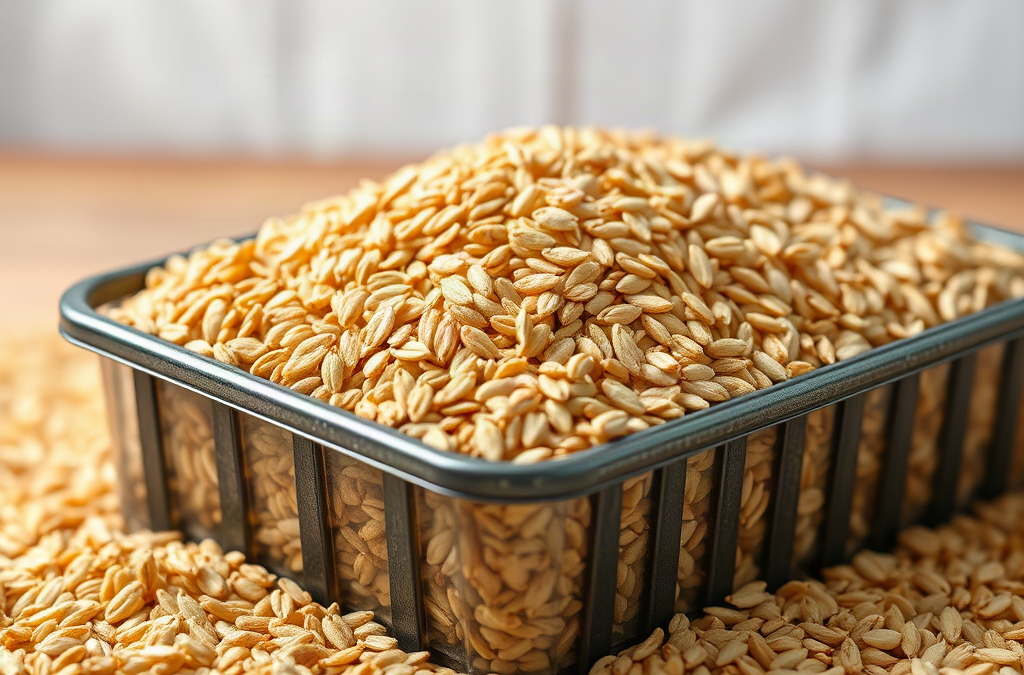
Grain storage changes that prevent freezer burn focus on limiting air exposure, moisture migration, and repeated temperature changes around frozen grain. Replace thin bags or loosely closed packages with moisture-vapor-resistant freezer bags, vacuum-sealed pouches, or rigid airtight containers, and divide grain into portions that can be removed without reopening the main supply. Cool grain before packing, remove excess air, freeze it promptly, and keep it in a stable part of the freezer rather than the door. When taking grain out, leave the package sealed until it reaches room temperature so condensation forms on the container instead of the grain.
Why Does Frozen Grain Develop Freezer Burn?
Freezer burn develops when frozen grain loses moisture to the cold, dry air surrounding it. Moisture moves from exposed or poorly protected food surfaces, then refreezes elsewhere in the package as frost. The affected kernels, flakes, or flour may become unusually dry, pale, dull, or stale-tasting. Freezer burn is primarily a quality problem, but its appearance should not be confused with mold, insect contamination, or moisture damage.
Whole kernels generally tolerate freezing better than milled products because their intact outer layers provide some physical protection. Flour, cracked grain, rolled grain, and grain meal expose far more surface area to air. A partially filled bag of rolled oats, for example, contains many air spaces around thin flakes. If the closure leaks or the bag is repeatedly opened, moisture loss and odor absorption become more likely. Whole wheat berries in a tightly sealed pouch usually have less exposed surface and fewer pathways for dry freezer air.
Packaging alone does not explain every failure. Frequent temperature fluctuations can cause ice within a package to sublimate and redeposit. A bag stored near a freezer door may warm slightly whenever the door opens and cool again afterward. An automatic-defrost freezer also cycles temperature as part of normal operation. Stable placement toward the back or center cannot stop those cycles, but it reduces the additional warming caused by door openings.
A common mistaken assumption is that any plastic bag becomes freezer-safe once it is tied shut. Thin produce bags, paper sacks, and original retail packaging often allow more water vapor and air movement than packaging designed for frozen food. They may be adequate as an inner layer, but they are weak primary barriers for extended freezer storage.
Before changing containers, inspect the grain itself. It should be dry, clean, and free from visible insects, webbing, off odors, or damp clumps. Freezing questionable grain does not reverse deterioration that has already occurred. The first priority is sound grain; the second is a package that separates it from freezer air.
Which Packaging Protects Grain Best?
Effective freezer packaging combines a low-permeability barrier with a dependable seal and little unused air space. Heavy freezer bags, vacuum-seal pouches, and rigid freezer-rated containers can all work, but they suit different grains and patterns of use. The word “airtight” should describe the complete package after closure, not merely the container material.
Heavy freezer bags are practical for modest quantities because they conform to the grain and make it easy to press out air. A double zipper or carefully made heat seal is more dependable than a loosely twisted tie. Bags remain vulnerable to punctures from sharp kernels or crowded freezer contents, so placing them in a protective bin can reduce damage. Double-bagging may add puncture resistance, but it cannot compensate for trapped air or poorly closed seams.
Vacuum sealing removes much of the air surrounding dry grain and produces a compact package. It is especially useful for flour, rolled oats, and portions intended to remain unopened for months. Fine flour can be drawn toward the sealing area, however, which may weaken the seam or enter the machine. Leaving flour in an inner food-safe bag, folding rather than sealing that inner bag, and vacuum sealing the outer pouch can keep powder away from the seal. Another option is to pre-freeze the filled pouch upright before applying vacuum, provided the final seal remains clean and complete.
Rigid containers resist crushing and punctures and are convenient for grain used regularly. Their disadvantage is headspace: a large container holding a small amount of grain traps unnecessary air. Match the container to the quantity, and confirm that its lid and gasket remain flexible and undamaged at freezer temperatures. A rigid box with a loose snap lid may organize bags well but should not be treated as the moisture barrier.
| Packaging option | Best use | Main limitation |
|---|---|---|
| Heavy freezer bag | Shorter-term portions and irregular shapes | Can be punctured or closed incompletely |
| Vacuum-seal pouch | Longer unopened storage and low headspace | Seal failure may be hard to notice at first |
| Rigid freezer container | Grain accessed frequently | Excess headspace if the container is oversized |
| Original paper or thin plastic package | Inner identification layer only | Usually offers weak moisture-vapor protection |
Label every outer package with the grain type, form, packing date, and quantity. Labels reduce unnecessary opening and searching, both of which expose packages to warmer, humid room air. For the strongest practical protection, prioritize an intact seal and appropriately sized package before buying elaborate storage accessories.
How Should Grain Be Portioned and Frozen?
Portioning grain according to actual use limits the number of times the main supply is opened. A household that bakes with two cups of flour at a time gains little from freezing ten pounds in one repeatedly opened bag. Several recipe-sized or weekly portions allow each package to remain sealed until needed, while a larger reserve can stay undisturbed.
Pack dry grain at a cool room temperature rather than immediately after milling, cooking, or exposure to a warm kitchen. Grain that feels warm can contribute heat and moisture to the enclosed air. Cooked grains are a separate storage case: they contain substantial water and require prompt cooling, shallow portions, and food-safety handling appropriate to leftovers. Advice for dry berries, flour, oats, cornmeal, or rice should not be applied automatically to cooked grain.
Use a simple packing sequence to reduce avoidable exposure:
- Inspect: Reject grain with dampness, musty odor, visible mold, or active infestation.
- Measure: Divide it into quantities likely to be used at one time.
- Pack: Choose a freezer-rated barrier with minimal empty space.
- Remove air: Press air from bags without forcing grain into the closure, or use an appropriate vacuum setting.
- Seal and check: Wipe sealing surfaces clean and test that closures do not reopen under light pressure.
- Label and freeze: Place packages promptly in a stable freezer location without crowding warm items around them.
Flat packages freeze efficiently, stack neatly, and expose less material when one portion is removed. Flour can be spread into a moderately thin, even layer before sealing, while sharp whole kernels may be safer in a thicker pouch or a bag protected by a rigid outer bin. Avoid compressing a package so forcefully that kernels stress the seams.
The tradeoff is packaging use. Very small portions require more bags, labels, and freezer space than a single bulk package. A workable compromise is to keep several use-sized packages plus one larger sealed reserve. The reserve is opened only when the smaller supply has been consumed, reducing the repeated air exchange that accelerates quality loss.
Do not add desiccant packets or oxygen absorbers casually to frozen grain. They address different storage conditions and do not repair a leaking freezer package. Some absorber combinations and food moisture levels require specific handling. For ordinary household freezing, a sound moisture-vapor barrier, clean seal, and controlled thawing are the more direct changes.
Temperature, Thawing, and Condensation Control
A stable freezing environment protects grain better than a location exposed to repeated warming. Store packages away from the door, ice-dispenser area, and vents that may create mechanical stress or localized frost buildup. Leave enough room for cold air to circulate, but prevent bags from sliding against sharp racks or becoming trapped under heavy frozen items.
Get Whole Wheat Flour, Grains and Milling Supplies – CLICK HERE 
Opening a package while it is still cold creates a less obvious moisture problem. Warm room air carries water vapor, which can condense on chilled grain and packaging surfaces. If the unused portion returns to the freezer, that added moisture may freeze into crystals and promote clumping. The package can then appear “freezer burned” even though careless thawing, rather than the original freezing step, supplied much of the moisture.
For a package intended to be used completely, remove it from the freezer and let it reach room temperature while it remains sealed. Any condensation is then more likely to collect on the outside. Once the contents are no longer cold, open the package and use or transfer the grain as planned. Larger packages take longer to temper than flat portions, which is another reason smaller units are easier to manage.
If only part of a container must be removed, work quickly with a dry utensil, close the package immediately, and return it to the freezer before extensive warming occurs. This approach is less protective than single-use portions because every opening introduces humid air. A frequently used working container and an unopened reserve provide a better balance than repeatedly opening the entire supply.
Power interruptions require judgment based on actual thawing and food condition rather than assumptions. Dry grain does not behave like meat or dairy, but condensation can still compromise quality if cold packages are opened or refrozen wet. Keep packages closed during a short interruption. Afterward, look for liquid moisture, wet clumps, damaged seals, or unfamiliar odors. Grain that became wet or shows mold should not be dried and returned to storage.
The clearest sign that temperature control is failing is recurring frost inside several otherwise intact packages, especially those near the door. Move new packages to a more stable zone and compare them over time. If frost appears only in one pouch, inspect that pouch for a pinhole, contaminated seal, or closure failure before blaming the freezer.
How to Check Whether Storage Changes Work
Successful storage changes produce packages that remain tightly closed, free of internal frost, and consistent in aroma and texture when opened. Inspection should focus on evidence, not appearance alone: frost coating the freezer wall does not necessarily mean grain inside a sound package is damaged.
Check transparent bags for ice crystals, pale dry patches, seam separation, and air entering a previously tight vacuum pouch. Examine rigid containers for warped lids, brittle gaskets, or grain dust caught across the sealing surface. Run a finger along heat seals to find channels or wrinkles. A package that has expanded after vacuum sealing may have leaked, although some movement can occur as loose grain settles.
Compare stored grain with a recently packed sample when practical. Whole kernels should remain hard and dry, while flour or meal should pour without wet clumps. Smell the grain after it reaches room temperature; cold temperatures can suppress aromas. Cardboard-like, rancid, musty, or freezer odors indicate that quality or package protection has declined. Higher-fat products, including some whole-grain flours and meals containing the germ, may develop stale flavors sooner than intact refined grain because their oils remain exposed after milling.
A useful trial is to package the same grain in two realistic options, label both, and open them on the same date. For example, compare a carefully closed heavy freezer bag with a vacuum-sealed pouch rather than comparing completely different grains. Note internal frost, clumping, aroma, and baking or cooking performance. The result reveals whether a more costly method provides a meaningful advantage in that freezer and usage pattern.
Do not assume that removing visible dry spots restores quality. Mildly freezer-burned grain may still be usable when there are no signs of spoilage, but flavor and texture losses are not reversed by repackaging. It may perform acceptably in porridge, bread, or another strongly flavored preparation, depending on its condition. Mold, dampness, insect activity, or a distinctly rancid odor calls for disposal rather than a change of recipe.
When failures persist, troubleshoot in order: verify grain was dry before packing, inspect the seal, reduce package headspace, move the package away from the door, and stop reopening frozen bulk supplies. Changing one factor at a time makes the cause easier to identify and avoids replacing containers when handling practices are responsible.
Frequently Asked Questions
Can grain get freezer burn in an airtight container?
Yes, particularly if the container contains substantial headspace, has a worn gasket, or is opened repeatedly while cold. A properly sized, intact container greatly reduces the risk but does not correct condensation introduced during handling.
Is vacuum sealing necessary for frozen grain?
No. A heavy freezer bag with excess air removed and a secure closure may be adequate. Vacuum sealing is more useful for long, unopened storage or finely milled grain with extensive exposed surface area.
Should flour be thawed before opening the package?
Yes. Keep the flour sealed until it reaches room temperature so humid air does not condense directly on the cold flour and cause damp clumps.
Does double-bagging stop freezer burn?
Double-bagging adds puncture protection and another barrier, but both bags must close properly. It will not solve excessive trapped air, repeated opening, or condensation during thawing.
Can freezer-burned grain still be used?
Mild freezer burn usually affects quality rather than making dry grain automatically unsafe. Discard grain with mold, wet clumps, active pests, or rancid or musty odors; freezer burn should not be used to explain those warning signs.
Conclusion
Better frozen-grain storage begins with matching the package and portion to the way the grain will be used. Place dry, sound grain in freezer-rated packaging, remove unnecessary air, protect seals from flour dust and sharp kernels, and keep reserve packages unopened. Stable placement away from the freezer door reduces temperature cycling, while sealed thawing keeps room humidity from condensing on cold flour, flakes, or kernels.
Start by correcting the most likely weak point rather than replacing everything at once. Inspect seals and headspace, divide frequently used bulk grain into smaller units, and move packages showing recurring frost to a steadier location. Label a test batch and check it for internal ice, clumping, odor changes, and package leaks. Those observations will show whether the problem comes from the barrier, the freezer location, or repeated opening—and which change deserves priority.
Get Whole Wheat Flour, Grains and Milling Supplies – CLICK HERE
Auto Amazon Links: No products found.





