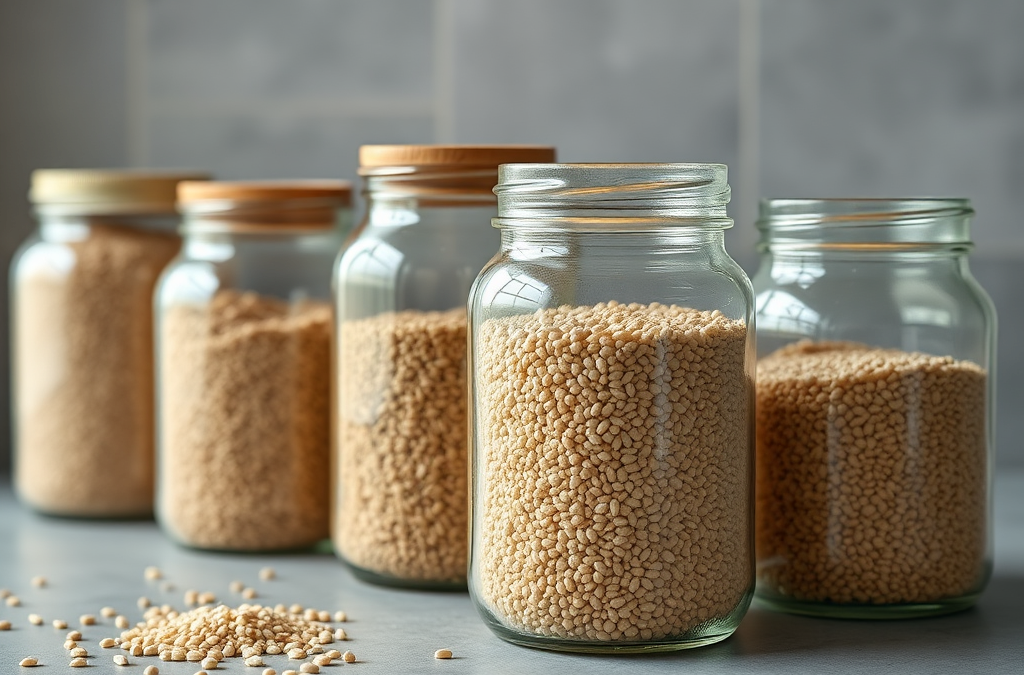
To store grains in glass jars effectively, ensure the jars are clean, dry, and airtight to prevent moisture and pest infiltration. Choose dark glass jars to protect grains from light, which can degrade quality. It's important to label jars with the grain type and date for easy reference, and to keep them in a cool, dark location to maintain freshness. Regularly check for any signs of spoilage or pest activity to ensure your grains remain in optimal condition.
Importance of Proper Grain Storage
Storing grains properly is crucial for maintaining their freshness, flavor, and nutritional value. Poor storage can lead to spoilage, pest infestations, and nutrient loss. Grains are often harvested in bulk and can be subject to various environmental factors that affect their longevity. By using glass jars, you create a controlled environment that minimizes exposure to air, moisture, and light, which are the primary culprits in grain degradation.
Moreover, glass jars are non-reactive and do not leach chemicals, making them a safer choice compared to plastic containers. They allow for easy visibility of the contents, enabling you to monitor the grains without opening the jars unnecessarily. This can help in maintaining the quality of your stored grains over time.
Choosing the Right Glass Jars
When selecting glass jars for grain storage, consider the size, shape, and type of glass. It’s advisable to choose jars that are large enough to hold the amount of grain you intend to store, but not so large that the grains are left exposed to air for long periods. Wide-mouth jars are often easier to fill and clean.
Opt for dark or opaque glass jars, as these provide protection against light, which can deteriorate the quality of grains. Ensure that the jars have airtight seals to prevent moisture and pests from entering. Look for jars with rubber gaskets or screw-on lids that create a tight seal. Mason jars are a popular choice, as they are designed for preserving food and often come with these features.
Steps for Storing Grains
1. Clean and Dry the Jars: Before filling the jars, wash them with hot soapy water, rinse thoroughly, and allow them to dry completely. Any moisture left in the jars can lead to mold growth.
2. Fill the Jars: Pour the grains into the jars, leaving a little space at the top to allow for expansion and easy closing. Avoid packing the grains too tightly, as this can lead to moisture retention.
3. Seal the Jars: Ensure that the lids are sealed tightly to prevent air from entering. If using jars with rubber gaskets, press down firmly to create an airtight seal.
Get Whole Wheat Flour, Grains and Milling Supplies – CLICK HERE

4. Label the Jars: Use a permanent marker or label maker to note the type of grain and the date it was stored. This will help you track freshness and rotation.
5. Store in a Cool, Dark Place: Place the jars in a pantry, cupboard, or other cool, dark area. Avoid storing them near heat sources or in direct sunlight, as this can affect the quality of the grains.
Common Mistakes to Avoid
One common mistake is underestimating the importance of cleanliness. Always ensure jars are thoroughly cleaned and dried before use. Another mistake is neglecting to check the seals on jars; any break in the seal can allow air and moisture to spoil the grains.
Additionally, some people may store grains in areas with fluctuating temperatures or high humidity, which can lead to spoilage. It’s also crucial not to mix different types of grains in the same jar, as they may have varying shelf lives and storage requirements.
Get Whole Wheat Flour, Grains and Milling Supplies – CLICK HERE
Auto Amazon Links: No products found.