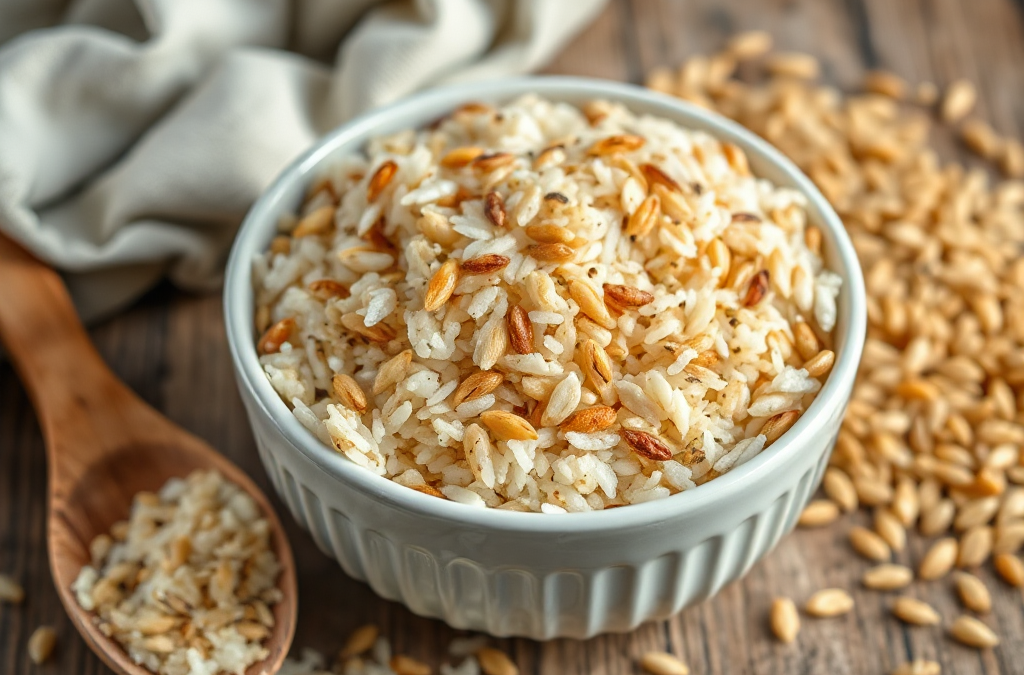
Prepare grains for family meals by matching each grain to the right water ratio and cooking method, then season and portion it for the dishes your household actually eats. Rinse rice, quinoa, millet, and similar grains when their package instructions recommend it; toast some grains briefly for a nuttier flavor; and use a covered simmer so moisture is absorbed evenly. Check doneness by texture rather than the clock, because age, pan size, and heat affect cooking time. Rest cooked grains before fluffing, cool leftovers promptly, and combine them with vegetables, beans, eggs, fish, or meat for balanced, adaptable meals.
Choose Grains That Fit the Meal
The best grain for a family meal depends on the dish, available time, desired texture, and how well the cooked food will hold. Long-grain rice tends to produce separate, fluffy grains for bowls and stir-fries, while short-grain rice becomes stickier and suits rice balls or creamy dishes. Brown rice and other whole grains bring a chewier texture and more fiber, but they generally need more water and cooking time than refined versions.
Quinoa cooks relatively quickly and works in salads, stuffed vegetables, or a warm side dish. Barley has a hearty chew that fits soups and stews, whereas bulgur is useful when a meal needs a fast grain component because it can often be hydrated rather than simmered for a long period. Oats are not limited to breakfast; savory oats can carry eggs, vegetables, cheese, or leftover roasted food.
Family preferences should influence the choice more than novelty. A grain that nobody enjoys creates waste, even if it has an appealing nutrition profile. A practical approach is to keep one familiar option, such as rice, and introduce a different grain in a small portion beside a well-liked sauce or filling. The familiar food reduces pressure while the new texture remains easy to assess.
Whole grains may provide more fiber and a firmer bite, but they are not automatically the best choice for every plate. Young children, people with chewing difficulties, or diners who prefer softer foods may do better with tender rice, porridge, or finely chopped grain salads. When planning how to prepare grains for family meals, prioritize a texture the household can comfortably eat and a cooking time that fits the evening.
Rinse, Toast, and Measure for Better Texture
Preparation before heat often determines whether grains are clean-tasting and evenly cooked. Rinsing rice in cool water removes loose surface starch and may reduce gumminess, especially when the goal is distinct grains. Quinoa is commonly rinsed because its outer coating can taste bitter. Follow the package directions for specialty products, since some grains are prewashed or processed for a specific cooking method.
Use a fine-mesh strainer for small grains and drain thoroughly. Excess water carried into the pot changes the intended ratio, while an unwashed grain can produce a muddy cooking liquid. Rinsing is less central for grains such as pearled barley or quick-cooking bulgur, where the product has already been processed and the cooking instructions often rely on a fixed amount of liquid.
Toasting is optional but useful when flavor matters. Warm dry rice, farro, quinoa, or millet in a saucepan with a small amount of oil for a few minutes, stirring until the grains smell nutty. Toasting can deepen flavor and help a grain remain more distinct, but it also adds a step and can make scorching more likely. Use moderate heat and remove the pan if the grains darken sharply or smell burnt.
Measure both grain and liquid with the same system. A measuring cup for the grain and an unmarked estimate for the water is a common source of inconsistency. Salt the cooking liquid when appropriate, but remember that broth, canned beans, sauces, and cheese may already add sodium. A useful pre-cooking checklist is:
- Read the package directions for the exact variety.
- Rinse or drain when the grain calls for it.
- Measure liquid rather than guessing.
- Choose a pot with enough room for expansion.
- Prepare the toppings before the grain finishes resting.
These steps matter because grains absorb liquid as their starches soften. Too much water produces a wet or broken texture; too little leaves a hard center and may cause the bottom to scorch. The correct ratio is not universal, so a recipe for white rice should not be transferred directly to brown rice, barley, or a grain blend.
Cook Grains Reliably for a Family
Most stovetop grains cook best when brought to a brief boil, reduced to a gentle simmer, covered, and left undisturbed until the liquid is absorbed. Vigorous boiling can break delicate grains and drive off water too quickly. Lifting the lid repeatedly releases steam, which may lengthen cooking and leave the upper layer underdone.
Use the package time as a starting point, then check texture. Rice should be tender without a chalky center; quinoa is ready when the grains are translucent and their small germ rings have separated; barley should have the chew expected for the recipe rather than a raw, tough core. If the liquid is gone but the center remains firm, add a modest amount of hot water, cover the pan, and continue cooking. If the grain is tender but watery, uncover it briefly over low heat or drain it, depending on the variety.
Resting is a useful part of cooking rather than wasted time. After the heat is off, leave the covered pot alone for several minutes so remaining steam distributes moisture. Fluff with a fork or rice paddle instead of stirring aggressively. A crowded pot also changes results: a large family batch in a narrow saucepan may cook unevenly, while a wide, heavy pot can encourage more consistent heating.
Different methods suit different schedules. A rice cooker reduces active monitoring for rice and some similar grains, but it does not eliminate the need to measure accurately. An oven method can provide steady heat for a large casserole, while simmering barley directly in soup saves a separate pan but causes the broth to thicken as the grain absorbs liquid. Choose the method according to the meal, not habit.
A common mistake is doubling every ingredient in a familiar recipe without considering the vessel. Doubling grain and water may work, but a deeper batch can need more time and may require stirring or a wider pot. Cook a small test batch when trying a new grain, then record the amount, pan, liquid, and cooking time that produced the texture your family prefers.
Turn Cooked Grains Into Practical Family Meals
Cooked grains become easier to serve when they are treated as a base rather than the entire meal. Pair them with a protein, vegetables, and a flavorful element such as salsa, yogurt sauce, pesto, curry, or a simple vinaigrette. This structure lets each family member adjust the plate without requiring a separate dinner.
For a weekday bowl, combine rice or quinoa with roasted vegetables, beans, shredded chicken, or a fried egg. For a cold meal, cool farro or bulgur and mix it with cucumber, tomatoes, herbs, chickpeas, and dressing. Soft grains can be folded into soup, meatballs, stuffed peppers, or a breakfast-style dish. Leftover rice can become fried rice when cooled and refrigerated properly, while cooked oats can be reheated with vegetables and an egg for a savory lunch.
Seasoning at several stages usually gives better results than adding a large amount at the end. Salt in the cooking liquid flavors the grain internally; herbs, aromatics, citrus, or spices added afterward provide contrast. Fat can improve mouthfeel, but a heavy sauce may hide the grain’s texture and make the meal less appealing to children who are still learning new foods.
Portioning also affects family acceptance. Serve a modest scoop with familiar toppings rather than filling the plate with an unfamiliar grain. A mixed approach, such as combining brown rice with white rice or adding a little quinoa to a trusted salad, can make the transition gradual. Avoid assuming that every grain must replace another completely; rotation gives variety without forcing one ingredient into every recipe.
Get Whole Wheat Flour, Grains and Milling Supplies – CLICK HERE 
For more meal ideas, use how to prepare grains for family meals as a planning question: what grain can cook during the available window, what ingredients are already on hand, and which leftovers can be reused safely tomorrow? The strongest plan is usually the one that reduces separate cooking tasks while preserving options at the table.
Store Leftovers and Avoid Common Mistakes
Cooked grains should be handled as perishable food, not treated like the dry product in the pantry. Divide a large batch into shallow containers so it cools more quickly, refrigerate it promptly, and reheat only the amount needed. A sealed container helps prevent drying and limits contact with other foods. When reheating, add a splash of water if the grain has hardened, then heat until it is steaming hot throughout.
Do not leave a large, warm pot sitting on the counter for an extended period while the family eats. The center cools slowly, creating a poor storage pattern even when the surface seems comfortable. If you will not use the leftovers soon, freeze meal-size portions. Labeling the grain and date prevents forgotten containers from becoming a recurring source of waste.
Texture problems usually point to a specific process error. Mushy grains often result from excess liquid, vigorous stirring, or cooking past tenderness. Hard grains may reflect insufficient water, an unreliable simmer, an ill-fitting lid, or an inaccurate measure. Burned bottoms can occur when heat remains high after the liquid has been absorbed. These signs are more useful than simply blaming the variety.
Another weak assumption is that soaking always improves every grain. Soaking can shorten cooking for some intact whole grains and may be useful when planning ahead, but it changes the amount of liquid and timing required. Quick-cooking products may become soft or lose their intended texture if soaked unnecessarily. Read the instructions, then adjust only one variable at a time.
Keep a simple household note for grains that work well: variety, dry quantity, liquid, pan, heat level, and resting time. That record turns trial and error into a repeatable routine. For additional context on how to prepare grains for family meals, compare the method with the grain’s package directions rather than relying on a single universal ratio.
For food-safety details and grain-specific cooking instructions, consult current guidance from government food-safety agencies, university extension programs, and the package directions supplied by the grain producer. Those sources are more dependable than applying one cooking time or storage rule to every grain.
Frequently Asked Questions
Should grains be washed before cooking?
Rinse rice and quinoa when their instructions recommend it, particularly when you want less surface starch or a cleaner flavor. Barley, bulgur, and packaged quick-cooking grains may not need the same treatment.
How can I stop rice from becoming mushy?
Measure the liquid, keep the pot at a gentle simmer, avoid repeated stirring, and let the rice rest covered after cooking. A large batch may also need a wider pot for even heating.
Which grains are easiest for busy weeknight meals?
Quinoa, bulgur, quick-cooking oats, and some rice varieties fit shorter schedules. Check the label because processing and grain variety affect actual cooking time.
How do I make grains more appealing to children?
Serve a small portion with familiar foods, use sauces or toppings separately, and introduce firmer or nuttier grains gradually. A mixed grain dish can be gentler than a complete replacement.
Can cooked grains be frozen?
Yes. Cool them promptly, divide them into meal-size portions, seal them well, label them, and reheat until hot throughout. Adding a little water can restore moisture during reheating.
Conclusion
Successful family grain meals come from matching the variety and method to the household schedule, then controlling the details that affect texture: rinsing when useful, measuring liquid, managing heat, and allowing a covered rest. Choose familiar grains for dependable weeknights and introduce alternatives beside foods your family already accepts. Build meals around the cooked grain with vegetables, beans, eggs, fish, meat, or a flavorful sauce so one pot can serve different preferences. Pay attention to signs of failure—hard centers, excess water, scorching, or a gummy surface—and change one variable at a time. Cool leftovers promptly and portion them for later use. A short cooking record will make the next batch more predictable and reduce both waste and evening stress.
Get Whole Wheat Flour, Grains and Milling Supplies – CLICK HERE
Auto Amazon Links: No products found.