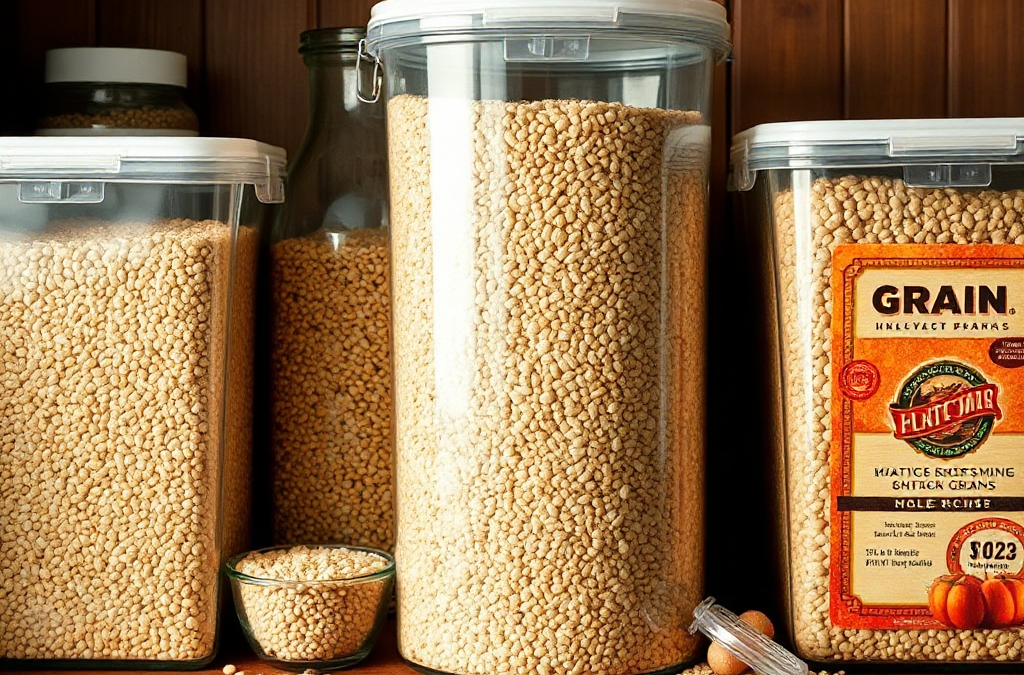
Adapt grain storage practices for small spaces by reducing the quantity kept at one time, choosing stackable airtight containers, separating frequently used grains from reserve stock, and monitoring heat, moisture, and pests. Square or rectangular containers usually use shelves more efficiently than bags or round bins, while shallow containers make inspection easier. Store grains in the coolest, driest interior location available, keep them off floors and away from plumbing, and label each container with the grain and packing date. Rotate older packages into regular meals before opening newer ones. Avoid compressing a large supply into an inaccessible corner: poor visibility can hide condensation, insects, or stale odors until several containers are affected.
Measure the Space Before Choosing Containers
Small-space grain storage works best when the storage area is treated as a set of usable dimensions rather than a single empty cupboard. Measure shelf width, depth, vertical clearance, door swing, and the distance from the floor. A container that holds more grain but leaves no room for removal may be less useful than a smaller container that can be checked and rotated easily.
Square and rectangular containers generally make better use of shelves than round jars or loosely packed bags because they leave fewer unused gaps. Clear walls can help with visual checks, but transparency does not replace labeling; light exposure may be undesirable for some foods, and a crowded shelf can still conceal an old package. Choose food-safe containers with secure lids, a stable base, and dimensions that allow one container to be lifted without moving an entire stack.
Consider access frequency when assigning locations. Rice, oats, flour, and other grains used weekly belong at hand height, while sealed reserve stock can occupy a higher shelf if it remains reachable. Heavy containers should stay low enough to lift safely. A narrow pantry may favor several modest containers over one large pail because smaller units limit the amount exposed if one package develops a problem.
A common mistake is filling every available gap. That approach maximizes volume but reduces air circulation, visibility, and cleaning access. Leave enough clearance to remove containers, wipe shelves, and inspect corners. If the only available location is beneath a sink, beside a dishwasher, or against a warm appliance, reduce the quantity stored there rather than treating the space as a full pantry. For more planning ideas, compare this layout with how to adapt grain storage practices for small spaces in relation to the foods your household actually consumes.
Match Grain Types to Storage Conditions
Different grains have different storage demands, so a small shelf should not be organized by container size alone. Refined white rice, dry pasta, and intact dry grains are usually easier to manage in a compact pantry than whole-grain flours, brown rice, or other products containing more natural oil. Milling and processing change how quickly quality can decline, particularly when heat and oxygen are present.
Whole-grain flour deserves a shorter planning horizon than intact kernels because its larger exposed surface area can accelerate flavor changes. If a small kitchen cannot provide a cool, stable location, buy smaller packages and use them routinely instead of dedicating scarce space to a large reserve. Brown rice may also be better handled as a rotating food rather than an overlooked long-term stock. The goal is not to make every grain last indefinitely; it is to align quantity with the conditions available.
Separate foods by intended use. Keep everyday ingredients in containers that open easily, and place backup quantities in sealed units that are clearly marked. A household that cooks oatmeal several times a week may benefit from a medium container in the working zone and a smaller reserve behind it. Someone who rarely uses wheat flour may be better served by one fresh package than by a large container occupying prime shelf space.
Do not assume that an airtight container can correct poor starting quality. Grain should be dry, clean, and free of unusual odors or visible insects before transfer. Moving questionable food into a sealed box can trap the problem and make inspection harder. Buy from a source with normal product turnover, check package condition, and avoid combining a new purchase with older grain until the older portion has been used and the container cleaned. That simple separation makes the small-space storage process easier to audit.
Build a Compact Rotation and Inspection System
Rotation is the central operating system of a small pantry. Rather than storing food by purchase date and forgetting it, place the oldest suitable package where it will be used first and record the packing or opening date on every container. A short label such as “oats—opened March” is more useful than relying on memory, especially when several grains look similar.
Use a two-level arrangement when space permits: a working container for the next few weeks and a reserve container behind or above it. Refill the working container only after checking the reserve for odor, clumping, insects, or damaged seals. This limits repeated opening of the full supply and makes it clear how much food is actually available. If the shelf is too shallow for two rows, use a vertical file-style arrangement with labels facing outward.
A monthly inspection need not be elaborate. Remove each container, check the lid and lower corners, look for webbing or small insects, and confirm that the grain remains free-flowing and smells normal. Inspect the shelf itself for crumbs, dampness, and evidence of pests. A container that is difficult to remove will probably not be inspected often, which turns a space-saving design into a risk.
Several small containers can improve isolation, but they also create more lids to clean and more labels to maintain. One large container reduces packaging clutter but makes a failure more costly and may be awkward to lift. Choose the smallest unit that fits the household’s normal use cycle without creating excessive handling. A useful checklist includes:
- Label the grain, purchase or packing date, and opening date when relevant.
- Keep older usable stock in front of newer stock.
- Inspect seals, odors, clumping, insects, and shelf dryness.
- Clean and dry an empty container before refilling it.
For households with very limited space, buying smaller quantities more often may outperform bulk purchasing. The higher package cost can be offset by fewer stale products, less shelf congestion, and easier quality control.
Avoid Moisture, Heat, and Pest Failures
Moisture is the most serious environmental threat in a cramped storage area because condensation, leaks, and humid air can damage grain even when the container appears closed. Store containers away from exterior walls that regularly collect condensation, plumbing connections, dishwashers, and areas exposed to cooking steam. Keep them elevated from the floor, particularly in basements, laundry rooms, or garages where a minor leak may go unnoticed.
Heat speeds quality loss in foods that contain natural oils and can make an enclosed cabinet warmer than the surrounding room. A cabinet beside an oven may be convenient, but it is a poor location for long-held whole grains or flour. If no cool pantry exists, use the coolest stable indoor shelf and shorten the rotation period. Avoid moving food repeatedly between a cold area and a warm kitchen, since temperature changes can encourage condensation inside containers.
Pests often enter through the original package or reach food through crumbs and neglected corners. Airtight storage reduces access after packing, but it does not sanitize a dirty shelf or guarantee that an infested package will be detected. Wipe spills promptly, keep containers closed, and inspect incoming packages before they join the rest of the supply. If one container shows insects or webbing, isolate it and inspect neighboring foods rather than spreading the contents into other containers.
Get Whole Wheat Flour, Grains and Milling Supplies – CLICK HERE 
Do not use a humidity absorber or chemical product inside a food container unless its labeling specifically permits that use. Improvised materials can contaminate food or create a false sense of security. A dry location, sound packaging, modest quantities, and regular inspection are more dependable than adding accessories to an unsuitable cupboard. Signs the arrangement is failing include damp lids, musty odors, softened or clumped grain, repeated insects, and shelves that cannot be cleaned without unloading everything.
Create a Small-Space Storage Plan
A workable plan begins with consumption, not an idealized emergency quantity. List the grains used during a normal month, estimate how much fits comfortably in accessible containers, and reserve only the remaining space for backup stock. This prevents a common mismatch: a pantry full of foods that were inexpensive in bulk but rarely appear in meals.
Assign each shelf or cabinet a job. One area can hold daily-use grains, another sealed reserves, and a separate low shelf can hold heavier containers. Keep flour and fine particles away from containers whose lids are opened frequently, since spills around a working package can attract pests. If a refrigerator or freezer is available, it may be useful for limited quantities of products whose quality declines quickly, but appliance space and energy use become part of the tradeoff.
Test the arrangement before committing to a large purchase. Load empty containers or current packages onto the shelf, remove the back item, and confirm that labels remain visible. Open and close doors, check for contact with heat sources, and make sure a child or pet cannot pull down a heavy container. A storage system that passes these tests is more likely to be maintained than one that depends on perfect organization.
Reassess after several weeks. If the same container remains untouched, reduce the amount purchased or move it out of prime space. If the working container empties too quickly, increase its size slightly rather than stacking loose bags nearby. Readers comparing layouts can use how to adapt grain storage practices for small spaces as a reminder to prioritize access, condition, and actual consumption together.
The best compact system is not the one with the greatest capacity. It is the one that keeps dry foods identifiable, reachable, clean, and moving through regular meals without creating hidden corners where deterioration can go unnoticed.
Frequently Asked Questions
Are bags suitable for grain storage in a small pantry?
Original bags are acceptable for short-term use when kept dry and inspected, but rigid, sealed containers stack more reliably and protect better against spills and pests.
Should grain containers be round or rectangular?
Rectangular containers usually use shelf space more efficiently. Round containers can work when their lids are easier to clean or their shape fits a particular cabinet.
Where should grain be stored in a small home?
Choose a cool, dry indoor location away from sinks, appliances that produce heat, direct sunlight, and floor-level leak risks.
How often should stored grain be inspected?
Check working containers during normal use and inspect reserve stock at least monthly for insects, clumping, odors, damaged seals, and damp shelves.
Is buying in bulk always better when space is limited?
No. Smaller purchases may be wiser for infrequently used grains or products sensitive to heat and oxygen because they reduce clutter and shorten the time food remains open.
Conclusion
Adapting grain storage to a small home means managing access and condition before maximizing quantity. Measure the shelf, select stable food-safe containers, and give frequently used foods the easiest locations. Keep reserve stock separate, label every package, and rotate it through ordinary meals rather than allowing it to disappear behind newer purchases. Grain type also matters: intact refined products may tolerate a longer rotation than whole-grain flour or other oil-rich foods, especially in a warm cabinet. Protect the supply from steam, leaks, heat, crumbs, and pests, then inspect the arrangement often enough to notice change early. A modest, visible stock that fits the household’s real consumption is usually more dependable than an oversized reserve packed into an inaccessible corner.
Get Whole Wheat Flour, Grains and Milling Supplies – CLICK HERE
Auto Amazon Links: No products found.