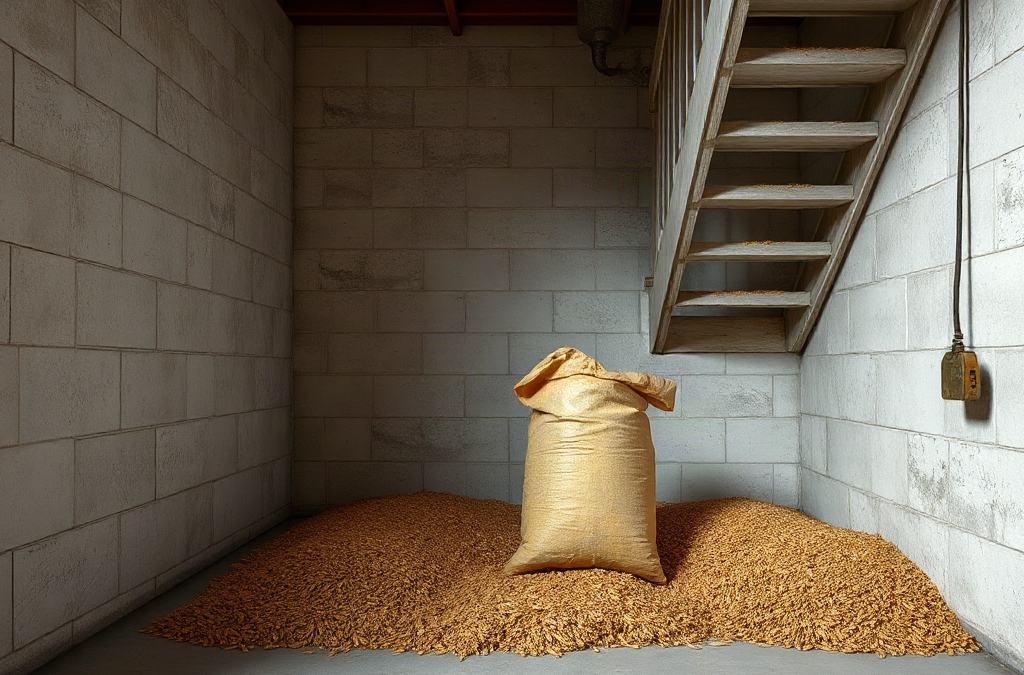
Grain storage under stairs is suitable only when safety checks confirm a dry, ventilated space, structurally sound shelving, sealed food-grade containers, and clear separation from electrical equipment, heat sources, plumbing, and escape routes. Do not place heavy grain containers on weak shelves or against wiring, furnaces, water heaters, or damp foundation walls. Keep the stair enclosure accessible for pest and leak inspections, and verify that storage does not violate local fire, building, or egress requirements. If moisture, utility equipment, limited inspection access, or questionable floor capacity cannot be corrected, choose a cool interior closet or dedicated pantry instead.
Is the Under-Stair Space Suitable for Grain?
An under-stair enclosure should be treated as a small storage environment rather than assumed to be a convenient empty cavity. Its suitability depends on construction, nearby utilities, air movement, moisture history, inspection access, and the amount of grain being stored. A finished cupboard beneath interior stairs may behave much like a pantry, while an enclosure beside a basement wall may collect humidity and conceal plumbing seepage.
Begin by emptying the area and examining every surface with a bright light. Look for water stains, swollen trim, rusted fasteners, crumbling wall material, droppings, insect remains, gnaw marks, musty odors, and gaps around pipes or cables. Check the floor after heavy rain and during seasonal temperature changes, not only on a dry day. A space that appears sound during one inspection may still receive condensation from a cold wall or occasional leaks from plumbing above.
Accessibility deserves equal weight. Grain containers placed beneath the lowest part of the stairs can become difficult to lift, rotate, or inspect. If reaching a rear container requires crawling over other containers, early signs of moisture or pest activity may go unnoticed. A workable layout leaves a visible gap around containers, keeps labels facing outward, and permits removal of each unit without dismantling the entire arrangement.
Do not assume that an enclosed space is automatically food-safe because the grain remains inside a bucket. Paints, fuels, pesticides, cleaners, pet products, and other chemicals should not share the enclosure with food. Odor transfer is only part of the concern; damaged packaging or a spill could contaminate container exteriors and make handling unsafe. A dedicated food-only area is easier to monitor and clean.
A practical test is to ask whether the space can be inspected, cleaned, and emptied without special effort. If the answer is no, reduce the quantity stored there or select a more accessible location. Under-stair storage is better suited to a controlled, rotating household supply than to containers that will be hidden and ignored for years.
How Do Moisture, Temperature, and Pests Affect the Space?
Moisture is usually the most consequential environmental warning sign because dry grain and damp building cavities are a poor combination. Water may enter through a plumbing leak, foundation seepage, wet floor, condensation on a cold pipe, or humid air trapped behind a closed door. Even when a container keeps liquid water out, repeated humidity and temperature changes can affect lids, labels, metal components, cardboard packaging, and the surrounding structure.
Check conditions at the back wall, floor edges, and underside of the stair stringer rather than judging the enclosure from its doorway. A simple humidity monitor can reveal changes over time, but it does not replace physical inspection. Condensation, persistent mustiness, softened cardboard, corrosion, or recurring mildew on the room surfaces signals that the location needs correction before food is stored there. Never place containers directly on a floor with a history of dampness.
Temperature stability matters more than achieving an unrealistically perfect number. Interior stairs generally offer better stability than stairs beside an unconditioned garage, exterior wall, furnace room, or hot mechanical chase. Repeated warming and cooling can encourage condensation where warm humid air meets cold surfaces. It may also shorten grain quality compared with a consistently cool interior cupboard. Monitor the enclosure across seasons before assigning it a large supply.
Pests exploit small openings around utility penetrations, baseboards, doors, and unfinished framing. Rodents can damage bags and some thin plastic packaging, while pantry insects may already be present in grain when it enters storage. Clean grain should go into intact, food-grade containers with properly fitted lids. Original paper sacks and loosely tied bags offer little protection in a concealed cavity.
Container choice cannot rescue an unsuitable room. Sealed buckets or rigid bins provide better physical protection than sacks, but placing them against a damp wall can hide leaks and create an undisturbed pest route. Raise containers on a sturdy, washable platform, maintain inspection clearance, and clean spilled kernels immediately. If fresh droppings, gnawing, insects, wet surfaces, or unexplained odors appear, isolate and examine the affected containers rather than treating the enclosure while food remains exposed.
Can the Floor and Shelves Carry the Stored Grain?
Grain becomes a concentrated structural load when several full containers occupy a small footprint. The issue is not merely whether one shelf appears sturdy; the floor, shelf supports, fasteners, and wall attachment all participate in carrying the weight. Container capacity does not reveal the final weight because different grains pack differently, so weigh a representative filled container instead of relying on volume alone.
Add the measured weight of every container planned for each shelf and include the shelving itself. Keep the heaviest units low, where a dropped container is less likely to injure someone and the shelf creates less leverage on its supports. Broadly distribute containers across a sound floor rather than stacking the entire supply at one weak edge. Do not attach heavy shelving to decorative paneling, thin drywall alone, stair treads, or unidentified framing.
For example, a narrow freestanding rack may fit neatly beneath a sloping stair but become unstable when large buckets occupy its upper levels. A lower platform with shorter rows may use less vertical space, yet it offers easier lifting and a lower center of gravity. Freestanding shelving should not block access panels or pinch wiring, and wall-mounted shelving should be secured to appropriate structural members using hardware suited to the construction. When framing or floor capacity is uncertain, a qualified building professional is the appropriate source of site-specific advice.
Get Whole Wheat Flour, Grains and Milling Supplies – CLICK HERE 
The containers themselves need safe handling clearance. Leave enough headroom to lift a lid without striking the stair underside, and avoid stacks that must be dragged forward while bending under a low ceiling. Grain rotation becomes unreliable when the oldest bucket sits beneath several newer ones. Arrange containers in one accessible row where possible, or use separate lanes so each batch can be removed independently.
Warning signs include sagging shelves, rocking racks, pulling fasteners, cracked supports, sloped containers, floor movement, or a door that begins rubbing after loading. Unload the structure if any of these appear. Adding another bracket without identifying the failing component may transfer the load to a different weak point. Smaller containers can cost more and consume additional lid space, but they are often easier to lift, inspect, and distribute safely than oversized bins.
Fire, Utility, and Access Safety Checklist
Fire and utility constraints can disqualify an otherwise dry under-stair location. Stair enclosures sometimes contain electrical panels, junction boxes, receptacles, plumbing shutoffs, heating equipment, or service access points. Stored food must not obstruct required working space, conceal overheating or leakage, or delay access during an emergency. Grain is combustible, as are many plastic buckets, paper labels, and wooden shelves.
Keep the enclosure free of extension-cord connections, overloaded receptacles, portable heaters, battery charging stations, and exposed lamps that produce heat. Do not place containers against electrical equipment or wiring. If the cavity contains a water heater, furnace, fuel line, chimney component, or other heat-producing appliance, follow the appliance manufacturer’s clearance and access instructions and seek qualified local guidance. A convenient gap beside equipment is not automatically approved storage space.
Stairs may also form part of a building’s exit path or fire-resistance design. Requirements differ by location, building type, stair arrangement, and whether the enclosure is finished. Storage should never narrow a required passage, impede a door, compromise stair components, or obstruct alarms and fire-safety equipment. Contact the local building or fire authority when the enclosure’s permitted use is unclear, particularly in rental housing, multifamily buildings, or spaces connected to a garage or basement exit.
Use this compact preloading check:
- Environment: No active leaks, condensation, persistent dampness, musty odor, or evidence of pests.
- Structure: Sound floor and shelving, appropriate attachments, heavy containers low, and no contact with stair components.
- Utilities: Electrical panels, shutoffs, appliances, piping, vents, and service points remain unobstructed.
- Food protection: Dry grain is labeled and sealed in intact food-grade containers, separate from chemicals.
- Access: Every container can be inspected and removed without blocking a doorway, passage, or emergency route.
After loading, schedule visual checks that match the space’s risk. Inspect promptly after storms, plumbing work, pest activity elsewhere in the home, or any unusual odor. Confirm that lids remain seated, shelves stay level, labels are readable, and no kernels have spilled. A safe arrangement is one that remains observable; sealing the cupboard and forgetting it is the most common weak assumption.
Frequently Asked Questions
Can grain buckets sit directly on a concrete floor under stairs?
A raised, sturdy platform is preferable because it separates containers from floor moisture, minor seepage, dirt, and temperature differences. The platform must support the combined load without flexing.
Is ventilation required in an under-stair grain cupboard?
The space should not trap damp air, but adding vents is not automatically the answer. First identify leaks, condensation, or humid adjacent rooms; ventilation into a damp area may worsen conditions.
Can grain be stored near an electrical panel?
Do not let containers or shelves obstruct the panel, its working clearance, wiring, or emergency access. Because clearance rules vary, confirm the arrangement with the local authority or a qualified electrician.
Are grain bags adequate for storage beneath stairs?
Paper and woven bags are vulnerable to moisture, insects, tearing, and rodents. Transfer suitable dry grain to clean, intact food-grade containers with secure lids and retain the batch information.
What signs mean the grain should be moved elsewhere?
Move it if you find damp surfaces, recurring condensation, leaks, musty odors, pests, shelf movement, overheated electrical components, blocked utilities, or insufficient room for safe inspection and lifting.
Conclusion
An under-stair cupboard earns its storage role through inspection, not convenience. Verify that the enclosure stays dry through seasonal changes, contains no inaccessible leaks or pest routes, and allows every container to be seen and removed. Weigh filled containers, keep heavy units low, and use shelving whose supports and attachments are appropriate for the actual load.
Utility access and fire safety take priority over maximizing capacity. Leave electrical equipment, plumbing controls, heating appliances, doors, and escape paths unobstructed, and confirm uncertain requirements locally. Use sealed food-grade containers, preserve batch labels, and separate grain from chemicals. Once loaded, recheck the area after storms, plumbing work, temperature shifts, or pest evidence. Choose another interior location when dampness, structural uncertainty, heat, or restricted access cannot be reliably corrected.
Get Whole Wheat Flour, Grains and Milling Supplies – CLICK HERE
Auto Amazon Links: No products found.