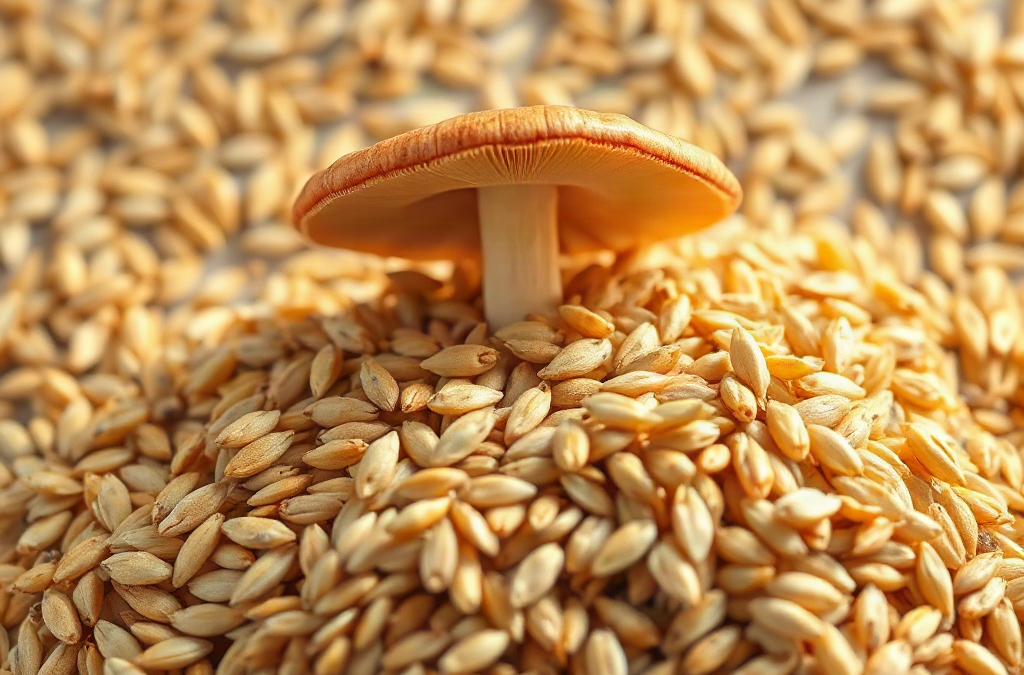
Mushroom grain spawn should be stored away from edible grains in a dedicated, labeled area that prevents mix-ups, moisture transfer, pest movement, and accidental food use. Keep spawn in its original sealed container, place it inside a washable secondary bin, and follow the supplier’s species-specific temperature and use-by guidance. Never return grain from a cultivation area to the human food supply, even when it looks clean. Separation works best when it includes different shelves or appliances, clear “not for food” labels, independent handling tools, and routine checks for damaged packaging, unusual odors, excess condensation, insects, or discolored growth.
Why Should Spawn Be Separated From Food Grain?
Commercial or homemade grain spawn is a cultivation input: hydrated grain colonized by mushroom mycelium and held in a bag, jar, or other culture container. Pantry wheat, rye, millet, sorghum, oats, and similar commodities are food ingredients. Although both may begin as grain, they have different intended uses, storage conditions, handling histories, and acceptance standards once one enters the cultivation process.
The most immediate hazard is a use error. A jar of rye spawn can resemble cooked or sprouted grain from a distance, especially if the mycelium is not yet dense. An unlabeled bag may be mistaken for food, seed, or animal feed by someone unfamiliar with the cultivation setup. Physical separation makes the label easier to act on: food stays in the food zone, while spawn remains in the cultivation zone.
Spawn is also relatively moist compared with properly stored dry grain. A leaking or damaged spawn package can raise humidity locally, leave organic residue on shelving, and attract insects. Pantry grain stored nearby may then face conditions that favor clumping, package deterioration, or pest activity. A secondary container limits the consequences of a weak seal, but it does not make mixed storage desirable.
The reverse pathway matters as well. Dry-food storage areas sometimes harbor flour beetles, grain moths, or other stored-product pests. Moving infested grain, cardboard, scoops, or dust near spawn may introduce insects and debris into the cultivation area. Cultivation supplies should not become a route by which pantry pests move between shelves.
Separation does not require a laboratory or a separate building. In a small home, it can mean assigning spawn to a washable lidded tote on a cultivation rack while keeping food grain in sealed containers in a pantry cabinet. A dedicated refrigerator compartment may be appropriate when the spawn supplier calls for refrigeration, but the spawn should still be enclosed, labeled, and protected from food spills.
A common misconception is that a tightly closed spawn bag can safely sit anywhere. Packaging lowers exposure, but it cannot prevent every puncture, seal failure, condensation problem, or human mistake. Treat location, labeling, and containment as independent safeguards rather than relying on one intact bag.
How Should You Choose a Dedicated Storage Location?
A suitable location protects spawn from temperature extremes, direct sunlight, standing moisture, pests, and accidental access while preserving a clear boundary from food. Start with the temperature range and storage duration supplied by the spawn producer. Mushroom species, spawn format, degree of colonization, and intended inoculation date can change whether cool room storage or refrigeration is appropriate.
Do not assume that colder storage is automatically better. Refrigeration can slow biological activity and may extend the usable window for some fully colonized spawn, but freezing or prolonged storage can damage vigor. Warm storage may accelerate growth, aging, gas production, or metabolite accumulation. Supplier instructions should take priority over a universal household rule because spawn products are not interchangeable.
Choose separation that remains obvious during daily use. A different room offers the strongest household boundary, but a dedicated cultivation cabinet or rack may be adequate where space is limited. When a shared refrigerator is the only temperature-controlled option, place spawn inside a rigid, washable bin on a designated shelf away from uncovered food and ready-to-eat items. Do not put spawn in a produce drawer where it may be mistaken for groceries.
Air circulation and enclosure require balance. Spawn bags may include filter patches designed for gas exchange; compressing them under heavy objects or sealing wet, warm spawn into an airtight outer container can create undesirable conditions. The secondary tote is for spill control and organization, not for changing the manufacturer’s package design. Allow the spawn to reach its intended storage condition before closing the tote, and avoid blocking filter areas.
Inspect the surroundings rather than judging the shelf alone. Water heaters, sunny windows, exterior walls, laundry equipment, and unconditioned garages can create temperature swings. Cardboard boxes on a basement floor can wick moisture after a leak. A raised metal or plastic shelf is easier to inspect and clean than unfinished wood or floor-level storage.
Use the following priority order when space is constrained:
- Follow the stated temperature requirement. Do not sacrifice spawn viability merely to place it farther away.
- Create a physical food boundary. Use a separate room, cabinet, shelf, or appliance compartment.
- Add secondary containment. Select a smooth, washable bin large enough to avoid crushing bags.
- Control access and visibility. Keep the area labeled and unavailable to children, pets, and anyone likely to mistake spawn for food.
The arrangement is working when temperatures remain within the recommended range, containers stay dry and intact, labels remain visible, and no food packages migrate into the cultivation zone. Recurring condensation, pest evidence, swollen or damaged packages, and frequent movement of bins to reach groceries indicate that the location should be changed.
How Should Spawn Be Packaged, Labeled, and Contained?
Keep purchased spawn in its original package unless the cultivation process specifically requires opening or transferring it. That package was selected for the product’s moisture and gas-exchange needs. Repacking spawn into an ordinary food-storage bag can remove useful identification, damage a filter patch, or create a seal that performs differently from the original.
Every unit should display enough information to prevent confusion and support rotation. Record the mushroom species or strain identifier provided by the seller, the acquisition or inoculation date, the intended substrate or project, and a clear statement such as “cultivation spawn—do not eat.” If a supplier provides a lot code, storage instruction, or recommended use date, retain it. Labels should remain readable under refrigeration and should not detach when exposed to condensation.
Secondary containment should be rigid enough to resist puncture and smooth enough to wash. It is not a substitute for the primary package. Place jars upright, keep bags away from sharp lid edges, and avoid overfilling the tote. If several mushroom cultures are stored together, use dividers or smaller labeled trays so an old or questionable unit can be isolated without disturbing the rest.
Color coding can reinforce written labels, but color alone is weak identification. A red tote may mean spawn to one person and emergency food to another. Written wording must state the contents and their non-food status. The outside of a shared refrigerator bin should be labeled as clearly as the individual bags inside it.
Get Whole Wheat Flour, Grains and Milling Supplies – CLICK HERE 
Dedicated handling tools strengthen the boundary. A tray used to carry spawn, a marker used for culture labels, and cultivation gloves should not be stored inside flour or grain bins. Likewise, pantry scoops should never be used to portion grain for spawn production and then returned unwashed to food storage. If grain intended for spawn has entered a cultivation workspace, designate it for cultivation rather than moving leftovers back into the pantry.
Consider a home cultivator who buys a large sack of rye and uses part of it to prepare spawn. The untouched portion can remain food only if it was separated before cultivation work and protected from cultivation tools, splash, dust, and opened culture materials. Grain that has been hydrated, sterilized, inoculated, or exposed during culture handling should never be represented or used as ordinary edible grain.
The usual packaging mistake is to prioritize neat stacking over package function. Folding filter patches, forcing bags into a tight bin, or piling jars against fragile lids may save shelf space while increasing damage risk. Leave enough clearance to inspect each package without squeezing or repeatedly rearranging it.
How Do You Inspect, Rotate, and Handle Stored Spawn?
Routine inspection should confirm package integrity, expected appearance, correct temperature, and freedom from pests or leaks. Check spawn when it enters storage, periodically while held, and again before use. Inspection is most useful when it is brief and consistent; excessive handling can stress packages, disturb filter areas, and expose them to unnecessary temperature changes.
Look through the container without opening it. Healthy appearance varies by mushroom species and product stage, so compare the unit with the supplier’s description rather than applying a single visual rule. Unexpected green, black, pink, or orange areas; unusual wetness; ruptured seals; insect activity; or an odor escaping from a damaged package are reasons to isolate the unit. Some mycelium produces normal metabolites or changes texture as it ages, so appearance alone may not identify the cause.
Do not open a questionable package beside food or healthy cultures to investigate it. Place the intact unit in a separate washable container, move it out of the food-storage environment, and contact the supplier when the product is newly purchased or its condition is unclear. If it is leaking, heavily contaminated, or pest-infested, follow local waste practices and clean the affected non-food surface. Avoid smelling an open culture closely or attempting to salvage a visibly compromised portion.
Rotation should be based on both date and condition. First-in, first-used is practical only when the older spawn still appears suitable and falls within its recommended holding period. A newer unit with package damage deserves attention before an older intact one. Keep a simple inventory that shows quantity, identity, storage date, planned inoculation date, and any observations. This prevents forgotten bags from aging behind new deliveries.
Before use, move only the needed spawn to the work area. Keep food preparation and eating out of that space while inoculation is underway. Clean the work surface and use cultivation-specific equipment. Afterward, return unopened units promptly to their proper conditions rather than leaving the entire inventory at room temperature for convenience.
Signs of a sound system include quick inventory checks, legible dates, no unexplained packages, clean secondary bins, and a clear route from storage to the cultivation workspace. Repeated identification errors, condensation inside the outer tote, insect debris, stale inventory, or uncertain temperature history are process failures even if the spawn still looks acceptable. Correct the storage arrangement before adding another batch.
The weakest assumption is that a successful prior grow proves the system is safe. Spawn quality and pantry protection depend on each package, each storage interval, and each handling event. Consistent segregation and documentation are more dependable than memory or visual familiarity.
Frequently Asked Questions
Can sealed mushroom grain spawn be stored in a food pantry?
A food pantry is a poor choice even when the spawn is sealed. Use a separate cultivation cabinet, rack, or labeled secondary bin outside the edible-grain area to reduce mix-ups and pest transfer.
Can grain spawn share a refrigerator with food?
If the supplier recommends refrigeration and no separate appliance is available, contain the spawn in a rigid, labeled, washable bin on a dedicated shelf away from uncovered or ready-to-eat food.
Should mushroom spawn be placed in an airtight tote?
Use secondary containment without crushing bags or blocking filter patches. Do not alter the primary package’s gas-exchange function, and follow the producer’s storage directions.
Can unused grain from spawn preparation return to food storage?
Only grain separated before cultivation work and kept protected from culture materials and cultivation tools should remain in the food supply. Grain exposed in the work area should stay designated for cultivation.
What should I do with spawn that looks contaminated?
Keep it closed, isolate it from food and other cultures, and check the supplier’s guidance. Do not open or closely smell a questionable package beside healthy spawn or edible grain.
Conclusion
A reliable storage setup creates boundaries that remain clear even when the household is busy or space is limited. Assign spawn its own shelf, cabinet, or refrigerator bin; retain the original packaging; add durable identification; and keep cultivation tools out of pantry containers. Temperature decisions should follow the mushroom species and supplier’s instructions rather than a blanket assumption that room temperature or refrigeration suits every product.
Check the current inventory before purchasing another batch. Remove unexplained or damaged packages from the food area, record dates and intended projects, clean the secondary container, and verify that filter patches are unobstructed. If edible grain has already entered the cultivation workspace, keep it designated for cultivation. These steps protect pantry organization and make aging, contamination, leakage, and pest problems easier to notice before spawn reaches the inoculation stage.
Get Whole Wheat Flour, Grains and Milling Supplies – CLICK HERE
Auto Amazon Links: No products found.