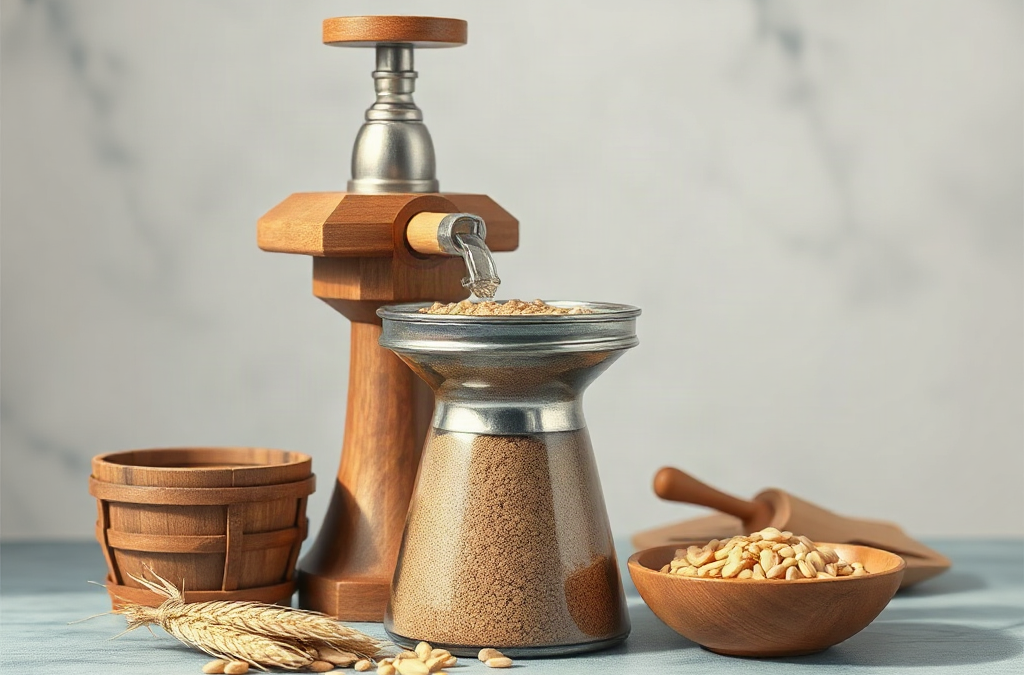
Choose a wheat mill for household grain preparation by matching the milling mechanism, motor or hand-crank capacity, flour texture, and cleanup demands to the foods you make and the amount you process. Impact mills produce fine flour quickly but are loud and usually cannot crack grain, while burr mills offer more texture control and may handle broader tasks. Check whether the mill accepts oily or moist ingredients, how much flour it can produce before overheating, and whether replacement parts are available. A dependable mill should fit your actual batch size, counter space, power access, and tolerance for noise rather than simply having the highest advertised output.
Which Mill Design Fits the Foods You Prepare?
The foods you intend to make should determine the milling mechanism. A household that bakes pan bread several times a week has different requirements from one preparing cracked wheat cereal, coarse meal, or small batches during power outages. Begin with the texture and ingredients you expect to use regularly, then eliminate machines that cannot perform those jobs.
Impact mills use rapidly moving elements to break dry grain into flour. Their strengths are speed and relatively fine output, making them well suited to bread, rolls, muffins, and other baked foods that need consistent whole-wheat flour. Their principal limitations are high noise, restricted texture adjustment, and an inability to produce intact cracked grain. Many are also limited to dry, low-oil materials. An impact mill may therefore be efficient for weekly bread flour but a poor match for someone who wants coarse breakfast cereal.
Stone-burr mills crush kernels between adjustable grinding surfaces. They can generally move from coarse meal toward fine flour, although attainable fineness and output differ among models. Stone-style burrs are often selected for texture control, but the label alone does not establish performance. Buyers should check what the burrs are made from, whether the gap remains stable under load, and which grains the manufacturer permits. Running unsuitable oily or damp ingredients can coat the grinding surfaces and obstruct flour flow.
Steel-burr mills are useful when versatility and durability carry more weight than exceptionally fine flour in a single pass. Depending on the design, they may crack dry grain, make meal, and process some harder materials. Fine baking flour can take more time or require repeated milling. That tradeoff may be reasonable for households preparing polenta-style cornmeal, cracked wheat, or mixed dry grains as well as bread.
Manual mills can use stone, composite, or metal burrs, so “manual” describes the power source rather than the flour quality. A sturdy hand mill can provide useful independence from electricity, but fine flour requires sustained cranking. Before treating it as an emergency solution, mill enough wheat for an actual loaf. That trial reveals whether the handle length, clamping system, throughput, and physical effort work for your household.
A common purchasing mistake is assuming that any machine called a grain mill can process every pantry staple. Nuts, flax, sesame, spices, coffee, sprouted kernels, and moist grain behave differently from dry wheat berries. Oils can create paste instead of free-flowing flour, while hard foreign objects can damage burrs or impact components. Use the approved-ingredient list as an operating boundary, not a suggestion.
How Much Capacity and Power Do You Need?
Useful capacity is the amount a mill can process during a normal kitchen session without excessive refilling, overheating, or exhausting the operator. Advertised speed has little value if the hopper is too small for a routine recipe, the flour container overflows, or the motor requires frequent cooling pauses. Estimate the grain used in your largest recurring batch and compare that quantity with hopper size, collection-bin volume, and continuous-run instructions.
Consider a household that typically mills enough flour for two loaves. A compact electric mill that completes that batch cleanly may be more convenient than a faster machine with an awkward bin or a footprint too large for accessible storage. Conversely, a small unit that requires several loading cycles can turn regular baking into a messy process. Capacity should reduce handling, not merely increase the output number on a specification sheet.
| Household use | Priority to check | Likely compromise |
|---|---|---|
| Occasional muffins or pancakes | Compact size and simple cleanup | Smaller hopper or slower batches |
| Frequent bread baking | Fine flour and sustained motor operation | More noise and counter space |
| Several grain textures | Adjustable burr gap and approved ingredients | Slower fine-flour production |
| Power-independent preparation | Secure mounting and manageable crank effort | Lower output and more labor |
Electrical requirements deserve a direct check. Confirm the mill’s voltage, plug type, rated power, and instructions for extension cords or inverter use. A motor’s wattage does not by itself prove flour fineness, durability, or output under load. Mechanism design, feed rate, ventilation, and duty cycle affect what the machine can do. If backup power is part of the plan, compare the manufacturer’s electrical specifications with the continuous and startup capacity of the power source rather than assuming a small appliance will run from any inverter.
Hand-crank output is constrained by leverage, burr setting, grain hardness, and operator endurance. Coarse cracking usually takes less effort than producing fine flour. A long handle and solid mounting can improve leverage, while a mill that shifts on the table wastes energy and creates a safety concern. Clamp clearances also matter: thick counters, rounded edges, drawers, and fragile stone overhangs may prevent secure attachment.
The strongest capacity choice leaves some operating margin without paying for output that will rarely be used. Signs of an undersized choice include repeatedly stopping mid-recipe, flour backing up around the outlet, the housing becoming unusually hot, or hand milling becoming burdensome enough that stored grain remains unused. Follow the model’s operating limits if heat, flow, or sound changes during use; forcing grain through faster can reduce consistency and strain components.
Flour Quality, Noise, and Kitchen Fit
Flour quality includes more than how fine the particles feel between the fingers. Consistency affects dough hydration, crumb texture, and whether bran remains evenly distributed. A mill with meaningful adjustment should produce repeatable results at a chosen setting, not alternate unpredictably between coarse fragments and powder. When comparing demonstrations or sample flour, look for the full output rather than a small sifted portion that may conceal uneven grinding.
Very fine flour is valuable for some breads and pastries, but it should not be treated as the only sign of a capable mill. Coarser whole-wheat flour may suit rustic loaves, crackers, or hot cereal, while cracked kernels are a separate result that many high-speed impact machines cannot make. If recipes span several textures, an adjustable burr model may offer more practical value even when it takes longer to reach the finest setting.
Temperature is often discussed as if any warmth proves that grain has been ruined. That is too simple: friction and fast-moving air naturally warm flour, and the amount varies with mechanism, feed rate, room conditions, and batch length. A more useful comparison is whether a mill maintains steady flow and consistent output within its documented operating limits. Unusual heat, a hot electrical smell, slowing, or repeated shutdowns are operational warnings, not reasons to improvise around the instructions.
Get Whole Wheat Flour, Grains and Milling Supplies – CLICK HERE 
Noise changes whether a mill is pleasant to use. High-speed impact designs can be too loud for conversation and may disturb nearby rooms, while slower burr machines can still produce substantial mechanical sound. Product descriptions rarely convey the character of that noise. If possible, hear the model operating with grain rather than running empty. Plan where it will be used, especially in an apartment, an open kitchen, or a home where milling must happen early in the morning.
Dust control and cleanup are equally practical. Flour can escape where a collection container fits poorly, a lid is removed too quickly, or an outlet retains material. Inspect how the bowl seals, whether the milling chamber needs brushing, and how many crevices collect flour. Components that touch grain should be accessible according to the maker’s cleaning instructions. Introducing water into a chamber intended for dry cleaning can cause corrosion, caking, or concealed residue.
Counter and storage measurements should include the hopper, bowl, cord, crank sweep, and clearance needed to remove parts. A heavy mill stored on a high shelf may be used less often than a slightly smaller machine that remains accessible. Good kitchen fit is evident when setup, milling, flour transfer, and cleanup can occur without moving several appliances or spreading dust across the work area.
How Should You Evaluate a Mill Before Buying?
A sound evaluation separates verified operating details from broad claims about speed, versatility, or professional results. Start with the current manual and warranty rather than a retailer’s short feature list. The manual should identify approved grains, prohibited materials, cleaning procedures, duty limits, adjustments, and basic troubleshooting. If those documents are unavailable before purchase, obtaining accurate operating boundaries later may also be difficult.
Use a compact pre-purchase check rather than comparing dozens of loosely related features:
- Define the batch: Record the grain quantity and texture needed for two or three recipes you actually make.
- Confirm compatibility: Match each intended dry grain to the manufacturer’s approved list.
- Test the workflow: Account for hopper loading, flour collection, transfer, cleaning, and storage.
- Check support: Look for replaceable burrs or wear parts, service instructions, and a clear warranty process.
- Assess constraints: Compare noise, physical effort, electrical demand, footprint, and total cost.
Replacement parts can matter more than an extra speed setting. Burrs, seals, filters, collection bowls, lids, clamps, and drive components may wear or become damaged. A model that can be serviced with identifiable parts may remain useful longer than a sealed appliance that must be replaced after one component fails. Check whether ordinary maintenance can be performed without disturbing calibrated or electrical assemblies.
Used mills require closer inspection. Look for chipped grinding surfaces, corrosion, cracks, missing shields, damaged cords, stiff bearings, and improvised repairs. Odors or oily residue may indicate that unsuitable ingredients were processed. Run a used machine only after obtaining the correct instructions and confirming that all guards and collection parts are present. A low price does not compensate for contaminated surfaces, unavailable parts, or unsafe wiring.
Budget comparisons should include accessories necessary for normal operation. A manual mill may need a mounting board or alternate clamp. An electric model may require a specific bowl, filter, or compatible replacement component. Shipping weight and return terms also matter because mills can be heavy and performance is difficult to judge from appearance alone.
After purchase, begin with inspected, clean, dry wheat and a moderate setting. Listen for stable operation, verify that flour exits freely, and note how long the normal batch takes. Change one adjustment at a time so you can identify the setting that works for a particular recipe. If output becomes erratic, the machine labors, or flour accumulates where it should not, stop and consult the manual rather than tightening burrs or increasing feed pressure blindly. A successful choice produces repeatable flour and a workflow the household will realistically maintain.
Frequently Asked Questions
Is an impact mill or burr mill better for wheat flour?
An impact mill suits households that mainly want fine flour quickly. A burr mill is the stronger choice when adjustable texture, cracked grain, lower-speed operation, or manual capability matters more than maximum output.
Can every wheat mill process corn, beans, or oily seeds?
No. Ingredient compatibility varies by mechanism and model. Dry corn and beans may be allowed in some mills, while oily seeds, nuts, moist grain, and sprouted grain can clog or damage machines not designed for them.
How much milling capacity does a household need?
Base capacity on your largest routine recipe rather than an occasional bulk session. A mill that completes a normal bread batch without repeated hopper refills or thermal pauses is usually more practical than unused high-volume capacity.
Does a manual wheat mill make flour fine enough for bread?
Some manual burr mills can produce bread flour, but fine settings require more effort and may need a second pass. Verify the model’s demonstrated flour range and consider whether the crank force and milling time are acceptable.
Should wheat berries be cleaned before milling?
Yes. Inspect dry wheat berries and remove stones, metal, husks, or other foreign material before loading the hopper. Do not wash grain immediately before milling unless it can be dried fully and the mill permits that preparation.
Conclusion
The most useful mill is the one that handles your recurring recipes without turning setup, noise, labor, or cleanup into reasons not to use it. Identify the flour textures and grains you need, size the hopper and duty cycle for a normal batch, and verify ingredient limits in the manufacturer’s documentation. Choose an impact design when fast, fine dry flour is the main objective; favor an adjustable burr design when cracked grain or wider texture control matters. Manual operation adds power independence but should be tested at a realistic bread-batch scale before it becomes part of a preparedness plan. Measure the intended workspace, examine parts availability, and read the cleaning instructions before buying. Those checks reveal more about long-term usefulness than motor wattage or an impressive maximum-output claim.
Get Whole Wheat Flour, Grains and Milling Supplies – CLICK HERE
Auto Amazon Links: No products found.