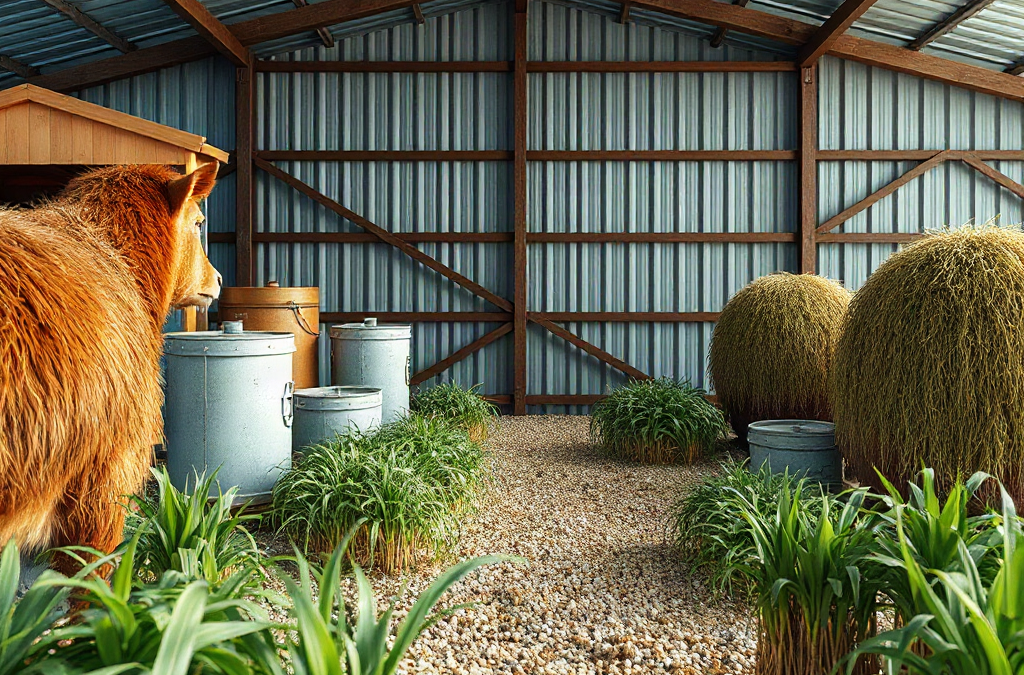
Grass-fed versus grain-fed feed storage requirements differ mainly because forage is bulky and vulnerable to moisture heating, while grain and concentrate feeds are dense, energy-rich, and attractive to insects and rodents. Hay needs a dry, ventilated structure, safe baling moisture, and separation from ground and wall condensation; silage requires airtight packing and disciplined face management. Grain-fed systems need sealed bins or protected commodity bays, temperature and moisture monitoring, pest exclusion, and strict ingredient rotation. Both systems should isolate spoiled feed, protect nutrients from weather, and match stored volume to realistic consumption so inventory does not remain exposed beyond its stable storage life.
Why Do Forage and Grain Need Different Storage?
Forage and grain deteriorate through different physical pathways, so a building that protects one feed may be poorly suited to the other. Dry hay is comparatively bulky, contains abundant fibrous plant material, and can trap moisture within tightly packed bales. Grain and processed concentrates occupy less space per unit of feed but present a concentrated food source for insects, rodents, birds, and molds. Silage adds a third storage problem: it remains moist by design and depends on excluding oxygen rather than drying the crop.
Moisture location matters as much as average moisture content. A hay lot may appear dry while a few wet bales heat inside the stack. Grain can enter a bin in acceptable condition and later develop damp zones when temperature differences drive moisture migration. A silage pile may ferment properly in its center yet spoil along an inadequately sealed shoulder. Managers therefore need controls aimed at the feed’s weak point rather than a single rule such as keeping every product under a roof.
| Feed Type | Primary Storage Objective | Main Failure Signs | Useful Control |
|---|---|---|---|
| Dry hay | Keep bales dry and release residual heat | Hot spots, musty odor, darkened forage, visible mold | Dry base, roof protection, ventilation, temperature checks |
| Silage or haylage | Maintain an oxygen-limited environment | Heating, surface mold, loose or visibly spoiled material | Dense packing, intact cover, clean removal face |
| Whole grain | Control moisture, temperature, and pests | Crusting, condensation, insects, off odors | Clean sealed bin, aeration where appropriate, inspection |
| Mixed concentrate | Prevent contamination and ingredient separation | Caking, rancidity, bridging, uneven texture | Weatherproof compartments and first-in, first-out rotation |
A common mistake is comparing grass-fed and grain-fed programs only by tonnage. One ton of baled forage requires far more protected floor or stack volume than one ton of grain, while grain may justify more investment in sealed handling equipment. A predominantly pasture-based herd can still require substantial winter forage capacity. Conversely, a grain-finished herd may store fewer cubic feet of feed but depend on several segregated ingredients and frequent deliveries.
The practical first move is to map each feed by form, moisture condition, delivery method, and expected residence time. That inventory identifies whether the operation needs bale space, an airtight forage system, bulk bins, commodity bays, or a combination. It also exposes incompatible arrangements, such as placing open mineral products near a damp silage area or allowing grain dust to accumulate beside ignition sources.
What Does a Grass-Fed Operation Need to Store?
A grass-fed program usually needs protected reserves even when pasture supplies most of the annual ration. Seasonal dormancy, drought, snow cover, pasture recovery, and animal class can all create periods when grazing alone is insufficient. The stored reserve may include dry hay, baleage, chopped silage, straw used for bedding, and approved mineral supplements. The grass-fed label does not make these materials shelf-stable or remove the need to document what enters storage.
Dry hay storage should limit rain entry, ground moisture, and condensation while allowing heat to escape. A roofed structure with drainage around the perimeter is more protective than stacking directly on soil under a tarp. Pallets, gravel designed for drainage, or another suitable raised base can reduce contact with ground moisture. Space near walls and under the roof should permit air movement and inspections. Tarps used outdoors need secure anchoring and a shape that sheds water; a torn tarp that forms pockets may keep the stack wetter than expected.
Recently baled hay deserves closer attention than established inventory. Moisture and plant respiration can create heat after stacking, and unusually warm areas, a sharp musty smell, steam, or discoloration call for prompt evaluation. Disturbing a severely heated stack can introduce oxygen and create additional danger, so suspected fire conditions warrant professional emergency guidance rather than casual restacking. Exact safe baling conditions vary with bale size, density, crop, preservatives, and local conditions; a calibrated moisture meter and advice from a local agricultural extension or forage specialist are more reliable than guessing by touch.
Fermented forage requires the opposite oxygen strategy. A bunker, pile, bag, or wrapped bale must remain sealed so fermentation can stabilize the feed. Punctured plastic, poorly packed edges, standing water, and an uneven removal face allow air to enter. For example, a small herd fed from an oversized bunker may move across the exposed face too slowly, increasing heating and spoilage. Individually wrapped bales or a smaller bag may cost more per ton but better match a low daily feed-out rate.
The recurring misconception is that forage storage is simply a space problem. Quality changes determine usable capacity: spoiled outer layers, wet bottom bales, and rejected moldy sections reduce the amount actually available. Plan reserve volume using realistic storage losses, inspect covers after wind or animal damage, and separate questionable material so it is not accidentally fed. Livestock responses to mold or spoiled feed vary, and a veterinarian or qualified nutrition professional should assess animal-health concerns.
How Should Grain-Fed Rations Be Protected?
Grain-fed systems need tighter control over pests, ingredient identity, and material flow. Whole corn or other cereal grain may be stored in a bin, while protein meals, by-products, premixes, and complete rations may arrive in separate bulk compartments or bags. Combining unlike feeds without clean partitions creates cross-contamination and makes ration consistency difficult. Storage design should follow the delivery vehicle, unloading method, and batch size as closely as it follows total capacity.
A grain bin needs weather exclusion, structural integrity, clean-out access, and a way to observe stored condition. Roof leaks, unsealed openings, old grain lodged in corners, and residue beneath conveying equipment provide starting points for insects and mold. Aeration may help manage grain temperature when the system is correctly designed and operated, but airflow is not a substitute for receiving grain in suitable condition. Running fans under the wrong weather conditions may introduce moisture rather than remove it.
Processed feeds can be less forgiving than intact dry grain. Cracked or rolled grain has more exposed surface area, and feeds containing fat may develop stale or rancid odors during extended storage. Fine material can compact, cake, or bridge inside a bin, creating both uneven discharge and a dangerous temptation to enter the structure. No one should enter a grain bin or feed vessel without appropriate confined-space and engulfment precautions. Flow problems should be addressed through equipment design and trained procedures, not by standing on stored material.
Rodent and bird exclusion protects both feed quantity and hygiene. Repair gaps, keep vegetation and spilled feed away from bins, close lids and access doors, and clean auger pits or commodity-bay edges. Poison or other pest controls must be selected and placed so they cannot contaminate feed or expose livestock, pets, wildlife, or workers. Local label directions and professional pest-control advice govern their safe use.
Get Whole Wheat Flour, Grains and Milling Supplies – CLICK HERE 
Rotation is the operational control most often undermined by oversized storage. Mark deliveries, use the oldest suitable lot first, and preserve ingredient identification when feed moves from bags into containers. A farm buying mixed ration weekly may need less capital equipment and gain fresher inventory, but it becomes more dependent on delivery reliability. A larger bin can reduce delivery frequency, yet it increases the consequences of a leak, quality problem, or formulation change. The better option is the one that balances consumption rate, supplier access, inspection capability, and the cost of feed remaining unused.
How Should Capacity and Monitoring Controls Be Chosen?
Storage capacity should be calculated from daily use, the longest credible supply gap, and the practical volume of each feed form. Annual tonnage alone hides seasonal peaks and physical space. A grass-based operation might need months of bulky hay before winter, while a grain-finishing program may replenish concentrated feed every few weeks. Add room for safe handling and lot separation rather than filling every bin or building to its theoretical limit.
Start with a feed-flow record covering deliveries, opening inventory, use, and discarded material. Even a simple log can reveal whether hay is being lost at the stack edge, silage is heating before consumption, or concentrate remains in a compartment longer than intended. Compare calculated inventory with physical inventory regularly. Large unexplained differences can point to inaccurate delivery records, spillage, pest losses, or ration-loading errors.
A compact inspection routine should address the failure mechanisms of each storage type:
- Check the envelope: look for roof leaks, torn plastic, damaged seals, blocked drainage, and open access points.
- Observe the feed: note heat, condensation, crusting, caking, mold, insects, unusual odors, and changes in texture.
- Verify movement: confirm that older lots leave first and that actual feed-out is fast enough for the opened storage system.
- Control the area: remove spills, keep ignition sources away from dry forage and dust, and maintain safe equipment access.
- Record and escalate: document abnormal findings and seek qualified help when fire, structural, confined-space, toxicity, or animal-health hazards are possible.
Inspection frequency should rise after a new delivery, severe weather, a power or ventilation problem, cover damage, or an abrupt change in feed use. Remote temperature systems and automated bin sensors can improve visibility, but they do not inspect a torn silage cover or identify water entering a commodity bay. Small operations may obtain more value from disciplined walk-throughs and clear lot labels than from complex monitoring equipment they cannot maintain.
Evidence that storage is working includes stable odors and appearance, predictable inventory shrink, free-flowing grain, intact covers, dry building surfaces, and little rejected feed. Warning signs include repeated heating, condensation beneath a roof, feed clinging to walls, birds or droppings, unexplained dust clouds, and animals refusing a new lot. Do not blend damaged feed into sound inventory merely to dilute the problem; that spreads uncertainty and can compromise the entire supply.
The weakest assumption is that the production claim determines the storage system. Actual feed form and handling conditions should drive the decision. Grass-fed farms may use both dry and fermented forage structures, while grain-fed farms still need hay storage. Build the system around every ingredient used, then maintain records needed for the operation’s marketing program, customer requirements, or applicable verification scheme.
Frequently Asked Questions
Does grass-fed livestock feed require a grain bin?
Usually not for the forage itself, but a weatherproof container may still be needed for permitted minerals or other dry supplements. Ingredient eligibility depends on the production claim or verification program being followed.
Can hay and grain be stored in the same building?
They can share a properly designed building if they remain physically separated, dry, accessible for inspection, and protected from cross-contamination. Dust, pests, fire loading, and different ventilation needs must be addressed.
Is outdoor hay storage acceptable?
Outdoor storage is possible, but weather exposure commonly increases loss. A raised, drained base and securely covered, water-shedding stack are preferable to bales placed directly on soil.
Why does silage heat after opening?
Air entering the exposed feed allows yeasts, molds, and other aerobic activity to resume. Dense packing, an intact seal, and removing feed from a clean face at an appropriate rate limit exposure.
Should questionable feed be mixed with sound feed?
No. Isolate it, preserve the lot identity, and obtain qualified advice before feeding or disposal. Mixing makes the affected quantity harder to assess and may expose more animals or inventory.
Conclusion
Feed form should determine storage design. Dry forage needs protected volume, drainage, airflow, and attention to heating; fermented forage needs dependable oxygen exclusion and a feed-out rate matched to the structure. Grain and concentrate systems place greater emphasis on sealed handling, pest control, lot separation, safe flow, and inventory rotation.
Before expanding a barn, bunker, or bin, document daily consumption, seasonal reserve needs, delivery constraints, and actual storage losses. Then inspect the weak points most likely to reduce usable feed: wet bale bottoms, damaged plastic, leaking roofs, stale bin residue, slow-moving ingredients, and uncontrolled pests. A modest system that is cleaned, monitored, and emptied predictably is often more dependable than excess capacity that keeps feed on site too long. Escalate heating, structural damage, confined-space hazards, suspected contamination, or livestock-health concerns to the appropriate qualified professional.
Get Whole Wheat Flour, Grains and Milling Supplies – CLICK HERE
Auto Amazon Links: No products found.