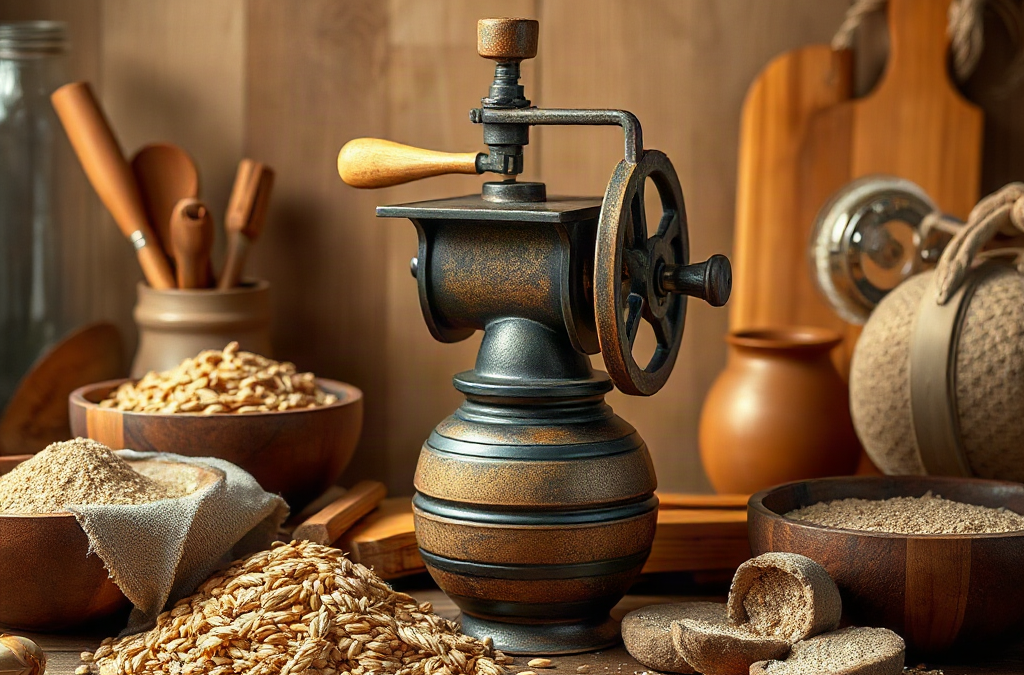
The strongest grain mill reviews assess durability and cleaning together by examining burr material, bearing support, drive components, flour-path access, and residue traps rather than relying on motor wattage or appearance. Metal burrs tolerate oily grains and incidental impact better, while stone or composite burrs often suit dry flour milling but require stricter moisture control. A durable mill should run without shaft wobble, slipping adjustments, or unusual heat under its rated workload. For easier upkeep, prioritize removable hoppers, reachable milling chambers, replaceable burrs, and surfaces that can be brushed clean without forcing water near bearings or motors.
What Makes a Grain Mill Durable?
Durability begins with a stable milling assembly, not a heavy-looking housing. The burrs or stones must remain aligned while grain passes between them, and the shaft, bearings, adjustment mechanism, and drive system must hold that alignment under load. A mill can have a metal exterior yet wear quickly if its shaft flexes, its adjustment collar slips, or unsupported bearings allow the rotating burr to wobble.
Reviewers should distinguish structural parts from cosmetic ones. A polymer hopper or flour chute is not necessarily a weakness because those parts carry little mechanical load. Greater attention belongs on the burr carrier, shaft supports, gearbox, pulleys, couplings, motor ventilation, and mounting points. Replaceable wear parts also matter. Burrs, belts, brushes, or drive couplers that can be purchased separately may extend practical service life more than a sealed design that cannot be repaired.
Workload changes the durability calculation. A household milling a few cups of dry wheat each week places different demands on a machine than a baker producing several batches consecutively. Continuous use creates heat in the motor, bearings, and flour. A duty-cycle limit is not automatically a defect, but the manufacturer should explain how long the machine may run and whether it needs cooling intervals. Reviews that test only a small handful of grain reveal little about heat buildup, adjustment drift, or motor protection.
Noise and vibration provide useful clues when interpreted carefully. A steady mechanical sound is expected, especially from impact-style mills, but new rattling, rhythmic knocking, or movement across the counter may indicate loose fasteners, uneven burr rotation, or an unsuitable feed rate. Hand mills should remain firmly clamped without the body twisting as the crank turns. Electric models need unobstructed air inlets and enough base stability to resist motor torque.
A practical durability review should answer several specific questions:
- Does the setting remain fixed from the beginning to the end of a batch?
- Are bearings or bushings protected from flour dust?
- Can high-wear components be replaced without discarding the machine?
- Does the housing remain stable when the hopper is full?
- Are workload limits and approved grains stated clearly?
The common mistake is treating weight, wattage, or a long warranty as proof of rugged construction. Wattage describes electrical input rather than alignment quality, and warranty value depends on coverage, exclusions, parts availability, and service procedures. A better purchase decision combines visible construction, a clearly stated use range, accessible replacement parts, and credible owner reports covering months or years rather than first impressions.
How Does Burr Design Affect Wear and Cleaning?
Burr material and geometry determine what a mill can process, how it wears, and where residue accumulates. Stone and stone-like composite burrs are commonly chosen for producing fine flour from dry grains. Steel or cast-metal burrs are generally more tolerant of coarse cracking and, when the manufacturer permits it, higher-fat materials. Impact mills use rapidly moving metal components rather than opposing burr faces and typically produce flour quickly, though their enclosed chambers can be less convenient to inspect.
No burr category is universally tougher. Stone or composite surfaces can give long service with clean, dry wheat, rye, or similar kernels, but hard foreign material may chip a surface. Metal burrs resist impact differently, yet they can dull, corrode if stored damp, or retain material in deep cutting grooves. The manufacturer’s approved-food list should control the decision. Capability should never be inferred solely from the burr being metal.
Oily seeds and high-fat foods expose the tradeoff between versatility and cleaning effort. Rather than fracturing into dry particles, oily material can smear across burr faces and pack into grooves. That coating narrows the working clearance, attracts additional flour, and may become stale between uses. A mill designed only for dry grain should not be tested with flaxseed, nuts, coffee, or moist corn merely because its motor seems powerful. Such use can clog the milling chamber and may fall outside the warranty.
Adjustment design deserves equal attention. Threaded collars offer fine control, but flour can collect in exposed threads and make the setting harder to turn. Lever or indexed systems are quicker to repeat, although broad detents may provide less control between coarse meal and fine flour. A review should test whether the mill returns to a known setting after disassembly and whether the burrs can accidentally touch. Persistent scraping at a normal setting, metallic dust, or a setting that changes during operation calls for inspection before further use.
Consider two households. One mills only dry hard wheat into bread flour and values a consistent fine output; a stone-burr model with a brush-accessible chamber may fit well. The other wants cracked corn, dry beans, and occasional approved spices; an adjustable metal-burr machine may offer better range, though grooves and feed passages can take longer to clean. The stronger choice is the one matched to the actual ingredient list, not the model with the broadest unsupported claims.
Inspect burr condition under good light when access is allowed. Normal wear tends to appear gradually and relatively evenly. Chipped edges, localized polishing, rust, a loose burr carrier, or contact marks on only one side suggest damage or misalignment. Reviews should report these observations separately from flour fineness because a mill can still produce acceptable flour while an adjustment or bearing problem is developing.
Which Cleaning Features Matter Most?
Easy cleaning depends on access to the complete food path: hopper, feed throat, burr chamber, flour outlet, and collection area. Smooth surfaces and a removable hopper help, but they do not compensate for a hidden ledge behind the burrs or a narrow chute that traps compacted flour. Reviews should identify where residue remains after brushing rather than simply calling a mill easy to clean.
Dry cleaning is the normal starting point for many household grain mills, subject to the manual. Unplug an electric model, let warm components cool, remove approved detachable parts, and use a dedicated soft brush to loosen flour. A small hand-operated air blower can move dust from accessible corners without introducing moisture. Vacuuming may be suitable around an exterior or removable chamber if the manufacturer allows it, but tools should not strike burr faces or pull on seals.
Water is a frequent source of avoidable damage. Immersing burr assemblies can introduce moisture to steel, bearings, porous grinding surfaces, or concealed joints. Even washable hoppers and bins should be completely dry before reassembly because damp residue adheres more firmly and can transfer moisture to the next batch. Never direct liquid into motor vents. The product manual, not a general cleaning shortcut, should determine which pieces may be washed.
Get Whole Wheat Flour, Grains and Milling Supplies – CLICK HERE 
A useful cleaning assessment follows the same sequence after every test:
- Empty: Allow the approved grain to clear, then disconnect power or secure the hand crank.
- Open: Remove only components intended for routine user access.
- Brush: Work from the hopper toward the outlet so loosened flour has an exit path.
- Inspect: Check adjustment threads, burr grooves, seams, and the underside of the chute.
- Reassemble: Confirm that parts are dry, seated correctly, and returned to a safe starting clearance.
Cleaning frequency should follow ingredients and residue, not a rigid calendar. A mill processing the same dry wheat regularly may need a quick brush after use and a more detailed inspection periodically. Changing from an aromatic grain to a mild one, switching between foods for allergy-sensitive users, or observing oily buildup calls for more thorough cleaning. Unless a manufacturer provides a validated process, a household grain mill should not be assumed to prevent allergen cross-contact.
Persistent odor, flour emerging from housing seams, a stiff adjustment control, visible insects, corrosion, or compacted material that a normal brush cannot remove indicates that routine cleaning is failing. Stop and consult the manual rather than forcing the assembly apart. The weakest assumption in many reviews is that rapid disassembly automatically means good hygiene. Reassembly errors can alter burr clearance, so access must be judged alongside foolproof alignment and clear instructions.
Testing a Mill Before and After Purchase
A useful grain mill evaluation starts with the intended foods, batch size, flour texture, and available cleaning time. Shoppers who define those needs first can ignore features that do not improve their own workflow. A compact impact mill may suit fast production of fine flour from approved dry grains, while a hand mill may appeal where portability and independence from electricity outweigh slower output. An adjustable burr mill often serves users who want both meal and flour, but its broader settings may add crevices and cleaning steps.
Before purchase, download the manual when available. Check the approved and prohibited ingredients, run-time limits, cleaning instructions, burr-removal procedure, warranty exclusions, and replacement-parts catalog. Product photographs should show the chamber rather than only the exterior. If a seller cannot identify the burr material or explain whether wear parts are available, long-term ownership becomes harder to evaluate.
New owners can establish a baseline without abusing the machine. Inspect for shipping damage, seat all parts according to the instructions, and begin with a modest amount of clean, dry, approved grain. Note whether feed is steady, the adjustment holds, the flour exits freely, and the body remains stable. After the mill stops, observe retained flour, warm areas, odor, and the time needed to expose and brush the food path. Some warmth is expected from milling friction; a burning smell, smoke, repeated shutdowns, or worsening mechanical noise is not a normal break-in condition.
| Review Area | Healthy Sign | Warning Sign |
|---|---|---|
| Adjustment | Setting stays fixed through the batch | Fineness changes without input |
| Drive and bearings | Steady sound and controlled vibration | Knocking, shaft play, or new scraping |
| Flour path | Residue is visible and brush-accessible | Material packs behind fixed barriers |
| Serviceability | Wear parts and instructions are available | Sealed assembly with no repair path |
| Cleaning result | Surfaces return dry and residue-free | Persistent odor, dampness, or oily film |
Repeat observations after several ordinary batches because first-use tests cannot show adjustment drift or rapid wear. Keep the grain type and setting consistent when comparing output; otherwise, a harder kernel or finer setting can be mistaken for declining performance. Photographing burr surfaces and noting cleaning time creates a more reliable record than relying on memory.
Do not perform destructive stress tests or intentionally feed stones, wet kernels, or prohibited foods. Such trials measure misuse rather than household durability. The best review describes realistic workload, maintenance performed, ingredient restrictions, and any service interaction. Readers can then decide whether a machine is durable for their use rather than accepting an unqualified claim that it is built to last.
Frequently Asked Questions
Should a grain mill be cleaned after every use?
Remove loose flour after each session when the manual recommends it. A deeper cleaning is more appropriate after oily residue, an ingredient change, extended storage, or any buildup in the chamber.
Are steel burrs more durable than stone burrs?
Not for every workload. Steel handles impact and coarse processing differently, while stone or composite burrs can serve dry-flour milling for a long time. Alignment, approved ingredients, and foreign-material control strongly affect either type.
Can grain mill burrs be washed with water?
Only when the manufacturer explicitly identifies them as washable. Moisture can corrode metal, enter bearings, or remain in porous surfaces, so brushing is often the safer routine method.
What indicates that grain mill burrs need replacement?
Possible signs include visibly damaged cutting surfaces, persistent uneven output, reduced feed at familiar settings, or an inability to reach the former texture after cleaning and alignment checks.
Can the same mill process wheat, corn, beans, and oily seeds?
Only if its documentation approves each food in the intended condition. Dry grains, dense beans, oily seeds, and moist kernels load burrs and motors differently, so apparent power does not establish compatibility.
Conclusion
A dependable mill is easier to identify when construction and upkeep are treated as connected ownership costs. Prioritize stable burr alignment, supported shafts, secure adjustments, realistic duty limits, accessible replacement parts, and a flour path that can be inspected without risky disassembly. Match the burr system to the foods actually being milled, particularly when corn, beans, spices, or oily seeds are under consideration.
Before buying, read the operating and cleaning instructions and confirm that parts remain available. After buying, establish a baseline with an approved grain and watch for setting drift, uneven residue, abnormal vibration, persistent odor, or changes in sound. Cleaning should remove retained material without introducing water where it can damage bearings, burrs, or electrical components. A review grounded in those observations offers far more decision value than ratings based only on speed, flour fineness, or appearance.
Get Whole Wheat Flour, Grains and Milling Supplies – CLICK HERE
Auto Amazon Links: No products found.