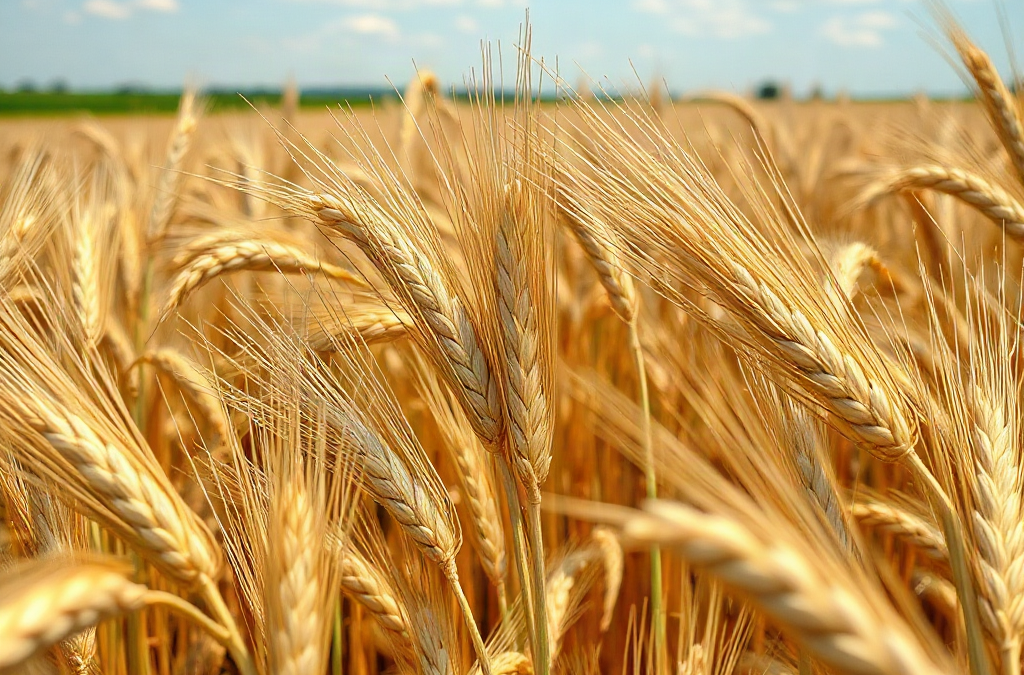
Grain field harvest timing and storage readiness should be coordinated by measuring kernel moisture, checking crop maturity and lodging risk, confirming dryer capacity, and preparing clean aerated bins before the combine enters the field. Harvest may begin above the moisture level suitable for storage when field losses or incoming weather pose a greater risk, but the grain must then be dried promptly. A representative moisture sample matters more than kernel appearance alone. The sound plan balances harvest loss against drying cost, keeps wet grain moving, and verifies that fans, augers, temperature cables, and unloading routes can handle the expected daily volume.
How Do You Decide When a Field Is Ready?
Field readiness is established from crop maturity, measured moisture, kernel condition, standability, and the short-term weather outlook. Color and dryness at the edge of a field can be misleading because borders often mature differently from low areas, shaded rows, or later-planted sections. Walk into representative parts of the field, inspect several plants or heads, and collect a composite sample rather than making the harvest decision from a handful taken near the road.
Physiological maturity and harvest readiness are related but not identical. A mature crop has completed most dry-matter accumulation, yet its kernels may still contain more water than the storage system can safely manage without drying. Waiting allows natural field drying and can reduce fuel use. It also exposes the crop to additional wind, rain, stalk deterioration, head loss, wildlife damage, and repeated wetting. The right date is therefore an operational decision rather than a single visual stage.
Moisture readings should come from a meter suitable for the crop and should be checked according to the instrument’s instructions. Grain temperature, uneven samples, damaged kernels, and an uncalibrated meter can distort a reading. When a decision is close, compare the field meter with a trusted commercial elevator, extension, or calibrated testing source. A one-time result should not be treated as proof that an entire field is uniform.
Sampling across known field zones gives a more useful picture. A practical route includes higher ground, low ground, an average interior area, and any section planted on a different date or with a different hybrid or variety. Combine those observations with a hand check for kernel firmness, sprouting, mold, insect damage, cracked seed coats, and stalk or stem strength. If one wet pocket will enter the same load as drier grain, the mixed load may behave more like the wettest portion than its average suggests.
| Decision signal | What to examine | What the result changes |
|---|---|---|
| Crop maturity | Representative heads, pods, ears, or panicles | Whether dry matter accumulation is complete enough to harvest |
| Kernel moisture | Composite samples from several field zones | Drying demand, harvest sequence, and temporary holding time |
| Standability | Lodging, stalk strength, shattering, or head loss | Priority given to vulnerable fields |
| Weather exposure | Rain, wind, humidity, and drying conditions | Whether waiting saves cost or increases field loss |
| Grain condition | Sprouting, mold, insects, and mechanical fragility | Segregation and handling requirements |
A common mistake is waiting for every plant to look uniformly dry. Fields seldom mature with that degree of consistency. Base the sequence on representative measurements and risk: a standing crop that is drying steadily in favorable weather may wait, while a field beginning to lodge may deserve priority even if it requires more mechanical drying.
Balance Field Losses Against Drying Needs
Harvest should begin when the expected cost and capacity of handling wetter grain are preferable to the likely losses from leaving it outside. Earlier harvest can preserve grain that would otherwise shatter, lodge, sprout, or weather, but it places more pressure on the dryer, transport line, and receiving bins. Later harvest lowers the amount of water that must be removed while increasing exposure to field hazards.
The tradeoff differs by crop and by farm. Corn may remain structurally harvestable while field-drying, yet weakened stalks can fail quickly after wind. Small grains can lose kernels from brittle heads or suffer quality damage during wet weather. Soybeans may cycle between damp and dry conditions, increasing shatter risk when pods become brittle. These differences make a fixed calendar date less useful than field-specific measurements and machinery capacity.
Dryer throughput often sets the practical harvest pace. If the combine can deliver wet grain faster than the dryer can process it, trucks and receiving bins become unplanned holding facilities. Warm, moist grain continues to respire, and pockets containing fines restrict airflow. A harvest plan should therefore calculate daily incoming volume against drying and conveying capacity. When the gap is large, slowing harvest or separating wetter fields is usually safer than building an unmanaged backlog.
Weather changes the value of waiting. Several dry, breezy days may make field drying economical when the crop is standing well. A forecast involving prolonged rain or strong wind can justify harvesting earlier, provided the storage operation can receive and condition the grain. A forecast alone should not trigger more combining than the dryer can support. Moving the risk from the field into an overloaded wet bin does not remove it.
Use a short priority sequence before each harvest day:
- Measure: Retest moisture in the fields that could be harvested next.
- Inspect: Look for lodging, dropped heads, shattering, sprouting, and storm injury.
- Match: Compare expected loads with dryer, aeration, labor, truck, and bin capacity.
- Sequence: Harvest vulnerable fields first and direct distinct moisture or quality lots to suitable destinations.
- Recheck: Sample grain leaving the dryer and entering storage rather than assuming settings remain correct.
The weak assumption is that later always means cheaper because the crop will be drier. That view ignores yield and quality loss, harvest speed, and the chance that a narrow weather window will close. The opposite assumption—that early harvest always protects value—is equally flawed if drying is slow or uneven. The better choice is the earliest date the complete handling system can manage without allowing wet grain to accumulate.
Is the Storage System Ready Before Harvest Starts?
A storage system is ready only when it is clean, weather-tight, mechanically functional, and able to move enough air through the intended grain depth. Empty bins should be inspected before harvest pressure begins. Old grain, fines, and residue left on floors, ledges, sumps, and around aeration openings can harbor insects and obstruct airflow. Cleaning also makes it easier to identify water leaks and fresh pest activity.
Inspect roofs, hatches, wall joints, foundations, unloading wells, and fan transitions for openings or water entry. Confirm that vents are clear and that roof exhaust capacity is appropriate for the airflow being supplied. A powerful fan cannot perform properly if air cannot pass through the grain mass and escape. Run fans, conveyors, augers, dryers, switches, and monitoring equipment before grain arrives; discovering a failed bearing or blocked sump beneath a loaded bin creates a more difficult repair.
Bin capacity should be considered as usable conditioning space, not merely empty volume. Overfilling can restrict headspace ventilation and make inspection harder. Grain peaks and fines concentrated beneath the loading point resist airflow, so leveling or coring may be needed according to the bin and management system. Fines are not harmless filler: they pack tightly, retain moisture, and create zones that may heat while the surrounding grain appears normal.
Storage preparation should cover the route into and out of the bin as well. Check that receiving pits are clean, truck approaches remain usable after rain, electrical service is reliable, and backup destinations are known if a bin or dryer becomes unavailable. Label bins and establish how loads will be assigned by crop, moisture, test results, or visible damage. Mixing sound dry grain with a questionable wet lot can turn a contained problem into a full-bin problem.
Get Whole Wheat Flour, Grains and Milling Supplies – CLICK HERE 
A concise preharvest storage check includes:
- Remove residual grain and debris from bins and handling equipment.
- Check roofs, doors, seams, vents, foundations, and penetrations for leaks.
- Test fans, heaters, controllers, augers, conveyors, alarms, and temperature monitoring.
- Verify available capacity for wet holding, drying, cooling, and final storage.
- Prepare safe sampling points and keep guards and access controls in place.
The common failure is treating an empty bin as a ready bin. Empty space does not confirm airflow, sanitation, or unloading reliability. Storage readiness is demonstrated by a test run and a written destination plan. Grain-bin entry and entanglement hazards also require strict controls; no harvest deadline justifies entering flowing grain or bypassing equipment guards and lockout procedures.
Coordinate Harvest, Drying, and Bin Loading
Harvest quality is preserved by managing grain as a continuous flow from the header to stable storage. Combine settings, transport delays, dryer operation, and bin loading all affect the final condition. A crop harvested at an appropriate moisture can still deteriorate if kernels are cracked, wet grain waits too long, or the dryer discharges unevenly conditioned material.
Begin with combine losses and kernel damage. Check behind the machine rather than relying only on cab displays. Excessive rotor or cylinder action may crack kernels, while unsuitable fan or sieve settings may carry sound grain out with residue. Settings often need adjustment as dew lifts, humidity changes, or the combine moves from a damp low area to a dry ridge. A setting that performed well in the morning should not be assumed correct all afternoon.
Keep wetter, damaged, or visibly suspect grain separate when practical. For example, grain from a low area that experienced delayed maturity may require more drying than the rest of the field. Directing it to a wet holding bin or processing it as a separate batch makes dryer control easier. Blending it immediately into a large dry lot hides the moisture variation but does not eliminate the risk.
Drying removes water; aeration primarily controls temperature and equalizes conditions after drying. Those functions should not be confused. The feasibility of drying grain with unheated air depends on crop, initial moisture, airflow, grain depth, and weather, so a local extension recommendation or qualified grain specialist is valuable when setting operating limits. Whatever system is used, sample both the discharge and the stored mass. Dryer controls can drift, and a reading from one location may miss wet pockets.
Cooling is part of the process rather than an optional final step. Grain leaving a heated dryer may be dry enough yet remain warm, which encourages moisture movement when outside temperatures fall. Appropriate aeration can cool the mass and reduce temperature differences. Monitor for changes rather than relying on smell at the hatch: rising temperature, condensation under the roof, crusting, musty odor, insect activity, or fan exhaust that remains unusually warm can indicate trouble.
Records make the system easier to correct. Note the field, load time, incoming moisture, dryer setting, discharge result, destination bin, and subsequent temperature observations. If a bin begins heating, these records help identify whether the cause may be a wet field section, a dryer interruption, or uneven loading. The operational sign of success is not simply a completed harvest; it is grain that reaches its target condition without bottlenecks, persistent hot spots, condensation, or repeated handling damage.
Frequently Asked Questions
Can grain be harvested before it reaches safe storage moisture?
Yes, if drying and wet-grain handling capacity are immediately available. Earlier harvesting may reduce field loss, but wet grain should not sit in an unaerated truck, pit, or bin while waiting for an overloaded dryer.
Why do moisture readings vary across the same field?
Soil drainage, elevation, planting date, crop development, shade, and weather exposure create different drying rates. Composite samples from several representative areas provide a better decision basis than an edge sample.
Should damaged grain be mixed with sound grain?
Segregation is usually the more manageable option when damage or moisture differences are substantial. Mixing can distribute fines, microorganisms, insects, or wet kernels through a larger mass and complicate drying and monitoring.
What should be tested before filling a grain bin?
Test fans, vents, augers, conveyors, unloading equipment, controllers, alarms, and monitoring devices. Inspect the structure for leaks, remove old grain and debris, and confirm that each planned lot has enough conditioning and storage capacity.
What are early signs that stored grain is becoming unstable?
Watch for rising or uneven temperatures, roof condensation, crusting, musty odors, insect activity, or persistently warm air leaving the fan. Investigate changes promptly without entering flowing grain or taking unsafe bin-entry risks.
Conclusion
A dependable harvest plan connects field evidence with the limits of the drying and storage system. Sample multiple field zones, verify moisture-meter performance, and give priority to crops threatened by lodging, shattering, sprouting, or incoming weather. Before combining begins, clean and inspect every planned bin, test fans and conveying equipment, and reserve enough capacity for wet holding, conditioning, cooling, and segregation.
During harvest, compare incoming volume with actual dryer throughput and adjust the field sequence before wet grain accumulates. Check losses behind the combine, sample dryer discharge, and monitor stored grain for temperature change, condensation, odor, insects, or crusting. The next practical step is to create a field-by-field destination sheet showing current moisture, vulnerability, expected volume, drying route, and assigned bin. That single operating record exposes capacity conflicts while there is still time to solve them.
Get Whole Wheat Flour, Grains and Milling Supplies – CLICK HERE
Auto Amazon Links: No products found.