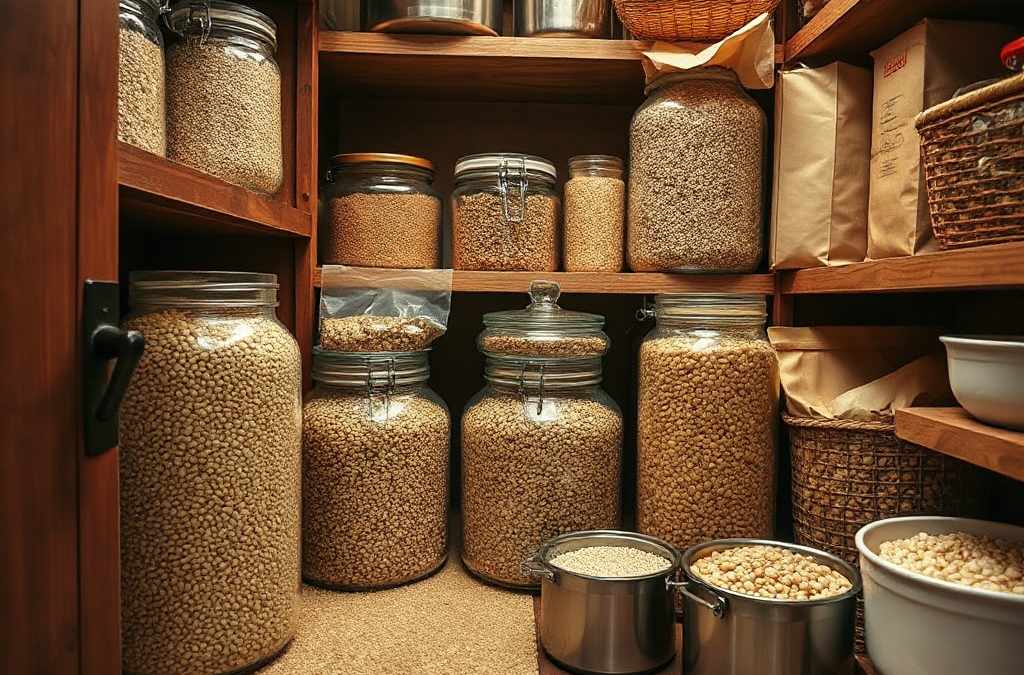
To store grains effectively in a family-sized pantry, use airtight containers made from glass, food-grade plastic, or metal to protect against moisture and pests. Keep your grains in a cool, dark place with temperatures below 70°F (21°C) to prevent spoilage. Regularly check for signs of spoilage and rotate your stock to ensure freshness. Incorporating desiccants like silica gel packets can help manage moisture levels, extending the shelf life of your grains. Labeling each container with the grain type and storage date will facilitate easy access and tracking of your supplies.
Choosing the Right Containers
To effectively store grains, selecting the appropriate containers is essential. Airtight containers are crucial in preventing exposure to air, which can lead to oxidation and spoilage. Containers made from glass, food-grade plastic, or metal are excellent choices, as they provide durability and protection against pests. For instance, glass jars are not only visually appealing but also allow you to see the contents, making it easier to manage your supplies.
When considering the size of your containers, think about the amount of grain your family consumes regularly. Smaller containers can be more manageable and reduce waste, while larger ones are suitable for bulk storage. Labeling each container with the type of grain and the date of storage will help you keep track of freshness and usage.
Controlling Moisture and Temperature
Moisture control is critical for grain storage. Grains should be kept in a cool, dark, and dry place, ideally with a temperature below 70°F (21°C). High humidity can lead to mold growth and attract pests. Using desiccants, like silica gel packets, in your storage containers can help absorb excess moisture and prolong the shelf life of stored grains.
Additionally, consider the pantry’s overall environment. Avoid placing grains near heat sources, such as ovens or stoves, which can raise temperatures and affect grain quality. Regularly monitoring humidity levels in your pantry can provide insights into the conditions that may affect your grain storage.
Organizing Your Pantry for Easy Access
Efficient organization of your pantry can greatly enhance your experience in managing grain storage. Group similar types of grains together, such as rice, quinoa, and oats, to streamline access and inventory checks. Utilize shelves effectively by storing heavier containers on lower shelves and lighter ones above. This not only maximizes space but also ensures safety.
Consider employing a first-in, first-out (FIFO) method when using your grains. Place newly purchased grains at the back of the shelf and older ones at the front, ensuring that you use the older stock first. This practice reduces the risk of grains going stale or spoiling before they can be used.
Maintaining Grain Quality Over Time
Regular checks on your stored grains are essential to ensure they remain fresh and safe for consumption. Inspecting for signs of spoilage, such as off odors, discoloration, or insect activity, can help catch potential issues early. If you notice any problems, it’s crucial to address them immediately to prevent the spread to other containers.
Rotating your stock every few months is a good practice. Use grains that have been stored the longest first, and replenish your supply with fresh grains as needed. This not only maintains quality but also ensures that you always have usable grains on hand.
Frequently Asked Questions
What are the best containers for storing grains?
Airtight containers made of glass, food-grade plastic, or metal are ideal for storing grains as they prevent air and moisture exposure.
How can I tell if my stored grains are spoiled?
Signs of spoilage include off odors, discoloration, or insect activity. Regularly inspect your grains to catch any issues early.
What is the ideal temperature for storing grains?
Grains should be stored in a cool, dark place with a temperature below 70°F (21°C) to prolong their shelf life.
How often should I check my stored grains?
Regular checks every few months are recommended to ensure grains remain fresh and to monitor for signs of spoilage or pest activity.
Can I use regular plastic containers for grain storage?
While regular plastic containers can be used, ensure they are food-grade and airtight to prevent moisture and pest intrusion.
Conclusion
Effective grain storage in a family-sized pantry is crucial for maintaining quality and ensuring a steady food supply. By choosing the right containers, controlling moisture and temperature, organizing your pantry efficiently, and regularly checking for freshness, you can maximize the shelf life of your grains. Implementing these practices will not only help you save money but also ensure that your family has access to nutritious grains whenever needed.
Get Whole Wheat Flour, Grains and Milling Supplies – CLICK HERE

Related Content
- Understanding Whole Grain Labels and Certifications
- Impact of Humidity on Grain Storage Longevity: Understanding Moisture Levels and Preservation Techniques
- Food Bank needs Donations To Manage Food Crisis
- How to Store Grains Safely for Emergencies
- 10 Effective Grain Storage Ideas for Small Spaces to Maximize Shelf Life in 2025
Auto Amazon Links: No products found.