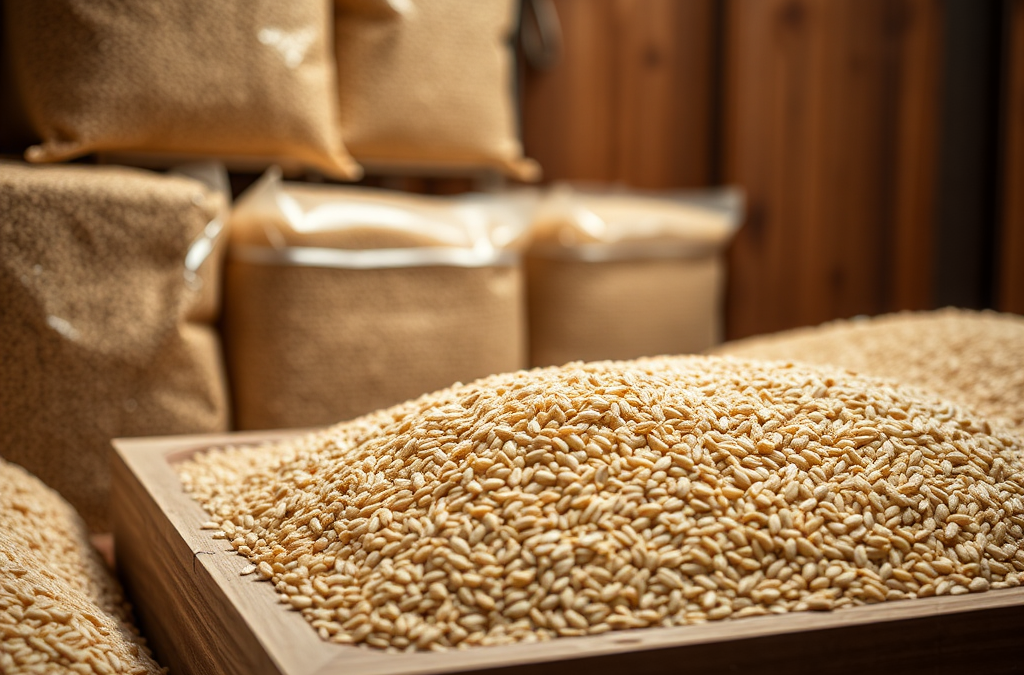
To effectively use desiccants in grain storage, select moisture-absorbing agents like silica gel or calcium chloride, which help maintain low humidity levels and prevent spoilage. Place these desiccants in breathable containers close to the grain and regularly check humidity levels with hygrometers. It's crucial to replace desiccants as they become saturated; failing to do so can lead to mold growth and grain deterioration. By implementing these practices, you can significantly extend the shelf life and quality of your stored grains.
Understanding Desiccants and Their Role
Desiccants are substances that absorb moisture from the environment, making them invaluable in grain storage. By controlling humidity, desiccants help prevent mold growth, grain spoilage, and pest infestations. Understanding how desiccants function is crucial for effective grain preservation. They work by drawing moisture from the air, creating a drier environment that is less conducive to microbial growth and insect activity.
Common types of desiccants include silica gel, activated clay, and calcium chloride. Each type has unique moisture-absorbing capacities and applications. For instance, silica gel is highly effective in low-humidity environments, while calcium chloride can absorb moisture even in higher humidity. The choice of desiccant should align with the specific storage conditions of the grain.
Choosing the Right Desiccant for Grain Storage
Selecting the appropriate desiccant is essential for maximizing grain quality. Silica gel is a popular choice due to its high absorption capacity and non-toxic nature. It can be reused by drying it out, making it cost-effective for long-term storage. On the other hand, calcium chloride is highly efficient in humid environments but is not reusable, which may increase costs over time.
When choosing a desiccant, consider factors such as the type of grain, the anticipated storage duration, and the local climate. For instance, grains stored in humid regions may require more aggressive moisture control, while those in dry areas may need less intervention. Always review product specifications and guidelines to ensure compatibility with the specific grains being stored.
Proper Application Techniques for Desiccants
Correct application of desiccants significantly impacts their effectiveness in grain storage. Desiccants should be placed in breathable bags or containers to allow for optimal air circulation. Position them strategically within the storage area, ideally near the grain, but not in direct contact, to avoid contamination.
It’s also vital to calculate the appropriate amount of desiccant based on the volume of grain and the expected humidity levels. For example, a general rule of thumb is to use one pound of silica gel for every 10-20 cubic feet of storage space. Regularly check and replace desiccants according to the manufacturer’s guidelines to maintain their moisture-absorbing capabilities.
Monitoring and Maintaining Humidity Levels
Monitoring humidity levels is critical to ensure that desiccants are performing effectively in grain storage. Using a hygrometer can help track the moisture content in the storage environment. Ideally, the relative humidity should be kept below 60% to prevent spoilage.
In addition to using desiccants, consider employing ventilation strategies to further control humidity. For instance, using fans or opening storage facilities during dry periods can help maintain a suitable environment for grain storage. Regular inspections and maintenance are essential to identify any signs of moisture buildup or pest activity early.
Frequently Asked Questions
What is a desiccant?
A desiccant is a substance that absorbs moisture from the air, used to keep environments dry and prevent spoilage.
How often should desiccants be replaced?
Desiccants should be checked regularly and replaced every few months, or as indicated by humidity levels or manufacturer guidelines.
Can I reuse silica gel desiccants?
Yes, silica gel desiccants can be reused by drying them out in an oven to restore their moisture-absorbing capacity.
What humidity level is ideal for grain storage?
The ideal humidity level for grain storage is below 60% to prevent mold growth and spoilage.
Are there any risks associated with using desiccants?
While generally safe, some desiccants can be harmful if ingested or improperly handled, so always follow safety guidelines.
Conclusion
Using desiccants effectively in grain storage is a vital strategy for maintaining grain quality and extending shelf life. By understanding the types of desiccants available, applying them correctly, and monitoring humidity levels, you can significantly reduce the risks of spoilage and pests. Prioritize regular checks and replacements to ensure optimal storage conditions, ultimately preserving the integrity of your grains.
Get Whole Wheat Flour, Grains and Milling Supplies – CLICK HERE

Related Content
- Food Storage Checklist for Preppers: Essential Foods and Supplies for Emergency Preparedness
- The Ultimate Guide to 10 Effective Whole Wheat Storage for Long Term in 2025
- What Are the Benefits of Storing Whole Grains in Bulk?
- Home Grain Storage and Rotation: Effective Techniques for Maintaining Quality and Freshness
- Whole Grain Risottos: Creative Cooking Techniques
Auto Amazon Links: No products found.