
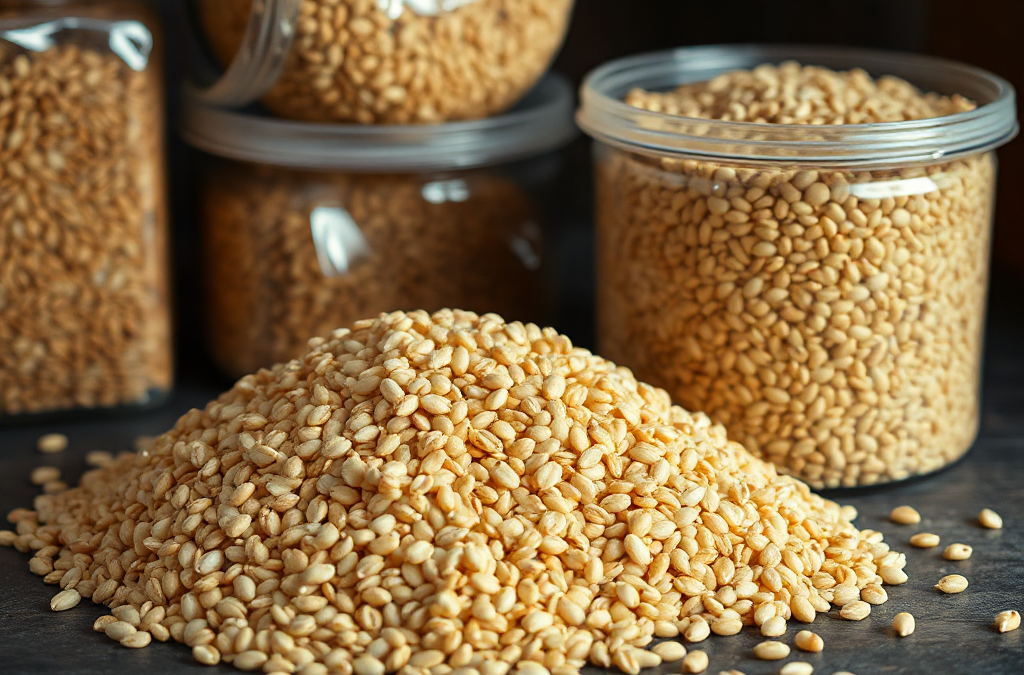
Prepare grains for long-term family use by selecting clean, dry products, removing damaged kernels, packaging them in airtight food-grade containers, and storing them in a cool, dark, stable location. Wheat, white rice, oats, corn, and dried beans each have different storage limits because whole-grain oils, moisture, heat, oxygen, and pests affect quality at different rates. Divide supplies into manageable portions, label purchase and packing dates, and keep a working rotation rather than treating every container as untouched emergency stock. Do not seal warm or damp grains, and discard any package showing insects, condensation, mold, rancid odors, or unexplained moisture.
Choose Grains That Fit Family Use
Long-term preparation begins with choosing foods your household will actually cook and eat. A large quantity of an unfamiliar grain is less useful than a smaller reserve of wheat, rice, oats, cornmeal, or other staples already accepted by the family. Consider cooking fuel, available water, milling equipment, allergies, children’s preferences, and the recipes used during an ordinary week.
Different grains age differently. Polished white rice generally stores more easily than brown rice because milling removes much of the oil-rich outer layer. Whole wheat and other intact whole grains retain more natural oils, which can eventually develop stale or rancid flavors, especially in warm conditions. Rolled oats have a similar concern, while dry corn products may absorb odors and moisture if their packaging is weak. These distinctions make a mixed reserve more practical than relying on one food.
A useful starting point is a normal-use test. Cook a small amount of each candidate grain using the water, pot, mill, or pressure cooker available in your home. Record the cooking time, fuel demand, serving yield, and whether family members will eat it repeatedly. Wheat may be versatile for bread and porridge, but it requires milling or a suitable recipe. Rice cooks simply, yet it provides less variety unless paired with beans, vegetables, or canned foods.
Buy products that are clean, commercially packaged, and intended for human consumption. Avoid using animal-feed grain for a household reserve because its handling, cleanliness, and treatment may not match food needs. Inspect bags for tears, webbing, live insects, damp patches, or unusual odors before bringing them into the storage area. The cheapest product is not automatically the best value if it requires equipment the family does not own or creates waste during preparation.
Use the how to prepare grains for long-term family use process as a household planning exercise, not merely a container-purchasing project. A reserve should match likely meals, available preparation skills, and the time the family can spend maintaining it.
Inspect, Clean, and Condition the Grains
Grains should be dry and sound before they are sealed for extended storage. Packaging cannot correct a moisture problem; it can conceal one until mold, clumping, insects, or off odors appear. Spread a small batch on a clean tray and look for broken, discolored, shriveled, or visibly contaminated pieces. Remove foreign material and isolate anything questionable rather than mixing it into an otherwise good supply.
Do not wash grains before storage. Rinsing adds surface moisture, and grains must be completely dry before packaging. Similarly, do not seal grain that has just been moved from a cold area into a warm, humid room if condensation can form inside the container. Let the product reach room temperature in its original packaging, then inspect it again before transferring it.
Commercially dry grains normally do not need home drying, roasting, or chemical treatment. Homemade heat treatment can affect flavor and may not distribute heat evenly. If a product seems damp, smells musty, or shows mold, discard it rather than attempting to rescue it. Mold can penetrate beyond the visible area, and cooking is not a dependable way to make spoiled food acceptable.
Insects deserve special attention. Pantry pests can arrive in a package that looks intact, and a warm cupboard allows a small infestation to spread through nearby foods. Quarantine new purchases away from established supplies while checking seams and the bottom of bags. Freezing may be used by some households as a pest-control step for small quantities, but the product must be protected from freezer moisture and allowed to warm without condensation before final packaging.
A simple preparation checklist keeps the work orderly:
- Confirm the product is food-grade, dry, and free from visible infestation.
- Remove damaged packaging and transfer only clean, sound grain.
- Use clean, completely dry tools and containers.
- Record the product name, purchase date, and packing date.
- Keep suspect batches separate until their condition is resolved.
The common mistake is treating appearance as proof of safety. A dry-looking bag can still contain insects or absorb odors, while a sealed container can trap moisture that was present at packing. Inspection is a small step with a large effect on the rest of the reserve.
Package Supplies Against Moisture, Oxygen, and Pests
Good packaging creates a barrier against the conditions that shorten grain quality: humidity, oxygen, light, insects, rodents, and repeated handling. Food-grade buckets with tight lids, heavy barrier pouches, or purpose-made storage containers can work when used correctly. The container should be clean, dry, structurally sound, and appropriate for contact with food; containers that previously held chemicals, paint, or strong-smelling materials should not be repurposed.
Choose portions according to household use rather than container size alone. A very large bucket may protect the unopened supply, but every opening exposes the contents to room air and handling. Smaller sealed portions let a family use one unit while the others remain protected. For example, a household that cooks rice weekly might keep a working container in the pantry and reserve several sealed units elsewhere, transferring only what is needed.
Oxygen absorbers can reduce oxygen in a properly sealed package, but they are not a substitute for dry grain or a reliable seal. Use products according to their manufacturer’s instructions and package size. Do not place an absorber in a container unless it is designed for the food and package conditions involved. A lid that leaks, a punctured pouch, or an incorrectly sized absorber can create false confidence.
Keep packaging away from direct sunlight and heat-producing appliances. Temperature swings can encourage condensation and accelerate quality loss, even when the average room temperature seems acceptable. Store containers off the floor to reduce exposure to leaks, pests, and cleaning water, while leaving enough space to inspect them. Rodent protection depends on the storage room as well as the container; damaged lids and wall gaps can defeat otherwise careful food preparation.
Label every unit on the top and side. Include the grain, form of the product, packed date, purchase date, and any preparation note such as “requires milling.” Avoid writing only a vague expiration date because quality depends on the product and storage environment. A label turns a pile of containers into an inventory that can be rotated and checked.
Compare ordinary resealable bags with barrier packaging realistically. Bags may be suitable for short-term pantry use but are more vulnerable to punctures, pests, oxygen, and humidity. A rigid container or high-barrier pouch costs more initially, yet it may protect a reserve better when the storage room is not climate-controlled. The right choice depends on the expected storage period, available budget, and ability to inspect the supply regularly.
Build a Storage and Rotation System
The storage location should be cool, dry, dark, and stable rather than merely convenient. Garages, attics, sheds, and utility rooms often experience heat or humidity swings that reduce quality. A basement may be cooler but can present flood or dampness risks. Check the actual location across changing seasons, especially near exterior walls, water heaters, windows, and plumbing.
Keep food away from household chemicals, fuels, fertilizers, and strongly scented products. Plastic containers can sometimes allow odors to migrate, and a spill can contaminate surfaces or packaging. Shelving should carry the weight safely, with heavier containers low enough to lift without injury. Leave a visible inspection path so the family can notice leaks, pest activity, swelling, or damaged lids.
Rotation is what makes a long-term reserve useful. Mark older supplies for first use and replace them with newer purchases. Use a working container for normal meals, then refill that container from the oldest sealed unit. This approach reveals whether the family likes the grain and whether cooking equipment, water, or fuel assumptions were realistic.
Get Whole Wheat Flour, Grains and Milling Supplies – CLICK HERE 
Maintain a simple inventory with quantity, package size, location, and date. Review it when grocery shopping and after major cooking periods. A household may discover that it has plenty of wheat but no mill, or enough dry beans but insufficient fuel for long simmering. Such gaps are planning problems, not storage problems, and they are easier to correct before the reserve is needed.
Avoid assuming that a printed “best by” date describes the exact end of safe or usable quality under every condition. It is a useful reference, not a replacement for inspection. Grain that has developed a rancid smell, mold, insect activity, wet clumps, or an abnormal appearance should not be tasted as a test. When uncertainty remains, discard the questionable portion and investigate whether nearby containers were exposed.
Connect this system with family grain preparation by keeping recipes and equipment with the inventory plan. A note stating how much water, cooking time, or milling is normally required can help another household member use the supply when the usual cook is unavailable.
Cook, Monitor, and Replace the Reserve
Prepared grains remain valuable only when the household can turn them into acceptable meals. Test recipes before committing to large purchases. Wheat can become flour, cracked wheat, or cooked berries, while oats can serve as breakfast or a thickener. Rice and corn products may require less preparation equipment but still need adequate water and fuel. Beans are not grains botanically, yet they often belong in the same family food plan because they add variety and plant protein.
Watch for signs that storage is working: containers stay dry, labels remain readable, no insects appear, and cooked food retains its expected aroma and texture. Warning signs include condensation, caking, leaking lids, chewed packaging, webbing, rancid odors, or a sharp change in flavor. Separate the affected unit immediately and inspect adjacent supplies instead of opening every container at once.
Preparation methods also affect practical value. Whole grains may offer more fiber and nutrients than refined products, but they can require milling and may have a shorter quality window because of their natural oils. Refined grains are often easier to store and cook, but a family relying heavily on them should plan varied accompaniments. A mixed reserve can balance convenience, nutrition, taste, and equipment requirements without claiming that one grain suits every household.
Review the plan after several meals. Ask whether portions are convenient, whether children will eat the food, whether cooking consumes more fuel than expected, and whether the storage space stays dry. Replace products gradually rather than waiting for a major failure. The best reserve is a managed household pantry: familiar foods are used, older packages leave first, and new supplies enter only after inspection.
For more planning context, use long-term family grain preparation alongside a broader food and water inventory. Grains should not be treated as a complete diet or as a substitute for safe water, varied foods, or normal food-handling practices.
For storage decisions involving moisture control, food safety, and pantry pests, consult publications from the USDA, state university extension programs, and other recognized food-safety authorities. Their guidance can be especially useful when evaluating unusual grains, home-milled products, flood exposure, or suspected infestation.
Frequently Asked Questions
Which grains are easiest for a family reserve?
White rice, rolled oats, and refined corn products are often straightforward to cook and package. Choose based on meals your household already accepts, not storage reputation alone.
Should grains be washed before long-term packaging?
No. Washing adds moisture. Keep grains dry during packaging and rinse them immediately before cooking if the product instructions or household preference calls for it.
Are plastic buckets suitable for storing grains?
Food-grade buckets with tight-fitting lids can be suitable when clean, dry, and protected from heat, light, pests, and chemical odors. Do not reuse containers that held hazardous materials.
How can a family tell whether stored grain has spoiled?
Look for mold, damp clumps, insects, webbing, rancid or musty odors, damaged packaging, and unusual appearance. Do not taste questionable grain to determine whether it is safe.
Is whole grain always the best choice for long-term use?
Not necessarily. Whole grains may provide more fiber but can lose quality sooner because of natural oils and may require milling. A combination of whole and refined products may better fit family equipment and meals.
Conclusion
Successful family grain preparation depends on matching the food to household meals, then protecting it from moisture, heat, oxygen, pests, and careless handling. Test grains before buying large quantities, inspect every batch, keep products dry, and divide them into labeled food-grade packages that can be rotated. Give special attention to whole grains and other oil-rich products because storage conditions and age can affect flavor sooner than expected. Review the reserve through ordinary cooking so equipment, fuel, water, recipes, and family preferences remain realistic. Begin with a manageable quantity, record what works, and expand only after the first rotation proves dependable. That process produces a usable food reserve rather than containers that are simply stored and forgotten.
Get Whole Wheat Flour, Grains and Milling Supplies – CLICK HERE
Auto Amazon Links: No products found.





