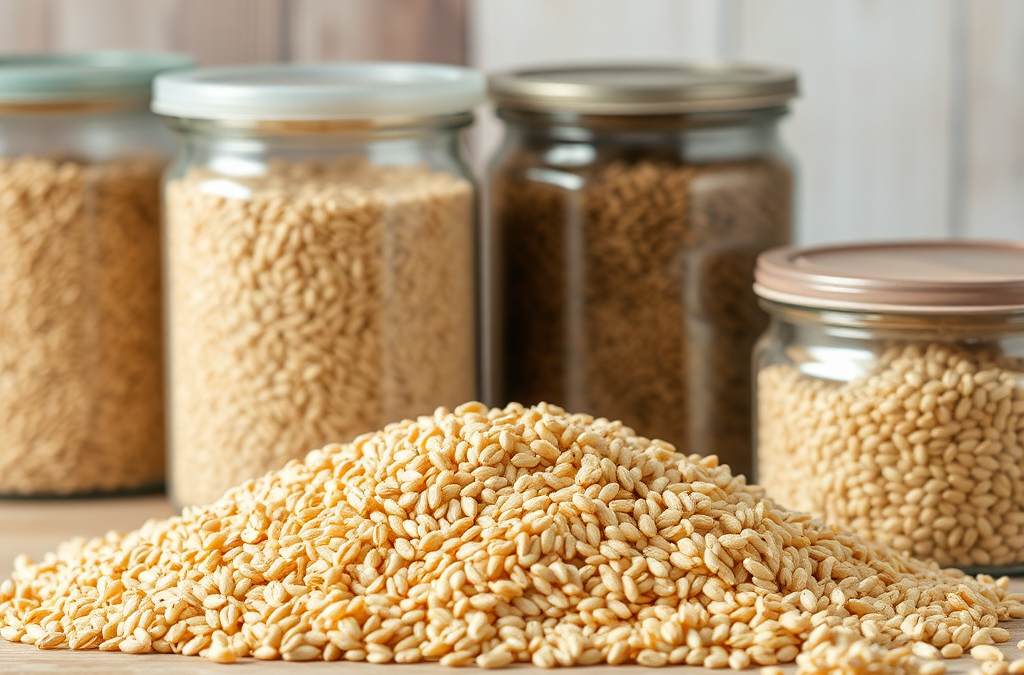
Prevent grain from absorbing odors by keeping it in clean, food-safe, airtight containers away from chemicals, fuels, spices, smoke, and strongly scented foods. Grain is dry and porous, so volatile compounds can move through poorly sealed packaging and cling to the kernels or flour surface, especially in warm storage areas. Transfer opened bags into odor-free containers, clean and fully dry them before filling, and leave headspace low without compressing the contents. Check the storage area and container separately when an odor appears; grain that smells chemical, moldy, or strongly rancid should not be rescued by rinsing or cooking.
Why Grain Picks Up Unwanted Odors
Grain can take on surrounding odors because its dry surface and packaging are not complete barriers against airborne volatile compounds. Rice, wheat berries, oats, corn, flour, and other grain products may absorb or retain smells from nearby materials when air moves through a loose bag, folded liner, cardboard carton, or damaged seal. Warmth can make the problem more noticeable because odor-producing compounds move more readily in warm air.
The source does not need to touch the grain. A gasoline can in the same utility room, a freshly painted shelf, a strong disinfectant, wood smoke, or an open container of curry powder may affect an inadequately protected supply. Paper packaging is particularly vulnerable because it is designed for handling and short-term distribution rather than long-term odor isolation. A sealed outer container cannot fully solve the problem if the grain was already exposed before transfer.
Odor also provides useful information about condition, but it is not a perfect freshness test. A faint smell from a neighboring food may be a quality issue, while a solvent-like, musty, moldy, or sharply rancid odor is a reason to treat the product as questionable. Odors can come from the grain, its liner, the container gasket, a spill underneath the container, or shelving that retained fumes. Smelling the grain and the empty container separately prevents a common mistake: blaming the contents when the container itself is contaminated.
For example, oats stored beside an open bag of detergent may acquire a perfumed note even when they remain dry. The safer response is to improve separation and packaging rather than adding an absorbent sachet inside the food container. Odor absorbers can introduce their own materials, mask deterioration, or occupy space without addressing the source. If you are reviewing broader preservation practices, how to prevent grain from absorbing odors should be treated as part of a larger system involving cleanliness, dryness, temperature, and rotation.
Containers and Sealing Methods That Limit Odor Transfer
The most reliable first move is transferring grain into a clean, food-safe container with a dependable seal. A rigid container with a gasketed lid generally offers better odor protection than a thin bag, snap-top box with a loose fit, or folded original package. Glass jars can provide an effective barrier for smaller quantities, while food-grade plastic buckets or tightly sealing canisters are more practical for larger amounts. The container should be selected for its seal and material condition, not merely its appearance.
Cleanliness matters before the lid closes. Wash a reusable container with an unscented detergent, rinse thoroughly, and allow it to dry completely. Even a small amount of residual moisture can create a quality problem, and scented cleaner left on a surface may transfer directly to the grain. Do not fill a container that still smells like onions, coffee, soap, paint, or its previous contents. Leave the lid open in a clean, dry area until the smell has disappeared; if it persists, use another container.
Keep the original inner packaging only when it is intact, odor-free, and compatible with the outer container. A liner can reduce direct contact with a plastic wall or gasket, but it does not replace a tight closure. For flour and other finely milled products, a secure seal is especially useful because the larger exposed surface area can retain nearby odors. Whole kernels are often less exposed, yet they can still pick up fumes through porous packaging or during repeated opening.
A large container is not automatically better. Oversizing creates more air space and may require frequent opening, while undersizing can damage the seal or force grain against a lid. Divide a large supply into manageable portions if the household will open only one portion regularly. This limits repeated air exchange and keeps the reserve supply undisturbed. Mark each container with the grain type and packing date, and rotate older portions first. The storage approach described in how to prevent grain from absorbing odors works best when every container can be identified without prolonged searching or unnecessary opening.
Avoid storing grain in containers that previously held nonfood chemicals, automotive products, scented products, or strongly flavored materials. Washing may remove visible residue without removing absorbed compounds from plastic, rubber, or seams. A container intended for food should have a clean history, a sound lid, and no persistent odor.
Where to Place Grain and How to Inspect the Storage Area
Placement determines how much odor exposure a sealed container must withstand. Keep grain in a cool, dry, well-ventilated location separated from fuels, pesticides, paint, solvents, trash bins, litter products, smoke, and strongly scented foods. A pantry shelf dedicated to dry goods is usually easier to manage than a garage shelf shared with household chemicals. If a garage is the only available location, use a sealed secondary cabinet or tote and inspect it more often for heat, fumes, leaks, and pest activity.
Odors may enter through more than the lid. Cracked buckets, warped covers, brittle gaskets, punctured liners, and loose closures all create routes for air movement. Examine the container after moving it: check the rim for crumbs, the gasket for distortion, and the lid for a complete fit. A clean exterior does not prove the interior is protected. Place containers on a raised shelf or pallet rather than directly on a floor, where spills and cleaning chemicals are more likely to reach them.
Consider airflow patterns in the room. A container beside a furnace, laundry area, workshop door, or vent may receive repeated bursts of scented or contaminated air. A closed cabinet can reduce exposure, but it can also trap fumes from a spill. Before using a cabinet, open it and smell the empty space. Wipe shelves with an unscented cleaner, let them dry, and wait until the area is odor-free. Never try to cover an existing smell with air freshener.
Imagine two identical bags of wheat berries: one sits in a clean indoor pantry, and the other rests beside a kerosene heater in a warm shed. Even if both remain dry, the second has a higher chance of developing an off-odor because of repeated exposure to heated air and nearby fuel vapors. The cooler pantry is preferable, but it still requires sealed packaging and rotation. Temperature control cannot compensate for a damaged closure, just as an airtight container cannot make an unsuitable room safe for food.
Use a simple inspection sequence whenever you add or relocate supplies:
- Smell the empty storage space before placing food there.
- Inspect containers, lids, liners, and gaskets for cracks or persistent odors.
- Separate grain from nonfood chemicals and strongly aromatic foods.
- Check for dampness, leaks, insects, and residue around the shelf.
- Record the packing date and review older containers first.
These checks make how to prevent grain from absorbing odors a repeatable household practice rather than a one-time packaging decision.
What to Do When Stored Grain Already Smells
First identify whether the odor belongs to the grain or to its surroundings. Move the container to a clean area, open it briefly, and compare the smell with the empty container after removing the contents. Examine the grain for damp clumps, discoloration, insects, webbing, or visible mold. A smell that is merely recognizable as a nearby food may indicate quality loss, but a chemical, moldy, sewage-like, or strongly rancid smell warrants disposal rather than experimentation.
Do not rinse, toast, bake, or heavily season grain to hide an unwanted odor. Cooking may change the smell without removing the compounds responsible, and heat does not make chemically contaminated food suitable. Mixing questionable grain with a fresh batch creates a larger problem and makes the source harder to trace. If the grain smells like fuel, paint, pesticide, or a cleaning product, discard it according to local waste guidance and investigate the exposure source before storing more food nearby.
Get Whole Wheat Flour, Grains and Milling Supplies – CLICK HERE 
For a mild food odor, the decision depends on the product and intended use. A sealed container that protected dry rice from a neighboring spice may preserve usable texture while leaving a noticeable aroma; that may be unacceptable for plain rice but less objectionable in a strongly seasoned dish. This is a quality judgment, not a guarantee of safety. Grain with mustiness, moisture damage, mold growth, or rancidity should not be evaluated only by taste.
After removing affected contents, wash and dry the container and inspect the shelf, nearby packages, and floor. Replace a gasket or liner that retains the smell. If several containers develop the same odor, suspect the room, cabinet, or shared outer tote rather than each batch individually. Record what happened: the product, packaging type, location, and nearby odor source. That information helps reveal whether the failure came from a loose lid, unsuitable placement, or a contaminated container.
A Practical Odor-Control Routine
Odor prevention is easiest when packing, placement, and rotation are handled together. New grain should be checked before storage; packaging with a strong warehouse, smoke, or chemical smell should not be sealed into a long-term supply. Transfer only dry, clean product into a food-safe container, close it firmly, label it, and place it in the cleanest stable area available.
Use separate routines for reserve stock and daily-use stock. A frequently opened kitchen canister should hold a modest amount, while the larger reserve remains sealed. This reduces the number of times the full supply encounters cooking aromas, steam, and changing room air. Keep a small amount of space between containers so a spill can be noticed and wiped up rather than trapped against multiple packages.
Review the supply at a practical interval based on how often the room changes, not on a rigid calendar. Inspect after painting, pest treatment, fuel delivery, flooding, appliance replacement, or any strong-smelling spill. Signs that the system is working include clean-smelling containers, dry free-flowing grain, intact seals, and no odor change when a portion is opened. Signs of failure include a recurring smell across different products, condensation, a loose lid, or an odor that returns after cleaning.
Prioritize improvements in this order: remove the odor source, replace compromised packaging, move the food to a cleaner location, reduce opening frequency, and rotate stock. Buying a more expensive container is less useful if it sits beside solvent or smoke. Conversely, a basic food-safe container with a sound seal can perform well in a clean pantry. Readers comparing container systems can use how to prevent grain from absorbing odors as a reminder that the surrounding environment matters as much as the container itself.
Frequently Asked Questions
Can airtight containers stop grain from absorbing every odor?
No container is a reason to store food beside chemicals or fuel. A sound airtight container greatly reduces air exchange, but damaged seals, contaminated gaskets, and exposure before packing can still cause odor problems.
Should grain be stored in the original bag?
The original bag is suitable for short-term use when it is intact and kept in a clean area. For longer storage or strong-smelling surroundings, transfer the grain to a clean food-safe container with a tight seal.
Can baking soda remove an odor from stored grain?
Do not place baking soda or another loose deodorizer directly in grain. It may contaminate the food or mask a serious problem. Remove the grain, find the odor source, and assess the product separately.
Is grain with a faint spice smell safe to eat?
A faint food odor may be a quality concern rather than proof of contamination, but it should not be assumed safe solely because it is mild. Discard grain with chemical, moldy, damp, or rancid odors.
Where is the worst place to keep grain?
A workshop, fuel area, pesticide cabinet, smoky room, or hot shed is a poor choice because fumes and temperature changes can affect packaging and product quality. Use a clean, dry pantry or a separated food-storage cabinet instead.
Conclusion
Protecting grain from unwanted odors depends on controlling the air around it as well as sealing the container. Use food-safe containers with clean, dry interiors and dependable gaskets, keep them away from fuel, chemicals, smoke, detergent, and strongly aromatic foods, and separate frequently opened portions from reserve stock. When an odor appears, isolate the grain, inspect the container and storage area independently, and treat chemical, moldy, damp, or rancid smells as disposal signals rather than problems to cover up. A simple routine of source removal, seal inspection, clean placement, labeling, and rotation provides more dependable protection than an expensive container used in a contaminated or overheated room.
Get Whole Wheat Flour, Grains and Milling Supplies – CLICK HERE
Related Content
Auto Amazon Links: No products found.