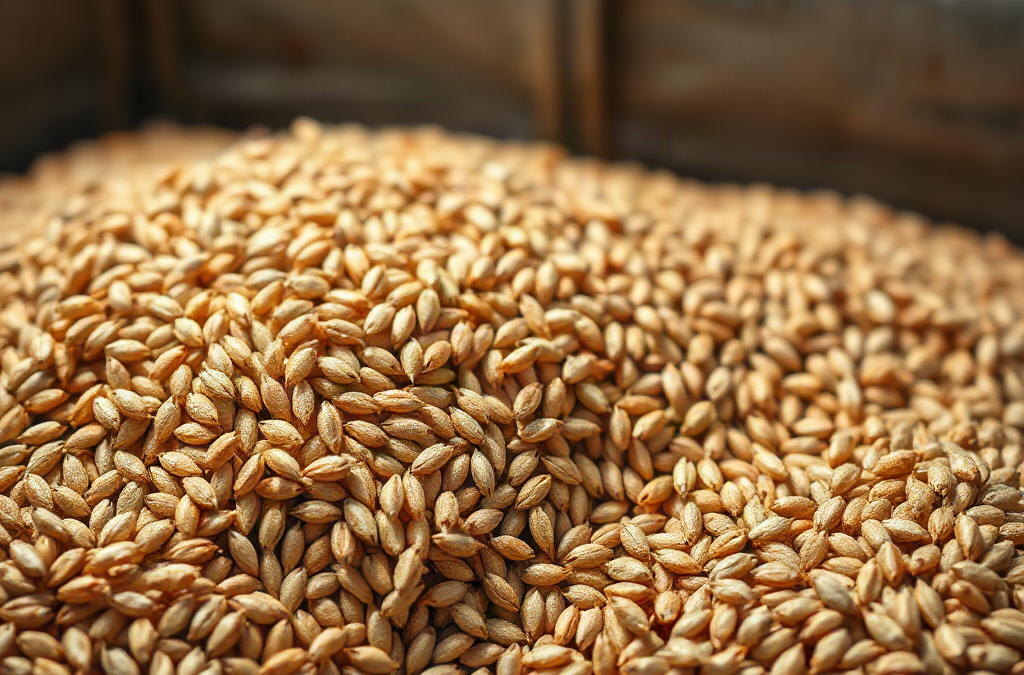
Storage altitude affects grain preservation mainly through its influence on temperature, humidity, air pressure, and daily temperature swings rather than elevation alone. Higher locations may offer cooler conditions that slow insects and grain deterioration, but intense solar heating and cold nights can drive condensation inside bins or containers. Lower elevations may have warmer, more humid air, increasing moisture migration, mold risk, and insect activity. Grain should therefore be dried to an appropriate storage moisture level, sealed against humid air, shaded from direct sun, and monitored for temperature changes, condensation, odors, clumping, and pests regardless of elevation.
Why Does Elevation Change Storage Conditions?
Elevation changes the environment surrounding stored grain, but the number shown on an altimeter does not determine shelf life by itself. Temperature, relative humidity, sunlight, building design, ventilation, and the grain’s moisture content have more immediate effects. Altitude matters because it alters several of those conditions at once, sometimes in opposing ways.
Air generally becomes cooler as elevation increases, although local terrain, seasons, and weather can override that pattern. Cooler grain usually experiences slower biological activity than warm grain. Insects develop less rapidly under cool conditions, while molds and the grain’s own respiration are also constrained when both temperature and moisture are controlled. A cool mountain storeroom can therefore be favorable, provided the grain entered storage dry and remains protected from moisture.
Higher elevations can also produce large swings between daytime and nighttime temperatures. A metal bin warmed by strong afternoon sun may cool rapidly after sunset. The air and grain near the bin wall change temperature faster than the grain at the center, creating gradients that move air and moisture through the grain mass. When a surface falls below the dew point of adjacent air, water can condense on a lid, wall, liner, or layer of kernels.
Air pressure also decreases with altitude, but ordinary elevation changes do not make an unsealed room oxygen-free or pest-proof. A common mistake is to assume that thin mountain air replaces airtight packaging or controlled storage practices. Insects can remain a concern, and oxygen continues to support oxidation and pest survival. Altitude should not be treated as a preservation process comparable to drying, hermetic sealing, refrigeration, or properly managed aeration.
Microclimate often matters more than regional elevation. A shaded storeroom on a dry high plain may remain cool and stable, while a rooftop shed at the same elevation becomes extremely hot each afternoon. Likewise, a low-elevation basement may outperform an exposed mountain outbuilding if it stays dry, clean, and thermally stable. Evaluate the exact storage space rather than relying on the climate of the nearest town.
The practical priority is to track conditions where the grain actually sits. Place a thermometer and, when useful, a humidity monitor near the containers without pressing the sensor against an exterior wall. Compare daytime and nighttime readings for several days during both warm and cold seasons. Wide changes, visible droplets, or recurring dampness indicate that the room or container needs better insulation, shading, moisture control, or relocation.
Does High-Altitude Storage Preserve Grain Better?
High-altitude storage can be advantageous when elevation delivers consistently cool, dry conditions, but it is not automatically safer. Its strongest potential benefit is reduced heat exposure. Whole kernels held in a cool, stable space generally retain quality better than grain repeatedly heated in an attic, vehicle, sunny shed, or uninsulated metal structure.
Dry mountain climates may also reduce the amount of moisture available from outdoor air. That advantage disappears when snowmelt, roof leaks, ground moisture, or poorly timed ventilation introduces water. Cold outdoor air can appear dry by relative humidity yet still create trouble when warm indoor air contacts a cold container. The relevant question is not simply whether the regional climate is dry, but whether surfaces inside the storage system cross the dew point.
Consider grain kept in sealed pails inside an unheated mountain cabin. During winter, the grain and containers may become very cold. If a cold pail is opened immediately after being carried into a warm kitchen, moisture from indoor air can condense on the grain or inside the lid. Repeated opening can add small amounts of water that accumulate in the upper layer. Allowing the sealed container to warm before opening reduces that exposure.
Strong ultraviolet exposure and solar heating are separate high-elevation concerns. A dark container placed near a sunny window or against a sunlit wall can become much warmer than the surrounding air. The resulting cycle of heating and cooling encourages moisture migration even when no liquid water enters. Shade and insulation are therefore often more valuable than additional ventilation for sealed household containers.
Some high locations also have limited access, intermittent electricity, or buildings that remain unattended for long periods. Those constraints affect the best system. A powered dehumidifier or climate-controlled room is useful only if power and maintenance are dependable. Sealed food-grade containers, intact moisture barriers, raised shelving, and conservative package sizes may be more resilient where inspections are infrequent.
Signs that high-altitude storage is working include stable container temperatures, free-flowing kernels, no droplets under lids, no musty odor, and no live insects or webbing. Warning signs include dampness concentrated near walls, kernels stuck together, rust on metal components, repeated lid condensation, and localized warming. The mistaken response is to open every container for extended airing; that can admit humid air and pests. Identify whether the moisture originated in the grain, the room, or temperature-driven condensation before changing the system.
How Do Low-Altitude Humidity and Heat Affect Grain?
Low-altitude storage often faces a different combination of pressures: warmer air, longer insect-active seasons, and, in coastal or river environments, persistent humidity. Warm grain respires more rapidly than cool grain, while many storage insects reproduce more readily under favorable temperatures. Humid air can also raise grain moisture when packaging allows continued air exchange.
Grain is hygroscopic, meaning it exchanges moisture with surrounding air until it approaches an equilibrium with local temperature and humidity. A cloth sack, paper bag, or loosely covered bin offers little resistance to that exchange. Grain that was acceptably dry when packed in an arid region may gain moisture after being moved to a humid lowland storeroom. Conversely, dry local air can remove moisture, though relying on uncontrolled room air is not a substitute for verifying that grain is sufficiently dry before long storage.
Get Whole Wheat Flour, Grains and Milling Supplies – CLICK HERE 
A practical example is a sack of wheat stored in a warm garage near a humid coast. The garage door opens daily, bringing moist outdoor air around the kernels. Afternoon heat warms the grain, and nighttime cooling raises relative humidity near cooler surfaces. The sack may show no leak, yet the outer layers can become damp enough to clump or develop an off odor. Moving the wheat into clean, sealed food-grade containers in the coolest interior room addresses both air exchange and temperature exposure.
Ventilation creates a tradeoff in these settings. Airflow can remove heat when outdoor air is cooler and appropriately dry, but ventilation during muggy weather may add moisture. Large agricultural bins use aeration according to grain and outdoor conditions; simply running a fan continuously is not equivalent. Household storage generally benefits more from dry grain, sealed barriers, modest package sizes, and a stable room than from uncontrolled airflow through the product.
| Observed condition | Likely pressure | Practical response |
|---|---|---|
| Warm containers throughout the day | Room heat or solar exposure | Move grain inward, add shade, or improve insulation |
| Droplets near lids or walls | Condensation from temperature differences | Stabilize temperature and inspect grain for damp zones |
| Clumping or musty odor | Moisture gain or wet grain | Isolate the lot and assess it before further use |
| Live insects or webbing | Infestation favored by warmth | Separate affected packages and inspect nearby stocks |
Do not mask a musty smell by blending suspect grain with a dry lot. Visible mold, persistent off odors, unusual discoloration, or moisture-damaged kernels require cautious evaluation, and questionable grain should not be eaten merely because it can be dried again. Drying can reduce water but does not reverse damage that has already occurred.
How to Adapt Grain Storage to Local Elevation
Adaptation begins with the grain’s condition, then the package, and In closing the room. Trying to compensate for damp grain with a favorable altitude is a weak approach. Grain intended for extended storage should be clean, sound, and dried to a moisture level appropriate for the grain type and intended storage period. Because safe targets vary by crop, temperature, and duration, use crop-specific guidance or a calibrated grain moisture meter rather than guessing from touch alone.
Packaging should match both climate and inspection needs. Food-grade pails or other durable containers with effective seals protect household quantities from ambient humidity and pests. Moisture-barrier liners can add protection when used correctly. Large bins require a different level of management because grain temperature, moisture migration, aeration, and localized spoilage cannot be judged from a single surface observation.
A useful altitude-aware setup follows this order:
- Map the storage microclimate. Record room temperature and humidity during daily and seasonal extremes, paying attention to walls, roofs, floors, and direct sun.
- Confirm grain condition. Check for excess moisture, insects, damaged kernels, foreign material, and unusual odors before sealing a lot.
- Reduce temperature swings. Favor shaded interior spaces, insulation, raised shelving, and distance from exterior metal walls or hot roofs.
- Control air exchange. Seal dry household grain against humid air; manage aeration in bulk systems according to actual grain and outdoor conditions.
- Inspect on a schedule. Look for condensation, warming, clumps, odors, webbing, insects, corrosion, and package damage.
Inspection frequency should respond to risk rather than altitude alone. Newly stored grain, recently moved containers, abrupt seasonal changes, and lots with uncertain moisture deserve closer attention. Stable grain in proven packaging can be checked less intensively, but no location should be considered maintenance-free. Record observations so a slow rise in temperature or repeated condensation is easier to recognize.
Container size also affects risk. One very large household container may reduce packaging cost, but every opening exposes the entire lot to room air and makes localized trouble harder to isolate. Several manageable containers limit exposure and simplify stock rotation. The tradeoff is more lids, more storage space, and more items to label. In humid lowlands or remote high-altitude sites, that redundancy may be worth the added effort.
A functioning system keeps kernels dry, cool, clean, and separated from rodents, insects, chemicals, and flooding. A failing system shows trends rather than only dramatic spoilage: more condensation after weather changes, a warm patch within otherwise cool grain, growing insect activity, or an odor that returns after airing the room. Correct the moisture or temperature source instead of assuming elevation will eventually stabilize the grain.
Frequently Asked Questions
Does grain last longer at high altitude?
It may last longer when the site is consistently cool and dry, but elevation alone does not extend storage life. Moist grain, solar heating, condensation, and poor packaging can cause deterioration at any altitude.
Does lower air pressure kill grain insects?
No. Normal high-altitude conditions should not be treated as pest control. Use clean grain, pest-resistant packaging, sanitation, inspection, and an appropriate established control method when needed.
Why does condensation form in a mountain storeroom?
Warm, moisture-bearing air forms droplets when it contacts a surface below its dew point. Rapid day-to-night cooling, cold walls, and bringing chilled containers into warm rooms can create that condition.
Should stored grain be ventilated in humid lowlands?
Not continuously. Airflow can remove heat under suitable conditions, but humid outdoor air may add moisture. Small household lots are usually better protected by verified drying and effective sealed containers.
What should be monitored besides room humidity?
Check grain or container temperature, condensation, clumping, odors, insect activity, webbing, leaks, corrosion, and damaged seals. Trends across several inspections are more informative than one room reading.
Conclusion
Elevation should be treated as a source of storage conditions, not as a preservation method. High sites may provide useful cooling and dry air, yet sharp thermal cycles can produce hidden condensation. Low sites may expose grain to sustained warmth and humidity, making airtight moisture protection and heat control especially valuable. Start by confirming that the grain is dry and sound, then choose food-safe packaging that limits moisture and pest entry. Place containers away from sun, roofs, damp floors, and exterior walls, and measure the microclimate instead of relying on regional assumptions. Inspect more closely after packing, relocation, severe weather, or seasonal temperature changes. Stable temperatures, free-flowing kernels, clean odors, and dry container surfaces indicate that the system is functioning; recurring warmth, droplets, clumps, pests, or mustiness call for prompt investigation.
Get Whole Wheat Flour, Grains and Milling Supplies – CLICK HERE
Auto Amazon Links: No products found.