
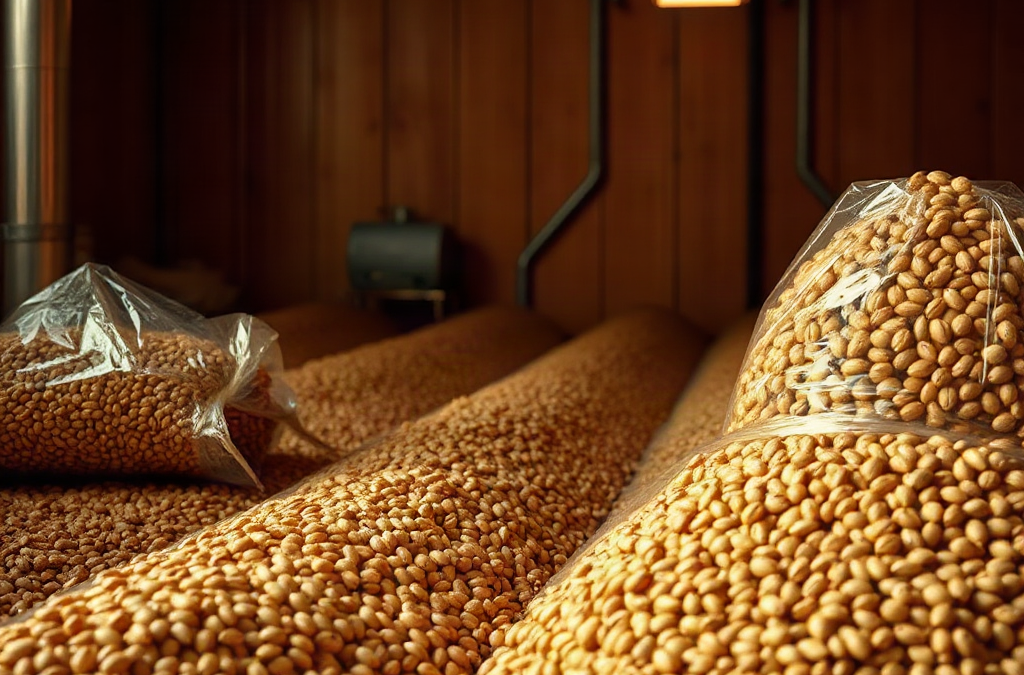
Compare grain storage climates by measuring temperature, relative humidity, seasonal fluctuation, condensation risk, and the room’s exposure to heat or moisture sources. A cool location is not automatically suitable if damp air enters regularly, while a warmer but stable and dry interior space may protect grain better. Record conditions at grain-container height for at least several days, inspect containers for moisture and insect activity, and consider the hottest and most humid season rather than relying on one reading. Favor the climate that keeps dry grain stable, limits temperature cycling, and allows prompt detection of leaks, pests, or condensation.
Which Climate Measurements Matter Most?
A useful climate comparison begins with conditions where the grain actually sits, not with the outdoor forecast or a thermostat mounted elsewhere in the building. Temperature and relative humidity are the basic measurements, but their stability and interaction matter more than either number viewed alone. A storage room that stays moderately cool and dry may be more dependable than an unheated outbuilding that becomes very cold in winter but hot, humid, and variable in summer.
Temperature affects insect activity, chemical deterioration, and the movement of moisture inside a container. Relative humidity indicates how much moisture the surrounding air carries compared with what it could hold at that temperature. Dry grain can exchange moisture with surrounding air if packaging is permeable or repeatedly opened. Warm, humid air is especially troublesome when it reaches a cool surface: as that air cools, it can approach its dew point and leave condensation on a lid, wall, pipe, or container.
For that reason, compare both average conditions and fluctuations. A single afternoon reading cannot reveal what happens overnight, during rain, when a furnace starts, or when a garage door opens. A basic digital temperature-and-humidity logger can show daily peaks and repeated cycles. Position it near the containers but away from direct sunlight, heating vents, exterior doors, and bare concrete unless those exposures are part of the location being evaluated.
| Climate factor | What to compare | Warning sign |
|---|---|---|
| Temperature | Typical level and daily range | Heat pockets or frequent sharp changes |
| Relative humidity | Normal reading and humid peaks | Persistent dampness or rain-related surges |
| Condensation | Cold surfaces and air movement | Water droplets, rust, or damp shelving |
| Moisture sources | Plumbing, floors, walls, and doors | Leaks, seepage, or recurring musty odors |
| Air stability | Seasonal and day-to-night variation | Rapid cycling around poorly insulated areas |
The common mistake is treating “cool” as a complete storage specification. A cool basement with seepage, exposed plumbing, and summer humidity may present more moisture risk than an interior closet that is slightly warmer but consistently dry. When conditions differ, prioritize the location with controlled moisture, limited heat, and fewer abrupt changes. Stable conditions do not rescue grain that was stored damp, however; the grain’s initial condition and the package remain part of the comparison.
How Do Seasonal Changes Affect Stored Grain?
Seasonal extremes often determine whether a location is suitable for long-term use. A room that performs well during a mild week can behave very differently during summer humidity, winter heating, spring thaw, or prolonged rain. Comparing climates by annual behavior prevents a convenient but misleading choice based on conditions observed only when the grain was placed into storage.
Consider an attached garage in a region with hot summers and cold winters. Its winter temperature may look favorable, yet the containers can warm rapidly when the door opens or sunlight heats an exterior wall. In spring, warm moist air may enter while the grain and containers remain cold. That combination can encourage condensation on cold surfaces. An interior pantry lacks the garage’s winter cooling, but it usually experiences smaller temperature swings and less contact with outdoor air.
Basements require a different reading. Below-grade spaces often remain cooler than upper floors, which can be helpful, but they may also receive moisture through walls, floors, drains, or plumbing. Finished appearance is not proof of dryness. Look for efflorescence on masonry, rust on metal shelving, swelling in cardboard, damp odors, water marks, and humidity increases after storms. Grain containers should not sit directly on concrete, where they are exposed to floor moisture, spills, and local temperature differences.
Attics and sheds tend to have the opposite problem: pronounced heat. Their large day-to-night swings can repeatedly move air within partially filled containers and stress seals over time. Even opaque containers may become much hotter than the occupied part of a home. These spaces can be serviceable for some short-duration uses only when monitored through the relevant season, but apparent dryness should not be confused with temperature control.
Build the comparison around the worst credible period for each location:
- Summer: check peak heat, humid-air entry, and direct solar gain.
- Winter: note freezing exposure, heating vents, and cold exterior surfaces.
- Wet seasons: inspect for seepage, leaks, and storm-related humidity spikes.
- Seasonal transitions: watch for warm air meeting cold grain or containers.
A frequent failure is moving grain to whichever room feels best at the moment. Repeated relocation can expose containers to changing temperatures and increases handling damage. Select a location from a seasonal record when possible, then review it after weather extremes rather than reacting to every ordinary daily change.
Compare Storage Locations by Risk
A practical comparison ranks hazards rather than declaring one room type universally best. Climate, building construction, container type, storage duration, and inspection access change the result. The strongest candidate usually has no active water source, modest temperature variation, limited summer heat, a cleanable surface, and enough access to inspect every container.
Begin with disqualifying problems. Active leaks, recent flooding, visible mold on the room’s surfaces, standing water, and uncontrolled pest activity require correction before the space is considered. Packaging should not be expected to compensate for a failing room. Likewise, an area beside a water heater, clothes dryer, boiler, stove, or frequently opened exterior door may create localized conditions that a room-average reading misses.
Next, compare how packaging changes exposure. A sound, food-appropriate container with an effective seal provides a stronger barrier against surrounding humidity and pests than paper sacks or loosely closed bins. It does not make climate irrelevant. Heat still reaches the grain, seals can be damaged, and moisture trapped at packing time stays inside. Paper and woven packaging demand a cleaner, drier, more stable room and are less forgiving of spills or humid air.
For example, suppose the available options are a dry interior closet, a basement utility area, and a detached shed. The closet may lose points for warmth and limited space but gain them for stability and inspection access. The basement may be cooler but should rank lower if a drain backs up or pipes run overhead. The shed may offer capacity, yet high heat, outdoor humidity, rodents, and infrequent inspection can outweigh that advantage. The decision should reflect the weakest feature, not just the most appealing one.
Get Whole Wheat Flour, Grains and Milling Supplies – CLICK HERE 
Use a simple priority order when tradeoffs cannot be avoided:
- Reject locations with active water intrusion or unresolved contamination.
- Prefer lower humidity exposure and fewer condensation pathways.
- Choose moderate, stable temperatures over dramatic seasonal cooling and heating.
- Account for insects, rodents, packaging strength, and sanitation.
- Keep containers visible, elevated, labeled, and reachable for inspection.
The weak assumption here is that the coldest available room must win. Climate quality is better understood as controlled exposure. A slightly warmer space may be the safer choice when it remains dry and predictable. Conversely, a stable room cannot correct grain that smells musty, shows moisture damage, or contains insects. Questionable grain should be isolated and assessed rather than mixed with sound stock.
How Should You Test a Storage Climate?
Testing should capture time, location, and weather rather than produce one isolated number. Monitor each candidate at container height for at least several representative days, and repeat the check during the season expected to create the greatest stress. Longer logging is more informative when a room is affected by storms, outdoor doors, intermittent heating, or large day-to-night changes.
Use comparable instruments and placements. Two unverified meters may disagree, so place them side by side first and note whether their readings track together. Then move one to each candidate location, avoiding a setup where one sensor sits beside a vent while another is protected in a cabinet. Record outdoor conditions, rain, heating or cooling cycles, and unusual activities such as laundry or prolonged door opening. These notes explain peaks that a chart alone cannot interpret.
Climate readings should be paired with a physical inspection. Look above, below, and behind the proposed shelving. Check plumbing joints, exterior walls, window wells, roof penetrations, floor drains, and signs of rodents or insects. Examine existing metal objects for corrosion and cardboard for softening or distortion. Those clues can reveal intermittent moisture that is absent during the test.
After placing grain, establish a baseline for each container: grain type, packing date, package condition, and initial observations. During inspections, check for a loose or distorted lid, condensation, unusual warmth, webbing, insects, damaged packaging, clumping, discoloration, or an off odor. Do not taste grain to determine whether visibly damaged or suspicious material is safe. When contamination, mold, chemical exposure, or substantial water damage is possible, local food-safety or agricultural extension guidance may be more appropriate than home salvage attempts.
Signs that the location is working include stable logger patterns, dry shelves and walls, intact seals, no pest evidence, and grain that remains free-flowing and unchanged in appearance and odor. Warning signs include repeated humid peaks, droplets inside or outside containers, rust developing nearby, recurring mustiness, new insect activity, or packages softening. A common mistake is responding only by buying a stronger container. If the room has a leak or regular condensation, correct the source or relocate the stock; packaging is a backup barrier, not a substitute for climate control.
Frequently Asked Questions
Is temperature or humidity more important for stored grain?
Both matter, but uncontrolled moisture usually deserves first priority because damp grain can deteriorate even in a cool room. After excluding leaks and humid locations, compare heat and temperature fluctuation.
Is a basement better than a pantry for grain storage?
A basement may be cooler, while a pantry is often more stable and easier to inspect. Choose the basement only if it remains dry, has no seepage or plumbing exposure, and avoids condensation.
How long should I monitor a possible storage location?
Monitor for at least several representative days and repeat during the hottest, most humid, or wettest season. A longer logger record is preferable where conditions change with storms or door openings.
Can airtight containers make a poor climate acceptable?
No. Effective seals reduce exposure to humid air and pests, but they do not block heat, repair leaks, or remove moisture already trapped with the grain.
What signs show that a grain storage climate is failing?
Condensation, musty odors, clumping, corrosion, damaged seals, softened packaging, insects, and repeated humidity spikes all justify prompt inspection and correction of the room or packaging.
Conclusion
The best storage location is the one that performs reliably through difficult seasons, not the room that produces the lowest reading on a convenient day. Eliminate spaces with leaks, flooding exposure, persistent dampness, major heat buildup, or unresolved pests. Then compare the remaining locations for humidity patterns, temperature variation, condensation pathways, packaging demands, and ease of inspection.
Place a logger at container height, review conditions during challenging weather, and verify the numbers with a close inspection of walls, floors, pipes, shelves, and existing packages. Once grain is stored, keep containers elevated and accessible, record their condition, and investigate any moisture, odor, clumping, heat, or insect evidence promptly. This process turns a vague room comparison into a defensible choice based on actual exposure and observable performance.
Get Whole Wheat Flour, Grains and Milling Supplies – CLICK HERE
Auto Amazon Links: No products found.





