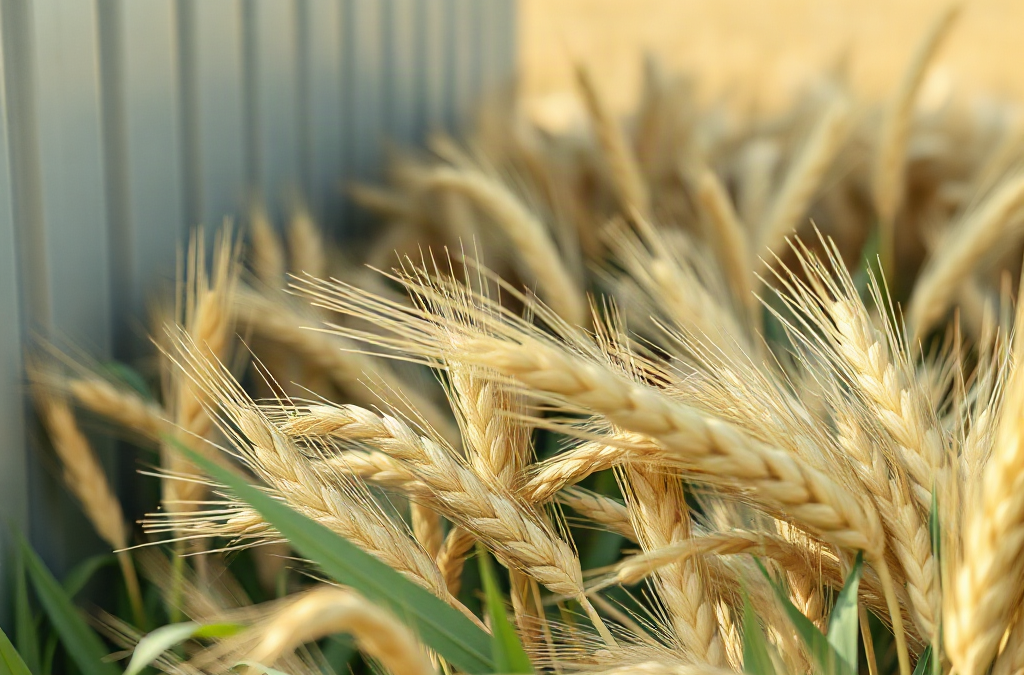
Effective wheat growth cycle planning for harvest storage links crop development to bin readiness rather than treating harvest as a fixed calendar date. Track heading, flowering, grain filling, physiological maturity, kernel moisture, and local drying conditions, then prepare cleaning, drying, handling, and storage capacity before the crop becomes harvestable. Wheat that enters storage too wet can heat, mold, or lose quality, while delayed field harvest raises exposure to lodging, shattering, sprouting, and storms. The practical plan is to scout fields repeatedly, sample representative kernels, verify moisture with a calibrated meter, and match harvest order to crop condition and available drying capacity.
How Do Wheat Growth Stages Shape the Storage Plan?
Wheat development provides a sequence of planning checkpoints, not an exact harvest appointment. Establishment and tillering indicate whether the stand is uniform, stem elongation reveals differences in crop progress, and heading and flowering narrow the likely maturity window. Grain filling then becomes the critical bridge between crop management and storage preparation. Weather, variety, planting date, soil moisture, and field position can cause separate areas of one farm to progress at different rates.
During grain filling, the kernels accumulate dry matter while retaining substantial moisture. Cutting too early can capture immature kernels that are harder to handle and may have lower test weight or inconsistent moisture. Waiting long after the crop is harvestable creates a different set of risks: mature heads remain exposed to rain, wind, lodging, shattering, and possible sprouting. The best decision is therefore not simply “harvest as soon as possible” or “leave it until completely dry.” It is a balance among kernel condition, machinery performance, weather exposure, drying expense, and storage capability.
Physiological maturity marks the point at which the kernel has essentially stopped adding dry matter, but it does not mean the grain is automatically ready for safe storage. Kernel moisture can still be too high for the intended storage period. Field drying must continue, or the harvested grain must pass through a suitable drying system. A grower without drying capacity has less flexibility than an operation able to remove moisture promptly. That constraint should influence planting choices, acreage, harvest scheduling, and available bin space months before maturity.
A practical approach is to record the date of heading or flowering for each field and then increase scouting frequency as kernels firm. Compare early and late areas rather than sampling only the field entrance. For example, a south-facing slope or lighter soil may mature before a low, moisture-retentive section. Harvesting the entire field based on its driest edge can produce a mixed load whose average moisture conceals wetter pockets.
The common mistake is treating stage estimates as measurements. Growth-stage records help determine when to inspect, but they do not replace representative kernel sampling, a dependable moisture meter, or direct observation of straw and head condition. Use the crop cycle to trigger preparation, then use current field evidence to make the harvest decision.
When Should Field Signals Replace Calendar Dates?
Field signals should control the final harvest schedule once wheat approaches maturity because elapsed days cannot account for current weather or within-field variability. Seasonal heat and moisture alter development, while cloudy conditions, rainfall, drought, and uneven emergence can widen the maturity spread. A date estimated at planting remains useful for staffing and equipment planning, but it becomes progressively less reliable as the crop nears harvest.
Start with a representative walking pattern through the field. Sample heads from several locations, including low ground, field margins, dense patches, thin stands, and any area planted later. Rub out kernels and compare their firmness and moisture rather than judging readiness from straw color alone. Straw and heads may appear dry while kernels remain wetter than expected, particularly after humid nights or intermittent rain. Conversely, a drought-stressed canopy can look prematurely mature even when kernel development is uneven.
Moisture testing works best when the sample reflects the grain that will enter the combine. Collect and combine multiple subsamples, allow a cold or hot sample to approach the meter’s operating conditions when necessary, and follow the meter manufacturer’s procedure. Periodic comparison with a trusted reference test can reveal calibration drift. A single reading from one head or one truck compartment is weak evidence for a storage decision.
| Field observation | What it may indicate | Planning response |
|---|---|---|
| Kernels differ sharply across the field | Uneven maturity or moisture | Sample by zone and consider harvesting sections separately |
| Crop is mature but rain is forecast | Field-loss risk is increasing | Compare early harvest and drying capacity with the cost of delay |
| Dry straw with unexpectedly wet kernels | Appearance is misleading | Base the decision on representative moisture readings |
| Grain moisture varies among loads | Field variation or changing daily conditions | Segregate wetter grain and monitor drying closely |
Daily timing matters as well. Grain moisture may decline during a warm, dry afternoon and rise again with evening humidity or dew. If harvest continues across those conditions, label loads or bins so wetter grain is not unknowingly buried beneath drier material. Blending should not be assumed to solve concentrated wet pockets; local moisture can support heating even when the bin-wide average appears acceptable.
A warning sign is a schedule driven only by combine availability. Equipment efficiency matters, but storage safety depends on what enters the bin. If readings exceed the level suitable for the planned storage duration, the choices are to dry the grain, aerate it under conditions that genuinely remove moisture, divert it to a shorter holding period, or postpone harvest when field risk permits.
Aligning Harvest Order With Drying and Handling Capacity
Harvest order should reflect the interaction between field risk and the rate at which the operation can receive, clean, dry, cool, and store wheat. A fast combine can overwhelm a small dryer or limited wet-grain holding area. Once that bottleneck appears, trucks wait, grain remains warm, or loads are placed into bins without a clear moisture-management plan. The useful measure is not daily cutting capacity alone but the amount of grain the whole system can condition safely each day.
Rank fields several days before expected harvest. Give priority to mature crops facing lodging, shattering, storm exposure, or sprouting risk, while accounting for moisture and travel time. A uniform field at manageable moisture may be a better first choice than a wetter field that would occupy the dryer and block all following loads. On the other hand, a vulnerable mature field may justify higher drying cost if leaving it standing creates a larger potential loss.
Use a short operating checklist before assigning the first field:
- Estimate harvestable acres and likely load volume by field.
- Confirm wet holding, dryer, clean-bin, truck, and auger capacity.
- Identify where wetter or lower-quality loads can be segregated.
- Set a sampling and recordkeeping routine for each load or field zone.
- Define what will stop intake if drying or aeration falls behind.
Segregation preserves options. Grain harvested after rain, from a weedy patch, or from an immature section may carry more moisture or foreign material than the main crop. Placing it directly into the center of a long-term storage bin can create a dense, damp concentration that restricts airflow. Routing that load through cleaning, drying it separately, or holding it in a smaller bin makes inspection and corrective action easier.
Airflow must also be judged realistically. Aeration is highly useful for cooling grain and equalizing temperature, but it is not interchangeable with a properly sized drying process. Whether air removes meaningful moisture depends on grain depth, fan performance, ambient temperature and humidity, and operating time. A fan that cools a shallow bin effectively may not move enough air through a deeper grain mass to dry wet wheat at the required rate.
Get Whole Wheat Flour, Grains and Milling Supplies – CLICK HERE 
The failure signal is growing backlog: incoming loads become wetter, the dryer runs continuously without catching up, grain temperatures remain elevated, or condensation appears. Reduce intake, redirect loads, or alter field order before the storage system is overloaded. Harvest speed should serve grain condition, not force unsafe storage decisions.
How Early Should Storage Bins Be Prepared?
Bin preparation should be completed before wheat reaches the final harvest window, leaving time to correct equipment failures rather than discovering them under load. Empty-bin work includes removing old grain and debris, cleaning ledges and floors, checking for water entry, and testing fans, vents, unload equipment, temperature cables, and electrical controls. Any pest-management action should follow the product label and applicable local requirements.
Residue from a previous crop can harbor insects and restrict sanitation even when the bin looks mostly empty. Sweep or vacuum cracks, sumps, floor openings, and nearby handling equipment where grain accumulates. Inspect the roof, seams, access doors, foundation, and discharge points after rain if possible. A bin that excludes ordinary rainfall when empty may still admit wind-driven water through a damaged vent or poorly sealed opening.
Run the aeration fan before filling and verify that air reaches the expected outlets. Listen for bearing noise, check belts and guards, and confirm that vents are unobstructed. Testing only whether the motor starts is insufficient; a damaged fan, blocked floor, or plugged vent can reduce airflow after thousands of bushels cover the system. Repairing those problems beneath a filled bin is difficult and may expose workers to serious hazards.
Plan grain placement as carefully as bin cleaning. Excess fines tend to concentrate beneath the filling point, reducing airflow through the center. Cleaning grain before storage, using appropriate spreader practices, or managing the central fines concentration after filling can improve airflow uniformity. The selected method depends on bin design and operating procedures; no placement technique compensates for wet grain or undersized fans.
Once filled, the bin becomes a monitored system rather than a sealed container that can be ignored. Cool the grain when suitable outside-air conditions arrive, inspect for crusting, odors, condensation, insects, or unexpected temperature patterns, and keep dated records. Follow established grain-bin safety procedures: lock out powered equipment before maintenance, avoid entering grain where possible, and never treat entry into a loaded bin as routine work.
A frequent planning error is reserving bin preparation for the week harvest begins. One failed motor, leaking roof seam, or blocked unload can then dictate where the crop goes. Completing inspection earlier creates alternatives: parts can be obtained, another bin can be assigned, and harvest order can be revised before mature wheat is exposed in the field.
Frequently Asked Questions
Can wheat harvest be scheduled from the planting date alone?
No. Planting date supports an early estimate, but variety, temperature, moisture, emergence, and field variability change development. Use growth stages to time scouting and representative moisture tests to make the final decision.
Does physiological maturity mean wheat is ready for long-term storage?
Not necessarily. Dry-matter accumulation may be complete while kernel moisture remains too high for the intended storage period. Test moisture and provide suitable drying or a shorter holding plan.
Should the driest field always be harvested first?
No. Harvest order should balance moisture with lodging, shattering, sprouting, weather exposure, transport, and dryer capacity. A slightly wetter but highly vulnerable field may deserve priority.
Can aeration fans dry freshly harvested wheat?
Aeration may remove some moisture under favorable conditions, but its primary storage role is often temperature management. Actual drying depends on airflow, grain depth, weather, fan capacity, and operating time.
Why should wetter loads be kept separate?
Segregation allows targeted drying and closer monitoring. Mixing a wet load into dry grain may create localized heating or mold risk even when the bin’s average moisture reading appears acceptable.
Conclusion
A dependable plan connects four records: crop stage, representative moisture readings, field-risk observations, and the daily capacity of the harvest and storage system. Begin bin inspection while grain is still filling, then increase field scouting as kernels mature. Rank fields by vulnerability as well as dryness, and avoid taking in grain faster than it can be cleaned, conditioned, cooled, and monitored.
Before harvest starts, test fans and unload equipment, assign space for off-condition loads, and decide who records moisture and bin destinations. During harvest, watch for widening differences among loads, dryer backlog, warm grain, condensation, or restricted airflow. Those are reasons to slow intake or change the field order. After filling, continue temperature and condition checks rather than assuming the work ended at the auger.
For location-specific maturity, moisture, drying, and storage recommendations, consult your regional university agricultural extension service and current grain-storage publications from the relevant agriculture department. Equipment manuals should also be used for moisture-meter calibration, fan operation, dryer settings, and bin safety procedures.
Get Whole Wheat Flour, Grains and Milling Supplies – CLICK HERE
Auto Amazon Links: No products found.