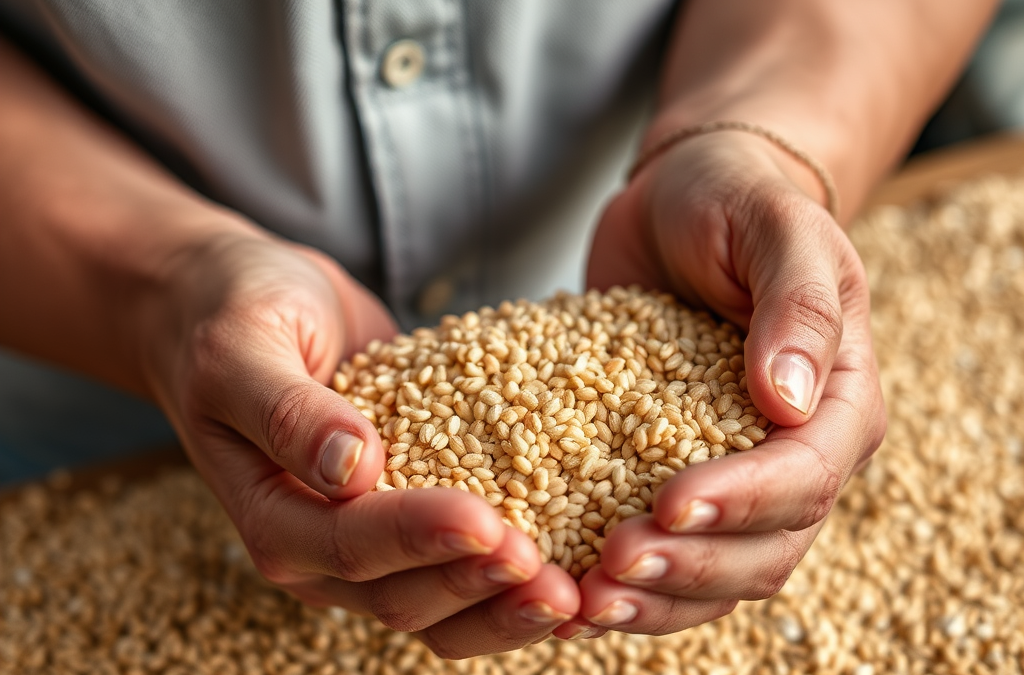
To identify quality grains for storage, examine their appearance, moisture content, and smell. Quality grains should be free from contaminants, have a uniform color, and possess a pleasant, natural aroma. Proper evaluation methods include visual inspection and testing moisture levels, as high moisture can lead to spoilage and pest issues. Understanding these characteristics ensures effective storage and preservation of grains.
Visual Inspection of Grains
Evaluating the visual appearance of grains is the first step in identifying quality. High-quality grains typically exhibit a uniform color and size, free from discoloration or foreign materials. Look for any signs of pest damage, such as holes or frass, which can indicate infestation. The surface texture should be smooth, and the grains should feel solid and not shriveled.
For instance, when assessing wheat, a healthy grain should be plump and have a golden hue without any dark spots. Rice should appear clean and polished, while corn should be intact with bright yellow kernels. This visual inspection is crucial because it provides an immediate indication of the grain’s overall health and suitability for storage.
Moisture Content Assessment
Moisture content is a critical factor in grain storage, as excess moisture can lead to mold growth and spoilage. Quality grains should have a moisture level typically between 12% and 14%, depending on the type. To assess moisture content, you can use a moisture meter, which provides an accurate reading of the grain’s water content.
For example, using a moisture meter on barley can help determine if the grain is safe for storage. If the moisture level exceeds the recommended range, consider drying the grains before storage. This step is vital to prevent deterioration, as high moisture not only affects flavor but also attracts pests.
Assessing Grain Aroma
The aroma of grains can reveal much about their quality. Fresh, high-quality grains typically emit a pleasant, natural smell. A musty or sour odor can indicate spoilage or the presence of mold, which is a significant red flag. For instance, when evaluating oats, the scent should be mild and earthy, while any strong or unpleasant smell suggests that the grains are no longer fit for storage.
It’s essential to trust your senses in this evaluation. If the aroma is off, it’s best to avoid storing those grains, as they may not maintain their nutritional value or flavor over time. Regularly checking the aroma of stored grains can help in early detection of spoilage.
Common Mistakes in Grain Evaluation
When identifying quality grains for storage, several common mistakes can lead to improper evaluation. One major error is relying solely on one characteristic, such as appearance, while neglecting others like moisture content and aroma. Each factor plays a crucial role in determining the overall quality.
Another mistake is ignoring the storage conditions before and after the evaluation. Grains that are stored in humid or fluctuating temperatures may deteriorate quickly, regardless of their initial quality. It’s imperative to ensure that grains are stored in a cool, dry place, as this significantly impacts their longevity.
Get Whole Wheat Flour, Grains and Milling Supplies – CLICK HERE

Frequently Asked Questions
What are the signs of spoiled grains?
Signs of spoiled grains include a musty smell, discoloration, and the presence of mold or pests.
How can I test the moisture content of grains?
You can use a moisture meter, which provides a quick and accurate measurement of moisture levels in grains.
Why is moisture content important for grain storage?
Moisture content is crucial because high moisture levels can lead to spoilage, mold growth, and pest infestations.
Conclusion
Identifying quality grains for storage is essential for ensuring their longevity and usability. Focus on visual inspection, moisture content, and aroma to make informed decisions. By avoiding common mistakes and understanding the characteristics of quality grains, you can effectively preserve your grain stocks for future use. Regular monitoring and proper storage conditions will help maintain grain quality over time.
Get Whole Wheat Flour, Grains and Milling Supplies – CLICK HERE
Auto Amazon Links: No products found.
Further Reading
Authoritative Sources
- Practice good cereal grain storage techniques
topcropmanager.com"The temperature and moisture content of the grain are two important factors that influence the length of time grain can be stored without a change in quality," ...
- Research Progress on Detection and Evaluation Methods ...
sciopen.comAs a key link in the management of grain storage, quality inspection and evaluation has always been a hot research field of much concern ...
- Understanding grain quality - University of Minnesota Extension
extension.umn.eduMoisture. Moisture content is an important factor for determining storability and handling, but also for establishing factors based on specific moisture basis.
- Evaluation of Rice Quality Storage Stability - PMC - NIH
pmc.ncbi.nlm.nih.govRice grain quality is normally evaluated by considering three dimensions: the processing quality, appearance quality, and eating quality [6].