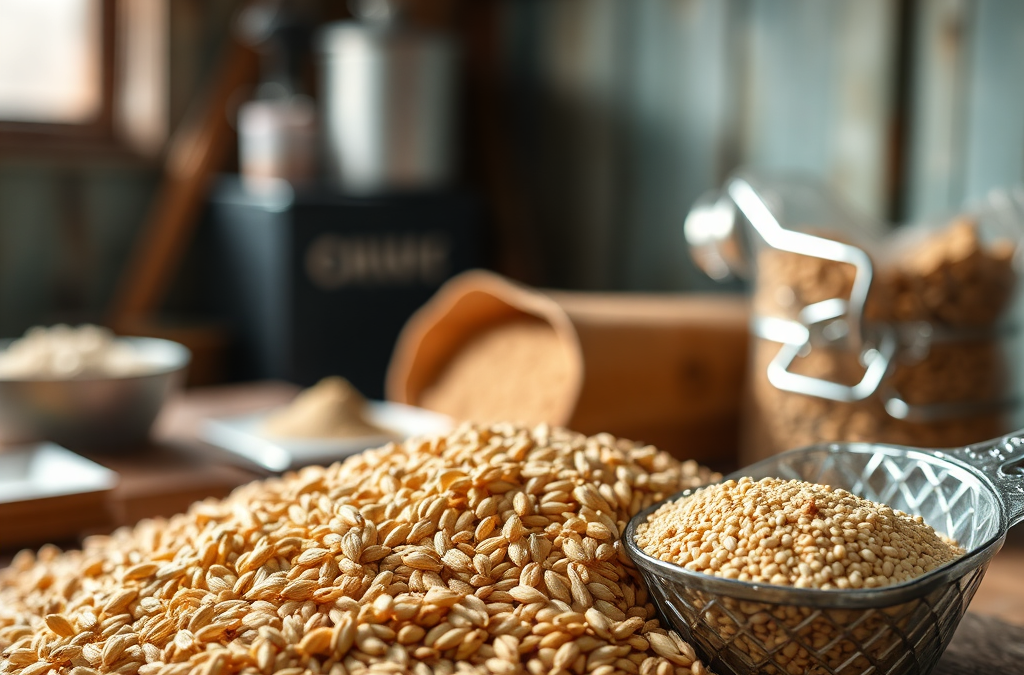
Temperature fluctuations significantly impact grain quality by altering moisture content, promoting fungal growth, and affecting nutrient retention. Maintaining a stable storage environment is crucial to prevent spoilage and preserve the nutritional integrity of grains. Effective temperature control methods include using insulated storage facilities and monitoring humidity levels. Awareness of these factors can help grain handlers mitigate risks and ensure high-quality grain delivery.
Impact of Temperature on Grain Quality
Temperature plays a critical role in determining grain quality. Fluctuations can lead to significant changes in moisture levels, which in turn affect the grain’s physical and chemical properties. For instance, grains stored at inconsistent temperatures may absorb moisture, leading to the growth of molds and fungi, which can compromise both safety and quality.
Moreover, temperature variations can alter the nutritional profiles of grains. For example, high temperatures can accelerate the breakdown of essential proteins and vitamins, leading to a loss of nutritional value. Thus, understanding how temperature impacts grain quality is essential for producers and handlers.
Mechanisms Behind Temperature Fluctuations
Temperature fluctuations can occur due to changes in environmental conditions, such as seasonal variations, storage facility design, and external weather influences. These fluctuations can create conditions conducive to moisture condensation, which is detrimental to grain quality.
For instance, when warm air enters a cooler storage area, condensation can form on the grain surface, increasing moisture content and promoting mold growth. Additionally, rapid temperature changes can weaken the structural integrity of grains, making them more susceptible to physical damage during handling. To mitigate these effects, it is vital to monitor temperature and humidity levels regularly.
Best Practices for Grain Storage
To maintain grain quality, it is essential to implement effective storage practices. First, using temperature and humidity control systems can help stabilize the environment. Insulated storage facilities can reduce the impact of external temperature changes, while dehumidifiers can lower moisture levels.
Regularly checking storage conditions is also crucial. Periodic inspections of grain quality can help identify issues such as insect infestations or mold growth early on. Additionally, employing aeration techniques can circulate air throughout the grain, further stabilizing temperature and moisture levels.
Common Mistakes to Avoid
One common mistake in grain storage is neglecting the effects of temperature fluctuations. Many handlers may assume that grains are safe simply because they are stored indoors, failing to consider the impact of environmental changes. Another mistake is not monitoring humidity levels, which can lead to unforeseen spoilage.
Get Whole Wheat Flour, Grains and Milling Supplies – CLICK HERE

Additionally, overloading storage facilities can hinder proper air circulation, exacerbating temperature and moisture issues. To avoid these pitfalls, it is essential to adhere to recommended storage guidelines and regularly assess storage conditions.
For those seeking more in-depth knowledge about grain quality and temperature management, resources from agricultural extension services and grain storage publications can provide valuable insights. Engaging with these resources will enhance understanding and implementation of effective grain preservation techniques.
In practice, strong results with The Effects of Temperature Fluctuations on Grain Quality: Understanding Risks and Preservation Techniques usually come from repeating the same few priority actions long enough for them to become consistent. That means focusing on one clear standard, removing mixed signals, and watching what changes the outcome over several days instead of reacting to one isolated result. Small adjustments tend to work better than constant resets, because they make it easier to see what is actually helping and what is slowing progress.
Get Whole Wheat Flour, Grains and Milling Supplies – CLICK HERE
Popular Questions
What are the best practices for updating a Table of Contents as my document changes?
Regularly update your Table of Contents whenever you add, remove, or modify sections in your document. Use automatic tools available in most word processors to keep it synchronized with your content. Double-check that page numbers and headings are accurate after each update.
How does a well-structured Table of Contents improve document readability?
A well-structured Table of Contents provides a clear roadmap of your document, allowing readers to find information quickly. It highlights the main topics and subtopics, making complex content more accessible. This organization encourages readers to engage with your material more efficiently.
What tools can help generate a Table of Contents automatically?
Most word processing software, such as Microsoft Word or Google Docs, offers built-in features to generate a Table of Contents automatically. These tools scan your document for headings and create a navigable outline. Using these features saves time and ensures consistency as your document evolves.
Auto Amazon Links: No products found.
Further Reading
Authoritative Sources
- Effects of high temperature at grain-filling stage on rice ...
researchgate.netThe adverse effects of extreme temperatures primarily stem from irreversible disruptions in grain filling and material accumulation during this phase [40].
- EFFECTS OF TEMPERATURE AND MOISTURE ON ...
storedgrain.com.auEFFECTS OF TEMPERATURE AND MOISTURE ON STORED GRAIN. Hub for Grain Storage, Quality Control, Insect & Pest Management
- Grain Storage Temperature Management | PDF | Insects
fr.scribd.comGrain temperature greatly affects insect and fungal activity, with biological activity doubling for every 10 degree Celsius increase in temperature.
- The Impacts of Temperature Change and Fluctuation on ...
cgscholar.comIn this paper I develop a statistical framework for modeling climate changes, and I produce a characterization that separates changes in annual ...