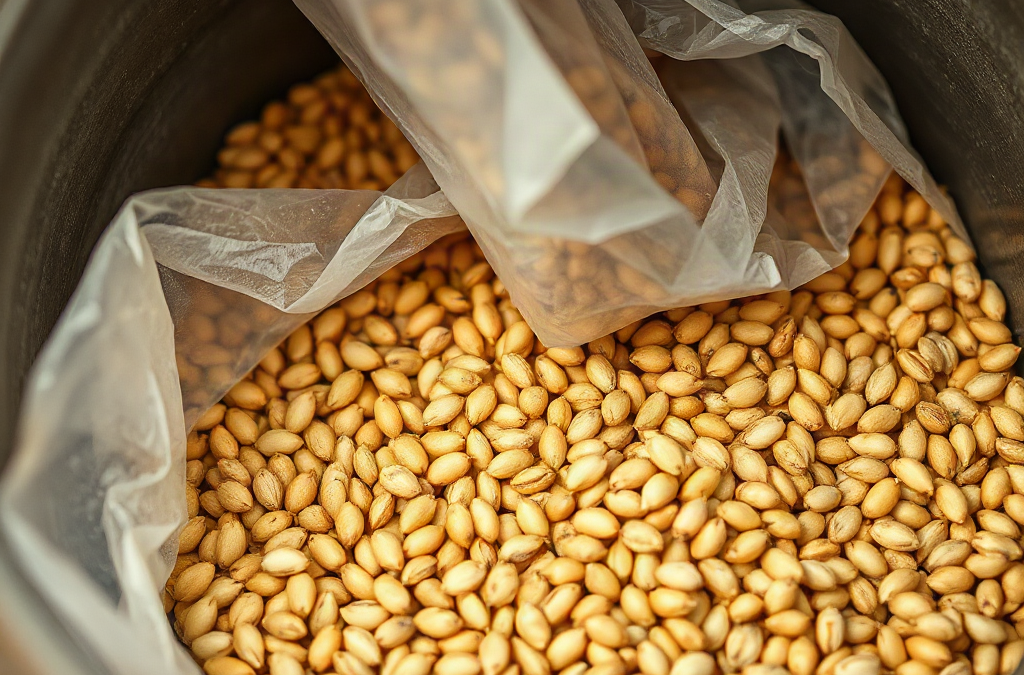
Wheat storage pest damage identification relies on matching insect evidence with characteristic kernel damage, dust, webbing, odors, and activity inside the container. Round exit holes and hollow kernels suggest internal feeders such as grain weevils, while irregular surface feeding often points to flour beetles or other secondary pests. Webbing, clumped grain, larvae, and cast skins are stronger evidence of moth activity than a single flying adult nearby. Inspect several depths because insects cluster where temperature, moisture, and broken kernels favor them. Isolate suspect wheat immediately, then decide whether to discard, treat, or retain it according to infestation extent, moisture damage, contamination, and its intended use.
Read the Damage Pattern Before Naming the Pest
The location and shape of damage reveal more than the presence of an occasional insect. Stored-product pests fall broadly into internal feeders, which develop inside intact kernels, and external feeders, which consume broken grain, flour, germ, or material on kernel surfaces. Distinguishing those patterns narrows the likely pest and shows how deeply the lot may be affected.
A clean, nearly circular hole through the bran is a classic clue that an adult insect has emerged after developing inside a kernel. Affected kernels may feel unusually light, float during a diagnostic water check, or break open to reveal a hollow interior. The absence of visible adults does not clear the wheat: eggs and larvae of internal feeders can remain concealed. Conversely, roughened surfaces, irregularly gnawed germ areas, and a growing layer of fine meal are more consistent with insects feeding outside the kernels.
Dust requires careful interpretation. A small amount may come from handling, cracked grain, or abrasion during transport. Fresh insect feeding tends to produce increasing quantities of fine material accompanied by live insects, larvae, cast skins, fecal particles, or damaged kernels. Sifting a sample through a fine kitchen sieve can separate mobile insects and fragments from sound wheat, but the sieve should be cleaned away from other stored food.
Webbing changes the diagnosis. Silken threads that join kernels, line a lid seam, or hold dust in loose clumps commonly indicate stored-food moth larvae. Condensation can also make wheat cake together, but moisture-bound clumps usually lack silk and may have musty odors, staining, or visible fungal growth. Both conditions warrant isolation, although the safety implications are different.
Use sight, touch, and smell together rather than relying on one damaged kernel. A practical wheat storage pest damage identification check should compare affected grain with a sample from a known clean container. Prioritize repeatable evidence: multiple bored kernels, larvae in seams, new webbing, or insects appearing after the sample warms. A common failure is identifying a pest from color alone; many beetles are small and brown, while age, lighting, and dust make visual identification unreliable without body shape and damage context.
Match Kernel Evidence to Common Wheat Pests
Internal feeders usually cause the greatest hidden kernel loss because much of their development occurs out of view. Grain weevils have a noticeable snout as adults, and their offspring develop within kernels before leaving round exit holes. Lesser grain borers also attack whole kernels, but adults lack the long weevil snout and may generate substantial powder as they bore and feed. Finding adults among intact wheat plus perforated, lightweight kernels supports an internal-feeder diagnosis.
External or secondary pests more often exploit cracked wheat and the residue that collects at the bottom of a container. Flour beetles are associated with fines, flour, and damaged grain rather than the concealed destruction of intact kernels. Sawtoothed grain beetles are narrow, flattened insects that can enter small package openings and feed on processed or broken material. Their presence often signals that cracks, dust, or previous damage have created a favorable food source.
Stored-food moths leave a different set of clues. Larvae may crawl away from the food before pupating, so a caterpillar on a wall or ceiling can originate from wheat stored several feet away. Inside the grain, inspect for silk, clumped fines, feeding tubes, shed skins, and larvae with a distinct head capsule. Adult moths alone are not enough to identify the infested container because they can travel between pantry products.
Several non-pest findings are easy to misread. Wheat germ, chaff, and fragments from mechanical cleaning can resemble insect parts. Tiny holes caused by harvesting damage tend to be irregular and lack an emergence flap or associated infestation evidence. Psocids, sometimes called booklice, are minute moisture-associated insects that may occur around damp grain but do not create the same bored-kernel pattern as weevils. Their appearance should trigger a moisture investigation rather than an assumption that every kernel contains larvae.
For a useful comparison, collect a transparent jar sample from the top, middle, and bottom of the lot. Allow it to reach room temperature while keeping the lid secured; cold insects may remain inactive. Examine the jar against a light background, then inspect cracked kernels under bright light or low magnification. Photograph the insect beside a ruler and record whether it has a snout, wings, a flattened body, or larval form. The mistake to avoid is treating a household insect spray as an identification tool. It may kill visible adults without reaching hidden life stages, and products not labeled for contact with stored food should never be applied to wheat.
Inspect the Container and Confirm Active Infestation
A reliable inspection samples the entire storage environment, not merely the exposed surface. Insects can concentrate near warm walls, damp pockets, seams, oxygen leaks, or accumulations of broken kernels. A clean-looking top layer can therefore cover activity lower in a bucket, bin, or sack.
Begin by moving the suspect container away from other grain without opening it in the pantry or storage room. Place it on an easy-to-clean surface, preferably outdoors or in a separate utility area. Check the exterior first for larvae, webbing around the lid, beetles beneath the rim, gnawing, punctures, or a failed seal. Inspect neighboring containers because migrating moth larvae and small beetles can spread through shelving and packaging seams.
Use a clean scoop to take samples from several depths. For large containers, a grain probe is more representative than a surface handful. Spread each sample thinly on a light-colored tray and look for movement, exit holes, larvae, skins, frass, webbing, and kernels that have become unusually light. A fine sieve can reveal insects concealed in dust. Seal the examined material afterward rather than returning it to the main lot.
A compact inspection sequence keeps evidence from being missed:
Get Whole Wheat Flour, Grains and Milling Supplies – CLICK HERE 
- Isolate: separate the container and inspect nearby foods before moving anything else.
- Sample: collect grain from the top, center, edges, and bottom where practical.
- Separate: sieve fines and split several suspicious kernels.
- Confirm: look for live stages, fresh powder, silk, cast skins, or repeated emergence holes.
- Document: note the date, location, odor, moisture clues, and condition of the seal.
Monitoring can help when evidence is ambiguous. Place a secured sample in a clear jar and observe it over the following days at normal indoor temperature. Do not use this as proof that the remaining lot is safe: a small sample may miss a localized infestation. Pheromone traps can indicate the presence of particular moths or beetles, but they monitor adults rather than measure kernel damage or certify that grain is pest-free.
Moisture and heat deserve equal attention. A warm spot, condensation, sour or musty odor, or visible mold suggests deterioration beyond insect feeding. Insects can raise localized heat and moisture through activity, while damp grain supports both pests and fungal growth. If mold is suspected, avoid inhaling dust and do not taste the wheat. Readers building a repeatable inspection routine can use the same sampling principles outlined in Wheat storage pest damage identification, but should adjust sample size to the container rather than relying on a single scoop.
Decide Whether to Isolate, Treat, or Discard the Wheat
The decision depends on contamination, spread, intended use, and whether a validated treatment can reach every kernel. Isolation comes first because opening, carrying, or pouring infested wheat near clean supplies can distribute adults, eggs, larvae, and dusty residue. Bag the container if necessary and inspect the shelving before choosing a recovery method.
Discarding is the prudent choice when wheat has mold, a persistent musty or sour odor, damp clumps, chemical contamination, rodent evidence, or extensive insect debris. Cooking does not reverse spoilage or remove every contaminant associated with poor storage. Grain intended for seed also needs separate judgment: feeding damage and heat can reduce germination even if the kernels still appear usable as food. Local waste rules may affect disposal; seal infested material so pests cannot escape back into the building.
For dry wheat with a limited, confirmed insect infestation and no mold or objectionable odor, temperature treatment may be considered. Freezing can kill many stored-product insects when the entire grain mass reaches and remains at a sufficiently cold temperature, but treatment time varies with pest stage, package size, freezer performance, and starting temperature. A tightly packed bucket cools much more slowly than several shallow, sealed packages. Repeated freeze-and-thaw cycles also create condensation if packages are opened before returning to room temperature.
Heat can kill insects as well, but uneven household heating may leave cool refuges or damage grain quality. Improvised heating creates added risks when plastic packaging, ovens, or large grain masses are involved. Chemical fumigation is not a casual household remedy; effectiveness and legal use depend on the product, application site, and label. Spraying the outside of a container does not treat insects developing inside kernels.
Treatment should be followed by cleaning and monitoring. Vacuum shelf joints and cracks, empty the vacuum outdoors, wash removable surfaces, and allow them to dry fully. Do not mix treated wheat into clean reserves until inspection shows no continuing activity. Repackage it in clean, insect-resistant containers rather than returning it to a sack or bucket that may hold eggs in seams.
A common misconception is that oxygen absorbers can rescue any active infestation. Properly designed low-oxygen storage may suppress or kill insects over time, but performance depends on container integrity, oxygen volume, absorber capacity, temperature, and the commodity’s moisture. It does not make moldy or otherwise spoiled wheat safe. If the lot represents a major financial value, commercial grain, or uncertain contamination, seek guidance from a local extension service or qualified stored-grain professional before attempting salvage.
Frequently Asked Questions
Do holes in wheat kernels always mean insects?
No. Round, repeated exit holes accompanied by hollow kernels, insects, skins, or fresh powder strongly suggest pests, while irregular cracks may result from harvesting or handling.
Can infested wheat be washed and eaten?
Washing may remove surface debris but does not resolve hidden larvae, spoilage, mold, odors, or contamination. Evaluate the whole lot before deciding whether any treatment is appropriate.
Why are moth larvae found away from the wheat?
Stored-food moth larvae often leave their food source to pupate in wall junctions, ceilings, shelf holes, or container seams. Inspect nearby dry foods and storage crevices.
Does one beetle prove the wheat is infested?
Not by itself, but it warrants isolation and multi-depth sampling. Repeated sightings, damaged kernels, fresh fines, larvae, or cast skins provide stronger confirmation.
Will airtight storage stop wheat pests?
A sound barrier limits new entry, but insects already present may continue developing. Airtight packaging works only as part of proper drying, clean handling, suitable oxygen control, and inspection.
Conclusion
Accurate identification comes from combining kernel patterns with evidence from the container and surrounding storage area. Round emergence holes, hollow interiors, surface feeding, fresh fines, silk, larvae, and cast skins each point toward different pest activity, but none should be interpreted without checking several depths of the lot. Isolate suspect wheat before sampling, document what you find, and examine neighboring foods for spread. Treatment is most defensible when the wheat remains dry, clean-smelling, and only lightly affected, while mold, moisture, rodents, chemical exposure, or extensive debris favor disposal. After any decision, clean seams and shelving, use a fresh insect-resistant container, and monitor for renewed activity. That sequence protects unaffected supplies and prevents a minor discovery from becoming a storage-wide infestation.
Get Whole Wheat Flour, Grains and Milling Supplies – CLICK HERE
Auto Amazon Links: No products found.