
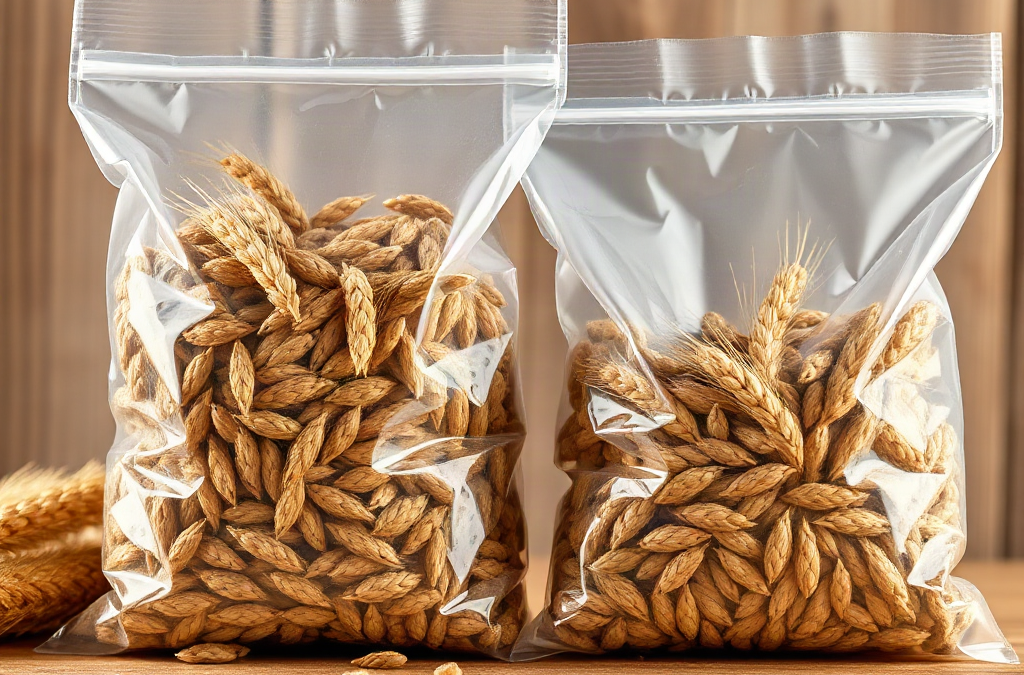
What Vacuum Sealing Does—and Does Not Do
Vacuum packaging reduces the amount of air surrounding whole wheat berries, which can slow oxidative changes and make the package less hospitable to insects that require oxygen. The method is especially practical for household quantities that will be opened and rotated over time. It also produces compact packages that are easy to divide into meal-sized or milling-sized portions.
A household vacuum sealer does not create a perfect vacuum. Some oxygen remains between kernels and within the bag, and flexible packaging can gradually admit small amounts of gas through the material. The seal therefore extends useful storage conditions rather than suspending the wheat indefinitely. Bag quality, seal integrity, grain moisture, room temperature, and physical protection all influence the result.
Moisture is the critical limitation. Removing air from damp wheat does not dry it, and low-oxygen packaging can create unsafe conditions for moist foods. Whole wheat intended for room-temperature storage must already be dry and suitable for dry storage before it enters the bag. A vacuum sealer should never be treated as a rescue method for grain exposed to rain, a damp basement, or visible condensation.
The method also offers little defense against sharp kernels, mice, and repeated handling. Wheat points can puncture thin film, while rodents can chew through vacuum bags. A sealed bag placed directly on a garage floor may therefore fail even when the heat seal was initially sound. For Whole wheat storage in vacuum-sealed bags, the dependable arrangement is a barrier system: a suitable bag controls air exposure, while a lidded food-grade bucket or another rigid container controls puncture and pest risks.
Compare vacuum sealing with a sealed Mylar bag and oxygen absorber. Vacuum bags make seal loss visually apparent because a tight package becomes loose, and they are convenient for portions used within a rotation plan. Mylar offers stronger light and oxygen protection when properly sealed, but it does not show a vacuum in the same way. The better choice depends on storage duration, equipment, package size, and whether easy visual inspection or a more substantial oxygen-and-light barrier is the priority.
Preparing Wheat Berries Before Sealing
Only sound, storage-ready wheat belongs in a vacuum package. Begin with intact berries that are clean, dry, and free from visible insect activity. Grain containing musty kernels, unexplained clumps, dampness, webbing, or a sour odor should be isolated rather than mixed with a good batch. Sealing questionable wheat hides the problem inside a compact package; it does not reverse deterioration.
Check the grain under bright light before portioning it. Look for live insects, larvae, fine dust that appears to be accumulating from damaged kernels, and kernels with unusual discoloration. A few bits of field material can also interfere with packaging by creating sharp pressure points. Removing stones, stiff stems, and broken debris reduces the chance that the bag will be punctured after air is withdrawn.
Home handling should avoid introducing new moisture. Do not rinse wheat before room-temperature storage, and do not package kernels while they are warmer or colder than the room if that temperature difference could produce condensation. Grain brought from a cold vehicle into a warm, humid kitchen should remain closed in its original container until its temperature equalizes. Opening it immediately can allow humid room air to condense on the cold kernels.
Freezing is sometimes used to manage pantry insects, but it needs a careful return to room temperature. If wheat is frozen before packaging, keep it enclosed while it warms so condensation forms outside the container rather than on the grain. Seal it only after the kernels and packaging have reached room temperature and no moisture is visible. Freezing should not be mistaken for drying; kernels that entered the freezer damp will still be damp afterward.
A compact preparation check prevents the most consequential mistakes:
- Condition: Use clean berries without musty odors, clumps, webbing, or visible insects.
- Dryness: Package only grain already suitable for dry, room-temperature storage.
- Temperature: Let cold grain equalize while enclosed before exposing it to humid air.
- Debris: Remove stones, stems, and sharp foreign material that could damage film.
- Portions: Divide the batch according to realistic milling or cooking needs.
Smaller portions limit how much wheat is exposed each time a package is opened. A household that mills two pounds at a time gains little from sealing twenty pounds in one bag. On the other hand, extremely small packages require more film, seals, labels, and inspection time. Choose a portion that can be used promptly after opening without creating excessive packaging work.
Packaging the Wheat Without Weak Seals or Punctures
A durable package depends on both the film and the sealing technique. Use bags specifically made for the vacuum sealer rather than smooth general-purpose plastic, which may not allow channel-style machines to remove air correctly. Confirm that the bag material is intended for food contact and compatible with the machine. Thin or poorly matched film can wrinkle at the seal, collapse around pointed kernels, or lose its vacuum during handling.
Leave enough empty material above the wheat to lie flat across the sealing bar. Grain dust in the seal area can create microscopic channels, so wipe the inside edge with a clean, dry cloth before sealing. Keep kernels below the machine’s vacuum channel. If the unit allows manual or pulse control, stop before the berries are compressed so tightly that their tips strain the film.
Sharp kernels are a predictable packaging hazard. One practical approach is to use heavier embossed bags and avoid pressing the finished package against hard edges. Some users create an inner buffer with food-safe material compatible with their storage plan, but any added layer must not block airflow during vacuum extraction or contaminate the grain. Double-bagging can improve physical protection, although it adds cost and should not compensate for flimsy primary packaging.
Seal each package according to the appliance instructions, then examine the entire seal under good light. It should be continuous, flat, and free from folds, trapped particles, or scorched sections. A second seal line above the first can provide redundancy when the machine and bag manufacturer permit it. More heat is not automatically better: overheating can weaken film next to the seam.
Label the bag before it disappears into a larger container. Record the grain type, purchase or harvest source, packaging date, and any treatment such as freezing. Lot identification matters when one package later shows insects or an odor; the label lets you inspect related bags without discarding unrelated wheat. A simple sequence number also supports first-in, first-out rotation.
Let newly sealed bags rest where they can be observed before placing them in deep storage. A package that relaxes noticeably may have a dirty seam, a puncture, or film damage. The bag does not need to remain rock-hard in every design, but a clear change from its initial condition deserves investigation. More detail about package sizing and barrier choices can be organized alongside a broader Whole wheat storage in vacuum-sealed bags plan.
Choosing a Storage Location and Inspection Routine
Cool, stable, dark storage protects wheat more effectively than an impressive seal in a harsh room. Heat accelerates quality loss, while repeated temperature swings encourage air movement and can contribute to condensation when moisture is present. An interior pantry or conditioned storeroom is usually more predictable than an attic, shed, or vehicle. Basements may be cool, but only dry spaces without flooding or persistent humidity are suitable.
Get Whole Wheat Flour, Grains and Milling Supplies – CLICK HERE 
Place the vacuum bags inside clean, rigid containers with secure lids. The outer container protects against rodents, abrasion, falling objects, and accidental puncture. It also makes the packages easier to move without gripping the film. Keep containers off bare concrete and away from plumbing, water heaters, exterior walls prone to dampness, chemicals, fuels, and strongly scented products.
Light is less damaging to wheat than heat or moisture, but darkness is still preferable for long storage. Clear vacuum bags make inspection convenient, so an opaque outer bucket or closed cupboard provides a useful combination: visibility when the package is removed and darkness during storage. Avoid tightly packing buckets where none can be reached; inaccessible grain tends to escape routine checks and rotation.
An inspection schedule should be simple enough to maintain. Check after initial sealing, again after the packages have settled, and periodically during storage. Examine the outer container for gnawing, water marks, insects, or damaged lids. Inside, look for loose bags, pinholes, condensation, webbing, unusual dust, swollen packaging, or grain stuck together. Smell the container area before opening individual packages; a musty or sour odor can reveal a problem that is not yet visually obvious.
Rotation remains necessary even when every seal looks intact. Use older packages first, and keep enough identification to avoid mixing different purchase lots. If the storage room experiences a plumbing leak, prolonged heat, or pest activity, inspect immediately rather than waiting for the normal date. A calm pantry environment calls for routine monitoring; a summer garage or damp outbuilding requires either much more scrutiny or, preferably, relocation.
The signs of a working system are uneventful: stable packages, dry kernels, clean containers, readable labels, and predictable turnover. Recurrent lost seals point to a process problem such as sharp kernels, inadequate headspace, incompatible bags, or rough handling. Fixing that cause is more useful than repeatedly resealing the same package and returning it to the same conditions.
Handling Failed Seals, Condensation, and Spoilage
A loose bag is a packaging failure, not automatic proof that the wheat is spoiled. Move it away from sound packages and inspect the seam and film. If the berries remain dry, clean, odor-free, and otherwise normal, they may be transferred to a new bag for prompt use or resealing. Identify the likely puncture or seam defect first; otherwise, the replacement may fail for the same reason.
Condensation demands a more cautious response. Droplets inside the bag show that moisture is present where dry storage was intended. Do not simply vacuum-seal the wet package again. Isolate it, consider how the moisture entered, and avoid storing it at room temperature as though nothing happened. When the grain’s condition is uncertain, discarding it is safer than relying on smell alone or attempting an improvised drying process without reliable moisture assessment.
Visible mold, a musty or sour odor, slimy or clumped kernels, unexplained discoloration, or active spoilage are reasons not to taste the wheat. Cooking or milling does not make visibly spoiled grain appropriate for use. Discard affected contents in a way that does not spread insects or debris through the storage area, then clean and dry the outer container before restocking it.
Insect activity requires a lot-level check. Webbing, larvae, beetles, or fresh powder around damaged kernels may occur in one compromised package while neighboring seals remain sound. Inspect packages from the same source and date, as well as seams and container corners. Freezing may be used for insect control in otherwise sound dry grain, but it does not restore kernels already damaged, contaminated, or affected by moisture.
Do not taste-test questionable wheat as the first diagnostic step. Appearance, package history, odor, dryness, and storage conditions provide safer evidence. Rancid or stale flavors can develop without dramatic visual warning, particularly after warm storage. If a package is merely old but appears sound, mill or cook a small amount separately and assess its aroma and quality before using it in a large recipe.
A failed package should improve the next packing cycle. Record whether the problem was a seal wrinkle, pinhole, rodent damage, temperature event, or condensation. That record turns an isolated loss into a specific correction—heavier bags, cleaner seal zones, smaller portions, rigid secondary containment, or a cooler location—rather than a vague decision to “seal it better” next time.
Frequently Asked Questions
Can whole wheat berries be vacuum-sealed without oxygen absorbers?
Yes. Vacuum sealing removes much of the package air, but some oxygen remains and can gradually enter through flexible film. For longer storage goals, compare the vacuum bag with a properly sealed high-barrier package and an appropriately used oxygen absorber.
Should wheat be frozen before vacuum sealing?
Freezing may help control pantry insects, but it is not a drying method. Keep frozen wheat enclosed while it returns to room temperature, verify that no condensation is present, and package only dry kernels.
Why did a vacuum-sealed wheat bag become loose?
Common causes include a wrinkled or dusty seam, a pinhole made by a kernel, incompatible film, or rough handling. Isolate the bag, inspect the wheat, locate the defect, and use a new package if the grain remains sound.
Can vacuum-sealed wheat be stored in a garage?
A garage is a poor choice when it experiences summer heat, freezing cycles, humidity, rodents, or chemical fumes. A cool interior space with stable conditions generally protects both the wheat and its packaging more reliably.
Is vacuum-sealed whole wheat safe indefinitely?
No packaging method makes wheat indefinitely safe or fresh. Storage temperature, initial dryness, bag permeability, seal condition, pests, and handling all matter, so packages still require inspection and rotation.
Conclusion
Reliable results come from treating the vacuum bag as one part of a storage system rather than the entire system. Package only clean, dry wheat berries; keep dust and kernels out of the seal; and choose portions that match normal milling or cooking habits. Protect finished bags inside rigid, lidded containers in a cool, dark, stable room.
After sealing, watch for relaxation, punctures, condensation, webbing, clumping, and off odors. A failed seal may justify repackaging sound grain, but moisture or spoilage calls for isolation and a conservative decision. Label every lot, rotate older wheat first, and record the cause of any failure. Those habits make Whole wheat storage in vacuum-sealed bags easier to inspect, use, and correct before one damaged package affects a larger supply.
Get Whole Wheat Flour, Grains and Milling Supplies – CLICK HERE
Related Content
Auto Amazon Links: No products found.





